
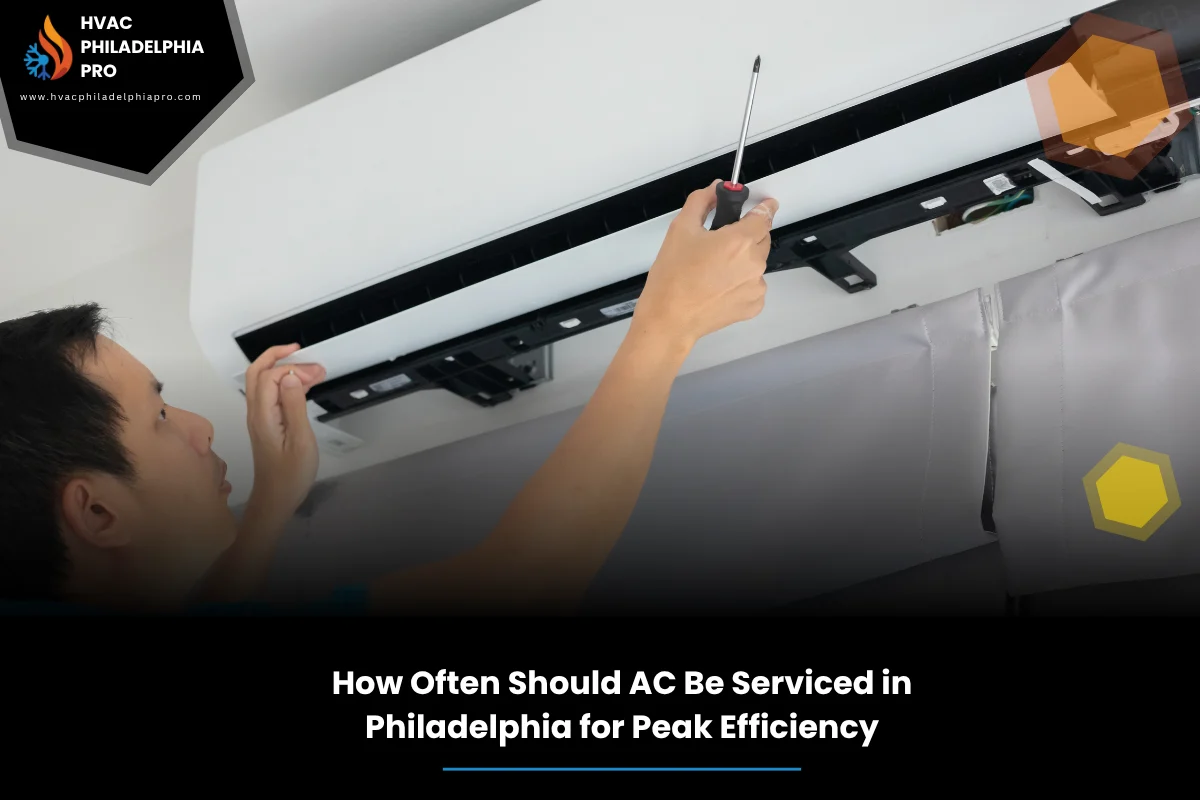
Philadelphia summers swing from humid to downright sticky, so your AC works hard. The big question many homeowners ask is how often should AC be serviced in Philadelphia? In most homes, a twice-a-year routine keeps things steady: once before cooling season and once after heavy use. It prevents small issues from turning into big repairs and helps the system run smoother.
At HVAC Philadelphia Pro, we see the same pattern year after year: systems that get regular care stay efficient longer and cost less to run. This article breaks down timing, what to check each season, and simple signs that tell you it’s time to move up your next appointment. We’ll also explain when a quick DIY task is fine and when a pro visit makes sense.
Along the way, you’ll see how smart plans for AC maintenance in Philadelphia PA connect to comfort, better airflow, and steadier bills. Let’s set a schedule you can follow without guesswork.
Table of Contents
Quick Summary
If you just want the timing, here it is: schedule AC maintenance twice a year in Philly. Aim for early spring and early fall. Spring readies the system for heat and humidity. Fall checks wear from summer and sets the stage for winter heating. Homes with older units, pets, or heavy use may need a quick mid-season check.
For condos or light-use homes, a solid annual visit can work, but watch for warning signs like uneven cooling or higher bills. A simple filter swap every 1 to 3 months supports biannual service well. Tie your dates to the seasons to keep it easy to remember, and you’ll reduce surprise breakdowns.
Why service timing matters in our climate
Philly’s humidity strains coils, drains, and fans. Dust and pollen add to the load. If you time a seasonal tune-up before summer, your system faces heat with clean filters, clear drains, and correct refrigerant charge. That means steadier cooling and fewer mid-July panics.
For a deeper dive into tasks and timing, see the Complete Guide to AC Maintenance in Philadelphia PA for Reliable Home Comfort. It pairs well with this schedule-focused article.
This cluster post keeps its focus on “how often” and why. For checklists and more detailed steps, the complete guide to AC maintenance in Philadelphia PA is a handy reference you can keep nearby.
What changes your service frequency
Several factors shape the right plan. Start with age. Units over 10 years often run better with two visits a year. Add pets and you add fur and dander, which clog filters and coils faster. Family size matters too. More people, more cooking, more door openings, more dust.
Cooling hours tell the truth. If your AC runs most afternoons and evenings, or you keep a low set point, schedule more checks. This is classic usage-based scheduling. Also consider allergies. Cleaner coils and ducts reduce irritants, so maintenance may pull double duty here.
Finally, watch history. If you’ve had frequent repairs, tighten the schedule until the system stabilizes. Then reassess. That keeps surprises low and comfort high.
Annual vs biannual vs reactive: what fits your home
Some homes can ride with one visit a year, while others need spring and fall. Waiting until a breakdown is the costly path. Here’s a quick side-by-side to help you choose.
| Approach | Best for | Pros | Trade-offs |
|---|---|---|---|
| Annual visit | Newer systems, light use | Saves time, basic checks covered | Risk of mid-season issues rising |
| Biannual maintenance | Typical Philly homes | Stable comfort, fewer surprises | Two appointments to schedule |
| Reactive only | Short-term rentals rarely used | Lower upfront cost | Higher repair risk and downtime |
Most households do best with biannual maintenance. It aligns with weather shifts and keeps HVAC efficiency improvement steady across the year.
Seasonal AC maintenance checklist for Philadelphia
Use this simple framework to stay on schedule. It’s a step-by-step checklist you can repeat every year.
Spring prep: Replace or clean filters. Clear debris around the outdoor unit. Check the condensate drain. Test thermostat accuracy. Book a pro to check refrigerant levels, electrical connections, blower performance, and duct airflow.
Mid-summer: Inspect the filter again. Listen for odd sounds. Confirm steady cooling at vents. If anything feels off, schedule a quick check. For deeper tasks and parts care, see the complete guide on this topic for context you can act on.
Early fall: Inspect coils for dirt. Make sure the drain pan is dry and clean. Replace filters before you switch to heat. Review summer performance so your tech can focus on trouble spots at the visit.
[IMAGE: Simple AC maintenance calendar mapped to spring and fall in Philadelphia]
Signs your AC needs attention sooner
Watch for early warning signs. Rising energy bills with unchanged use. Hot and cold spots in the same room. Short cycling or long run times. Musty smells or water near indoor units. Clicking, grinding, or buzzing you’ve never heard.
If two or more show up at once, don’t wait for your next seasonal window. Move your appointment up and protect the system.
DIY care vs professional help
Homeowners can handle filters, clearing leaves, and keeping vents open. You can also rinse the outdoor coil gently with a hose, as long as power is off and you avoid bending fins. These small jobs support performance and extend time between deeper checks.
Pros handle the tough parts: static pressure testing, coil deep cleaning, refrigerant diagnostics, capacitor testing, and electrical safety checks. That’s where a professional inspection catches small faults before they snowball.
According to the U.S. Department of Energy (2023), proper maintenance helps systems run efficiently and can improve comfort and reliability over time. Maintaining Your Air Conditioner
If you want an expert to walk you through timing specific to your home, this resource on how often should AC be serviced in in Philadelphia explains service intervals and what pros check during a visit.
Service frequency by system type
Central AC: Most homes benefit from two visits a year. Spring covers cooling readiness. Fall covers wear and electrical checks after peak use. Filter changes stay on the 1–3 month cycle.
Heat pumps: Because they heat and cool, heat pumps need checks every six months. They run nearly year-round, so heat pump service keeps efficiency up and avoids winter surprises.
Ductless mini splits: Clean filters monthly during heavy use. A biannual pro visit helps clean blower wheels and indoor coils, which get dusty fast in small cassettes.
Plan your year without guesswork
Set two standing reminders: mid-March and mid-September. Tie them to your calendar and label them “AC service.” That’s your baseline. If you add a new pet, notice more dust, or host a long-term guest, nudge a quick check mid-season.
Keep notes in your phone: filter dates, noises, drain clogs, hot spots. These notes guide the tech and help you hold to a seasonal maintenance rhythm. That record also makes it easier to compare year-to-year performance.
Refer back to the complete guide to AC maintenance in Philadelphia PA for deeper task lists. Pairing that knowledge with this timeline keeps service short and focused.
Efficiency and bill impact
Regular care supports smoother airflow, stable refrigerant charge, and tighter ducts. That’s how you see true HVAC efficiency improvement. It’s not magic. It’s clean filters, tuned components, and fewer leaks working together.
Many homeowners aim to lower electric bill with AC maintenance. The fastest wins come from sealing obvious air leaks, managing set points, and keeping coils clean. The seasonal plan above does that by default and trims waste across spring and summer.
Remember, residential AC maintenance in Philadelphia is about comfort too. Even temperatures, quiet operation, and fewer callbacks all point to a healthy system.
FAQ
- How often should I change my AC filter?
Check monthly and replace every 1 to 3 months, faster with pets or allergies. A clean filter protects coils, improves airflow, and supports your service schedule.
- Is one annual AC service enough?
For newer, lightly used systems, once a year can work. In Philly’s humidity, most homes do better with two visits to catch wear and keep performance steady.
- What month is best for AC service in Philadelphia?
Book in March or April before heat hits, then again in September or October after peak summer load. Those windows keep your system ready and reliable.
- Does maintenance really affect energy bills?
Yes. Clean filters, tuned components, and proper refrigerant levels reduce strain. That can curb runtime and stabilize costs through the season.
- What tasks should a pro handle?
Electrical checks, deep coil cleaning, refrigerant diagnostics, blower testing, and duct evaluations. These need tools and training to do safely and correctly.
- How do I know if I need service sooner?
Watch for hot spots, odd sounds, short cycling, musty smells, or rising bills. Two or more signs together mean schedule a check now.
- Does a newer AC still need biannual visits?
Often yes, especially in humid summers. A steady schedule helps new systems stay efficient and supports long-term reliability.
Conclusion
So, how often should AC be serviced in in Philadelphia? For most homes, two tune-ups a year hit the sweet spot: spring to prepare for heat, fall to review summer wear. If your system is newer and lightly used, one visit can work, but watch for signs that suggest moving it up.
Follow the seasonal checklist, keep simple notes, and adjust based on usage. This steady plan supports comfort, airflow, and stable bills without drama. If you want help setting a custom schedule or checking a concern, contact HVAC Philadelphia Pro for expert assistance. With the right rhythm, your AC works quieter, cooler, and longer, all season long.
continue reading
Related Posts
Learn what homeowners should expect from EV charger maintenance in Philadelphia PA. Get simple checklists, pro tips, a care plan, and clear safety signs to keep charging reliable.
Learn why EV charger maintenance is important for safe, reliable home charging. Get a clear checklist, warning signs, DIY vs pro tips, and a simple monthly framework.
Use this checklist of questions to ask before scheduling home air conditioner repair in Philadelphia. Confirm basics, understand costs, and compare repair vs replace with confidence.