
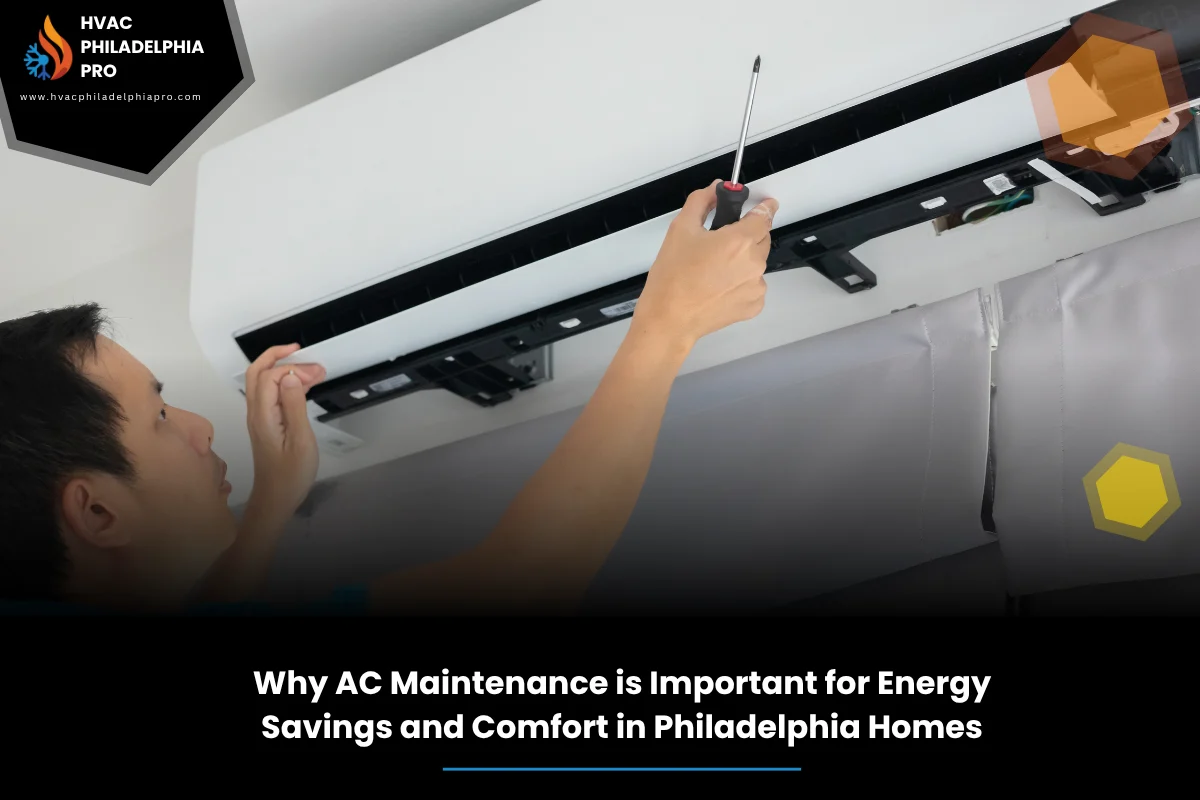
If you want steady comfort and fewer surprises, it helps to understand why AC maintenance is important. A well-tuned system runs smoother, sips less power, and keeps rooms even. Small checks prevent big problems. Filters stay clean, coils stay clear, and parts last longer.
HVAC Philadelphia Pro sees the same pattern every year. Homes that stick to simple care avoid mid-season breakdowns. They don’t wrestle with rooms that feel muggy or warm. And they rarely lose sleep over sudden spikes on the power bill. With the right plan, you get reliable comfort and a calmer summer.
Table of Contents
Quick Summary
Regular AC care lowers strain on parts, trims wasted energy, and helps you avoid a hot day breakdown. If your system cycles too often, blows weak air, or struggles in the afternoon heat, it likely needs attention. Clean filters, clear airflow paths, and proper refrigerant levels work together to keep rooms balanced.
A simple plan works best: change filters on time, rinse outdoor coils, check drains, and book a yearly tune-up before peak heat. This routine often leads to a lower electric bill with AC maintenance and clear HVAC efficiency improvement. Think of it as cheap insurance for comfort and peace of mind.
How maintenance saves energy and keeps comfort steady
You can link the small tasks directly to power use. Cleaning coils and clearing airflow reduce resistance. That means the blower and compressor don’t fight to move air or shed heat. For a deeper dive, see the Complete Guide to AC Maintenance in Philadelphia PA for Reliable Home Comfort and use it as a reference during your seasonal tune-up.
Even simple coil cleaning can cut runtime. When coils are dirty, heat transfer drops, so the system must run longer to hit the same temp. Clean coils let refrigerant do its job, so the unit cools faster and shuts off sooner. Less runtime equals less energy burned.
Balanced airflow also helps with steady comfort. Cold spots fade, hot rooms calm down, and humidity stays in check. This is the backbone of a complete guide to AC maintenance thinking: remove resistance, stop leaks, and keep the system close to factory settings.
Signs your AC is not cooling efficiently
Watch for short cycling, weak airflow, and rising indoor humidity. If your vents blow cool but rooms still feel sticky, the coil or drain might be clogged. If air feels warm or uneven, it might be a filter, duct leak, or refrigerant issue.
Check for noise changes too. Rattles, hissing, or squeals point to loose panels, duct gaps, or motor wear. A steady hum is fine. Sudden shifts are not.
Weak airflow is the classic symptom. If a new filter and clean return grills don’t fix it, the blower wheel could be dirty or the ductwork restricted. That needs a closer look before a small problem turns into a summer outage.
Preventative AC maintenance calendar for local homes
Plan early spring for a full tune-up and a mid-summer check for airflow and drains. In fall, wash the outdoor unit and clear leaves. Winter is a good time to seal ducts and test insulation. This simple rhythm keeps stress low all year.
For families focused on preventative AC maintenance in Philadelphia, the sweet spot is a pre-season visit to verify refrigerant levels, electrical checks, and drain cleaning. Pair that with monthly filter checks during peak season and you’ll head off common mid-July failures.
A professional seasonal tune-up tends to catch what DIY misses: small voltage imbalances, weak capacitors, or a slow drain. These are the small fixes that protect comfort when the heat wave hits.
What a pro tune-up includes vs DIY checks
A lot of AC care is simple: swap filters, hose off the outdoor coil, and clear the return grills. A deeper tune-up verifies the parts that affect power draw and runtime. That’s where a technician brings meters, gauges, and a trained eye.
| Pro tune-up tasks | DIY checks |
|---|---|
| Check and adjust refrigerant charge | Replace filters on schedule |
| Test capacitors, contactor, motors | Rinse outdoor coil fins |
| Measure static pressure and airflow | Vacuum return grills and vents |
| Inspect drain pan, trap, and safety switch | Keep outdoor unit clear 2 feet around |
| Calibrate thermostat and verify staging | Set sensible thermostat schedules |
Pair both and you’ll see steady HVAC efficiency improvement. The DIY steps keep air paths open. The pro steps make sure the system runs close to design specs.
5-step framework to lift efficiency at home
Step 1: Filter habit. Use the right size and rating. Check monthly in summer. Change when dirty. Don’t guess; shine a light through it. If light barely passes, it’s time.
Step 2: Coil care. Gently rinse outdoor fins from inside out. Keep shrubs trimmed. Indoors, make sure supply and return vents stay unblocked by rugs or furniture.
Step 3: Duct and seal. Look for kinks, gaps, or squashed flex. Seal small joints with mastic or UL foil tape, not cloth duct tape. Leaky ducts waste cool air.
Step 4: Controls. Program schedules that match your day. Avoid big swings. Two to three degrees of setback is fine for comfort and savings.
Step 5: Annual tune-up. Book before peak heat. This is where a pro verifies the hard-to-see details. For a deeper step-by-step, open the complete guide on this topic and keep it handy while you work through your checklist.
Finish by confirming drains and safeties. A stuck float switch or clogged trap can shut the system down on the hottest day. A quick test now prevents that surprise later.
When to call in a technician and schedule service
If performance drops, indoor humidity climbs, or you notice ice on the refrigerant lines, it’s time to bring in a pro. Electrical smells, repeated breaker trips, and loud start-ups are also warning signs. Don’t wait for a no-cool call if you see these hints.
If you want a neutral rundown on why AC maintenance is important before booking a visit, review service scope and timing so you can plan the best window. A spring appointment usually gives the most breathing room.
A thorough safety check adds peace of mind. That includes verifying disconnects, checking wire connections, and testing overload protection. These steps protect your system and your home.
Cost of skipping maintenance: stress, air quality, and lifespan
Running with a dirty filter or coil makes every part work harder. Motors draw more current, compressors run hotter, and wires see extra heat. Over time, that can shorten the life of the system and raise the chance of mid-season failure.
According to the U.S. Department of Energy, replacing a dirty, clogged filter can lower AC energy use by 5 to 15 percent (U.S. Department of Energy, n.d.). Maintaining Your Air Conditioner
Skipping care can also lead to water damage if the drain backs up. High humidity in the ductwork can encourage growth on the coil or in the pan. That leads to musty smells and more cleaning later, plus a higher chance of compressor failure from liquid slugging.
Safety and indoor air quality benefits
Good maintenance also protects health and safety. Clean filters trap more dust and pollen. Clear drains stop overflow. Proper wiring checks prevent arcing and heat buildup in tight spaces.
Coils that stay clean hold less moisture and debris. That reduces odors and helps the system control humidity. A regular drain pan cleaning and trap flush keep water moving, so you avoid surprise leaks in finished spaces.
Balance air and seal ducts to reduce dust pulled from attics and basements. That means fewer particles in living areas and less cleaning. You’ll also likely run the fan less to feel the same comfort.
Philadelphia home notes: age, space, and humidity
Older homes often have tight returns or limited closet space for equipment. That makes filter access tricky and airflow more fragile. In small rowhomes, furniture can block supply vents without you noticing.
High summer humidity can push systems hard even on moderate days. Sealing ducts in basements and adding better return paths can calm the system. This is where humidity control and good filters team up to keep rooms even.
Many families who focus on residential AC maintenance in Philadelphia pair a spring tune-up with a quick mid-season check of drains and filters. That small second touch helps keep the system steady through the most humid weeks.
Troubleshooting when AC is not cooling efficiently
Start with the basics. Set the thermostat to cool and a few degrees below room temp. Check the breaker, confirm the outdoor fan is spinning, and listen for the indoor blower. Then check the filter and returns.
If ice forms on the lines, shut the system off and let it thaw. Run the fan to help melt ice. Ice hints at airflow issues or a refrigerant problem. Don’t run a frozen system or you risk damage.
If nothing obvious shows, stop. A short test visit now beats a full breakdown later. And it may be something simple, like a loose wire or a clogged drain switch.
FAQ
- How often should I change my AC filter?
Check monthly in summer and replace when dirty. Most homes change every 1 to 3 months, but pets, dust, or allergies may shorten that cycle.
- What causes weak airflow from my vents?
Clogged filters, blocked returns, dirty blower wheels, or duct leaks are common causes. Fix the simple items first, then have a pro measure airflow.
- Can maintenance lower my electric bill?
Yes. Clean filters and coils reduce runtime, which can lower your electric bill with AC maintenance compared to a neglected system.
- Why does my AC run but not cool well?
It could be low refrigerant, dirty coils, a failing capacitor, or poor duct sealing. Each issue hurts performance and comfort.
- Is a yearly tune-up enough?
For most homes, yes. Pair one pro tune-up with regular DIY filter and coil care. If your home is dusty or humid, consider a mid-season check.
- When should I schedule service?
Book in spring before peak heat. If you notice new noises, rising humidity, or short cycling, schedule a visit sooner.
- What if my AC freezes up?
Turn it off, run the fan to defrost, and replace the filter. If it freezes again, call a technician to check airflow and refrigerant levels.
Conclusion
The big picture is simple: once you know why AC maintenance is important, the path to lower bills and steadier comfort is clear. Keep airflow open, keep parts clean, and verify the details before the heat hits. Small, steady care prevents waste, stress, and surprise outages.
Use a basic plan you can stick to. Pair DIY habits with a yearly tune-up, and log what you do so nothing gets missed. If you want help building a plan or verifying system performance, contact HVAC Philadelphia Pro for expert assistance. With a calm routine, your AC can run better, longer, and with fewer headaches.
continue reading
Related Posts

Learn how to choose the right EV charger electrician in Philadelphia for reliable repairs. Get a simple vetting framework, diagnostics, safety tips, and when to repair or replace.

See why hiring an EV charger electrician in Philadelphia is safer than DIY. Learn about load checks, code, GFCI, 240V outlet work, and a simple planning framework.

Learn what really happens with residential EV charger installation in Philadelphia, from panel checks and permits to charger choice, placement, safety, and testing.