
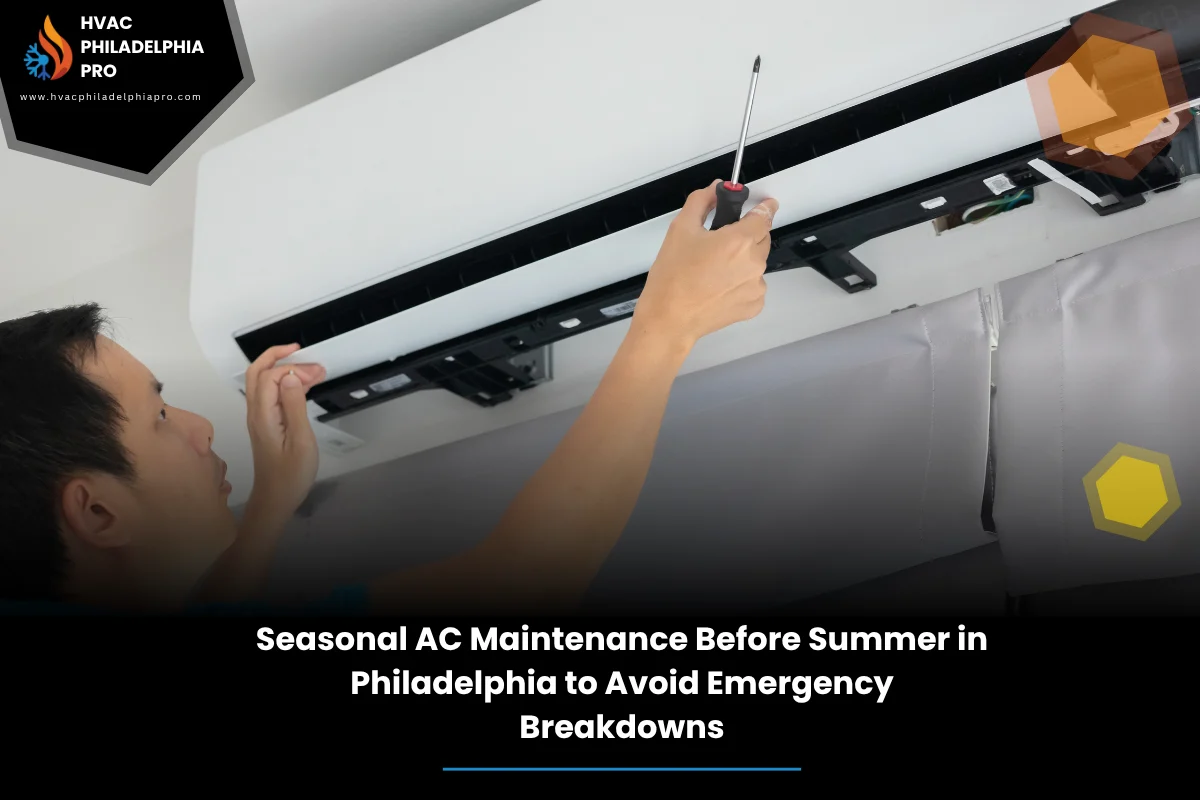
Philly summers heat up fast. When that first hot week hits, every air conditioner in the city kicks on at once. That rush exposes weak parts, dirty coils, and low refrigerant. Planning AC maintenance before summer in Philadelphia prevents those surprise failures and keeps your home cool when everyone else is scrambling.
You do not need a major overhaul to get steady cooling. A focused visit catches small issues early and helps your system breathe, drain, and cycle the way it should. At HVAC Philadelphia Pro, we see the same patterns every year. Units that get a simple spring tune run smoother, use less energy, and rarely need emergency calls in July. A little work now saves time, stress, and money when temps spike.
This guide shows how to time seasonal AC maintenance in Philadelphia, what techs actually check, and how to spot warning signs before a breakdown. We will also share a simple step-by-step plan you can follow at home and with your tech to make summer start-up painless.
Table of Contents
Quick Summary
If you want the short version: book seasonal AC maintenance in Philadelphia for late spring, clean or change your filter, clear outdoor airflow, test cooling early, and note any odd sounds or smells. For a deeper checklist and pro-level details, read the Complete Guide to AC Maintenance in Philadelphia PA for Reliable Home Comfort. Use this article as your timing and strategy map.
Pair a spring check with simple home tasks. Replace your filter, rinse debris off the outdoor unit, open supply vents, and check your thermostat schedule. Then confirm even airflow in each room and watch the drain line. That is practical preventive maintenance you can start today, and it makes a pro tune faster and more effective.
Why timing your pre-summer tune matters
Early maintenance avoids the June rush and helps your AC start clean. Dirt and blocked airflow make parts run longer and hotter. That stress builds up until a component fails on the first heat wave. Scheduling in late April or May sets your system up for a calm, steady season.
Philly’s humid summers push systems hard. Moist air makes your AC work to remove heat and water from the air. That higher cooling load exposes weak capacitors, loose wires, and worn blower belts. Fix those at mild temps, not in a 95-degree emergency.
Plus, a clean start improves comfort. Faster temperature pull-down, fewer hot spots, less short cycling. The pillar topic’s complete guide to AC maintenance in Philadelphia PA expands on these points and explains how each task supports comfort and reliability.
What to expect in a seasonal AC tune-up
A good tune checks performance and safety, cleans the right parts, and confirms refrigerant is within spec. It is not guesswork. Your tech should show readings and explain what they mean for your home.
- Filter and return airflow: confirm correct size and pressure drop for steady breathing.
- Outdoor unit cleaning: remove leaves, straighten fins, and perform light coil cleaning to improve heat transfer.
- Electrical checks: tighten connections, test capacitor and contactor, and measure amp draw.
- Refrigerant checks: compare pressures and temperatures to charts, and look for signs of a leak.
- Drain and safety: clear the condensate line, test float switch, and confirm proper slope.
- Thermostat and controls: verify staging, program, and accurate sensors.
This is the same core checklist found in any solid AC maintenance in Philadelphia PA plan. Ask for results in plain terms. If something is borderline, note it and plan a follow-up before peak heat.
5-step pre-summer AC readiness plan
Use this simple framework to prevent last-minute surprises. It pairs at-home checks with a focused pro visit. If you want more task depth and component details, see the complete guide on this topic and combine it with the steps below.
- Clear airflow zones: trim plants 2 to 3 feet around the condenser. Vacuum return grills. Open all supply vents. Better airflow means cooler coils and longer life.
- Filter and seal check: install a fresh filter and inspect the return for gaps or whistling. Seal anything obvious with UL-rated tape for air sealing that stops dust and warm leaks.
- Thermostat setup: set a realistic schedule, enable gentle setbacks, and verify Wi-Fi control if you have it. Then perform a short test run on a mild day.
- Condensate safety: locate your drain line. If there is a cleanout, pour a small amount of distilled vinegar to discourage clogs. Confirm the float switch clicks when lifted.
- Pro performance check: book a spring tune to measure refrigerant, electrical health, temperature split, and static pressure. Ask for notes, not just a thumbs-up.
DIY tasks vs professional work
Some tasks are safe at home. Others need gauges, meters, and training. Use this quick comparison to avoid accidental damage and keep warranties in good standing.
| Task | DIY safe? | Why it matters | Best timing |
|---|---|---|---|
| Filter change | Yes | Protects coil, airflow, and indoor air | Every 1 to 3 months |
| Outdoor debris clearing | Yes | Restores condenser airflow | Early spring, then monthly |
| Coil deep clean | No | Prevents fin damage, ensures proper chemicals | Spring tune |
| Refrigerant diagnosis | No | Needs gauges and EPA-certified handling | Spring tune |
| Electrical testing | No | Prevents shorts and nuisance trips | Spring tune |
| Thermostat programming | Yes | Matches comfort and savings | Pre-season |
Stick with filters, airflow, and basic cleaning. Leave refrigerant handling, deep coil service, and electrical diagnostics to a trained tech. That keeps you safe and protects sensitive parts.
Scheduling and lead times before heat waves
Spring slots go fast once the first warm spell hits. Aim for late April through May. That window gives you time to order parts if your tech finds a weak capacitor or a failing contactor. It also avoids weekend emergency rates and long wait times.
If you want a simple way to line up your visit, book AC maintenance before summer in Philadelphia a few weeks ahead of peak demand. Ask for a morning window so the system is cool and dry for testing. Save the report and set a reminder for next spring.
Try not to postpone until the first 90-degree day. By then, crews are stacked, parts stock is thinner, and small issues can pile up. A calm pre-season appointment beats a hot-week scramble every time.
Preventing emergency breakdowns: common warning signs
Most emergency AC maintenance in Philadelphia starts with small clues. If the system runs longer than usual, rooms feel muggy, or you hear a new buzz at start-up, do not wait. Those signs often point to a weak capacitor, dirty coil, or airflow restriction.
Watch the drain line for drips or puddles. A blocked drain can trip the safety switch and shut you down on a humid afternoon. Check supply vents for low airflow. If you see frost on the refrigerant line or coil, shut the system off and call a pro to prevent damage.
Write down any early warning signs and share them with your tech. The more precise you are about sounds, smells, and timing, the faster the fix. This is the practical side of the pillar’s complete guide idea: catch small issues before they snowball.
Records, warranty, and energy savings
Keep a simple maintenance log: date, filter change, notes from the tech, and any parts replaced. Many manufacturers want proof of annual service for parts coverage. A one-page record can protect you if a component fails under warranty.
Energy savings add up too. According to U.S. Department of Energy (2023), routine checks like cleaning coils, changing filters, and verifying refrigerant help systems run more efficiently and last longer. U.S. Department of Energy: Central Air Conditioning
FAQ
- When should I schedule seasonal AC maintenance in Philadelphia?
Late April through May is ideal. You avoid the first heat wave rush and have time to address minor fixes before summer humidity and high demand.
- What is the difference between a tune-up and a repair visit?
A tune-up is a planned check to verify performance and prevent issues. A repair visit fixes a known problem. Many repairs are avoidable with a spring tune.
- How often should I change my AC filter?
Check monthly and replace every 1 to 3 months. Homes with pets, allergies, or renovation dust need more frequent changes to protect airflow.
- Can I hose off my outdoor unit?
Yes, gentle rinsing from the top down is safe. Avoid high-pressure spray and chemicals. Deep coil cleaning should be done by a technician.
- What are early signs I might need emergency AC maintenance in Philadelphia?
Longer run times, warm air, weak airflow, strange noises at start-up, musty smells, water near the air handler, or occasional breaker trips.
- Is an AC tune up in Philadelphia worth it if my system is new?
Yes. New systems still need airflow checks, drain service, and basic measurements. Early service protects efficiency and keeps warranties valid.
Conclusion
Getting AC maintenance before summer in Philadelphia is a simple habit that pays off all season. You avoid the mad rush, fix small issues on your schedule, and start the first heat wave with strong cooling. Clean airflow, safe drains, and accurate readings do more for comfort than any last-minute rescue.
Use the five-step plan, keep a short record, and schedule a calm spring check. If you want the deep dive, the city-wide best practices in the complete guide to AC maintenance in Philadelphia PA pair well with the timing and strategy you learned here. Contact HVAC Philadelphia Pro for expert assistance, and head into July with confidence that your system is ready.
continue reading
Related Posts
Learn how an EV charger diagnostic service finds the real reason your charger fails. Follow clear steps, tools, and safety tips to fix power, signal, or app issues at home.

Plan safe and smooth home EV charger installation in Philadelphia. Learn permits, panel checks, Level 2 basics, 240V circuits, and site planning. Stay code-safe.
See how a regular EV charger tune up in Philadelphia prevents heat, faults, and downtime. Learn safety checks, Level 2 care, a 6-step framework, and when DIY is enough.