
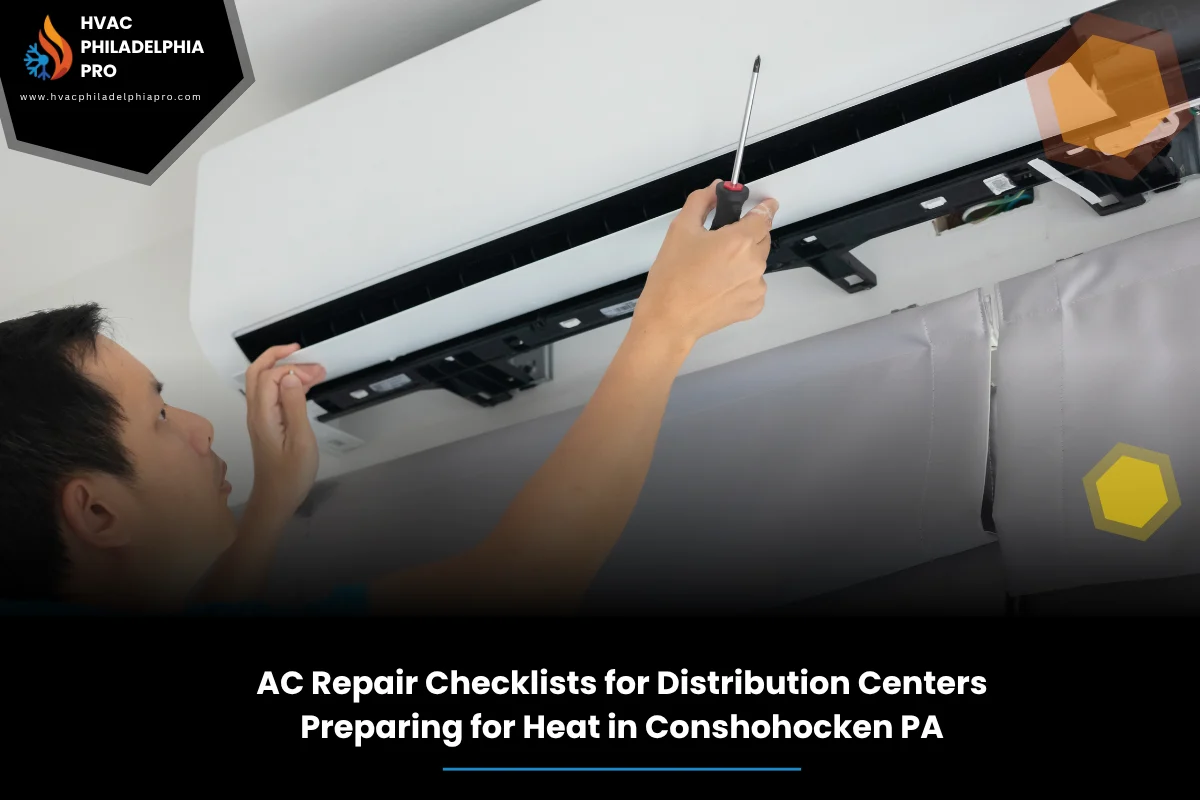
Summer heat puts real pressure on big buildings, and distribution centers feel it first. Long aisles trap warm air. Dock doors leak. Motors and people add more heat each hour. Before temps spike, set a clear plan for inspections, quick fixes, and parts on hand. For context, many teams still say they need HVAC repair in Philadelphia PA when things go sideways. Do not wait for that moment.
You want a plan, a checklist, and a backup path if gear fails during the afternoon rush. If you need a direct resource to schedule or ask a quick question, you can review HVAC repair in Philadelphia PA to understand options and timing without pressure. The steps below keep your Conshohocken PA site steady when heat builds fast.
Table of Contents
Quick Summary
This guide gives distribution center managers a simple, workable system to prepare AC and airflow before summer peaks. We cover a core checklist, preseason tasks, emergency readiness, controls checks, airflow at docks, and a quick capacity comparison you can use on site. There is also a five-step framework to run in the weeks before heat waves.
You will see notes that connect your prep to the broader topic many facilities look for, like a complete guide to AC repair in Philadelphia PA for both homes and businesses. That context helps you explain choices to finance, safety, and ops. Use the lists as living documents and update them after each heat event.
Why Heat Hits Distribution Centers Hard
Big open volumes, dock activity, and long run times stack up heat faster than most people expect. Build an hourly heat load profile that includes people per shift, forklift charging, lighting, and incoming air at docks. Note how much of that load lands near picking zones versus high-bay storage.
If you want a broader backdrop for decisions, see the Complete Guide to AC Repair in Philadelphia PA for Comfortable Homes and Businesses for fundamentals on symptoms, causes, and common fixes. Tie those basics to your floor map and daily schedule so your team knows what happens when heat and humidity climb together.
The Core AC Repair Checklists
Start with assets. List rooftop units, air handlers, condensers, economizers, and critical fans. Add model, age, filter sizes, belts, oil points, and recent issues. Create a simple weekly route with tasks, tools, and safe lockout steps. A strong checklist beats guesswork when something runs hot at 3 pm.
Your primary list should cover intake screens, filters, belts, coils, drains, wiring, and control alarms. Flag a pre-heat preseason inspection every spring with target dates. Close each route with notes on vibration, noise, or hot spots at docks and mezzanines. Photos help. Keep them in one shared folder so everyone sees changes.
Preseason Maintenance Tasks for Conshohocken PA
Before Conshohocken heat builds, clean condenser and evaporator coils, clear drains, and confirm refrigerant levels within manufacturer guidance. Dirty coils rob capacity right when you need it most. Mark gasket and damper checks so infiltration at dock doors does not overwhelm the system on humid days.
Replace worn belts, swap filters to the correct MERV, and stage spares. Verify economizers work, then lock in damper setpoints for spring versus peak summer. A focused batch of coil cleaning, belt tensioning, and drain treatments in late spring buys you hours of stable temps during July heat spikes.
Emergency Readiness and Response
Even good systems fail. Build an emergency map that shows which zones suffer first if a unit drops. Pre-plan portable cooling, air movers, and a rotation to protect high-value or temperature-sensitive stock. Decide who calls vendors, who moves product, and who documents temperatures.
Set a simple redundancy plan: critical aisles get backup airflow, IT rooms get dedicated portable cooling, and dock doors get staged fans. Keep a small parts bin for contactors, capacitors, and fuses that match your gear. Run a timed drill once before peak season so everyone knows their role.
Sensors, Controls, and Power Checks
Bad readings lead to bad choices. Calibrate supply, return, and zone sensors and verify setpoints. Confirm time-of-day schedules and any demand-response or staging logic. Match what the screen says with what you feel coming from the vents. Fix drift now to avoid short cycling.
Test breakers, disconnects, and wiring insulation where heat, dust, or vibration can cause headaches. Label panels and keep one-line diagrams handy. A short session on controls calibration and safe power checks can prevent downtime on the worst afternoon of the month.
Airflow, Ducts, and Dock Doors
Walk your air path. Look for crushed flex, loose takeoffs, and leaky seams. Confirm supply diffusers target the work zones, not empty rack tops. Balance return paths near docks so the building does not pull hot, wet air whenever doors roll up. Small duct fixes can pay off fast.
Set a routine for dock curtains, seals, and door timing. Add air curtains or vestibules where feasible. Treat airflow as a product. You aim for steady air balance that supports the floor task, not just a thermostat number at the office. [IMAGE: simple floor map showing supply, return, and dock airflow zones]
Cooling Capacity vs Real-World Load: A Quick Comparison
Use this quick table to match what your system can do with what your building asks for on a hot day. It is not a design calc, but it helps spot risk early.
| Item | What to Check | Typical Outcome | What It Means |
|---|---|---|---|
| Rated Cooling Capacity | Nameplate tons vs current draw | At or slightly below nameplate | Normal, watch amps during peak |
| Coil Condition | Clean vs lightly fouled | 5 to 15 percent loss if fouled | Plan cleaning before heat waves |
| Infiltration at Docks | Door cycles per hour | High cycles add latent load | Seal and adjust door timing |
| Airflow to Zones | CFM vs design estimate | Imbalanced zones run hot | Rebalance or redirect diffusers |
| Controls and Sensors | Calibration within spec | Bad data causes short cycling | Recalibrate and verify trends |
| Maintenance Status | Preseason tasks done | Fewer surprises under load | Preventive maintenance is cheaper than downtime |
5-Step Pre-Heat AC Readiness Framework
Follow these five steps over two to four weeks before sustained heat. This keeps work focused and results clear. If your team wants a deeper dive into core repair topics, see the complete guide on this topic while you run this plan.
- Map zones and risks: list hot aisles, dock clusters, and sensitive inventory. Pick top three risks to fix first.
- Run a baseline performance test: record supply, return, amps, and discharge temps on each unit.
- Execute quick wins: clean coils, change filters, tighten belts, clear drains, seal obvious duct leaks.
- Stress test: pick a warm afternoon, open docks to typical volume, and watch trends for 60 minutes.
- Update the checklist: lock in setpoints, stock parts, and assign on-call roles for heat alerts.
Regional Notes for Conshohocken PA Teams
Operations here often tie into vendors and staff in the city. When planning weekend work or late shifts, note common search terms like AC repair in Philadelphia and summer AC repair in Philadelphia so your crew knows what they will hear and ask for. Keep your procurement list simple so night crews can act fast.
During a breakdown, a supervisor may call for emergency AC repair in Philadelphia or even ask for AC repair near in Philadelphia from a shared corporate list. That is fine. Just keep your site data ready: model numbers, access notes, and roof safety rules. This speeds any dispatch and reduces repeat trips.
Training, Safety, and Documentation
Walk techs and leads through lockout, rooftop safety, and heat exposure basics. Keep a short binder with checklists, recent photos, and alarms explained in plain words. Make temperature logging easy and visible so floor leads can spot drift early and act.
According to OSHA (2024), planning, water, rest, shade, and clear procedures help prevent heat illness in the workplace. Use that as your safety anchor while tuning HVAC prep. OSHA Heat Illness Prevention
FAQ
- How often should we run the AC checklist in peak summer?
Run a quick visual and filter check weekly, and a deeper look every month. If your building is very active at docks, add a midweek airflow pass to catch new leaks or drift.
- What signs tell me a unit is about to fail?
Watch for rising amps, longer run times, warm supply air, short cycling, wet ceilings near drains, and new noises. If two or more show up together, schedule troubleshooting fast.
- Do dock curtains and seals really help cooling?
Yes. They cut hot, humid air from rushing inside. That reduces latent load and keeps zones stable. Pair seals with air curtains or vestibules for busy doors.
- How do I choose the right filter MERV?
Follow equipment guidance and the balance you need between air quality and static pressure. Higher MERV helps capture fine dust but can reduce airflow if fans are marginal.
- When should we call a professional?
Anytime you see electrical issues, refrigerant questions, repeated trips on the same unit, or sensor drift you cannot explain. Those problems can snowball during heat waves.
- What is the fastest win before a heat wave?
Clean coils, swap filters, clear drains, and confirm controls schedules. Those four tasks restore a lot of lost capacity and stop nuisance shutdowns.
Conclusion
Heat will test every weak spot in a distribution center. With a solid checklist, a short framework, and a few drills, you can keep aisles cooler, protect stock, and avoid rushed calls for HVAC Philadelphia Pro help at the worst time. Keep this playbook handy and refine it after each event.
Use the quick capacity table, watch airflow near docks, and keep controls honest. If you need guidance or scheduling support while staying focused on operations, reach out for HVAC repair in Philadelphia PA details and timing as needed. Contact HVAC Philadelphia Pro for expert assistance. Your steady prep now will pay off on the hottest days.
continue reading
Related Posts
Learn how to choose EV charger repair near me with clear safety checks, a simple shortlist framework, and provider comparisons so you can fix issues fast and right.
Power failures can freeze business chargers. Learn fast triage, common faults, and safe fixes for Marlton NJ sites, plus when to use emergency EV charger repair in Philadelphia.
Practical guidance for Springfield PA businesses on EV charging station repair in Philadelphia, with fast triage steps, safety basics, network vs standalone tips, and industry-specific advice.