
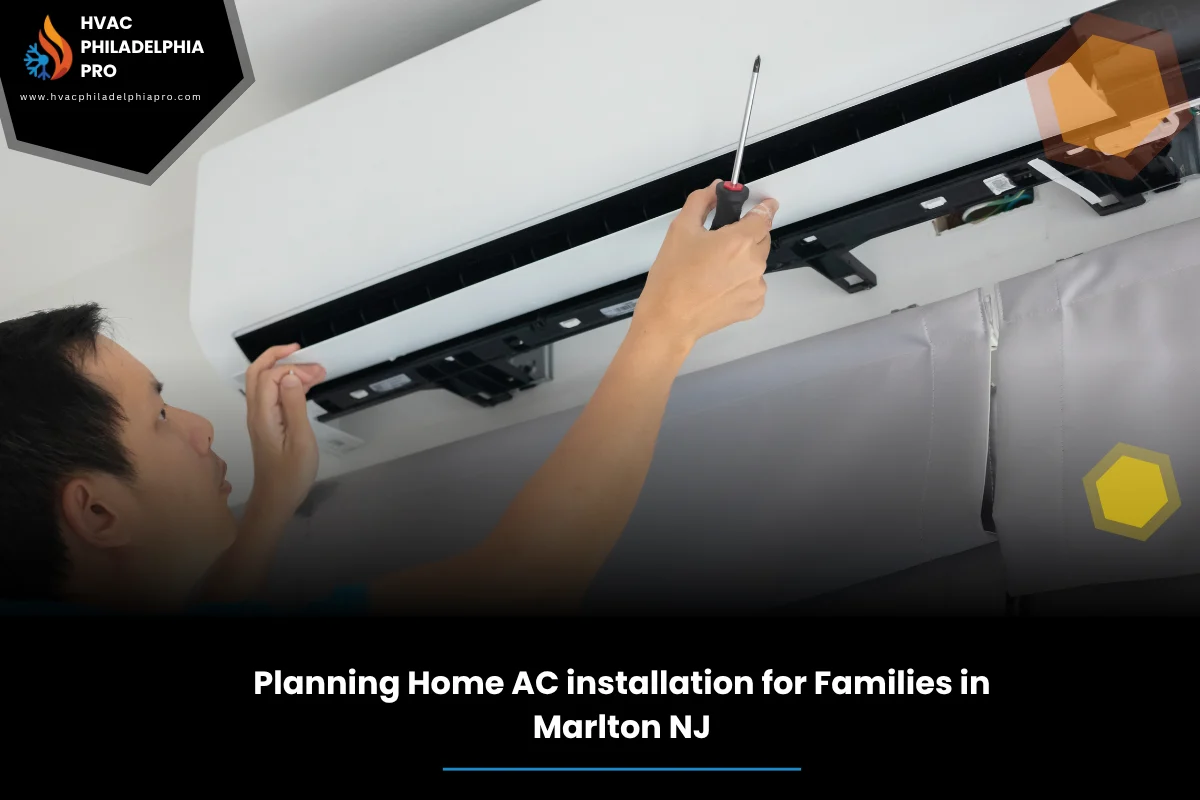
Good planning makes summer simple. If you are weighing options for home AC installation in Philadelphia, you can still use that same thinking for a family home in Marlton NJ. The steps are similar, but the details change with your rooms, ductwork, and daily routines. That is where HVAC Philadelphia Pro can help you think ahead.
Start with how your family lives: kids’ bedtimes, quiet nap windows, allergy needs, and pets. Then match the system to the home: size, ducts, fresh air, and controls. If you need a deeper dive or want to map choices to your space, visit home AC installation in Philadelphia for a clear, service-focused overview you can use as a planning reference.
Table of Contents
Quick Summary
Families in Marlton NJ need steady cooling, low noise, and smart control. Build from the basics: right-sized equipment, clean and sealed ducts, good filtration, and simple schedules that match school nights and weekends. Add safety steps for kids and pets, and plan for easy filter swaps. The result is comfort you do not have to think about.
For background on system choices, permits, and timelines, see the Complete Guide to AC Installation in Philadelphia PA for Reliable Home Cooling. It pairs well with this family-first plan and gives you a bigger picture before you decide.
How Marlton homes and families shape your AC plan
Marlton summers bring warm, sticky air, so moisture control and airflow matter. Two-story layouts can run hot upstairs, while shaded lots cool faster after sunset. If bedrooms are spread out, consider zoning so each floor or wing holds a steady set point without tug-of-war at the thermostat.
If your home has older ducts, check for leaks and sizing before picking a unit. Families with small kids or pets may prefer quieter air handlers and slower fan ramps at night. Think about filter access, too. If changing a filter means climbing a ladder, it will get skipped.
Sizing right: load, ducts, and rooms
Getting capacity right stops hot spots and high bills. A proper Manual J load calculation looks at square footage, insulation, windows, orientation, and air leaks. Skip rules-of-thumb that size by ton per square foot. They miss the real picture and often oversize the system.
According to the U.S. Department of Energy (2023), right-sized air conditioners cycle longer at lower speeds, remove more humidity, and waste less energy. That means better comfort and lower noise for families. U.S. DOE Energy Saver: Central Air Conditioning
Ducts matter as much as the unit. Undersized returns, crushed runs, or leaky joints choke airflow and force longer cycles. Ask for a static pressure check and a quick duct review so the new system can breathe. That single step saves headaches later.
Choosing systems: central, ductless, or heat pump
Your floor plan and noise goals guide the system type. New ductwork is not always needed, and mixed spaces can blend central cooling with a quiet ductless head in a bonus room. A high-efficiency heat pump can handle cooling and shoulder-season heat. Look for a variable-speed compressor if you want whisper-quiet nights and steady temps.
| System Type | Best For | Pros | Trade-offs | Typical Noise |
|---|---|---|---|---|
| Central AC | Homes with usable ducts | Whole-home comfort, one thermostat, hidden | Depends on duct health, less room-by-room control | Low to medium; quieter with insulated ducts |
| Ductless Mini-Split | Additions, bonus rooms, mixed family schedules | Room zoning, high efficiency, very quiet | Visible indoor heads, more filters to maintain | Very low at low speed |
| Heat Pump | Cooling plus mild-weather heat | One system for year-round, efficient | Needs proper sizing and setup in humid weather | Low; best with variable-speed |
If you want a deeper dive into how these choices line up with install steps, the complete guide to AC installation in Philadelphia gives added context without getting salesy.
Indoor air quality for kids, pets, and allergies
Families breathe a lot of shared air. Pick a filter with the right MERV rating to catch dust and dander without choking airflow. Seal return leaks so dirty attic or crawl air does not sneak into the system.
Homes with allergies may add a media filter cabinet, UV lights for coil cleanliness, or a ventilating fan to bring in measured fresh air. Balance is key. Overdoing filtration can starve airflow and freeze coils. Keep solutions simple and serviceable.
Efficiency and bills: ratings, airflow, and sealing
Efficiency is more than a number on a box. Yes, a higher SEER2 rating helps, but poor ducts or wrong charge erase gains. Ask for a quality install checklist: line set size, brazing, nitrogen purge, and recovery steps. These protect your investment.
Air sealing around attic hatches and knee walls reduces hot air infiltration. Smart thermostats can trim runtime, but avoid wild set backs on humid days. Gentle, steady cooling often beats big swings for comfort and energy.
Installation day playbook for families
Walk the job with the crew lead before work starts. Confirm outdoor unit placement away from bedrooms and play areas. Ask how they will protect floors and where tools will stage. A correct refrigerant charge and tested drains matter as much as shiny equipment.
Plan kid and pet zones so doors can stay closed. If duct changes are needed, confirm register locations and heights. Before sign-off, ask to hear the system at low and high speed, and check each room for airflow and return pull.
The Family-First AC Planning Framework
Use this simple path to keep choices clear and family-centered. It blends what you will find in the big-picture guide with daily-life details that matter at home.
Step 1: Map rooms and routines. Note hot rooms, nap times, allergy spots, and pet zones. Step 2: Verify load, ducts, and airflow with right-sized math and a duct check. Step 3: Choose system type and noise targets. Step 4: Pick filters and controls your family will actually use.
Step 5: Confirm install quality steps and a first-month check. Step 6: Set a maintenance rhythm and label filters by date. For a broader walk-through of permit steps and timelines, read the complete guide on this topic and keep this framework next to it.
Maintenance schedule for long, quiet comfort
Mark your calendar now. Replace or clean filters every one to three months based on dust and pets. Schedule spring service to check coils, drains, charge, and safeties. A steady preventive maintenance rhythm prevents surprise outages during heat waves.
Teach kids to keep returns clear of backpacks and blankets. Keep outdoor units free of leaves and grass clippings. Log noises, smells, or odd cycles. Small notes today help a tech fix issues fast tomorrow.
Common pitfalls to avoid
Avoid oversizing to chase fast cool-downs. It will short-cycle, leave the air sticky, and raise bills. Do not skip duct fixes when swapping equipment. New units cannot overcome crushed or leaky runs.
Do not bury the thermostat in a hot hallway or in direct sun. Keep the outdoor unit off bedrooms and play spots to cut noise. And do not forget to explain schedules and filter steps to the whole family.
How this ties to the Philadelphia-focused guide
The core steps are the same: careful sizing, solid ducts, and clean installs. The complete guide to AC installation in Philadelphia expands on permits, equipment tiers, and what to expect from day one to final test. Use that big view, then tailor it to your Marlton rooms and routines.
FAQ: Family questions about AC planning in Marlton NJ
- How do I know the system is the right size for my home?
Ask for a Manual J load calculation, a static pressure reading, and a duct review. These three checks confirm your home’s needs and the ducts’ ability to deliver airflow.
- What is the best thermostat setup for a family schedule?
Use simple, small set backs. Keep bedrooms steady overnight and set a gentle rise before wake-up. Avoid big swings on humid days to prevent sticky air.
- Can I reduce noise near kids’ rooms?
Pick variable-speed equipment, insulate ducts near bedrooms, and locate the outdoor unit away from windows. Balancing airflow also reduces whistling at registers.
- Do I need better filtration for allergies or pets?
Yes, choose a filter with a MERV rating that captures fine particles without choking airflow. A media cabinet makes swaps easier and improves sealing.
- What rooms benefit most from zoning?
Separate floors, wings with long hallways, and bonus rooms over garages often need their own zone. Zoning keeps each area steady without overcooling others.
- How often should a new system be serviced?
At least once a year. Spring visits catch drain, coil, and charge issues before summer peaks. Filters may need changes every one to three months.
- Will a heat pump handle both cooling and some heating?
Yes. A modern heat pump cools in summer and provides efficient heat in mild weather. You can keep a furnace for deep winter backup if needed.
- What should I review on install day before sign-off?
Confirm airflow in each room, quiet operation, correct thermostat settings, clean drains, and proper equipment labeling. Ask for filter sizes and change dates.
Conclusion: A calm, clear plan for family comfort
When you plan with your family’s routines in mind, the rest falls into place. Use the steps here to guide choices and ask for the checks that matter. Keep the focus on steady comfort, safe air, and simple care tasks your whole home can follow.
Bring the big-picture view from the Philadelphia guide into your Marlton plan, then dial it to your rooms and schedules. If you want help aligning options to your layout or budget for family comfort, reach out. Contact HVAC Philadelphia Pro for expert assistance, and keep home AC installation in Philadelphia best practices front and center while you tailor them to Marlton NJ.
continue reading
Related Posts
Learn how to choose EV charger repair near me with clear safety checks, a simple shortlist framework, and provider comparisons so you can fix issues fast and right.
Power failures can freeze business chargers. Learn fast triage, common faults, and safe fixes for Marlton NJ sites, plus when to use emergency EV charger repair in Philadelphia.

Practical guidance for Springfield PA businesses on EV charging station repair in Philadelphia, with fast triage steps, safety basics, network vs standalone tips, and industry-specific advice.