
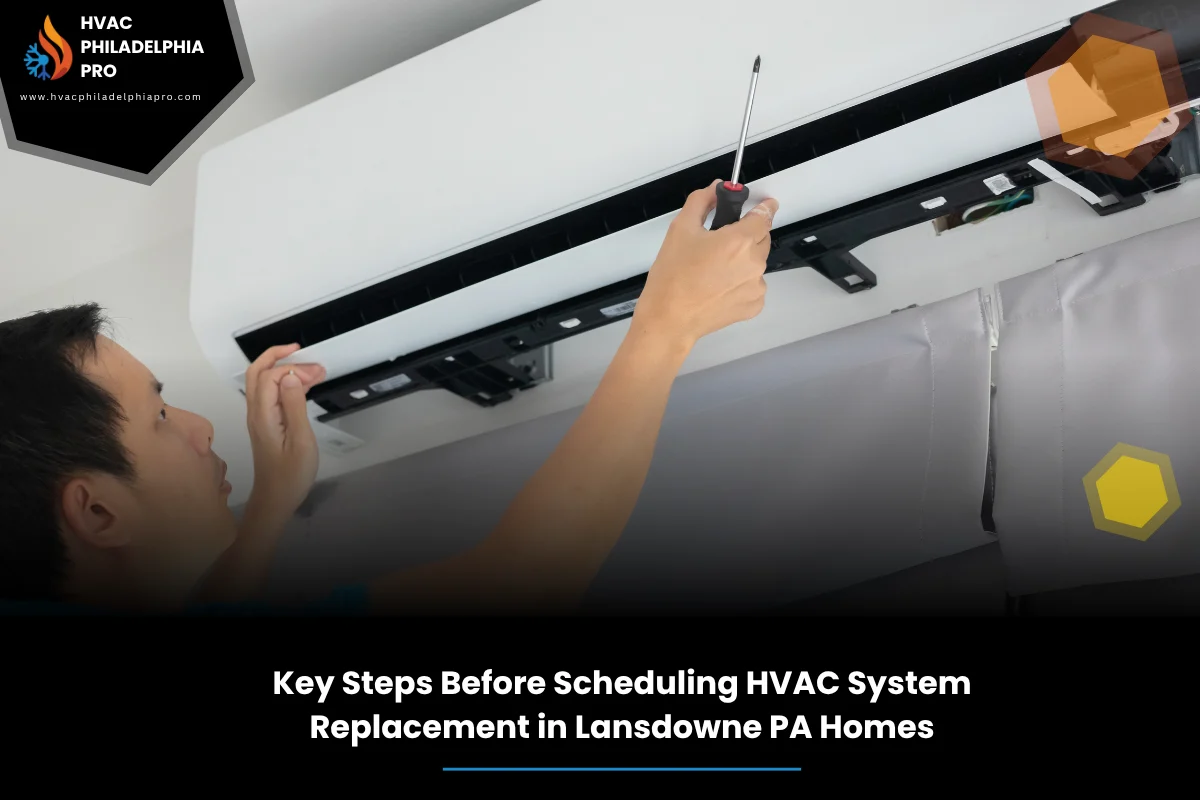
Thinking about a big upgrade takes planning, especially if you live in Lansdowne and you’re eyeing a summer changeout. If you’re weighing HVAC system replacement in Philadelphia, start with a clear plan so you avoid surprises. The first talk should cover your home’s needs, budget, and comfort goals. With HVAC Philadelphia Pro, you get plain talk and careful prep before anyone lifts a tool.
If you want a deeper look at solutions and timing, see options for HVAC system replacement in Philadelphia and use them as a guide while you plan next steps for your Lansdowne home.
Below, you’ll find a simple path to confirm the problem, right-size your system, check ducts, plan the install, and get your house ready. We’ll also compare repair vs replace paths and offer a short framework you can follow. Keep this handy as your checklist before you schedule a visit.
Table of Contents
Quick Summary
Before you book a date, build a short pre-replacement checklist. First, confirm if a solid repair will buy enough time or if your system’s age, cost, and comfort gaps point to a swap. Next, size the new unit with a real load calculation, then inspect ductwork and airflow. Plan electrical needs, line set details, and where the new system will sit.
Choose efficiency features that match your goals, and decide on air quality and controls like smart thermostats. In Lansdowne, ask about permits and access, and map out the install schedule that works for your family. Use the comparison table and the 7-step framework below to stay organized and to avoid last-minute delays.
Confirm the Problem: Repair or Replace?
Start with facts. How old is the unit? How often does it break? Are some rooms never comfortable? If repairs keep stacking up and comfort keeps slipping, a repair vs replace decision becomes easier. Also consider noise, humidity swings, and safety notes from past service visits.
If you suspect the issue is bigger than the outdoor unit, think about the whole system. That includes ducts, the indoor coil, controls, and airflow. For background on how new installs fit together, read the Complete Guide to AC Installation in Philadelphia PA for Reliable Home Cooling so your expectations match what a well-planned replacement should deliver.
Bottom line: if you’re replacing old AC unit in Philadelphia-style row homes or single-family homes near Lansdowne, make sure the call is based on data, not just a hot day and frustration.
Right-Size the System With Real Load Calculations
A new system should match your home’s real load, not just the old nameplate. Ask for a Manual J load calculation that factors insulation, windows, sun, air leakage, and room-by-room needs. Oversized units short-cycle and leave humidity behind. Undersized units run forever and still feel warm.
According to the U.S. Department of Energy (n.d.), proper sizing and selection are key to comfort, efficiency, and lower operating costs over time. U.S. Department of Energy: Central Air Conditioning
As you plan home cooling system replacement in Philadelphia, ask for the load report in writing. Then make sure the matched indoor coil, furnace or air handler, and outdoor unit all meet the design.
Evaluate Ductwork and Airflow Early
Ducts can make or break a new system. Leaky or undersized ducts reduce airflow and waste energy. Request a quick static pressure test and a visual check for crushed runs, loose connections, and blocked returns. Small fixes now can avoid big comfort problems later.
If needed, include duct sealing, added returns, or new supply branches in the scope. This is often the missing step when people rush into AC replacement in Philadelphia PA and then feel let down by the result.
Plan Electrical, Refrigerant, and Location Details
Work out the install logistics before anyone shows up. Confirm breaker sizes, disconnects, wiring, and grounding. If you’re upgrading to a heat pump, make sure the electrical panel and wiring can handle it. This avoids mid-day delays and extra trips.
Map the refrigerant path. Replacing the refrigerant line set is best practice with many new systems. If reusing lines is the only option, they must be flushed and sized right. Also plan pad placement, clearances, and safe condensate routing away from the foundation.
Choose Efficiency and Comfort Features That Matter
Efficiency is more than a sticker. Look at the SEER2 rating for cooling and consider variable-speed blowers for quieter operation and better humidity control. In many cases, energy efficient AC installation in Philadelphia pays you back through lower bills and smoother comfort.
Decide what matters most: lower monthly costs, steady temperatures, or humidity control. Match features to your goals so you don’t overbuy. This keeps the project focused and avoids buyer’s remorse after day one.
Consider Indoor Air Quality and Control Upgrades
Upgrades can lift comfort without a huge price jump. A smart thermostat adds scheduling, remote control, and better data. Whole-home filtration or a media filter improves dust capture. In damp basements, a dehumidifier can cut moisture and musty smells.
When planning home cooling system replacement in Philadelphia, ask how filters, UV lights, and ventilation tie into the air handler space you have. Also confirm maintenance steps upfront so you keep the gains long after install day.
Permits, Access, and Timing in Lansdowne PA
Before booking, ask about local permit requirements. Your contractor can advise when a permit is needed and how inspections work. If you’re part of an HOA, check any exterior rules for the outdoor unit location and appearance.
Think through access: narrow walkways, steep steps to basements, or third-floor attics can affect the schedule. Share photos and measurements. A little prep can trim hours off the job and avoid surprises.
Compare Your Replacement Paths
Not every home needs a full changeout right now. Use this table to compare options. If your system is near end-of-life and comfort is poor, a full system replacement is often the cleanest fix. For newer indoor gear, a partial path might bridge the gap for a few years.
| Path | Pros | Cons | Best For |
|---|---|---|---|
| Keep Repairing | Lowest upfront cost, no major changes | May repeat failures, higher bills, comfort not improved | Newer systems with one-off issues |
| Partial Replacement | Targets biggest weak point, spreads costs | Mixed-age equipment, efficiency limited by old parts | Mid-life systems with one failing component |
| Full System Replacement | Matched equipment, best efficiency, fresh warranty | Higher upfront cost, more planning needed | Older systems, poor comfort, rising repair costs |
A Practical 7-Step Framework Before You Book
Use this simple plan to stay on track from first call to install day. It helps you avoid rushed choices and missed details that can haunt you later.
- Document symptoms, age, and recent repairs with dates.
- Request a written load calc and airflow check.
- Confirm duct fixes and parts included in scope.
- Choose features that match your goals and budget.
- Verify permits, electrical, and line set plan.
- Set a staging plan for access, parking, pets, and work hours.
- Get the final proposal in writing with model numbers.
For more context on how installation steps unfold and what parts interact, skim the complete guide on this topic so you know what to expect during the changeout.
Prep Your Home and Family for Install Day
Clear pathways to the mechanical room, attic, or closet. Move cars to open parking for the crew. If you have kids or pets, plan a safe space away from work areas. Good prep speeds the job and keeps everyone safe.
Mark fragile items and protect surfaces. Provide clear access to electrical panels and any attic hatches. Share Wi-Fi info if you want the technician to connect your smart thermostat before they leave.
Frequently Asked Questions
- How long does a typical HVAC changeout take?
Most single-system swaps finish in one day. If ducts need work, add time. Complex access or multiple systems can take longer. Your proposal should note the expected schedule.
- Do I need to replace ducts when I replace my AC?
Not always. But if ducts are leaky or undersized, fixing them protects your new system and comfort. A quick test and inspection will guide the call.
- What size system do I need?
Size comes from a load calculation, not guesswork. It factors your home’s design, insulation, and windows. Ask for the report and review it with your contractor.
- Will a new unit lower my energy bills?
Usually yes, if it’s sized right, ducts are tight, and you use smart settings. Efficiency gains vary, but newer systems often run cooler, quieter, and cheaper.
- Can I reuse my old thermostat?
Sometimes. But a modern smart thermostat can improve comfort and scheduling. It’s a small upgrade that pays off in daily use.
- What should I do with my old outdoor pad and lines?
Ask if the crew will replace the pad and line set. New gear often benefits from fresh materials sized and placed for the new system.
Conclusion
Good outcomes start with a solid plan. Map your symptoms, confirm the load, check ducts, and settle on features that fit your goals. Sort permits and access early, then set clear expectations for day one. With that work done, HVAC system replacement in Philadelphia becomes a smooth, predictable upgrade for your Lansdowne home.
If you still have questions on AC replacement in Philadelphia PA or want to sanity-check your scope, keep this guide handy and share it with your contractor. Contact HVAC Philadelphia Pro for expert assistance. Smart prep today sets you up for steady comfort when the heat hits tomorrow.
continue reading
Related Posts
Learn how to choose EV charger repair near me with clear safety checks, a simple shortlist framework, and provider comparisons so you can fix issues fast and right.
Power failures can freeze business chargers. Learn fast triage, common faults, and safe fixes for Marlton NJ sites, plus when to use emergency EV charger repair in Philadelphia.
Practical guidance for Springfield PA businesses on EV charging station repair in Philadelphia, with fast triage steps, safety basics, network vs standalone tips, and industry-specific advice.