
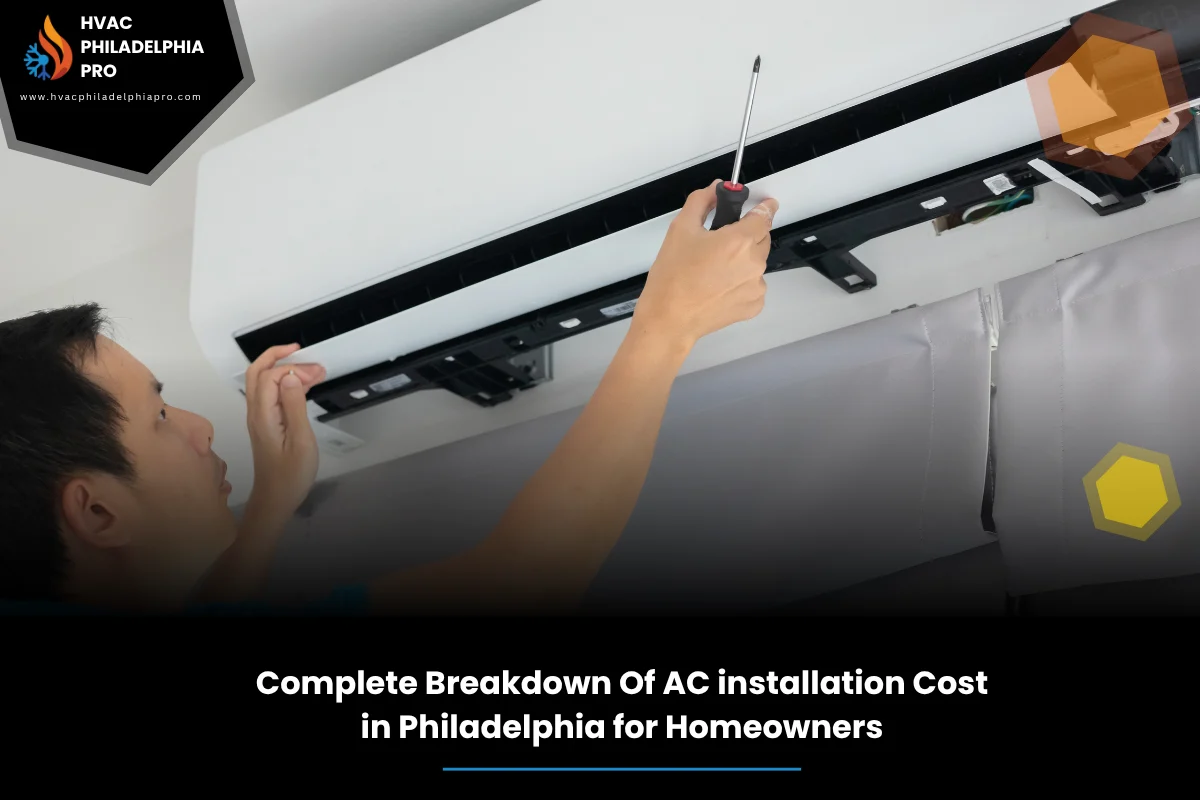
Trying to make sense of AC installation cost in Philadelphia? You are not alone. Prices vary a lot, and it is easy to miss line items that change the total. This guide keeps it simple so you can plan with confidence and avoid last‑minute surprises. If you need help sorting specifics, HVAC Philadelphia Pro is here to explain options clearly.
If you want a quick, credible place to check ranges and what affects them, review the service page on AC installation cost in Philadelphia. Then use this article to map the drivers, weigh choices, and build a realistic budget.
Table of Contents
Quick Summary
AC install pricing in Philly depends on your home, the equipment you choose, and the work needed to set it up right. The big drivers include capacity, system type, ducts, electrical, permits, and how hard it is to access the space. Efficiency ratings and comfort add-ons also shift the final number.
Budget tiers often fall into basic, mid-range, and advanced packages. Basic covers a standard unit and straightforward install. Mid-range adds higher efficiency or small duct fixes. Advanced includes top-tier efficiency, zoning, or major duct and electrical upgrades. If you plan a new AC unit installation in Philadelphia soon, start with a load calculation, compare system types, and lock in off-season scheduling when you can.
What Builds Your AC Installation Cost
Most budgets start with capacity and equipment sizing. A unit that is too small runs nonstop, and one that is too big short cycles and wastes energy. Next comes system type, whether you are adding central air, ductless, or a heat pump. Finally, your home’s ducts, wiring, and access all affect labor time.
For a deeper walk-through of installation decisions and timing, see the Complete Guide to AC Installation in Philadelphia PA for Reliable Home Cooling. Use it alongside this cost breakdown to connect choices with dollars.
Typical Price Ranges in Philadelphia
Every home is different, but you can use these ranges to frame a starting budget. These are ballpark estimates for full-system installation and common site work in USD. Your total may shift based on brand, efficiency, duct and electrical needs, and any special access or permits.
| Tier | What is usually included | Estimated range (USD) |
|---|---|---|
| Basic | Standard-efficiency central AC or single-zone ductless; straightforward placement; minor materials | $4,000 to $6,500 |
| Mid-range | Higher-efficiency central AC or multi-zone ductless; small duct fixes; basic electrical updates; better thermostat | $6,500 to $9,500 |
| Advanced | Top-efficiency or heat pump system; major duct or electrical upgrades; zoning; tight access work | $9,500 to $15,000+ |
Moving between tiers often comes from efficiency upgrades, new linesets, meaningful duct repairs, or complex attic and rowhome access. Heat pumps and multi-zone ductless systems can cost more upfront but may lower monthly bills. Always match the system to your home and comfort goals. Actual pricing may vary depending on scope and requirements.
Equipment Choices: Central, Ductless, or Heat Pump
The system type shapes your budget and comfort. Central AC uses ducts to cool the whole home, great if your ducts are in good shape. Ductless mini splits avoid ducts and shine in rowhomes, additions, and spaces with no easy duct path. Heat pumps both heat and cool, offering year-round comfort with one unit.
If you plan a new AC unit installation in Philadelphia, compare total cost of ownership, not just the bid price. Central AC can be best when ducts are solid. Ductless works well for targeted comfort. Heat pumps pair with insulation upgrades and can support energy efficient AC installation in Philadelphia when designed correctly.
Home Factors That Change the Final Bill
Your ducts matter. Leaky or undersized ductwork can ruin comfort and spike bills. Fixing or resizing ducts raises install cost but protects your investment. Tight attics, long linesets, and structural issues add time too. Accessibility is a quiet but powerful driver.
Load calculation and airflow design also steer pricing. Some homes need electrical panel updates, dedicated circuits, or condensate management. If you are planning AC replacement in Philadelphia PA, factor in removing old equipment, refrigerant recovery, and any code-driven updates that come with swapping systems.
Efficiency Ratings, SEER2, and Long-Term Savings
Higher efficiency units cost more upfront but can pay back over time. The SEER2 rating shows cooling efficiency under updated test conditions. In many Philadelphia homes, stepping up one or two efficiency levels lowers summer bills and improves dehumidification. Balance the payback window with how long you plan to stay.
According to ENERGY STAR (2023), properly sized, well-installed high-efficiency systems can reduce cooling use and improve comfort when paired with good ducts and controls. ENERGY STAR Air Conditioners
A Practical Budgeting Framework For Your Project
Use this simple budget framework to keep spending on track. It ties scope to dollars and leaves room for surprises without busting your plan.
- Define comfort goals and pain points. If some rooms are hot, note where and when. This shapes sizing and duct fixes.
- Get a load calculation and compare system sizes. For help mapping choices, review the complete guide on this topic before locking in brand or type.
- Pick your tier. Basic, mid, or advanced. Match it to your home and energy goals, not just the sticker price.
- Set a 10 to 15 percent contingency. This covers small duct issues, electrical odds and ends, or access challenges.
- Plan timing. Off-season scheduling can widen choices and reduce wait times, especially before the first big heat wave.
When you work this way, the bid tells a story you can understand, and change orders are less likely to derail the budget.
Hidden or Overlooked Costs to Plan For
Some items do not show up until the techs start. Think permits and inspections, refrigerant line repairs, pad or stand replacements, drain fixes, and thermostat rewiring. Old equipment removal can take time in tight basements or rowhomes. These do not always add much, but plan room for them.
DIY Tasks vs Professional Work
There is a clear line between homeowner prep and pro-only steps. You can clear access areas, improve insulation, and seal simple air leaks. But refrigerant handling, electrical connections, and pressure testing demand DIY safety boundaries and licensed pros. A clean handoff saves time and reduces callbacks.
After the install, change filters on schedule, keep outdoor units clear, and use smart thermostat settings. Small habits protect performance and help your new system last.
Seasonal Timing and How to Save
Prices reflect seasonal demand. Peak summer brings longer lead times and fewer choices. If comfort allows, schedule in shoulder seasons. You may find more appointment windows and, sometimes, package flexibility. Planning early helps you secure affordable AC installation in Philadelphia without rushing decisions.
When Replacement Makes More Sense
Repairs add up. A simple rule of thumb is to weigh the repair cost against the age and efficiency of your current unit. If the replacement threshold is close, a modern system can improve comfort and lower bills. Replacement also resets warranties and helps avoid emergency breakdowns during a heat wave.
FAQs
- What is a fair AC installation cost in Philadelphia for a typical home?
Many homeowners land somewhere between the basic and mid-range tiers shown above. The final number depends on system type, efficiency, duct work, and electrical updates. Use the ranges as a starting point and adjust for your home’s needs.
- How long does a new AC install take?
Most straightforward installs finish in one day. Complex duct repairs, panel upgrades, or multi-zone ductless setups can take two days or a bit more. Access and inspection timing also affect the schedule.
- Can ductless mini splits cool a whole rowhome?
Yes, with the right design. Multi-zone systems with proper head placement and doorways for airflow can cool the full space. They are common when ducts are hard to add or in mixed-use areas.
- Do I need permits for AC replacement in Philadelphia?
Many replacement projects require permits and inspections, especially when electrical or structural work is involved. Your installer should confirm what applies to your home and include it in the plan.
- What size AC do I need?
Size comes from a professional load calculation, not square footage alone. The process looks at insulation, windows, sun exposure, and air leakage. Proper sizing protects comfort and efficiency.
- How can I cut energy bills after installation?
Seal ducts, add insulation where needed, use a smart thermostat, and change filters on time. Keep outdoor coils clear and schedule routine maintenance so efficiency stays high all season.
- Is a higher SEER2 always worth it?
It depends on your usage, energy rates, and how long you will stay in the home. Often a step or two up in efficiency pays back faster than jumping to the top tier.
- Should I replace the furnace with the AC?
Sometimes. If your furnace is older or mismatched, pairing systems can improve efficiency, airflow, and warranty coverage. A tech can check compatibility and advise on timing.
Conclusion
Now you have a clear view of what shapes AC installation cost in Philadelphia and how to plan around it. Start with sizing, pick the right system, and set a cushion for the unknowns. Contact HVAC Philadelphia Pro for expert assistance if you want help turning this plan into action without guesswork.
Use the ideas here with the broader AC installation guide to keep choices aligned with comfort and budget. With a solid plan, you will get steady cooling, fair pricing, and a system that fits your home for years to come.
continue reading
Related Posts
Learn what shapes affordable EV charger repair in Philadelphia PA. See cost drivers, safe DIY checks, pricing ranges, and a simple framework to avoid surprise bills.
See what drives EV charger installation cost in Philadelphia. Learn key factors, realistic price ranges, and a simple plan to avoid surprises and stay safe.
Plan affordable EV charger maintenance in Philadelphia PA with a simple yearly routine, DIY vs pro split, and a 5-step framework. Build safety, cut surprises, and keep charging reliable at home.