
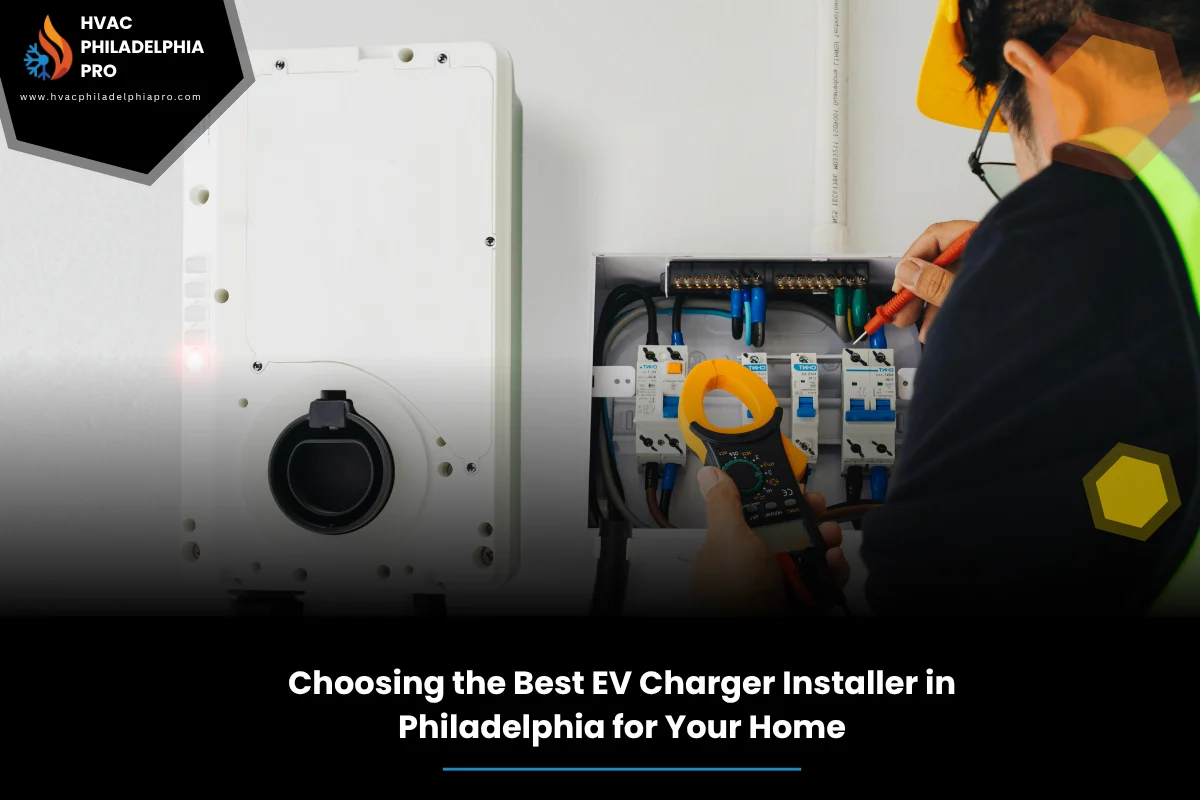
Finding the best EV charger installer in Philadelphia is more than a quick search. You want safe wiring, a clean permit process, and a setup that fits your car and panel. The right pro checks your load, plans the route, and explains every step in plain terms. That keeps your home safe and your charger ready.
If you already know your charger type and panel size, you can move faster. For hands-on help, see the best EV charger installer in Philadelphia to discuss options, timelines, and code requirements for your property.
At HVAC Philadelphia Pro, crews handle HVAC, plumbing, electric, and more across the city. We show up on time, look closely, and keep the work simple and safe. This guide walks through key checks, from panel capacity and permits to site layout and long-term upkeep, so you can choose with confidence.
Table of Contents
Quick Summary
Start with your goals: daily miles, parking spot, and whether you want a hardwired Level 2 or a plug-in option. Next, confirm your panel can handle a 240V circuit, and ask for a load calculation. A qualified EVSE installation plan covers permits, GFCI protection, routing, and weatherproofing. Ask about equipment and labor warranties, how inspections work, and whether same-day work is realistic. Compare quotes side by side: scope, materials, breaker size, and timeline. Finally, make sure your installer documents everything, labels circuits, and shows you how to use the charger safely. If you need deep technical details beyond this cluster, the main guide to EV charger installation in Philadelphia for homes and small facilities is the place to study requirements in depth.
What Makes a Great EV Charger Installer?
A strong installer listens first. They ask about your driving pattern, your parking spot, and your breaker panel location. Then they do a quick but careful load calculation to see if your home can support a new 240V circuit without tripping or overheating.
They also explain permits and inspection steps in plain language. You should know what is included, what is optional, and how long it might take. For a deeper dive into planning, see the Complete Guide to EV Charger Installation in Philadelphia PA for Homes and Small Facilities, which expands on panel checks, circuit sizing, and site layout.
Finally, the best pros show photos of past work and describe their cable management approach. They keep runs neat, protect the cable from damage, and keep your parking clear and safe.
Safety and Code Readiness in Philadelphia Homes
Home charging is simple when done right, but it must follow code. Look for GFCI protection where required, proper wire gauge, and a breaker that matches the charger’s continuous load. Outdoor installs need weather-rated enclosures and tight conduit seals.
A good EV charger electrician in Philadelphia will verify grounding and bonding, check for any recalled panels, and confirm labeling for emergency shutoff. They will also discuss surge protection and smoke-free routing to protect your walls and finishes.
If your panel is full or undersized, ask about a panel upgrade or a load management device. Do not cut corners. Good planning here prevents nuisance trips and protects your wiring for years.
Level 1 vs Level 2 Chargers for Homes
Picking between Level 1 and Level 2 comes down to daily miles and parking time. Level 1 works from a standard outlet, but it is slow. Level 2 uses a 240V circuit and charges much faster, making it the common choice for most households that drive daily and park overnight.
According to the U.S. Department of Energy, Alternative Fuels Data Center (2023), Level 2 home charging uses a 240V circuit and delivers faster charging than Level 1, which relies on a 120V outlet. U.S. Department of Energy, AFDC: Charging at Home
| Feature | Level 1 | Level 2 | Best For |
|---|---|---|---|
| Power Source | 120V outlet | 240V dedicated circuit | Daily commuters |
| Typical Speed | Slow | Faster | Regular overnight charging |
| Install Complexity | Low | Moderate | Permanent setups |
| Permits | Rare | Often required | Code-compliant installs |
| Long-Term Fit | Light drivers | Most households | Future EV growth |
Ask your installer about circuit sizing, cable length, and whether a hardwired or plug-in unit fits your space. In tight garages, a shorter cable with a smart holster can keep the floor clear.
Step-by-Step Framework to Choose an Installer
Use this simple path to get from idea to a safe, clean install. It keeps decisions clear and helps you compare quotes on equal terms.
- Step 1: Define your needs. Note your daily miles, parking routine, and whether you want a Level 2 hardwire or a plug-in. If you need background, bookmark the complete guide on this topic to check circuit sizes and planning tips.
- Step 2: Panel check. Ask for a written load calculation and photos of the panel and main breaker. Confirm available space and service amperage.
- Step 3: Site plan. Walk the route from panel to parking. Look for the cleanest run, best conduit protection, and a charging height that is easy to use year-round.
- Step 4: Quote clarity. Request a line-item quote that lists materials, breaker size, trenching or drywall work, permit fees, and inspection steps.
- Step 5: Schedule and prep. Confirm permit timing, utility shutoff needs, and any inspection requirements. Clear the work area and confirm access for the electrician.
- Step 6: Final review. Make sure labeling, test charging, and a brief walk-through are all included before you sign off.
Timeline and Same-Day Expectations
Small jobs can be fast. If your panel has space and the run is short, many homes finish in a day. But same day EV charger installation in Philadelphia depends on permit rules, inspection slots, and the site layout. Complex routes or upgrades take longer.
Ask your installer to map the work into clear phases: permit, material pickup, install, and inspection. With a solid project schedule, you know what happens when, and who needs to be home for testing.
Weather also matters for outdoor work. Good crews plan for safe ladder use, dry connections, and proper cure time for sealants before testing your charger.
Warranty, Permits, and Inspection Checklist
Two warranties apply: the charger unit and the workmanship. Ask for both in writing. A good installer explains what is covered, for how long, and how to request warranty service if needed.
Permits keep you safe and protect home value. Your contractor should pull the permit, schedule the inspection, and be onsite to answer the inspector’s questions. Keep a copy of the approved plans and final sticker.
Before they leave, confirm labeling, torque on lugs, a clean breaker labeling panel, and a quick demo. You should know how to start, stop, and safely coil the cable.
Common Pitfalls and How to Avoid Them
Skipping permits can lead to headaches when selling the home. Avoid oversized extension cords and non-rated outlets. Insist on a dedicated circuit and correct breaker size for your charger.
Long cable runs without protection can wear faster. Ask for proper conduit routing and supports. In flood-prone spots, mount the charger higher and seal penetrations.
Finally, plan for the future. If you might add a second EV, consider a load sharing setup now to save on later work. This often costs less than a second full run later.
FAQs
- Do I need a permit for residential EV charger installation in Philadelphia?
Most Level 2 installs require a permit. Your installer should handle the paperwork, coordinate with the city, and be present for the inspection to confirm code compliance.
- Can I use an existing dryer outlet for home EV charger installation in Philadelphia?
Sometimes, but only if the circuit, location, and usage pattern fit code and safety. A dedicated circuit is usually recommended to prevent overloads and tripping.
- How do I know if my panel can support a Level 2 charger?
Ask for a load calculation. A licensed pro checks service amperage, existing loads, and breaker space to confirm if your panel can handle the added demand.
- What is the difference between a plug-in and hardwired EVSE?
Plug-in units connect to a receptacle and are easier to replace. Hardwired units are permanent, often cleaner looking, and may offer better weather sealing for outdoor installs.
- What should I expect on installation day?
Expect power to be off in parts of the home, some drilling or routing, labeling, and a test charge. The crew should walk you through operation and safety basics before leaving.
- Is same day EV charger installation in Philadelphia realistic?
It can be, if permits are in place and the run is simple. Panel upgrades, long routing, or inspection timing usually adds time beyond a single day.
Conclusion
Choosing the best EV charger installer in Philadelphia starts with clear goals, a proper load check, and a neat plan from panel to parking. Ask for a written scope, permits, and a simple testing walkthrough. Compare quotes by what is included, not just the total price, and keep an eye on safety, labeling, and long-term fit.
Most homes are a great fit for Level 2, but only when the wiring, protection, and weatherproofing are done right. When in doubt, follow the plan you mapped in the framework above and confirm each step before signing off. Contact HVAC Philadelphia Pro for expert assistance, and reference the main guide to EV charger installation in Philadelphia for homes and small facilities whenever you want to dive deeper.
continue reading
Related Posts
Learn how to choose the best AC repair company in Philadelphia with a clear 7-step framework. Check credentials, response time, estimates, and warranties for confident, reliable service.