
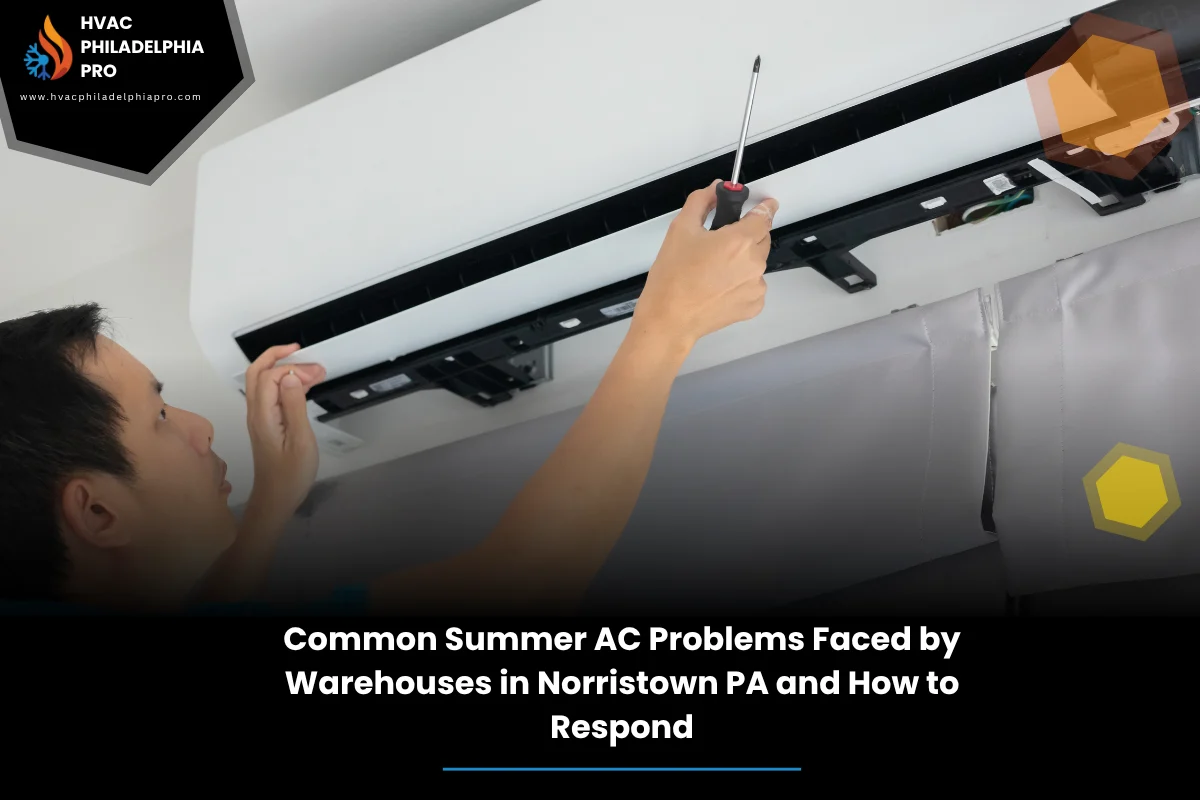
Warehouse summers can get rough. High roofs trap heat, long aisles choke airflow, and dock doors cycle all day. When the cooling lags, pallets sweat, labels curl, and staff slow down. If you manage a facility, you need a plain plan to spot issues fast and keep cooling steady. Many fixes tie back to solid checks, smart airflow moves, and timely maintenance.
HVAC Philadelphia Pro works with warehouses across the region, and we see the same patterns each year. Before we start, know this: summer AC repair in Philadelphia is about speed and prevention, not guesswork. We will cover the top problems, quick checks, and a response framework you can follow with your team.
If your system needs hands-on work or testing beyond in-house checks, read this guide first, then use summer AC repair in Philadelphia to reach a service team that can handle diagnostics, fixes, or tune-ups on your schedule.
Table of Contents
Quick Summary
Most warehouse AC trouble in hot months falls into four buckets: low or blocked airflow, dirty coils and filters, failing motors or belts, and control mistakes. These lead to hot zones, long runtimes, ice on lines, and high bills. Early signs include supply air warming, pressure creeping up, and unusual fan noise.
Your best move is a steady loop: measure, inspect, reset airflow, then confirm with data. Keep spare filters and belts on hand. Train staff to log duct pressure, supply temps, and door cycles daily. Small actions prevent big outages.
For deeper background on repair basics, safety, and diagnostics, see this helpful resource, the Complete Guide to AC Repair in Philadelphia PA for Comfortable Homes and Businesses. It pairs well with the warehouse steps here.
[IMAGE: Overhead warehouse plan showing supply vents, return paths, and airflow arrows down aisles]
Why Warehouse ACs Struggle in Summer Heat
Big open volumes and tall racks create long air paths. Heat pools near the roof, while goods block returns down low. Every time dock doors open, hot air rushes in and the system chases a moving target. That extra load often exposes weak fan belts, clogged filters, or poor duct balance.
Many sites also run equipment that adds heat. Forklift chargers, lights, and packing lines stack load on top of the weather. Without routine airflow balancing, chill never reaches the end of aisles, and the thermostat near the office lies about floor temps.
Finally, controls drift. A two-degree setpoint nudge or a bad sensor can push runs longer and hide the real cause. A good approach uses quick checks, then confirms with simple data trends, not guesses. This links well with any complete AC repair guidance you may already follow.
The Most Common AC Problems in Norristown Warehouses
Norristown PA summers swing humid and hot. In that mix, five problems show up most: restricted intake filters, dirty condenser coils, weak supply fans, low refrigerant charge from slow leaks, and control errors like wrong economizer or staging settings. These trigger uneven cooling, warm supply air, short cycling, or icing on suction lines.
Use this table to match symptoms with likely causes and next steps before calling for outside help. Target the basics first. A quick filter swap or coil rinse can reset performance faster than deep dives. Treat preventive maintenance as your first tool, not your last.
| Symptom | Likely cause | Quick check | Response speed |
|---|---|---|---|
| Warm supply air | Dirty filters or coils | Check filter delta-P and coil surface | Immediate |
| Hot aisles at rack ends | Poor return path or blocked vents | Walk aisles, feel returns, inspect grilles | Same day |
| Short cycling | Control setting error or sensor drift | Review setpoints and sensor location | Same day |
| Ice on suction line | Low airflow or low charge | Look for frosted coil and fan speed | Within 24 hours |
| High bills, long runtimes | Coil fouling, belt slip, outside air leak | Check amp draw, belts, and door seals | Within 48 hours |
Detecting Issues Early: Data and Walkthroughs
Start with a daily loop: check supply air temp, return temp, and static pressure at the same time each shift. Log door cycles and note any areas where staff complain. A simple sheet or app works. Patterns will point to the true cause.
Pair data with a five-minute walk. Listen for bearing whine and belt squeal. Feel for weak pulls at return grilles. Scan coils with a flashlight. This quick condition monitoring prevents small drifts from turning into shutdowns.
Close with a weekly review. Look for pressure creep, rising supply temps, or more door hours than normal. If trends move the wrong way, plan a short shutdown window to clean, tighten, and reset before peak afternoon heat.
Step-by-Step Response Framework for Warehouse AC Problems
Use this simple framework to triage and fix the most common summer issues. It keeps your team aligned and avoids guesswork that wastes time.
- Stabilize the space: open blocked returns, add temporary fans to move heat off workers, and close idle dock doors.
- Verify airflow: measure filter pressure drop, confirm fan belt tension, and set dampers to the last known good position.
- Reset heat exchange: clean condenser and evaporator coils, then confirm amp draw and coil temperatures.
- Check controls: validate setpoints, schedules, and sensor placement; swap a suspect sensor if readings look off.
- Confirm results: re-measure supply and return temps, and compare to your morning baseline before moving on.
- Document and schedule: log findings, add tasks to the weekly plan, and restock filters and belts.
For a broader walkthrough of AC repair basics you can adapt to warehouse gear, see the complete guide on this topic. It pairs well with this framework and can help you shape a shop-ready checklist.
Make this your standard rapid triage process during heat waves. It cuts downtime and keeps cooling stable while you line up deeper fixes if needed.
Preventive Maintenance Priorities for Peak Months
Focus early and often on air path and heat exchange. Replace filters before they hit high pressure drop. Rinse condenser coils and clear debris around outdoor units. Tighten belts and lubricate bearings on a set schedule, not just when noise starts.
Keep a small stock of fast-moving parts and consumables. That means filters in common sizes, belts, contactors, and a spare sensor or two. Set a clear PM schedule that leans forward in late spring and levels out by mid-summer to avoid surprises.
Finally, line up a mid-season inspection slot. A quick check of charge, controls, and airflow balance in July often saves you from a costly August outage.
Airflow and Layout Fixes for Storage Aisles
Aisle design can make or break cooling. Keep returns clear at low levels, and avoid stacking pallets right under supply diffusers. If end caps run hot, angle fans to pull cooler air down the aisle rather than blast the hot spot head-on.
Review rack heights against diffuser throw. Tall loads can create a dam that stalls air. Shift a diffuser or add a booster fan to move supply air deeper. These small layout tweaks often solve the worst AC airflow problems without touching the equipment.
Track results with simple temp loggers at mid-rack height. After each change, compare the afternoon high to the prior week. Keep what works, scrap what does not.
Controls, Sensors, and Setpoints That Matter
Sensors drift and staff tweak setpoints during peak heat. Place sensors away from doors, heaters, and sunlit walls. Lock setpoints with clear limits and audit them weekly in summer. A two-degree bump can double complaints if the sensor is in the wrong spot.
Use morning cool-start to pre-condition the space before door cycles spike. Stagger stages to avoid short cycling at opening time. Where possible, enable an economizer to use cool morning air, but set it to shut before humidity surges.
Document control changes in a shared log. When an afternoon issue pops up, you can trace it to a setting change instead of chasing a ghost.
Emergency Actions to Protect Stock and Staff
If a unit falters on a 95-degree day, move fast. Reduce heat load first: pause noncritical equipment, shut idle doors, and add temporary fans to sweep heat off people. Rotate staff from hot aisles and hydrate crews while you work the checklist.
According to OSHA (2023), heat exposure raises the risk of illness and strains productivity in hot work areas. This is why short-term cooling steps and hydration plans matter even when you are fixing equipment. OSHA Heat Illness Prevention
While you stabilize, verify airflow and clean coils. Those steps give the fastest lift in supply temps. Treat refrigerant work as a second wave unless a leak is obvious. Keep a simple incident plan posted so the team knows roles during a heat event.
FAQ
- What causes sudden hot spots at the end of aisles?
Usually blocked returns, shifted pallets under diffusers, or door cycles adding heat faster than air can move. Clear paths, add a booster fan, and log temps to confirm the fix.
- How often should warehouse AC filters be changed in summer?
Check weekly, change when pressure drop rises above your set threshold. Many sites swap monthly in peak season, but go by measured pressure, not the calendar.
- Why does ice form on suction lines during heat waves?
Low airflow from dirty filters or a weak fan is common. Low refrigerant charge can also cause icing. Restore airflow first, then check charge if icing returns.
- What is the fastest way to lower supply air temperature?
Clean evaporator and condenser coils, replace clogged filters, and confirm fan speed and belt tension. These basics often drop supply temps quickly.
- Do I need data loggers, or are handheld checks enough?
Handheld checks work if you do them daily and log them. Data loggers help spot patterns and save time. Use both if you can, starting with the simplest tools.
- When should I call for emergency AC help?
Call when heat risks stock or staff, or if icing, tripped breakers, or burning smells appear. For true after-hours risks, seek emergency AC repair in Philadelphia.
- Can dock curtains and seals really help cooling?
Yes. Tight seals and curtains cut hot air infiltration and reduce load on your AC, which helps keep aisles stable during busy loading windows.
- What should be on our mid-summer maintenance list?
Filters, coil cleaning, belt tension, bearing lube, sensor checks, and a quick control audit. Add door seal checks and a record of setpoints.
Summer brings real strain to big, busy spaces. The key is simple: measure, maintain, and move air where people and products need it. If you want a deeper dive into general repair methods, the complete AC repair in Philadelphia guide for homes and businesses offers a strong base you can adapt to your floor plan. Keep your plan clear and your tools ready.
In closing, remember that summer AC repair in Philadelphia is a mix of fast triage and steady care. Build your daily checks, lock in airflow, and watch controls. When complex issues surface, bring in help with clear notes and trends so work moves fast. Contact HVAC Philadelphia Pro for expert assistance. With good logs, a short parts list, and a trained crew, you can carry your Norristown warehouse through the hottest weeks with fewer surprises.
continue reading
Related Posts
Learn how to choose EV charger repair near me with clear safety checks, a simple shortlist framework, and provider comparisons so you can fix issues fast and right.
Power failures can freeze business chargers. Learn fast triage, common faults, and safe fixes for Marlton NJ sites, plus when to use emergency EV charger repair in Philadelphia.
Practical guidance for Springfield PA businesses on EV charging station repair in Philadelphia, with fast triage steps, safety basics, network vs standalone tips, and industry-specific advice.