
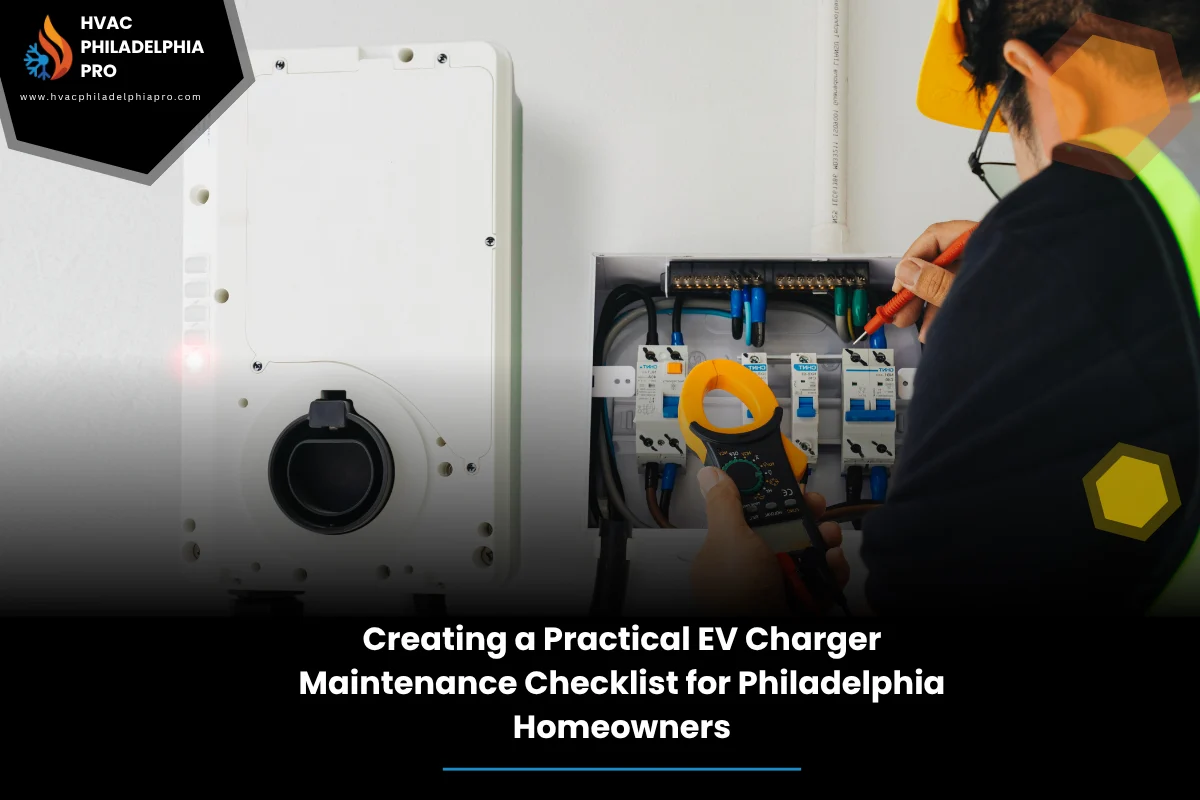
Your home charging routine gets easier when you use a clear EV charger maintenance checklist. It keeps small issues from turning into big headaches and helps your charger stay safe and steady. With a simple list, you can spot problems early, avoid surprises, and keep your EV ready each morning.
If you want a ready-to-use template you can adapt, see this helpful EV charger maintenance checklist.
The team at HVAC Philadelphia Pro works with home systems every day, so we know that a little structure goes a long way. This guide shows you what to check, how often to do it, and how to adjust for houses, apartments, condos, townhomes, and villas. It also supports the broader idea behind the complete guide to EV charger maintenance for reliable home charging.
Table of Contents
Quick Summary
This article helps you build a practical checklist to maintain your Level 1 or Level 2 home charger. You will learn what to inspect, how to set routines, and how to track notes over time. We cover safety checks, common warning signs, and simple fixes you can do without heavy tools. You will also see how needs shift across homes, apartments, condos, townhomes, and villas, especially where parking is shared. A short comparison table explains differences between Level 1, Level 2, and smart chargers. Use the steps to shape your own list, then keep a log so you can prove care for warranty support and home insurance. This supports the larger topic of EV charger maintenance for reliable home charging in Philadelphia.
Why a Home EV Charger Checklist Matters
A checklist turns guesswork into a steady habit. It reduces risk, keeps charging consistent, and keeps your install closer to manufacturer guidance. Over time, routine upkeep saves wear on cables and connectors and helps you fix small faults before they get worse.
For more context and deeper best practices, you can read the Complete Guide to EV Charger Maintenance in Philadelphia PA for Reliable Home Charging as a companion to this checklist-focused post.
What To Include: Core Inspection Points
Start with a quick look each week. A solid checklist should cover the unit, cable, plug, wall hardware, and the area around the charger. Keep your notes simple so you will actually use them.
- Visual inspection: Look for cracks, loose screws, or signs of heat at the plug and connector.
- Cable care: Check for cuts, kinks, and strain on the relief near the charger body.
- Connector check: Make sure pins are clean and free of debris or corrosion.
- Mounting and seals: Confirm the charger is firmly mounted and weather seals are intact.
- Ventilation and clearance: Keep leaves, boxes, and snow away from vents and around the unit.
- Firmware status: Note the app or unit version so you can update when needed.
If you ever schedule an EV charger inspection in Philadelphia, having these notes ready helps the technician work faster and focus on the right spots.
Safety First: Electrical and Site Checks
Safety should come first. Look at the breaker size and label, confirm the charger is on a dedicated circuit, and make sure the wire run shows no visible damage. If you use an outlet for Level 1, check that it grips the plug firmly.
Run a simple ground fault protection test if your unit or app includes it. Check the GFCI or breaker test button if present. Ensure drip loops on outdoor cables so water does not run into the unit, and keep outlets covered.
Philadelphia weather swings from hot summers to icy winters, so watch for moisture around conduit entries and ensure in-use covers close tight. In winter, clear snow away from the base and cable to prevent freeze-thaw stress on the jacket.
Routine Frequency: Daily, Monthly, and Annual Tasks
Set a cadence you can keep. Daily or weekly, do a quick glance for damage and confirm the charger starts and stops charging as normal. Monthly, wipe dust and dirt from vents, check cable wear, and review app alerts.
Quarterly, update firmware and test any safety features. Once a year, plan preventative EV charger maintenance with a deeper review of mounting, seals, and connector tightness. This rhythm supports reliable use and aligns with the idea of annual EV charger maintenance for home charging.
If you live in a shared garage, add monthly checks for signage, cord management hooks, and floor hazards. That extra look keeps the area safe for neighbors and visitors.
Step-by-Step Framework to Build Your Checklist
Use this five-step method to draft a list you will use and keep. Tailor it to your charger model and parking setup. Keep it short, repeatable, and easy to log.
- Define scope: Unit body, cable, connector, power source, app, and site conditions.
- Set frequency: Weekly glance, monthly clean, quarterly tests, and yearly deep review.
- Pick tests: Visual checks, heat checks by touch, app alerts, and firmware updates.
- Assign roles: What you do vs. what a licensed pro should do.
- Log results: Keep dates, issues found, fixes, and photos in a simple maintenance log.
If you need a fuller background before finalizing, skim the complete guide on this topic to round out any gaps in safety or schedule planning.
Comparison: Level 1 vs Level 2 vs Smart Chargers
Different chargers ask for slightly different care. This quick table outlines typical needs so you can fine-tune your checklist.
| Charger Type | Typical Use | Key Checks | Extra Notes |
|---|---|---|---|
| Level 1 | 120V outlet, slower charge | Outlet grip, cord heat, plug wear | Use dedicated outlet to reduce heat |
| Level 2 | 240V circuit, faster charge | Breaker label, mounting, cable strain | Confirm dedicated circuit and proper rating |
| Smart Level 2 | App-controlled, networked | Firmware, Wi-Fi, error logs | Update app and unit quarterly |
Troubleshooting Signals You Should Not Ignore
Pay attention to a few early flags. Repeated charge interruptions, warm outlets, or new noises from the unit point to growing trouble. App alerts or odd LEDs can tell you where to look first.
Look up the unit’s error codes and compare them to your notes. Watch for burning smells, a loose mount, or moisture inside covers. These are clear signs your EV charger needs maintenance and should not be put off.
When you see the same fault twice, stop charging and review your checklist. If the cause is not obvious, schedule help before you try again.
Adapting the Checklist for Homes, Apartments, Condominiums, Townhomes, Villas
Homes: You likely control the circuit and placement, so focus on breaker size, mounting anchors, and clear cable routing. Keep the area clean and dry, and protect the connector from weather.
Apartments and Condominiums: Prioritize shared parking safety, cord management, and clear signage. Add monthly checks for protective covers and trip hazards. Keep a copy of your checklist for property management if needed.
Townhomes and Villas: Space may be tight, so confirm ventilation and safe cable storage. If the charger is outdoors, watch seals and conduit entries after storms, especially during freeze-thaw periods common around Philadelphia.
Recordkeeping and Warranty Care
A simple written or digital log makes life easier. Record dates, what you checked, issues found, and what you did to fix them. Photos help show progress and condition over time.
Many brands expect proof of care if you file a warranty claim. Your maintenance log supports that and shows steady habits. It also helps during any professional visit, since a tech can spot patterns fast.
Your notes also add to the broader effort of reliable home charging that the full maintenance guide promotes.
FAQs
- How often should I check my home EV charger?
Do a quick weekly glance and a monthly clean and review. Run quarterly tests and a yearly deep check. This rhythm helps prevent small issues from turning into bigger problems.
- What are the first things to inspect?
Look at the cable, connector pins, plug or hardwire entry, mounting screws, seals, and ventilation. Confirm the breaker label and that your charger sits on a dedicated circuit.
- Are firmware updates important?
Yes. Updates can fix bugs, improve safety functions, and boost reliability. Check the app or unit screen quarterly, or enable automatic updates if available.
- When should I stop using the charger?
Stop if you smell burning, see melted plastic, find a loose mount, or the breaker trips more than once. Do not keep testing. Unplug if safe and get the issue checked.
- Do Level 1 and Level 2 chargers need different care?
The basics match, but Level 2 units run on higher power and may show heat or wear sooner if parts are loose. Confirm proper circuit rating and a solid mount.
- What are signs your EV charger needs maintenance?
Frequent charge drops, unusual warm outlets, new noises, moisture inside covers, or repeated app errors mean you should pause and review your checklist or call a pro.
- Is an EV charger inspection in Philadelphia different?
Local weather and shared garage setups can add checks for moisture, salt, and trip hazards. The core steps stay the same, but outdoor seals and covers need extra attention.
Conclusion
A clear EV charger maintenance checklist gives you confidence, saves time, and keeps home charging steady. Start small, set a routine, and keep short notes. If a problem repeats, pause and solve it before it grows. Contact HVAC Philadelphia Pro for expert assistance when you need deeper diagnostics or safe repairs.
This checklist-focused guide supports the broader topic of reliable home charging in Philadelphia. Keep your list handy, review it each month, and update it as your setup changes. With steady habits and simple logs, your charger will stay ready when you are.
continue reading