
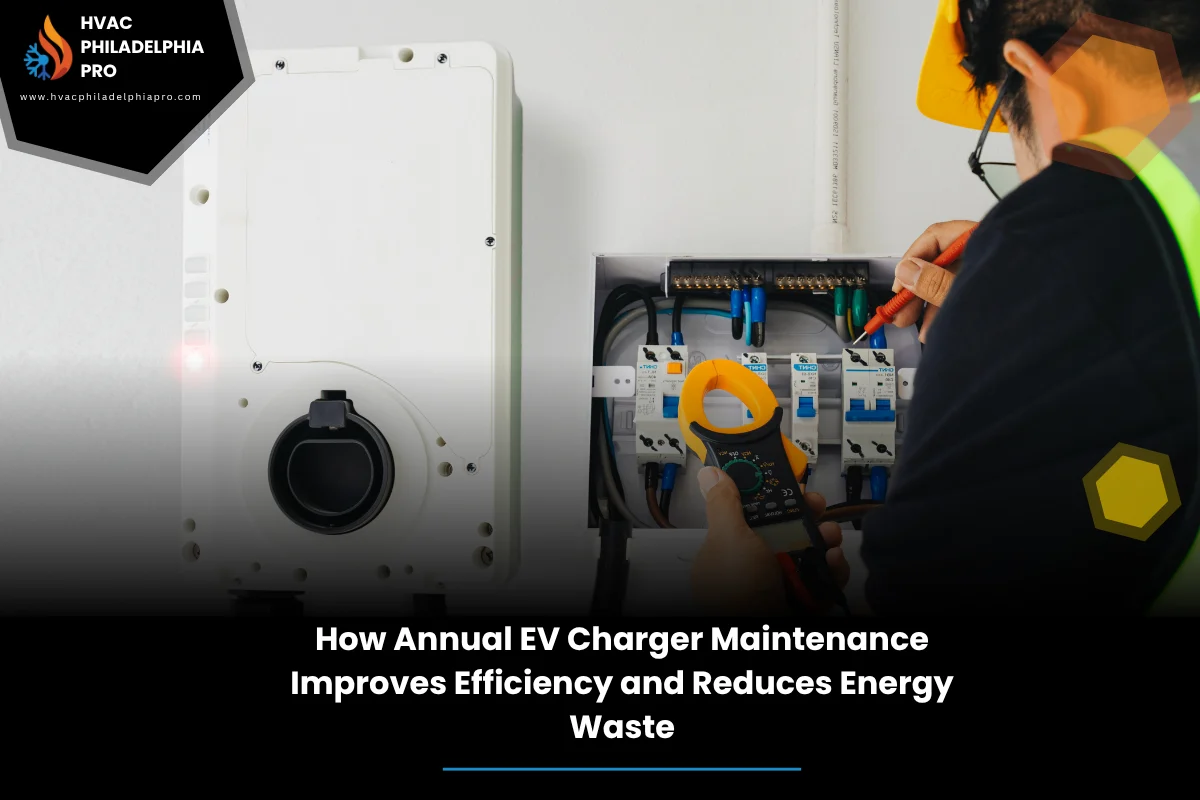
Home charging should be simple, safe, and cheap to run. With annual EV charger maintenance, you keep your charger clean, smart settings tuned, and small issues from turning into big energy drains. That means fewer wasted watts, steady charging speeds, and a longer life for your gear at homes, apartments, condos, townhomes, and villas.
HVAC Philadelphia Pro helps people keep essential systems running right every day. If you need a quick way to plan your upkeep, consider scheduling annual EV charger maintenance and use this guide to spot simple wins at home. We will focus on the habits and settings that cut waste without making charging hard.
Table of Contents
Quick Summary
EV chargers lose energy through heat, dirty or loose connectors, bad cable care, standby power, and outdated firmware. A short, steady routine fixes most of that. Clean contacts, check cable strain, update firmware, confirm tight mounting, and set smart schedules. That is the core of preventative EV charger maintenance and real EV charger efficiency improvement.
You do not need special tools for basic checks. Listen for odd noises. Watch for heat at the plug. Keep dust out of vents. Verify app settings each season. For deeper steps like load testing or internal checks, a pro visit once a year is wise. This blend keeps energy use low and uptime high.
Why upkeep changes charging efficiency
Small faults raise resistance. Extra resistance turns into heat, which wastes power and slows charging. Clean pins, firm terminals, and healthy cables help the charger move power with less loss. That is why connector care matters as much as the charger’s electronics.
For a step-by-step look at safety checks and cleaning methods, see the Complete Guide to EV Charger Maintenance in Philadelphia PA for Reliable Home Charging, which pairs well with this efficiency-focused overview. The idea stays simple: fix friction points in the path from panel to car, and your charger runs cooler and faster.
What wastes energy in home EV charging
First, standby draw. Some stations sip power while idle. You can trim that with smart schedules or a power-saving mode. Next, grimy or loose plugs. Dirt raises contact resistance and creates heat at the connector. Gently clean and seat plugs fully every time.
Long or coiled cables trap heat and push losses up. Keep the run neat and uncoiled when in use. Outdated firmware can misread limits or miss newer power-saving features. Update apps and firmware so the charger uses the cleanest profile it can.
According to U.S. Department of Energy, Alternative Fuels Data Center (2024), charging hardware, cables, and power electronics all affect overall charging losses, so proper equipment setup and upkeep improve energy outcomes over time. U.S. DOE AFDC: Charging Infrastructure Basics
Preventative EV charger maintenance checklist
A short, clear routine keeps usage smooth and waste low. Use this preventative EV charger maintenance checklist each season and once more before summer heat or winter cold.
- 1) Visual check: look for cracks, scorch marks, kinks, and loose fasteners.
- 2) Connector care: inspect pins, wipe with a dry, lint-free cloth, and cap when not in use.
- 3) Cable health: avoid tight coils, sharp bends, and crush points along walk paths.
- 4) Venting and dust: clear vents and keep spiders, leaves, and dust out of cooling paths.
- 5) Firmware and app: confirm the latest version and review schedules and amperage limits.
- 6) Test charge: start a short session, feel for warm spots, and confirm steady current.
These quick steps deliver reliable EV charger efficiency improvement without fuss.
A simple framework to cut waste in 30 days
Use the 4-step loop: Inspect, Update, Test, Repeat. Week 1, inspect and clean. Week 2, update firmware and app. Week 3, test a full cycle and confirm kWh used vs miles gained. Week 4, repeat light checks and adjust settings. This tight cycle builds a durable habit.
In your loop, set smart charging schedules to match off-peak hours or your solar window. Drop amperage slightly if the circuit runs warm. Shorten cable runs and hang the cable properly after each session. Keep notes so you can spot trends fast.
If you want a broader reference while you run this framework, bookmark the complete guide on this topic for checklists and safety notes you can revisit each season. Pair the loop with a once-a-year professional check to verify internal terminals and test GFCI functions.
Comparison: set-and-forget vs maintained charging
Skipping upkeep costs you in heat, idle use, and downtime. A light routine builds safety and speed. Here is how a maintained routine stacks up against set-and-forget habits.
| Factor | Set-and-forget | Maintained |
|---|---|---|
| Standby power | Higher, often left idle | Lower with schedules and sleep mode |
| Connector heat | More heat from dirt or loose fit | Cooler with clean, firm contact |
| Charging speed | May throttle under faults | Stays closer to rated power |
| Uptime | More surprise errors | Fewer faults after checks |
| Lifespan | Shorter due to stress | Longer with cooler operation |
Settings and features that boost efficiency
Your app controls shape real-world use. A few choices pay off fast. Use load management if you share circuits with other appliances. A lower max current during peak times keeps heat and losses down. Bump current back up when the panel is free and cool.
Turn on power-saving or sleep mode when the car is not connected. Align charge windows with off-peak rates if your utility offers them. If you have solar, charge while panels produce to trim grid draw. Keep over-the-air updates on so the charger learns better power rules over time.
Finally, keep cables off the ground with a simple hanger. That avoids kinks and puddles, cuts heat, and keeps the sheath clean. Small cable care leads to steady EV charger efficiency improvement day after day.
Local inspection example: Philadelphia mention
If you live in a tight garage or rowhome, space and dust are real. A quick professional inspection each year helps confirm safe routing and firm mounts. When you look for an EV charger inspection in Philadelphia, ask for cable strain checks, connector cleaning, GFCI testing, and a review of your app limits and schedules.
These same steps help in apartments, condominiums, townhomes, and villas that share power with other loads. The routine looks the same: short cable, clean contacts, updated firmware, and steady settings. That is why EV charger maintenance is important even when the charger seems fine.
Common myths about charger upkeep
- Myth 1: “If it charges, it’s efficient.” Not always. Dirt and heat can waste power while the car still fills.
- Myth 2: “Updates don’t matter.” They do. Firmware often improves charging control and safety logic.
- Myth 3: “Only old units need care.” New gear still needs clean pins, neat cables, and correct settings.
- Myth 4: “More current is always better.” Set current to match your circuit and season. Cooler, steady charging can save energy and stress.
Safety and warranty notes
Always de-energize before opening any panel. Do not open the charger case unless trained and approved by the maker. Keep water away from the connector and never use harsh cleaners on pins. Follow the maker’s guide on cleaning and testing steps.
Check your warranty terms. Many brands expect routine checks and care. Simple logs of your maintenance history help with claims if something fails early. If your charger shows scorch marks, trips often, or smells odd, stop and call a pro before using it again.
FAQs
- How often should I clean the connector?
Wipe the handle and pins lightly once a month, and cap when not in use. Clean more often if your space is dusty or humid.
- What signs show my charger is wasting energy?
Warm plugs, a humming unit while idle, longer charge times, or higher kWh for the same commute are common signs of extra losses.
- Do firmware updates really help efficiency?
Yes. Updates can improve power control, reduce idle draw, and fix bugs that cause throttling or errors during sessions.
- What cable habits prevent waste?
Avoid tight coils, sharp bends, and crush points. Hang the cable when done, and keep the run as short and straight as possible.
- Is lowering amperage a good idea?
Often. Dropping a few amps can reduce heat on tight circuits, which cuts losses and keeps charging steady, especially in hot weather.
- Why is EV charger maintenance important for new units?
New gear still gathers dust and can run outdated firmware. Early care protects the connector, keeps settings in check, and builds good habits.
Conclusion
When you practice annual EV charger maintenance, you protect your investment, cut waste, and keep charging dependable. Most gains come from clean connectors, tidy cables, firm mounts, and smart schedules. A short routine and one pro check each year add up to steady savings and fewer surprises.
Use this guide to set habits that fit homes, apartments, condominiums, townhomes, and villas. For deeper safety checks, reference the complete guide to EV charger maintenance for reliable home charging and keep simple logs of what you adjust. Contact HVAC Philadelphia Pro for expert assistance if you want help verifying settings or testing your setup.
continue reading
Related Posts
Learn how to choose the right EV charger electrician in Philadelphia for reliable repairs. Get a simple vetting framework, diagnostics, safety tips, and when to repair or replace.
See why hiring an EV charger electrician in Philadelphia is safer than DIY. Learn about load checks, code, GFCI, 240V outlet work, and a simple planning framework.
Learn what really happens with residential EV charger installation in Philadelphia, from panel checks and permits to charger choice, placement, safety, and testing.