
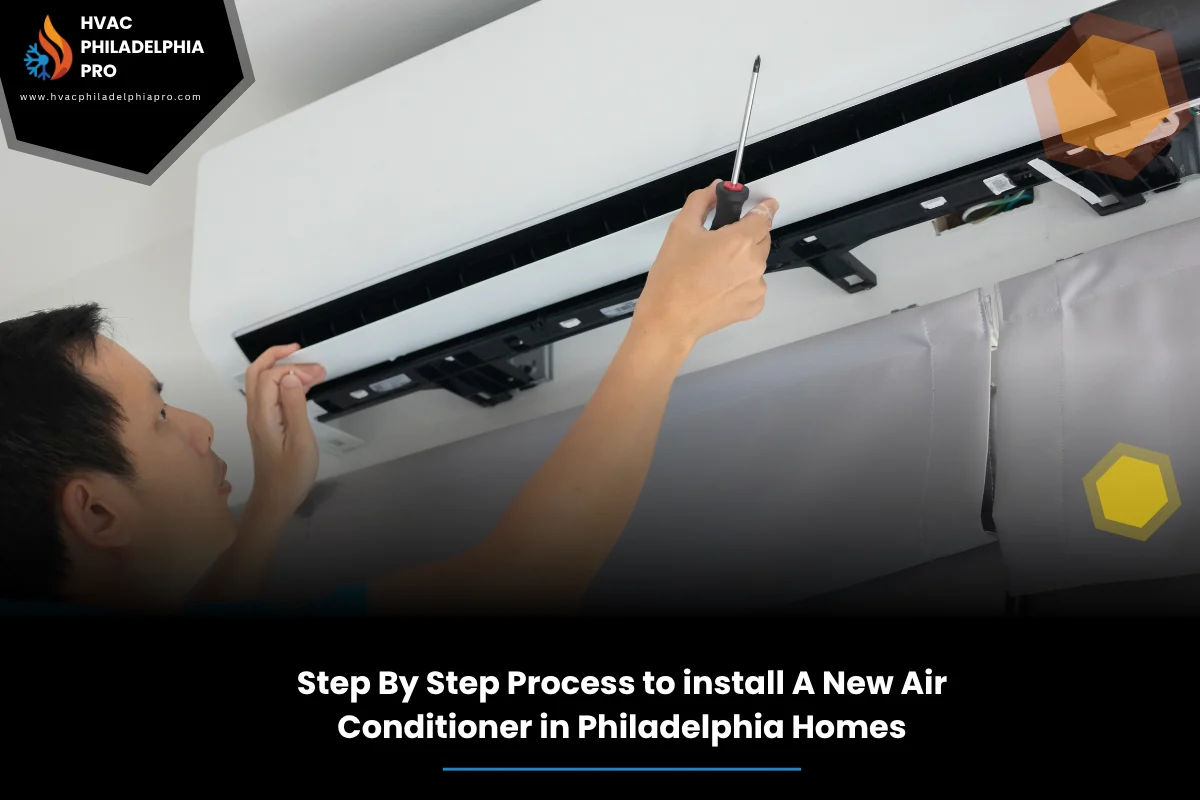
Installing a central AC is more than swapping a box. It takes planning, safe work, and clean finish. If you want to install new air conditioner in Philadelphia the right way, this step-by-step playbook walks you through tools, choices, and the order of work so your home cools evenly and runs efficiently.
If you decide you would rather have a licensed crew handle permits, wiring, and charging, you can install new air conditioner in Philadelphia with a pro team that does this every day. With support from HVAC Philadelphia Pro, you can still follow along, understand the process, and make smart decisions without stress.
Table of Contents
Quick Summary
This guide covers prep, sizing, equipment choices, safe removal, clean install, startup, and fine-tuning. You will check power, ducts, drain path, and outdoor clearances. You will see how a proper load calc, secure mounting, sealed ducts, and balanced airflow work together. Follow the order, keep a clean jobsite, and do a final system test before calling it done.
What You Need Before You Start
Gather the basics and map the plan. For context on planning and expectations across the whole process, review the Complete Guide to AC Installation in Philadelphia PA for Reliable Home Cooling while you assemble tools and parts. This step keeps you from chasing missing items mid-install.
- Tools: level, drill, torque wrench, vacuum pump, gauge set, and a fine leak detector
- Safety: gloves, eye protection, and a locking tag for the disconnect
- Materials: pad or brackets, line set, whip, disconnect, drain tubing, and sealant
- Paperwork: permit as required, manufacturer specs, and wiring diagrams
Pick a clear day, tell the family the power may be off, and cover floors near the air handler. If you are replacing equipment, take photos of the old setup before you touch anything.
Step-by-Step: From Assessment to Cool Air
For a deeper dive into planning and choices, see the complete guide on this topic, then use the steps below as your hands-on checklist for home AC installation in Philadelphia.
- Do a load check and duct review. A proper room-by-room review prevents oversizing and uneven rooms.
- Shut off power at the breaker and lock the disconnect. Confirm with a meter before touching wires.
- Remove old equipment. Cap open lines, recover refrigerant per rules, and clear the site for a fresh start.
- Set the outdoor unit on a level pad with correct clearance. Anchor it to prevent movement and vibration.
- Run and support the line set. Avoid sharp bends, insulate fully, and protect where it passes walls.
- Wire the disconnect and thermostat per labels. Tighten lugs to spec and keep conductors neat and safe.
- Install and trap the condensate drain. Pitch the line, add a cleanout, and route to an approved drain.
- Evacuate to deep vacuum and weigh in charge per nameplate. Verify refrigerant charge with superheat or subcooling.
Finish by starting the system, checking supply and return temps, and setting the thermostat schedule. Clean up and save all manuals for future service.
Choosing the Right Equipment for Philadelphia Homes
Match the system to the home. A good load calculation matters more than a guess based on square feet. Older rowhomes may need smaller tonnage than you think once air sealing and duct leaks are fixed. Newer builds might benefit from variable-speed systems that hold steady temps.
When planning new AC unit installation in Philadelphia, compare efficiency, noise, and footprint. Look at SEER2 rating, compressor type, and humidity control. If space is tight, a slim outdoor unit or a high-velocity air handler can solve clearance issues without sacrificing comfort.
Ductwork, Electrical, and Safety Checks
Even the best equipment fails if the ducts, power, or drain are wrong. Test duct static pressure and seal visible leaks with mastic. Undersized returns are a top cause of loud, hot-running systems. If returns are small, add or enlarge them before startup.
Confirm breaker size and wire gauge match the unit label. Add a dedicated disconnect box within sight of the condenser. For safety, strap and trap the drain line, add a float switch if the handler is above finished space, and keep condensate clear of walkways.
Installation Day, Startup, and Tuning
On install day, keep the job clean and the order tight. Mount the condenser level, secure the air handler, torque flare nuts, pull a deep vacuum, and verify a tight system with a decay test. Finish with a careful commissioning checklist before you wrap up.
According to the U.S. Department of Energy (n.d.), correct sizing, sealing, and installation are essential for comfort and efficiency. Small faults during setup can hurt performance and raise costs over time. U.S. Department of Energy. Central Air Conditioning
Dial in charge using subcool or superheat, confirm airflow in the 350 to 450 cfm per ton range, and set thermostat staging. Balance rooms by opening or closing dampers slightly, then recheck temperatures after 20 minutes. Log readings, model numbers, and filter size for future reference.
DIY vs Pro Tasks: What To Do Yourself
Some prep is homeowner-friendly, but pressure work and charge are not. You can clear the pad area, improve attic insulation, and plan thermostat location. Leave refrigerant handling, line brazing, electrical terminations, and final vacuum and charge to licensed pros.
| Task | DIY-Friendly | Why it matters |
|---|---|---|
| Clear pad area and confirm drainage | Yes | Prevents settling and water pooling |
| Filter sizing and return upgrades | Sometimes | Better airflow reduces noise and wear |
| Run new electrical circuit | No | Code, safety, and insurance concerns |
| Set and level condenser | Sometimes | Must be stable and square for long life |
| Refrigerant piping and charging | No | Requires EPA-certified tools and methods |
| Startup and performance tuning | No | Reads pressures, temps, and airflow |
Common Mistakes and How to Avoid Them
Rushing or skipping steps can cost comfort and money. Treat each step like it affects the next, because it does. Keep clear notes, take photos, and verify each connection before you power up.
- Skipping a proper load calc: leads to short cycling, poor humidity control, and higher bills
- Loose drain trap or no cleanout: causes leaks and drywall damage
- Wrong breaker or wire size: risks nuisance trips or worse, unsafe heat at lugs
- Dirty or undersized return: chokes airflow and overheats the system
- Charging by guess: always weigh in and confirm with subcool or superheat
If you want broader context beyond these steps, the complete guide to AC installation in Philadelphia PA for reliable home cooling explains planning, codes, and gear choices in more depth.
Frequently Asked Questions
- How long does a typical home AC installation take?
Most single-stage systems take one full day. Add time if ducts need upgrades, electrical work is complex, or space is tight.
- Do I need a permit for air conditioning system installation?
In most areas a permit is required for electrical and mechanical work. Check local rules and follow manufacturer specs.
- What size AC do I need for my home?
Size comes from a proper load calculation, not square feet alone. Windows, insulation, and ducts all matter.
- Can I reuse my old line set?
Only if it is the correct size, clean, and tested for leaks. Many installs need a new insulated line set.
- Why does airflow matter so much?
Correct airflow protects the compressor, improves comfort, and keeps efficiency high. Poor flow strains the system.
- What should I do after installation?
Register the warranty, mark filter sizes, set reminders, and schedule a first-year check to verify performance.
- Is ductless an option if I lack ducts?
Yes. Ductless systems cool rooms without ducts and can be zoned. They still need expert sizing and placement.
Conclusion
When you plan, prep, and follow a clear order, you reduce surprises and get steady comfort. From pad and clearances to vacuum and charge, each step builds on the last. With this guide, you know how to install new air conditioner in Philadelphia with confidence and spot problems before they grow.
If any part feels out of reach, that is normal. Electrical, refrigerant, and commissioning work demand training and the right tools. Use this playbook to speak the language, set expectations, and keep your home safe. Contact HVAC Philadelphia Pro for expert assistance, and enjoy the first cool, quiet run on a hot summer afternoon.
continue reading
Related Posts
Learn how an EV charger diagnostic service finds the real reason your charger fails. Follow clear steps, tools, and safety tips to fix power, signal, or app issues at home.
Plan safe and smooth home EV charger installation in Philadelphia. Learn permits, panel checks, Level 2 basics, 240V circuits, and site planning. Stay code-safe.
See how a regular EV charger tune up in Philadelphia prevents heat, faults, and downtime. Learn safety checks, Level 2 care, a 6-step framework, and when DIY is enough.