
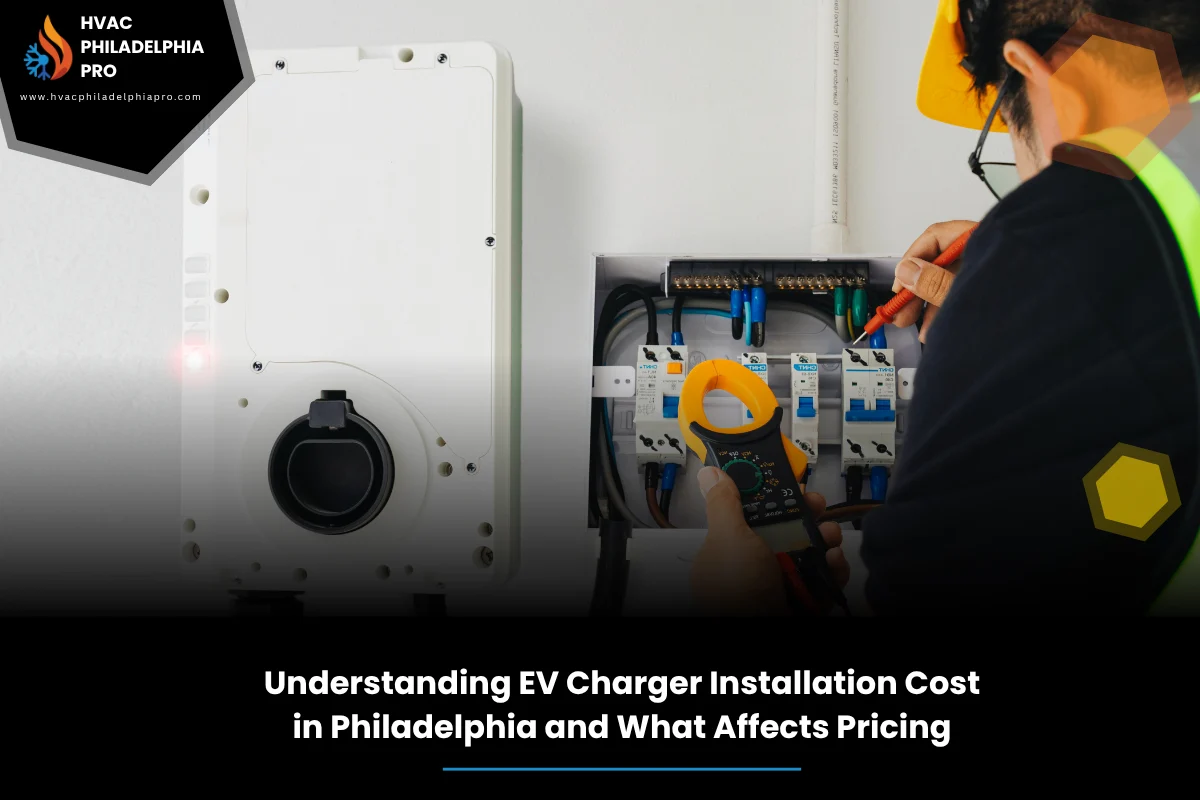
Thinking about a home charger but not sure what the EV charger installation cost in Philadelphia looks like? You are not alone. Prices shift based on charger type, your panel capacity, wiring distance, permitting, and on-site conditions. The goal here is to break it down in plain language so you can plan with confidence.
For a quick overview of typical ranges and what drives them, review EV charger installation cost in Philadelphia. We will keep this guide educational so you can compare options and set a fair budget without surprises.
At HVAC Philadelphia Pro, we see many homes ready for a basic setup and others that need more prep. Your plan should match your home and your driving needs. This guide explains the big cost drivers, shows common scenarios, and offers simple steps to keep work safe, clear, and on budget. We will also call out the EV charger installation cost in Philadelphia factors you can control, and those you cannot.
Table of Contents
Quick summary
Most homes aim for Level 2 charging, which uses a 240-volt circuit for faster daily charging. Costs depend on your electrical panel space, wire run length, where you mount the charger, and local permitting needs. Smart features, outdoor work, and long conduit runs add time and materials.
If your panel is full, a subpanel or upgrade raises cost. If your parking spot is far from the panel, more wire, fittings, and labor add up. Detached garages, trenching, or wall repairs drive price further. The charger you choose and its amperage also matter. Later we list typical ranges and a simple planning framework to cut avoidable expense.
What does EV charger installation include?
Most projects include a site check, a load check on your panel, a dedicated circuit with the right breaker, wiring or conduit to the charger location, proper grounding, labeling, and a test. Indoor installs are often simpler; outdoor installs may need weatherproof gear and extra protection.
If you want the broader picture for homes and small facilities, the Complete Guide to EV Charger Installation in Philadelphia PA for Homes and Small Facilities walks through planning, safety, and inspection details in depth.
This cluster focuses on the pricing side. We will keep the topic tied to the full guide so you can decide what’s right for your place without guesswork.
Charger levels and charging speed
Level 1 uses a standard outlet. It charges slow but needs little work. Level 2 needs a 240-volt circuit and charges far quicker. Most drivers pick Level 2 EV charger to make daily top-ups easy and reliable. Level 3 is for public sites and is not used in normal homes.
According to the U.S. Department of Energy (n.d.), Level 2 home charging typically uses a dedicated 240-volt circuit and provides much faster charging than Level 1, making it the common choice for daily home use. U.S. Department of Energy: Electric Vehicle Charging at Home
If you plan home EV charger installation in Philadelphia, match the charger amperage to both your driving needs and your panel capacity. Higher amperage can cut charge time but may require a larger breaker and thicker wire, which adds to cost.
Home electrical readiness
Your panel is the heart of the project. If it has space and capacity, a new breaker and circuit can be simple. If not, a panel upgrade or subpanel may be needed. That extra step increases materials and labor.
Electric ranges, dryers, and heat systems all share the load. A proper load check helps confirm the new charger will not overload anything. For many homes, a smart-allocated charger or slightly lower amperage setting still meets daily needs without a full upgrade.
For residential EV charger installation in Philadelphia, small layout choices can save a lot. Mount the unit near the panel if you can. Shorter runs mean less copper, fewer fittings, and less time.
Wiring distance, routing, and mounting
The longer the run, the more wire, conduit, supports, and time. Try to keep the wire run length short and direct. Every bend or wall pass-through adds steps. Finished walls also add patching and paint time.
Indoor installs cost less than outdoor installs in many cases. Outdoor work may need weather-rated boxes, in-use covers, and more rigid conduit. Detached garages can require trenching or creative routing. Planning the path early stops rework later.
If you aim for affordable EV charger installation in Philadelphia PA, measure and plan the route before you buy the charger. A few feet saved can cut labor and materials.
Permits, code, and inspections
Permits and inspections keep work safe and consistent. Expect time for approval and final sign-off. Simple indoor installs can be quick; complex sites need more review. Good plans and labels speed it up.
Budget for basic permitting and inspection effort. Ask about local timelines so you are not left waiting. You do not need to know every rule, but you should know what the inspector will want to see: proper circuit sizing, grounding, GFCI where required, correct mounting height, and clean labeling.
Keeping your project aligned with the complete guide to EV charger installation in Philadelphia helps you avoid misses that lead to repeat visits.
Typical price ranges for installs
Every home is different, but these broad tiers can help you frame a budget in USD. These estimates focus on installation labor and typical materials. Charger hardware, major panel upgrades, trenching, and unusual repairs can add more. Actual pricing may vary depending on scope and requirements.
| Tier | What it usually includes | Estimated range (USD) |
|---|---|---|
| Basic | Short run near panel, indoor mount, standard breaker, minimal patching | $500 to $900 |
| Mid-range | Moderate run, some wall work, outdoor-rated parts, smart charger setup | $900 to $1,800 |
| Advanced | Long runs, complex routing, detached garage prep, subpanel or coordinated work | $1,800 to $4,000 |
These ranges reflect typical labor time and standard materials for a Level 2 setup. If you also need a panel upgrade, trenching, or heavy wall repairs, add that to the plan.
A simple planning framework to avoid extra cost
Use this step-by-step plan to set a clear scope and keep your costs predictable. It pairs well with the full guide content and makes sure you are ready before any work starts.
- Goals: Decide how much range you need per day and where you want the charger.
- Assessment: Check panel space and note big appliances drawing power. Ask for a basic load calculation.
- Route: Map the shortest safe wire path. Note any finished walls, outdoor spans, or barriers.
- Charger choice: Pick amperage that fits your driving and panel capacity. Smart features are handy, but optional.
- Permits: Confirm what the local office needs. Clean diagrams and labels reduce delays.
- Install: Follow best practices for mounting, wiring, protection, and testing.
- Verify: Test charging, set limits if needed, and label the breaker.
If you want more depth on planning, see the complete guide on this topic for homes and small facilities in the city.
Ways to control costs without cutting safety
Pick a charger location near the panel. A shorter path saves time and materials. If outdoor, place it where conduit is simple and straight. Indoors, avoid long runs through finished spaces when you can. These small shifts often trim hours off the job.
Right-size the amperage. Many drivers do fine with a 40-amp circuit. Bigger is not always better if the panel is tight. While shopping, watch for utility or manufacturer offers. Local rebates and incentives can reduce total cost, even if the install price stays the same.
If you are aiming for affordable EV charger installation in Philadelphia PA, plan the route early, keep bends limited, and choose a charger that meets daily needs without oversizing.
Common scenarios and how they affect pricing
Charger mounted next to the panel, inside a garage: often the easiest path, minimal materials, and a clean install. If the wall is open or unfinished, it speeds the job even more.
Outdoor wall near the panel: a weather-rated box and fittings add a bit. Extra drilling and sealing may be needed. Still, it tends to be straightforward when the distance is short.
Detached garage or far parking pad: distance and barriers add conduit, supports, and labor. Trenching or concrete work increases time. Some homes add a subpanel for cleaner routing later and future circuits like lights or tools.
Upgrading from a NEMA 14-50 outlet to a hardwired smart charger: often simple if the circuit is sized right, but may need a breaker change, heavier wire, or better cable management.
Level 2 EV charger installation in Philadelphia: good practices
Stick to a dedicated circuit sized to the charger rating and follow manufacturer instructions. Use correct wire gauge, conduit type, and terminations. Protect the circuit with the right breaker and use GFCI protection where required.
Mount the unit at a comfortable height and keep cable reach in mind. Weatherproof outdoor installs. Label the breaker clearly so anyone can identify the circuit fast. If you are unsure, cross-reference the planning ideas in the complete guide to EV charger installation in Philadelphia for homes and small facilities.
Keep all documentation. A tidy record helps with any future changes or if you sell the home later. It also helps during final inspection.
Step-by-step example: from estimate to first charge
Walk-through: a tech reviews the panel, parking spot, and a direct route. You get a written scope. The plan calls for a 40-amp circuit, short run in EMT conduit, and an indoor mount near the garage door.
Install day: the team shuts power, installs the breaker and wiring, mounts the charger, and makes safe terminations. They test, label, and clean up. You review settings, set a charge schedule, and plug in.
Why it worked: The route was short, the panel had space, and the mount was simple. That kept materials and hours tight. If any part had changed, like a longer path or outdoor mount, the cost would rise for understandable reasons.
FAQs
- Do I need a new electrical panel for a Level 2 charger?
Not always. If your panel has space and capacity, you may only need a new breaker and circuit. If it is full or near capacity, a subpanel or upgrade might be required.
- Is a permit required for a home charger?
Many areas require a permit and inspection for safety. Check with your local office or your installer so the work meets code and passes final sign-off.
- Can I use my dryer outlet for charging?
Some outlets can work, but a dedicated circuit is recommended for safety and reliability. Your installer can advise based on the outlet type and wiring condition.
- What is the difference between Level 1 and Level 2?
Level 1 uses a standard 120-volt outlet and charges slowly. Level 2 uses a 240-volt circuit and charges much faster, which is why most daily drivers pick Level 2 at home.
- Where should I place the charger?
As close to the panel as practical, with a clear cable path to your parking spot. Short runs lower cost and reduce cable clutter.
- Will a smart charger lower my power bill?
Smart chargers can schedule charging during off-peak times if your utility offers time-of-use rates. The savings depend on your plan and charging habits.
- Is outdoor mounting a problem?
No, but it needs weather-rated parts and careful sealing. Expect a bit more material and time than a simple indoor mount.
- How long does installation take?
Simple installs can wrap in a few hours. Complex routing, outdoor work, or panel changes take longer. The written scope should outline the plan.
Conclusion
The EV charger installation cost in Philadelphia comes down to charger level, panel capacity, wire run distance, permits, and site conditions. Keep the route short, right-size the circuit, and plan documentation early. These steps prevent rework and keep timelines steady.
This article pairs with the broader ideas in the complete guide to EV charger installation in Philadelphia for homes and small facilities. If you need a hand turning a plan into a safe, clean install, contact HVAC Philadelphia Pro for expert assistance. With a clear scope and an honest checklist, your first home charge can be smooth and stress-free.
continue reading
Related Posts
Learn what shapes affordable EV charger repair in Philadelphia PA. See cost drivers, safe DIY checks, pricing ranges, and a simple framework to avoid surprise bills.
Plan affordable EV charger maintenance in Philadelphia PA with a simple yearly routine, DIY vs pro split, and a 5-step framework. Build safety, cut surprises, and keep charging reliable at home.
Get a clear view of AC installation cost in Philadelphia. See price tiers, key cost drivers, and a simple budgeting framework so you can plan smart and avoid surprises.