
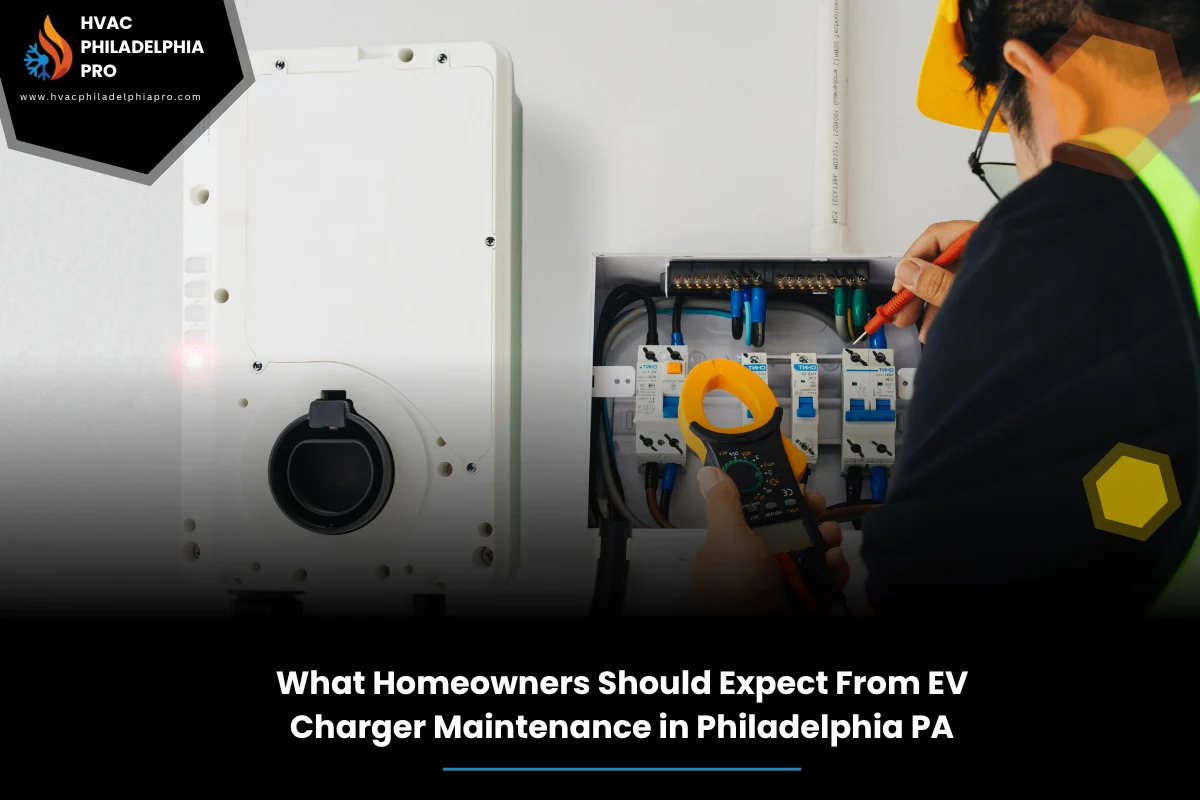
Smart homeowners schedule EV charger maintenance in Philadelphia PA to keep charging safe, steady, and simple. A little care protects your car, wiring, and panel, and it helps you spot problems before they turn into breakdowns or damage. In this guide, we explain what maintenance includes, what you can do yourself, and when to call a pro.
Routine upkeep is not hard once you know the rhythm. You will check cables, look for heat or wear, test safety devices, and keep dust, salt, and moisture out. If you need professional help, you can read more about EV charger maintenance in Philadelphia PA to understand what a visit covers and how it fits your home, townhome, or villa setup.
You should also expect clear notes and photos after each check. That record helps with warranty claims, insurance, and resale. And when questions pop up, a straight answer matters. That is why working with a team like HVAC Philadelphia Pro that explains findings in plain language just makes life easier.
Table of Contents
Quick Summary
This article shows what a solid maintenance plan looks like for home EV charging in Philadelphia Northeast PA. You will see what a pro inspection covers, the at-home checks you can do in minutes, and a simple schedule that works for homes, townhomes, and villas. We share a 5-step care plan, a comparison of Level 1 and Level 2 needs, and clear signs that mean stop and call a licensed electrician.
We also talk about weather and aging wiring common in our area, how to document visits for warranty support, and how to prep for future upgrades. Use this as a friendly guide and keep the fuller EV charger maintenance guide in mind when you want deeper detail. By the end, you will know what to expect and how to keep charging reliable year-round.
What a Pro Inspection Covers
If you want every step laid out, read the Complete Guide to EV Charger Maintenance in Philadelphia PA for Reliable Home Charging and use this page as your quick reference. A standard visit includes visual checks, electrical testing, cleaning, and documentation. For many homes, that starts with a panel review and ends with a live charging test.
A thorough EV charger inspection in Philadelphia should confirm breaker size and labeling, check torque on lugs, scan for heat at the outlet or wall unit, and test ground fault protection. The tech should look over the cable jacket for cuts, kinks, or brittleness, and inspect the J1772 or CCS connector for wear, pitting, or debris.
Expect a short report with photos, notes on any loose terminations, and next steps. If parts look worn or heat marks show up, the tech will flag them for repair before they fail. Clear talk and simple choices help you plan without stress.
At-Home Safety Checks You Can Do Monthly
Between visits, a quick EV charger maintenance checklist keeps you in control. Do these once a month: feel the plug, faceplate, and cable for warmth after a charge; look for frayed spots; keep the connector clean and dry; and reset the GFCI or breaker if it trips and note the date.
Wipe dust and grit off the connector with a dry cloth. Keep the cord off sharp edges and out of puddles. If anything smells burnt, looks melted, or feels hot to the touch, stop using it and schedule a check. Small signs often show up before big problems.
Local Factors: What Philadelphia Northeast PA Homes Face
Our winters bring salt, slush, and freeze-thaw cycles. Summers add heat and humidity. Those swings can work loose outdoor fasteners and push moisture into outlets. In older homes, legacy wiring or panels may be near capacity and need a careful look.
For townhomes with shared walls, cable routing and mounting points may be tighter, so even minor vibrations can back out screws over time. Villas with detached garages face longer conduit runs that need support and water-tight fittings. A focused local plan cuts these risks.
Make weather seals, drip loops, and weep holes part of your seasonal routine. These small details keep water out and help your charger breathe, which boosts reliability all year.
How Often Should Maintenance Happen
Most homeowners do well with a light monthly check, a deeper spring and fall review, and a pro visit yearly. If your charger sits outdoors, add a quick post-storm look for water intrusion and conduit damage. Frequent trips on the breaker or GFCI mean you should call sooner.
Homes and townhomes that charge nightly may need earlier cable replacements than villas used a few times a week. Keep notes on how often you charge and any odd behavior. That pattern helps a tech zero in on root causes.
Plan ahead for peak seasons. Schedule the yearly visit before winter and summer, when heat and cold strain connections. A little timing goes a long way.
The 5-Step Home Charging Care Plan
This simple framework keeps you organized. For deeper context on each step, scan the complete guide on this topic and match it to your setup. The goal is a steady routine that fits busy life, not a chore list that gathers dust.
Inspect: Look for heat, cracks, loose screws, and water paths. Check labels and the breaker marking. Confirm the cable hangs with gentle bends, not tight coils.
Clean: Dust the unit. Wipe the connector body. Keep the holster clear so the latch seats right. Never spray into the port. Use a dry cloth only.
Test: Use the test button on GFCI or built-in protection monthly. If available, run a load test with your EV to confirm normal charge speed and stable temps.
Update: When your charger has firmware, apply updates. They can improve charging profiles, fault detection, and utilities integration for load control.
Document: Keep dates, photos of wear, and notes on trips or odd noises. Good records support warranty claims and help pros spot patterns fast.
Level 1 vs Level 2: Maintenance Differences
Level 1 and Level 2 units share many needs, but the higher current on Level 2 makes tight terminations and healthy cables even more important. Use this comparison to guide your plan for homes, townhomes, and villas.
| Item | Level 1 Home | Level 2 Home | Shared Garage/Carport |
|---|---|---|---|
| Typical checks | Outlet condition, cord wear, GFCI test | Breaker torque, wall unit seals, cable heat | Mounting stability, signage, access clearance |
| Wear points | Receptacle contacts, adapter ends | Connector latch, strain relief, conduit fittings | Holster, handle, shared cord jacket |
| Testing tools | GFCI test button | Infrared temp scan, torque driver | All of the above plus visual compliance checks |
| Time needed | 10 to 15 minutes monthly | 15 to 25 minutes monthly | 20 to 30 minutes monthly |
| Homeowner tasks | Clean, feel for heat, test GFCI | Clean, feel for heat, watch for trips | Clean and report wear promptly |
| Pro tasks | Replace worn outlet, verify circuit | Retorque lugs, update firmware, seal checks | Hardware audit, signage and clearance review |
When to Stop and Call a Licensed Electrician
Stop charging and get help if you see scorch marks, melted plastic, burnt smells, or if the cord or connector gets hot to the touch. Repeated breaker or GFCI trips also need attention. These are safety signs, not bugs to ignore.
According to the U.S. Department of Energy’s Alternative Fuels Data Center, regular inspection, cleaning, and prompt repair of EV supply equipment reduce downtime and safety risks (U.S. Department of Energy, n.d.). Alternative Fuels Data Center
If water gets inside the unit, do not power it back up until it is inspected. Moisture plus electricity is never a good mix. A quick pro visit now can prevent a costly fix later.
Documentation, Warranty, and Insurance Tips
Keep a simple folder with install photos, model and serial numbers, breaker size, and the invoice. Add each visit date and any replaced parts. Good records speed warranty claims and protect your coverage.
Some charger makers require proof of upkeep. A clear trail of notes, photos, and signatures keeps you in good standing. It also helps when selling a home, since buyers like seeing careful care.
Take a few pictures after storms or odd trips. A photo beats memory when you describe a problem to a technician.
Outdoor vs Indoor Setups
Outdoor chargers need healthy seals, intact conduit, and tight fittings. Look for UV damage on cables and keep holsters covered if possible. Indoors, watch dust buildup and airflow around the unit to avoid heat pockets.
For townhomes with limited space, wall-mount hooks keep cables off the floor and away from cars and bikes. In villas with longer runs, make sure supports are spaced right so conduit does not sag or pool water.
Label the breaker clearly. In an urgent moment, you do not want guesswork. A fast shutoff can protect you and your equipment.
Smart Chargers and Load Management
Many units support schedules, utility rate plans, and load sharing. Updates often improve these features. Check the app monthly for alerts and firmware prompts. A short update can add safety checks or fix odd charging pauses.
In older panels, smart load management may prevent nuisance trips by balancing current. Pair smart features with a yearly EV charger inspection so software and hardware stay in sync.
If you plan to add another EV, note your current charging times and panel space. Prepping now avoids last-minute rushes later.
Troubleshooting Basics You Can Try First
Try a different parking position to remove stress on the cable. Reseat the connector until the latch clicks. Power cycle the charger per the manual. Check for app alerts and clear obstructions in the holster.
Confirm the breaker did not trip and that the GFCI test button is set. Look for error lights and note the code. If issues repeat, do not keep resetting. Escalate to a pro visit.
Simple habits like keeping the cable off the ground and coiling it loosely reduce strain and prevent early wear. Small wins add up.
FAQ: EV Charger Maintenance in Philadelphia PA
- How often should I schedule professional maintenance?
Once a year works for most homes. Outdoor units or heavy use may need checks twice yearly, often before winter and summer.
- What should be on my monthly checklist?
Feel for heat, look for cracks or frays, test GFCI, clean the connector, and confirm the cable hangs with gentle bends.
- Is Level 2 harder to maintain than Level 1?
Not harder, but more sensitive to loose connections because it carries more current. Tight terminations and healthy cables matter more.
- Can I use cleaners on the connector?
No liquid cleaners. Use a dry, lint-free cloth. Keep moisture out of the port and holster.
- Why does my breaker trip during storms?
Moisture intrusion, nuisance GFCI trips, or marginal wiring can cause trips. Pause use and get the setup checked if it repeats.
- Do I need special maintenance in older Philadelphia homes?
Older panels and wiring may be near capacity or have mixed grounding. A yearly inspection helps confirm safe operation.
- What records should I keep?
Install photos, model and serial numbers, breaker size, invoices, visit notes, and pictures of any wear or damage.
- How do seasons affect care?
Winter brings salt and moisture; summer brings heat. Check seals and fasteners after big swings in weather.
Conclusion
A steady plan for EV charger maintenance in Philadelphia PA keeps charging safe, fast, and predictable. Do simple checks monthly, schedule a pro visit yearly, and track small changes before they grow. Use the broader EV charger maintenance guide as your deep dive, and keep this page as your everyday compass.
Stay ahead of weather, watch for heat and moisture, and keep notes with photos. Those habits protect your vehicle, wiring, and wallet. If you want clear answers or a careful inspection, Contact HVAC Philadelphia Pro for expert assistance. With a little routine, your home setup will run smooth for years.
continue reading
Related Posts
Learn why EV charger maintenance is important for safe, reliable home charging. Get a clear checklist, warning signs, DIY vs pro tips, and a simple monthly framework.
Use this checklist of questions to ask before scheduling home air conditioner repair in Philadelphia. Confirm basics, understand costs, and compare repair vs replace with confidence.
Wondering how often should AC be serviced in in Philadelphia? Use this simple, season-based plan to keep cooling reliable, cut surprise repairs, and steady your bills.