
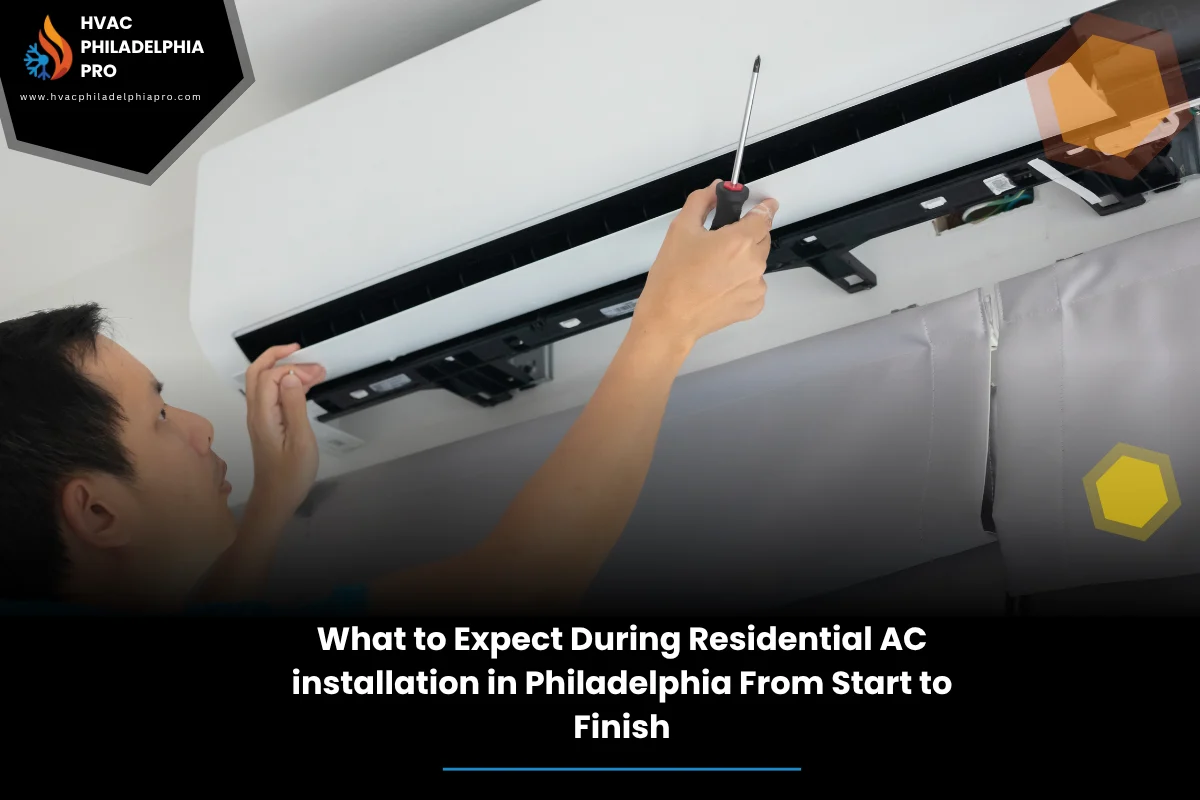
Getting a new AC should not feel like a mystery. This guide walks you through what happens during residential AC installation in Philadelphia, step by step, so you can plan your day and avoid surprises. With HVAC Philadelphia Pro, the process stays simple, clear, and focused on safety and comfort. We explain the work scope, timing, and what you can do to help before the crew arrives.
We also touch on permits, placement, duct checks, and thermostat setup. Expect talk about airflow, wiring, and testing, because the details matter. We will point to permit requirements and what pros typically handle so you do not have to stress. If you need a deeper service overview, see how residential AC installation in Philadelphia is typically scheduled and coordinated.
Table of Contents
Quick Summary
Here is the short version. First, the team confirms system size and layout. A quick duct inspection checks for leaks or blockages. They prep the site, protect floors, and verify power and drain lines. The outdoor unit gets placed level and secure. The indoor coil connects to the old or new lines. Then the system is vacuumed, charged, and tested.
Next, they run commissioning tests to confirm airflow, temperature drop, and safe operation. The thermostat gets programmed. The crew cleans up, reviews maintenance basics, and explains warranty steps. You get a final walkthrough, paperwork, and tips for the first hot week. That is home AC installation in Philadelphia in a nutshell.
Before the Crew Arrives: Planning and Pre-Check
Expect a call or message the day before with timing. Clear a path from the door to the air handler and electrical panel. Move fragile items, pets, and cars if they block work zones. The techs may ask for attic or basement access and space near the outdoor pad for the condenser.
If you want a deeper view of the full process, read the Complete Guide to AC Installation in Philadelphia PA for Reliable Home Cooling. It adds broader context that pairs well with this step-by-step look.
Most crews verify permits, if needed, and check panel capacity. A quick pre-install survey confirms the line set path, drain route, and thermostat location. You will hear about noise, clearance, and airflow because placement matters for comfort and service access.
Home Assessment and Load Calculations
Before air conditioner installation in Philadelphia PA, pros size the system using home data. Square footage is not enough. They look at windows, insulation, shade, duct layout, and air leaks. A proper Manual J load calculation helps prevent short cycles and hot rooms.
This is where planning links to the pillar topic: a complete guide to AC installation in Philadelphia PA often stresses sizing, duct condition, and airflow targets. You should expect that same focus here. Bigger is not always better; the right size keeps humidity steady and rooms even.
According to ENERGY STAR (2024), proper sizing and installation are key to comfort and energy efficiency in central AC systems.
ENERGY STAR Air Conditioning guidance
Choosing the Right Equipment for Philadelphia Homes
Philadelphia summers can be sticky, and winters are cold. That swing affects AC choice. You will hear about the unit type, coil match, blower strength, and filter size. Efficiency labels matter too. Look for the SEER2 rating that fits your budget and power costs.
Below is a quick comparison many homeowners find helpful when planning air conditioning system installation.
| Type | How it Runs | Comfort | Best For |
|---|---|---|---|
| Single-stage | On or off only | Basic, can swing temps | Small budgets, simple needs |
| Two-stage | Low and high speeds | Smoother temps, quieter | Most homes, better humidity control |
| Variable-speed | Wide speed range | Most even temps, very quiet | Premium comfort, tight homes |
Filter size and duct capacity can limit choices. Your tech may suggest duct fixes or a different blower to prevent noise and pressure issues. This is part of thoughtful AC installation in Philadelphia, not just a swap.
Site Prep: Electrical, Ducts, and Safety
On install day, the crew covers floors and sets tool zones. They shut off power and confirm a proper disconnect and breaker size. The pad for the outdoor unit should be stable and level. Often, a new pad helps with noise and water runoff.
Indoors, they check drains, trap, and pan. If ducts are leaky, simple duct sealing may be advised to boost airflow and reduce dust. This is also where the pillar topic shows up again: a thorough AC installation in Philadelphia PA focuses on airflow as much as equipment.
The 7-Step Framework From Arrival to Final Walkthrough
This framework keeps the day smooth and predictable. For a broader reference, see the complete guide on this topic to compare steps and timelines.
- Protect and verify: Cover floors, confirm power off, check access, and review the plan with you.
- Recover and remove: Safely recover refrigerant, disconnect wiring, and remove the old unit and coil.
- Set equipment: Place the condenser level and mount the indoor coil and supporting parts as needed.
- Connect lines: Run or reuse the line set if it passes inspection. Pressure test with nitrogen, then vacuum down.
- Wire and drain: Connect low-voltage, high-voltage, and drain lines. Slope the drain and test for proper flow.
- Charge and start: Add the correct refrigerant charge to manufacturer specs, then power up for testing.
- Verify and teach: Check airflow and temps, then show you filters, thermostat basics, and care steps.
Testing, Commissioning, and Thermostat Setup
After start-up, the team runs airflow and temperature checks. They test safety controls and look for odd noises. A quick check on return and supply temps confirms cooling performance. Good pros also look at humidity, drain flow, and fan speeds for comfort balance. This is called system commissioning, and it protects your new AC.
Thermostat setup comes next. You will see schedules, eco modes, and fan options. If you pick a smart stat, they help with Wi-Fi and basic app use. For some homes, a small tweak to fan delay or cycles can boost comfort. This line of thinking matches what any solid complete guide to AC installation in Philadelphia PA should emphasize: test, adjust, and document.
Cleanup, Disposal, and Post-Install Care
Once tests look good, the crew cleans the work area. Old equipment leaves for proper disposal. They show you how to change filters without bending the frame. You will also review warranty steps, including online warranty registration and the importance of keeping your invoice.
You will get starting tips: keep a few feet clear around the outdoor unit, change filters on schedule, and note any hot or noisy rooms. If anything feels off, call the office. Good documentation and care make air conditioner installation in Philadelphia PA run well for years.
FAQs: Residential AC Installation in Philadelphia
- How long does a typical install take?
Most standard swaps take one day. If ducts need work or electrical updates, it can take longer. Complex jobs can run into a second day, especially with attic access or tight spaces.
- Will I be without cooling all day?
Yes, cooling is off during removal and install. Technicians plan the schedule to restore cooling as soon as safe testing is complete.
- Do I need to be home?
You should be home at start and finish for access, approvals, and the final walkthrough. During the day, you can step out once the crew is set, if comfortable.
- What should I move before the crew arrives?
Clear paths to the indoor unit, thermostat, and electrical panel. Move cars if they block the driveway. Put pets in a safe room away from work areas.
- What about permits and inspections?
Your installer typically handles permits and scheduling inspections when required. They will tell you if a city visit is needed and coordinate timing.
- How do I keep the new AC running well?
Follow the filter maintenance schedule, keep outdoor fins clear, and book seasonal checks. Call if you hear new noises or see water near the air handler.
- When should I replace ducts?
If ducts are crushed, undersized, moldy, or very leaky, talk with your installer. Sometimes small fixes help; other times, replacement is the smart long-term move.
- Can I reuse my old thermostat?
Often yes, if it matches the new system. Smart features may need a C-wire or an upgrade. Your tech will confirm and offer options.
Conclusion
Now you know what happens during residential AC installation in Philadelphia, from prep and sizing to testing and cleanup. A careful plan, solid airflow, and proper documentation set you up for long-term comfort. Keep filters clean, watch clearances, and schedule a seasonal tune-up before peak heat.
If you want a refresher on broader planning points, remember how the complete guide to AC installation in Philadelphia PA stresses sizing and airflow. When you are ready or need help sorting next steps, contact HVAC Philadelphia Pro for expert assistance. You will get straight talk, a clean install, and a system that runs the way it should.
continue reading
Related Posts
Learn how to choose the right EV charger electrician in Philadelphia for reliable repairs. Get a simple vetting framework, diagnostics, safety tips, and when to repair or replace.
See why hiring an EV charger electrician in Philadelphia is safer than DIY. Learn about load checks, code, GFCI, 240V outlet work, and a simple planning framework.
Learn what really happens with residential EV charger installation in Philadelphia, from panel checks and permits to charger choice, placement, safety, and testing.