
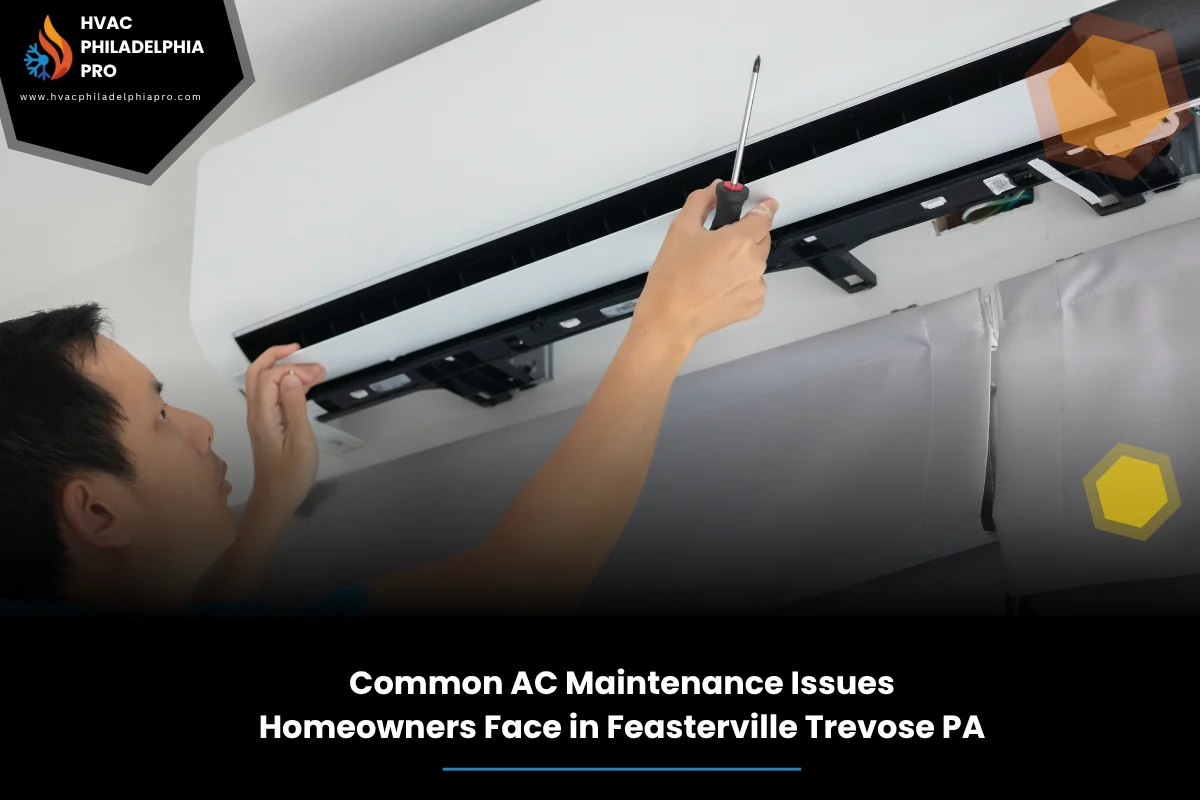
Air conditioners work hard every summer, and small issues can build up fast. Filters clog, coils get dirty, and drains back up. If you’ve noticed uneven rooms or longer run times, your system is asking for attention. Smart care starts with a plan, and that often means scheduling seasonal AC maintenance in Philadelphia before heat waves hit.
HVAC Philadelphia Pro handles heating and cooling every day, so we see the same patterns. Most problems start simple and grow when ignored. In this guide, you’ll learn the common issues, quick checks to try, and when to call a pro for safety or deeper testing.
Table of Contents
Quick Summary
Most AC complaints trace back to a short list: airflow limits, heat transfer problems, water drainage clogs, and control mistakes. You can prevent many of them with routine filter changes, coil cleaning, and a short monthly check. For parts that carry risk, like refrigerant or high-voltage, leave it to trained techs and focus on safe upkeep at home.
Think of this piece as a field manual. We name the signs, what they mean, and how to act. For a broader playbook that maps schedules and care across the whole season, the complete guide to AC maintenance in Philadelphia PA for reliable home comfort offers helpful context without pushing sales.
Why ACs Struggle Mid-Season: The Usual Culprits
Most systems struggle because airflow drops or heat transfer stalls. That happens when filters clog, coils cake with dust, or the outdoor unit can’t breathe. Slipping parts or a low refrigerant charge add to the mess and make cooling slow and costly.
For a deeper dive into tune-up timing, what to check, and why it matters, see the Complete Guide to AC Maintenance in Philadelphia PA for Reliable Home Comfort which connects maintenance steps to steady home comfort.
Spotting Dirty AC Coil Symptoms Early
Dirty evaporator coils force longer run times and weak airflow at the vents. Common evaporator coil warning signs include warm supply air, musty smells, short cycling, or frost on the indoor unit. Outside, a matted condenser coil can feel hot to the touch while the fan roars but rooms stay sticky.
Watch for these dirty AC coil symptoms during a filter change. If coils look grimy or fins are bent, stop. Coils are fragile. Vacuum light dust with a soft brush only if you can reach safely, and leave chemical cleaners to a pro.
AC Not Cooling Efficiently: Simple Checks Before You Panic
Before you assume a big repair, try a few basics. Set the thermostat to cool and lower it 3 degrees below room temp. Confirm the outdoor unit runs and the indoor blower pushes air. If the return filter is dark or caked, swap it. These steps fix a lot of “AC not cooling efficiently” calls.
| Issue | Homeowner check | Likely cause | When to call |
|---|---|---|---|
| Warm air from vents | Confirm thermostat mode and setpoint | Wrong settings or fan-only mode | If settings are right and air stays warm |
| Weak airflow | Inspect and replace filter | Clogged filter or duct issue | If new filter does not restore flow |
| Short cycling | Clear debris around outdoor unit | Overheating or airflow block | If cycling continues after clearing |
| Long runtimes | Check coil cleanliness | Dirty coils or low refrigerant | If coils look clean yet cooling lags |
Clogged Condensate Drain Line: What It Means and How to Prevent It
Your AC pulls moisture from the air and sends it down a drain. Algae, dust, or rust can build a plug and cause leaks or shutdowns. A condensate drain issue often shows up as water near the air handler, a musty smell, or a float switch that cuts power to protect your ceiling or closet.
Prevention is simple. Keep the drain trap clean and consider a safe, mild vinegar rinse a few times each season if your manual allows it. If water keeps backing up or the pan is rusted, call a pro to clear the line fully and confirm the slope is right.
Airflow, Filters, and Duct Leaks: Keeping the Path Clear
Air needs a clear path in and out. A dirty intake filter chokes cooling and makes dust swirl in the home. Replace filters on time and choose a MERV filter your system can handle without straining the blower. Close vents and blocked returns also starve the system and add to hot spots.
Leaky ducts lose cooled air into attics or closets. If rooms never match the setpoint, ask for a duct check. That test can reveal loose connections or crushed runs. For more on routine care patterns and home comfort goals, our complete guide to AC maintenance in Philadelphia PA outlines schedules most households can follow.
A Simple Framework for Preventative Care You Can Stick To
This quick plan keeps you ahead of trouble without tools or deep tech skills. It’s meant for Residential Homes and Townhomes and avoids risky tasks. Follow it each season so small problems don’t grow.
- Preventative maintenance: Change the return filter at the start of cooling season, then every 1 to 3 months based on dust and pets.
- Outdoor check: Keep 2 feet of open space around the condenser. Clear grass, bags, and cottonwood fluff from the coil face.
- Indoor check: Look for wet spots near the air handler and listen for gurgles in the drain line. If found, pause cooling and investigate.
- Airflow test: Feel for steady, cool air at a supply vent after 10 minutes of run time. If weak, replace the filter and recheck.
- Monthly quick run: Even on mild days, run cooling for 5 to 10 minutes to keep parts moving and catch odd sounds early.
- Season wrap-up: Gently rinse the outdoor coil with a garden hose from inside out if panels allow. Skip pressure washers.
For a full seasonal plan with timing, tools, and safety notes, review the complete guide on this topic and set reminders that fit your household rhythm.
According to the U.S. Department of Energy (n.d.), routine filter changes and coil upkeep help maintain efficiency and can reduce energy use compared to running with dirty parts. Energy Saver: Maintaining Your Air Conditioner
When DIY Stops and Safety Starts
Some jobs are not for DIY. Anything tied to sealed refrigerant lines, high-voltage wiring, or furnace control boards calls for training. Odd hissing, ice on lines, or repeated breaker trips point to deeper faults. Leave refrigerant handling and live electrical testing to licensed techs to avoid harm and new damage.
If you want a set plan without guesswork, look into routine visits for seasonal AC maintenance in Philadelphia so a technician can measure pressures, superheat, and system safety while you handle simple filter and airflow tasks. For urgent leaks or no-cool events, learn what to do first, then consider neutral, timely help for emergency AC maintenance in Philadelphia.
Local Notes for Feasterville-Trevose PA Homes and Townhomes
In Feasterville-Trevose, many townhomes share walls and have compact outdoor clearances. That can starve the condenser if storage crowds the unit. Roof or attic air handlers also make condensate leaks risky for ceilings. A quick pan and float switch check after filter changes helps prevent messy surprises.
Some homes mix older ducts with newer equipment. That mismatch can cause drafty rooms and loud returns. Sealing obvious gaps at accessible joints with mastic and scheduling a pro duct test can restore balance without major rebuilds.
FAQ
- What are the first signs my AC needs attention?
Longer run times, rooms that never cool, warm air at vents, or water near the indoor unit. Also watch for musty smells and a louder-than-usual outdoor unit.
- How often should I change the AC filter?
Every 1 to 3 months during heavy use. Homes with pets or dust may need monthly changes. A clean filter protects coils and keeps airflow steady.
- What causes a clogged condensate drain line?
Algae, dust, and rust from the pan can build a plug. A clogged condensate drain line often triggers a float switch that shuts the system off to stop leaks.
- Can dirty AC coil symptoms look like low refrigerant?
Yes. Dirty coils and low charge both reduce cooling and extend run times. A tech can measure pressures and temperatures to tell the difference safely.
- Why is my AC not cooling efficiently after I changed the filter?
Coils may be dirty, ducts may leak, or the thermostat could be mis-set. If the outdoor coil is blocked or the blower weak, you’ll still feel poor airflow.
- Is preventative AC maintenance in Philadelphia worth it for a newer system?
Yes. Early care protects warranties, keeps efficiency up, and finds small issues before they become repairs. New units still need airflow and drainage checks.
Conclusion
Most AC headaches start small: a forgotten filter, a dusty coil, or a slow drain. With a simple routine and a few safe checks, you can avoid many no-cool days and keep bills steady. When the work crosses into electricity or refrigerant, step back and call trained help for testing and repairs.
Use this guide to spot trouble early, and plan your preventative maintenance around your home’s needs. If you prefer a steady schedule with pro testing, consider seasonal AC maintenance in Philadelphia to keep your system honest and ready. Contact HVAC Philadelphia Pro for expert assistance.
continue reading
Related Posts

Learn how to choose EV charger repair near me with clear safety checks, a simple shortlist framework, and provider comparisons so you can fix issues fast and right.
Power failures can freeze business chargers. Learn fast triage, common faults, and safe fixes for Marlton NJ sites, plus when to use emergency EV charger repair in Philadelphia.

Practical guidance for Springfield PA businesses on EV charging station repair in Philadelphia, with fast triage steps, safety basics, network vs standalone tips, and industry-specific advice.