
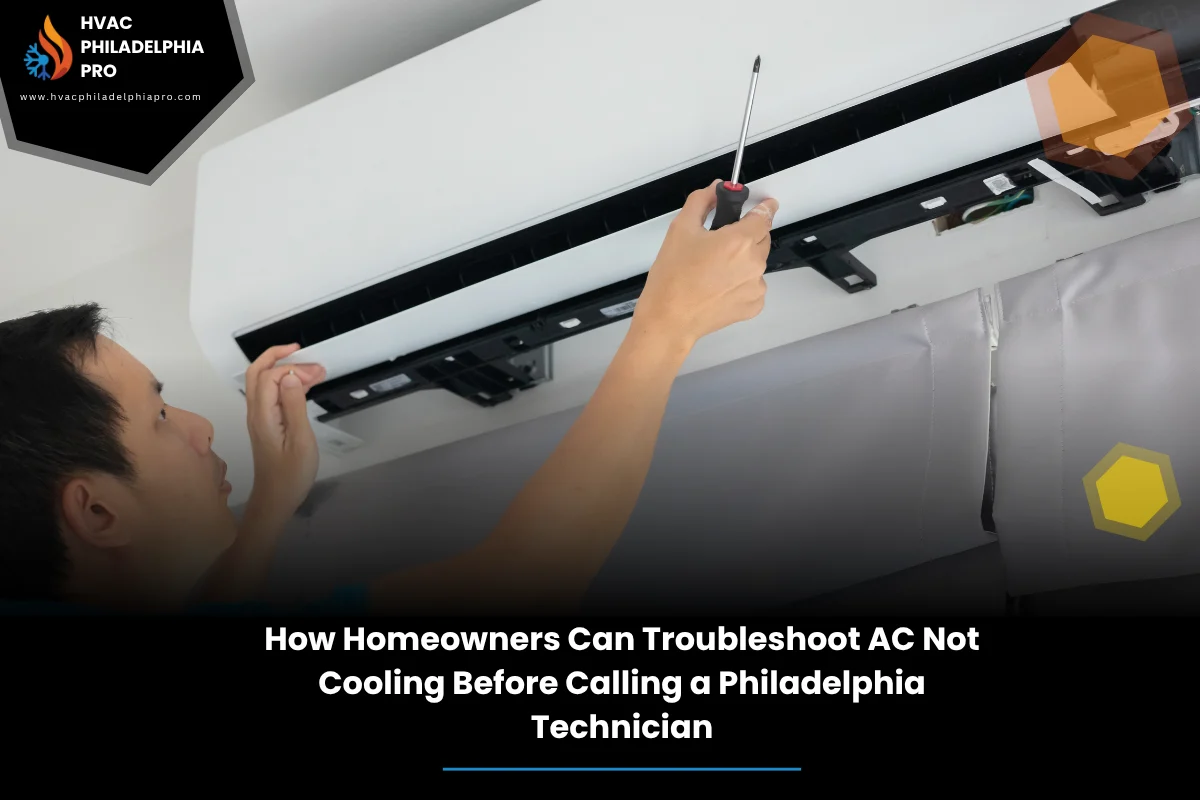
When your home feels stuffy and the thermostat keeps creeping up, it is easy to panic. If you are dealing with AC not cooling in Philadelphia, take a breath. A few safe checks can save time, money, and stress. Most cooling issues start with simple things like settings, power, or airflow. You can handle those in minutes.
Use this guide to spot common causes, try quick fixes, and decide when to stop and call a pro. We keep the advice practical and safe. If you need help after that, the team at HVAC Philadelphia Pro is ready, but let’s first see what you can do on your own to get cool air moving again.
Table of Contents
Quick Summary
Start simple. Confirm the thermostat is set to Cool, the fan on Auto, and the setpoint below room temp. Make sure power is on at the breaker and the outdoor switch. Check the air filter and open all supply and return vents. Then listen for the outdoor fan and indoor blower. These fast checks fix many issues.
If the AC is blowing warm air, suspect airflow or a frozen coil. If the AC unit is not turning on at all, look at breakers, the furnace switch, thermostat batteries, and a full condensate pan that might trip a safety switch. For rapid cycling, focus on drainage, thermostat placement, and dirty filters before assuming bigger faults.
Start With Simple Checks First
Look at your thermostat settings first. Set Cool, Fan Auto, and a target a few degrees below current room temp. Next, check the indoor furnace switch and the breaker panel for tripped breakers. Replace a dirty filter and open closed vents. Small things like these cause big comfort problems.
You can also learn how these basics fit into a broader maintenance plan by reading the Complete Guide to AC Repair in Philadelphia PA for Comfortable Homes and Businesses, which explains how pros approach testing, cleaning, and tune-ups across a full system.
| Symptom | Likely cause | DIY check | Safe next step |
|---|---|---|---|
| AC blowing warm air | Dirty filter, blocked return, outdoor unit blocked | Replace filter, clear debris, open vents | Let coil thaw if iced; retest |
| AC unit not turning on | Tripped breaker, furnace switch off, thermostat batteries | Reset breaker once, flip switch on, swap batteries | Wait 5–10 minutes after resets |
| Short cycling | Clogged drain, dirty filter, bad placement | Empty drain pan, clear line, new filter | Move heat sources away from thermostat |
| Weak airflow | Filter, closed dampers, blocked returns | New filter, open dampers, clear returns | Check ducts if no change |
If the AC Unit Is Not Turning On
Start at the source. Flip the indoor furnace power switch on. At the panel, reset a tripped breaker once. If it trips again, stop and do not force it. Replace thermostat batteries. Make sure the thermostat display is lit and reading room temp.
Look for a full condensate pan near the indoor unit. Many systems use a float switch that shuts the AC off when the drain clogs. Empty the pan and clear the drain line with a wet/dry vac at the outside drain. Close the blower door tight; some units will not run if the door is ajar.
After any reset, give the system 5–10 minutes. The control board may have a delay. If nothing kicks on, it is safer to pause. There could be a control, capacitor, or wiring issue that needs tools and training to test.
If the AC Is Blowing Warm Air
Warm air often points to AC airflow problems. Change the filter, open return grilles, and make sure furniture is not blocking supply registers. Outside, clear leaves and lint from the condenser. You need 2 feet of space for good air pull.
Sometimes a system ices up and then blows warm air or nothing at all. Turn the system Off and Fan On to help thaw a frozen coil. Replace the filter and wait until any ice is gone before testing Cool again. If it ices again, stop and seek help.
According to the U.S. Department of Energy (2023), routine filter changes and keeping coils clean help restore cooling capacity and prevent many performance losses. U.S. Department of Energy: Maintaining Your Air Conditioner
Outdoor Unit and Condenser Basics
Shut off power at the outdoor disconnect before any condenser cleaning. Hose the coil from the inside out with gentle water pressure. Do not bend fins. Clear grass, weeds, and trash from the base and sides. Restore power and listen for the fan and compressor.
If the fan runs but air is still warm, place your hand over a supply register. Weak air plus a clean filter suggests the indoor coil may still be iced or the blower may not be moving enough air. Give it time to thaw fully before judging results.
Hear loud buzzing or frequent clicking outside? That can hint at a failing contactor or capacitor. Those parts store power and can shock. Leave those tests to a pro. Focus your DIY time on cleaning, airflow, and settings.
AC Short Cycling Fix: Fast Starts and Stops
Short cycling is when the AC starts, runs briefly, then shuts off and repeats. Begin with a new filter and correct thermostat placement away from lamps or sunny windows. Heat sources can trick the thermostat and cause bursts of run time.
Next, check the drain. A backed-up line can trip a float switch that cuts cooling mid-cycle. Empty the pan, clear the line, and re-test. Make sure vents are open to avoid pressure issues that make the system work too hard.
If short cycling continues, do not keep restarting. That strains the compressor. For steady help with AC not cooling in Philadelphia, use a pro visit to test controls, sensors, and charge. That way you avoid damage while finding the real cause.
A Simple Troubleshooting Framework
Use this step-by-step framework to stay organized. It keeps you safe and helps you explain what you found if you call for help.
Step 1: Settings. Cool, Auto, lower setpoint.
Step 2: Power. Indoor switch on, breakers on, outdoor disconnect seated.
Step 3: Filter and vents. New filter, open returns and supplies.
Step 4: Outdoor check. Clear debris, rinse coil gently.
Step 5: Drains. Empty pan, clear line.
After each step, test for 10–15 minutes. If cooling returns, great. If not, document sounds, lights, and behavior. For a deeper process that mirrors what techs follow, see the complete guide on this topic to understand how full diagnostics proceed in Philadelphia homes.
Room-by-Room Airflow Checks
Uneven temps hint at duct balancing issues. Confirm all room dampers are open. Pull dust from returns. If one room feels weak at the supply, compare with another room using a tissue test. Light pull is normal; a limp tissue means airflow may be restricted.
Look for crushed flex duct in attics or basements if accessible. Do not open sealed ducts or cut tape. Note what you see. Sealing, resizing, or cleaning ducts is not a quick DIY job and often needs proper tools to avoid leaks and dust problems.
Remember, weak airflow forces longer run times and can lead to icing. Fixing these simple duct issues can stop a chain of problems, including AC blowing warm air and short cycling. If nothing changes after your checks, plan for a professional duct assessment.
How This Ties Into Full AC Repair
These steps mirror what you will see in a complete guide to AC repair in Philadelphia: start with easy, safe checks, then move to targeted testing. The goal is to restore airflow and correct setup before looking at deeper faults like sensors or charge.
By handling basic maintenance and simple resets, you avoid repeat trips and give a tech a clear starting point. If you do need service, your notes on noises, timing, and temperatures cut guesswork and speed up the visit.
You can always bookmark a full reference for later. Many homeowners keep a seasonal list to change filters, clear drains, and wash coils before peak heat. A little prep every spring often keeps surprises away when the first heat wave arrives.
FAQs
- Why is my AC blowing warm air after running fine yesterday?
A dirty filter or a blocked condenser often causes quick shifts. Replace the filter, clear debris, and let any ice thaw before testing. If air stays warm, stop and call a pro to prevent strain on the compressor.
- What should I do if the AC unit is not turning on at all?
Check the indoor switch, breakers, and thermostat batteries. Make sure the blower door is closed and the drain pan is not full. After a single reset, wait 5–10 minutes. If it trips again, stop for safety.
- How long should I wait after resetting a tripped breaker?
Wait 5–10 minutes. Many systems have built-in delays to protect the compressor. Do not flip the breaker on and off several times. If it trips again, there is a fault that needs diagnosis.
- Can a clogged drain cause AC short cycling?
Yes. A float switch can cut cooling when the pan fills, which looks like short starts and stops. Empty the pan and clear the line, then test again. If cycling repeats, schedule a checkup.
- How often should I change my AC filter in summer?
Check monthly and change when dirty. In peak use, many homes need a fresh filter every 1–2 months. Homes with pets or construction dust often need changes more often.
- Is it safe to hose off the outdoor coil?
Yes, if power is off at the disconnect and you use gentle pressure from inside out. Do not bend fins. Avoid chemical cleaners unless you know the coil type and instructions.
- What causes AC short cycling besides a thermostat issue?
Dirty filters, a clogged drain, iced coils, or control problems can all trigger short runs. Start with airflow and drainage. If that fails, a technician should test sensors and controls.
- When should I stop DIY and call a technician?
Stop if breakers re-trip, you see ice forming again, the outdoor unit buzzes without the fan, or there is a burning smell. At that point, testing parts and electrical safely needs tools and training.
Conclusion
You can solve many comfort issues tied to AC not cooling in Philadelphia with a calm, step-by-step approach. Start with settings, power, filters, vents, and outdoor airflow. Clear the drain and give the system time to stabilize. These simple steps often switch a room from sticky to steady in under an hour.
If your notes point to deeper faults or the system keeps tripping, it is time for a qualified check. Contact HVAC Philadelphia Pro for expert assistance. A skilled visit builds on what you already ruled out, speeds up testing, and protects your system. For broader context, a complete guide to AC repair in Philadelphia explains how full diagnostics and tune-ups keep homes and small businesses comfortable all season.
continue reading
Related Posts
Learn how an EV charger diagnostic service finds the real reason your charger fails. Follow clear steps, tools, and safety tips to fix power, signal, or app issues at home.
Plan safe and smooth home EV charger installation in Philadelphia. Learn permits, panel checks, Level 2 basics, 240V circuits, and site planning. Stay code-safe.
See how a regular EV charger tune up in Philadelphia prevents heat, faults, and downtime. Learn safety checks, Level 2 care, a 6-step framework, and when DIY is enough.