
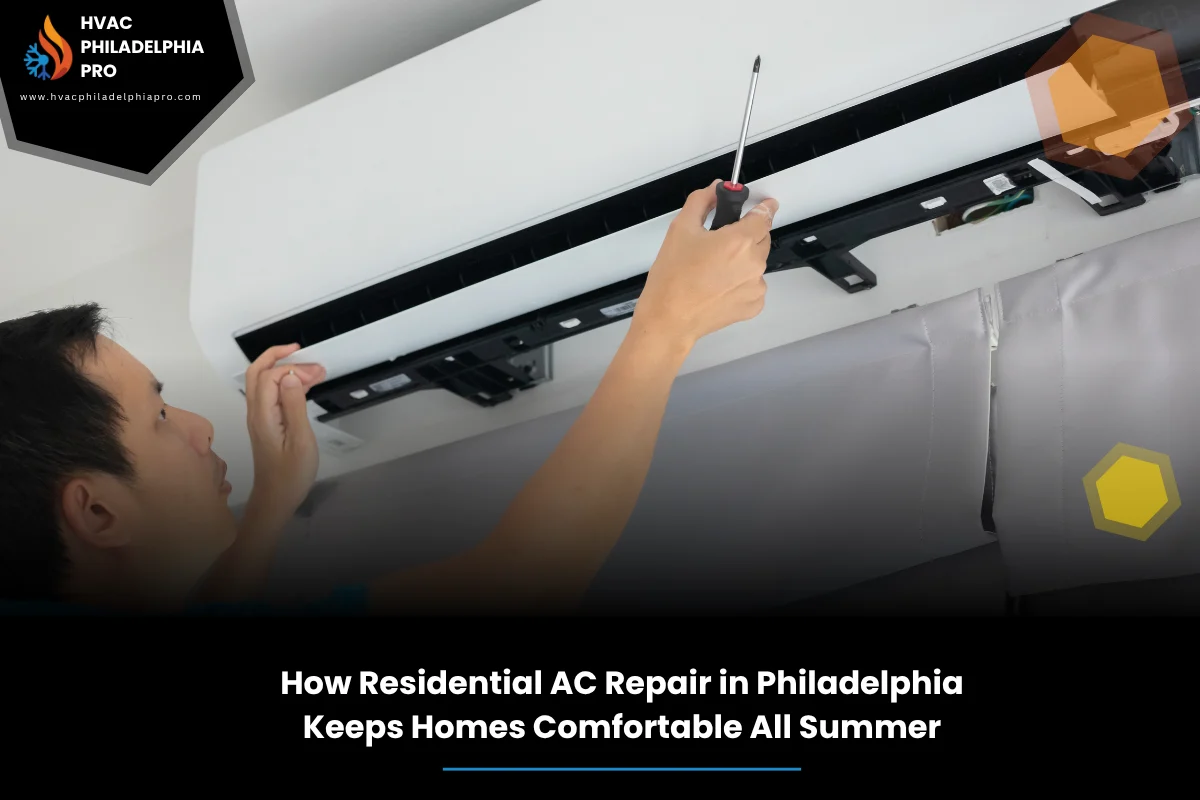
When humid air rolls in and the thermometer climbs, your AC becomes the quiet hero of the house. That is when residential AC repair in Philadelphia makes the difference between tossing at night and sleeping easy. In a city with heavy humidity and heat waves, a tuned system protects comfort, air quality, and the family budget.
HVAC Philadelphia Pro works across the city every day, so we see what fails, what holds up, and what keeps energy bills in check. In this guide, we break down how summer stress hits your system, what you can check fast, and how to plan repairs the smart way. Use it to avoid surprise breakdowns and keep cool through long July stretches.
Table of Contents
Quick Summary
Philadelphia summers push air conditioners hard. Heat and moisture raise indoor loads, so airflow, refrigerant charge, and thermostat control all need attention. Start with simple checks: filter, vents, thermostat, outdoor coil, and breaker. Watch for signs like warm air, short cycling, or ice on the lines. Handle easy fixes yourself, then call for targeted repairs when the issue goes deeper.
Use a simple summer plan: clean filter monthly, clear the outdoor unit, check drains, schedule preseason tune-ups, and track utility bills for sudden spikes. When systems age or need repeat fixes, compare repair to replacement with total cost of ownership in mind. You will find more background on AC repair fundamentals in the complete guide to AC repair in Philadelphia for both homes and small businesses, which ties these ideas together with seasonal tips and safety notes.
Why Philly summers strain your AC
Heat is only part of the story. The real load comes from humidity that raises indoor moisture and makes rooms feel sticky even at the right temperature. Your air handler must remove water from the air, not just cool it, which requires steady airflow and solid refrigerant charge to avoid long run times.
If you want a deeper dive into what affects performance from weather to building type, see the Complete Guide to AC Repair in Philadelphia PA for Comfortable Homes and Businesses, which explains the basics that drive comfort and efficiency in our climate.
Common parts that fail in home AC units
Warm air from the vents often points to low refrigerant or a bad reversing valve in heat pump systems. A refrigerant leak may start small, but it leaves the coil starved, lowers cooling, and can freeze the indoor coil. Leaks need proper recovery, repair, and recharging by a trained tech.
Short cycling or hard starting hints at failing capacitors or contactors. These small electrical parts wear faster in high heat. Replace them early to protect the compressor. If you hear buzzing, clicking, or smell burnt plastic at startup, cut power and get it checked.
Poor airflow points to clogged filters, dirty evaporator coils, or a weak blower motor. A clean filter and coil let refrigerant do its job. If the coil is matted with dust or pet hair, cooling drops and energy use climbs fast.
DIY checks before you call
Start with the easy win: swap the filter. A fresh filter replacement restores airflow and can fix weak cooling in minutes. Then open all supply vents, even in rooms you do not use, to keep static pressure low and protect the blower.
Next, make sure the thermostat is on cool, the setpoint is below room temp, and the fan is on auto. Step outside and clear leaves or weeds from the condenser. Rinse the coil gently from the inside out to lift dirt. Finally, check the breaker and the outdoor disconnect if nothing starts.
A simple summer-ready framework
Use this steady plan to glide through July and August: preseason tune-up, monthly filter check, coil cleaning, drain check, and basic electrical inspection. This rhythm of seasonal maintenance catches small issues before they become emergency calls.
Follow a 5-step loop: observe, clean, test, record, adjust. Observe noises and temperatures. Clean filters and coils. Test thermostat accuracy and safety switches. Record date, readings, and any odd behavior. Adjust vents and schedules for comfort and savings.
For broader context on system behavior and repair order of operations, you can review the complete guide on this topic for a structured approach to evaluation and safety before deeper work begins.
When to bring in a pro and what to expect
Call a technician when you see ice on the lines, hear grinding, or smell burning. Also call if the system trips the breaker, short cycles every few minutes, or blows warm air after all the basic checks. Expect a safe power-down, visual inspection, pressure readings, and electrical tests to pinpoint the fault. This is where targeted diagnostic testing saves time and money.
If you prefer a service visit that focuses on clear findings and next steps, learn more about residential AC repair in Philadelphia for a look at how visits are structured, from check-in to recommendations and post-repair verification.
Repair vs replace comparison
Sometimes a focused fix wins. Other times, replacement is smarter when parts stack up or energy use surges. Use the table below to weigh your options with total costs in mind, not just today’s bill.
| Option | Best for | Typical signs | Pros | Cons |
|---|---|---|---|---|
| Targeted Repair | Newer systems with one failed part | Capacitor failure, clogged drain, minor leak | Lower upfront cost, fast turnaround | May repeat if system has broader wear |
| Strategic Repair Plan | Mid-age units with a few known weak points | Intermittent faults, rising bills, noisy starts | Spreads costs, extends useful life | Efficiency may still lag modern units |
| Replacement | Old units with frequent breakdowns | Compressor issues, coil corrosion, poor airflow | New warranty, higher efficiency | Higher upfront cost, planning time needed |
Look at age, repair frequency, energy use, and expected life expectancy to decide. If an old compressor fails or refrigerant type is obsolete, a new system often pays back through lower bills and fewer emergency calls.
Energy and indoor air tips for steady comfort
Seal and insulate the attic and rim joists to lighten the AC load. Keep blinds closed on hot afternoons. Set the thermostat a bit higher and use ceiling fans to feel cooler. Replace filters more often during peak pollen to protect coils and keep rooms balanced. These small steps trim run time and protect parts.
According to U.S. Department of Energy (n.d.), regular maintenance and clean filters can lower energy use and improve performance in central AC systems. Maintaining Your Air Conditioner
Philadelphia-specific considerations
Row homes often have long duct runs and tight returns. That can raise static pressure and starve rooms at the far end. Balance supply and return paths, add returns where missing, and keep doors undercut for better airflow balance. Watch for condensation on ducts in humid basements and add insulation where needed.
Street trees shed seeds that clog outdoor coils every spring. Clear debris from the top and sides, and keep a two-foot space around the unit for proper condenser breathing. If your home sits near heavy traffic dust, clean the coil mid-season, not just once in spring.
FAQ: Summer AC questions, answered
- How often should I change my AC filter in summer?
Check monthly and replace when dirty. Many homes in Philly need a new filter every 30 to 45 days during peak heat due to pollen and dust.
- Why is my AC running but not cooling well?
Likely airflow or refrigerant charge. Start with the filter and outdoor coil. If cooling stays weak, a tech should test pressures and look for leaks.
- Is ice on the refrigerant line normal?
No. Ice points to low airflow or low charge. Shut the system off to thaw and fix the cause before restarting to prevent compressor damage.
- What is short cycling and why is it bad?
Short cycling means quick on-off bursts. It wastes energy and adds wear. Causes include oversized units, bad capacitors, or airflow issues.
- Can thermostat placement affect comfort?
Yes. If it sits near a sunny window or a supply vent, it will misread room temp. Move it to an interior wall for steadier readings.
- When should I consider replacing instead of repairing?
Consider replacement if the unit is old, breaks often, or has a failed compressor. Rising bills and loud operation are also clues.
- Does closing vents in unused rooms help?
Usually not. It raises static pressure and can reduce cooling. Keep vents open and use zoning or balancing dampers when possible.
- What maintenance should I do before a heat wave?
Install a clean filter, clear the outdoor coil, test the thermostat, and run the system early to catch problems before the hottest days hit.
Conclusion
With a bit of planning and fast checks, residential AC repair in Philadelphia stays simple and predictable. Handle filters, coils, and basic settings yourself. Then call for skilled diagnostics when cooling drops, lines freeze, or breakers trip. This balance keeps repair costs in check and comfort steady through thick humidity.
Use the habits in this guide and the broader concepts covered in the city’s complete guide to AC repair to get ahead of heat waves, not chase them. If you want a second opinion or a clear plan for your system, contact HVAC Philadelphia Pro for expert assistance. Stay cool, breathe easier, and enjoy summer nights without the stress.
continue reading
Related Posts

Learn how to choose the right EV charger electrician in Philadelphia for reliable repairs. Get a simple vetting framework, diagnostics, safety tips, and when to repair or replace.
See why hiring an EV charger electrician in Philadelphia is safer than DIY. Learn about load checks, code, GFCI, 240V outlet work, and a simple planning framework.
Learn what really happens with residential EV charger installation in Philadelphia, from panel checks and permits to charger choice, placement, safety, and testing.