
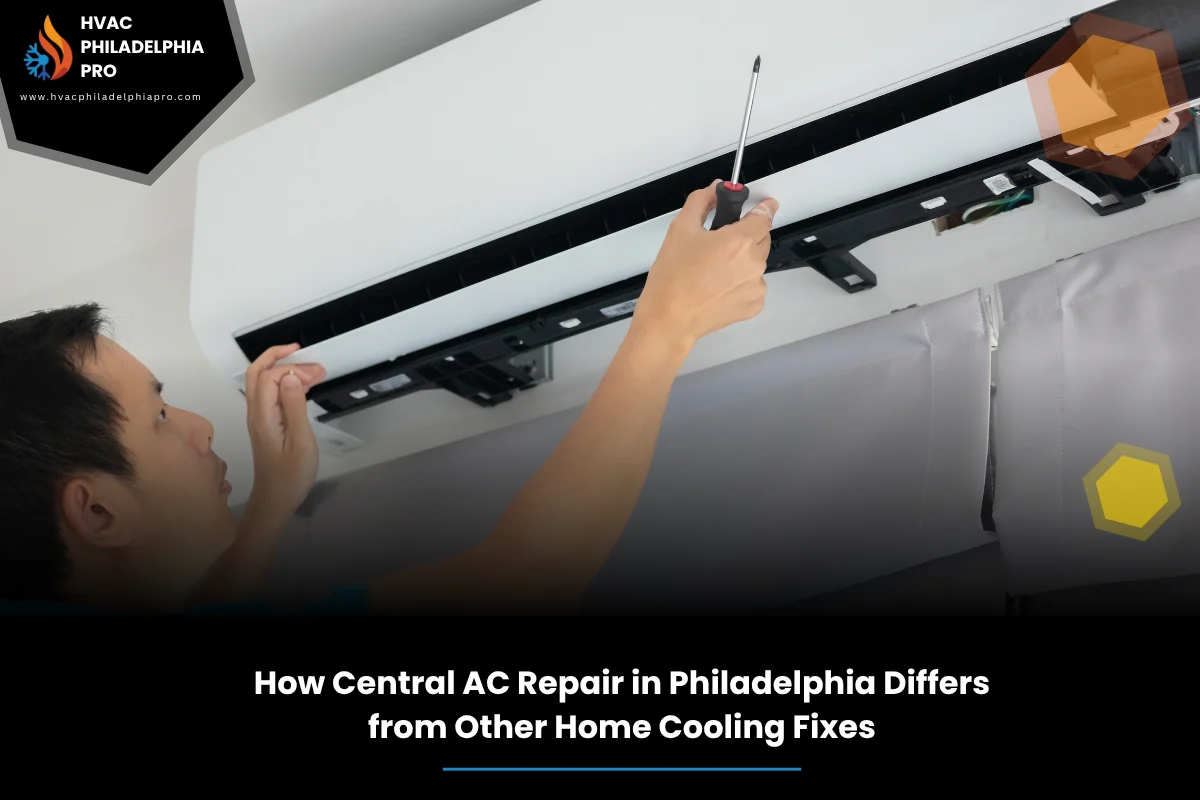
Central air is a different beast. Window units hum along in a single room. Ductless systems target zones. But a whole-house system ties everything together, from the thermostat to long runs of ductwork and a condenser outside. That’s why HVAC Philadelphia Pro treats central systems with a different plan and pace than small, standalone coolers.
If your home loses cool air on a hot city afternoon, you need fast answers that fit how your system is built. Our focus here is on central AC repair in Philadelphia, and how it stands apart from other home cooling fixes. We’ll walk through what makes central systems unique, how techs test them, and what you can do to keep air moving. You’ll learn where airflow gets blocked, how condensers struggle, and when repairs are smarter than replacements.
We’ll compare central AC to window units and ductless, show you a simple framework to spot issues early, and share safety and maintenance tips. Read this before you pull off a grille or pop a panel. It will save time, and likely, money.
Table of Contents
Quick Summary
Central systems push cool air through long ducts, so problems can hide in returns, supply runs, or the air handler. Fixes often blend refrigerant checks with ductwork testing and controls tuning. Standalone units, like window ACs, rarely need this level of whole-home thinking.
You’ll see how common AC airflow problems show up differently in a full system versus a single-room unit. We also compare costs of complexity, not price, so you can plan your next move. For a broader view across repairs and maintenance, see the Complete Guide to AC Repair in Philadelphia PA for Comfortable Homes and Businesses to connect these ideas end-to-end.
Philadelphia Homes and Central AC: What Changes the Repair Game
Many Philly homes mix old bones with newer equipment. That means tight returns, long runs, and odd chases. A small leak or blockage can starve rooms while the thermostat thinks everything is fine. That mismatch calls for testing the house and the system together, not just the box outside.
Rowhomes often put the condenser on small patios or rooftops. That can limit airflow around the unit. In those setups, condenser unit repair may include clearing obstructions and checking fan performance under heat and sun. These tweaks matter more than they do for a window unit stuck in a shaded window.
Older ducts can pinch shut at turns or lose seams at joints. With central systems, tiny leaks add up. A window unit can’t have a duct leak. A ductless head can’t either. Central is unique here, and that’s why the repair path is different.
Central AC vs Other Cooling Fixes: Key Differences
Before we dig deeper, here’s a quick look at how central systems differ from window and ductless setups when it’s time to diagnose and fix.
| Cooling Type | Main Repair Focus | Common Bottleneck | Complexity |
|---|---|---|---|
| Central AC | System integration across ducts, blower, coil, condenser, controls | Duct leaks, static pressure, undersized returns, thermostat logic | High |
| Ductless Mini-Split | Individual air handler, line set, board, sensors | Condensate clogs, sensor faults | Medium |
| Window/Portable Unit | Basic cleaning, fan, coil, simple controls | Dirty filters, coil frost | Low |
Central systems need balancing and sealing to deliver even cooling. That’s a building task, not just an equipment task. Window and portable units avoid those headaches but trade away whole-home comfort.
Why Airflow Matters More in Central Systems
Air is the carrier of comfort. If it cannot move, the coil freezes, rooms go warm, and energy bills rise. In central systems, small issues like a clogged filter, matted coil, or weak blower scale into a house-wide drop in comfort. That’s why pros test flow, pressure, and temperature across the system, not just at the vent.
According to U.S. Department of Energy Energy Saver, poor airflow and improper refrigerant levels reduce performance and can shorten equipment life (U.S. Department of Energy, n.d.).
U.S. Department of Energy Energy Saver: Central Air Conditioning
[IMAGE: simplified diagram showing return air, filter, blower, evaporator coil, supply ducts, and outdoor condenser]
Diagnostic Checks That Separate Central AC Repairs
Window and portable units rarely need a pressure reading or a duct inspection. Central systems do. A smart check starts with filter and coil condition, then measures temperature split across the indoor coil to verify heat transfer. Next, techs measure static pressure in the ductwork to see if the blower is fighting a blockage.
They’ll also verify thermostat operation and staging. A wrong thermostat setting can force short cycles and fake comfort. When needed, refrigerant pressures are checked to confirm charge and coil health. If the condenser is starved for air, the tech may find high head pressure and trim bushes, clean fins, or replace a weak fan motor.
These steps pop up often during home air conditioner repair in Philadelphia, where older ductwork or tight returns can cause long-term strain. Our complete guide to AC repair in Philadelphia for homes and businesses goes deeper into the whole sequence of checks, but here we keep it focused on what sets central systems apart.
A Simple Framework to Troubleshoot Central AC
Use this quick framework to spot problems fast and avoid guesswork. It won’t fix every issue, but it helps you talk clearly with a tech when you call.
- Airflow first. Check filter, return grilles, and supply vents. Listen for a struggling blower and note weak rooms. This is your baseline for airflow testing.
- Temperature next. Measure return and nearest supply. A normal cooling split is typically in a moderate range; if it’s far off, note it for the tech.
- Outdoor unit. Confirm the condenser fan runs, fins are clear, and no debris blocks the sides. Avoid bending fins.
- Thermostat sanity. Verify mode, setpoint, and schedule. Rules-based setbacks can cause short runs that never stabilize.
- Document patterns. Does the problem happen at peak heat, at night, or after rain? Patterns steer testing.
If you want a deeper step list with pro-level checks, see the complete guide on this topic and compare it to your notes. When you speak the same language, diagnosis moves faster and costs less.
When DIY Stops: Getting Help the Smart Way
Some tasks call for meters, gauges, and trained eyes. That includes refrigerant charge verification, duct leakage testing, and board-level controls work. If you’ve checked airflow and thermostat basics and the system still swings hot and cold, it’s time to bring in a pro.
For system-level issues and coordinated testing, schedule central AC repair in Philadelphia with a team that can inspect ducts, verify pressures, and tune controls. This keeps you focused on the symptoms while a tech traces the cause through the whole system.
Expect a clear explanation of findings, options to fix, and likely risks if you wait. Ask about return sizing, filter type, and blower speed. A simple tweak there can quiet the unit and boost comfort without touching the refrigerant loop.
Common Problems You’ll See With Central AC
Ductwork balancing issues show up as rooms that never match the setpoint. The blower pushes, but pressure spikes at bottlenecks. Techs may open dampers, resize returns, or recommend sealing to cut losses.
AC airflow problems can also come from a clogged evaporator coil. That coil hides behind panels and can mat with dust. Cleaning it restores heat transfer, keeps the compressor cooler, and can stop freeze-ups.
Condenser unit repair in Philadelphia often ties to outdoor life: cottonwood fluff, leaves, or city grime clog fins. Clearing that debris, checking the fan capacitor, and straightening fins can drop pressures and stabilize cooling.
Preventive Moves to Avoid Repairs Next Summer
Start with filters. Pick a type that protects the coil without choking airflow. Oversized returns help more than “better” filters. Then plan seasonal cleaning for the coil and fins. A simple schedule for coil cleaning keeps static pressure in check.
Keep shrubs trimmed around the condenser and sweep away debris after storms. Set reminders to rinse the outdoor coil gently. Inside, vacuum return grilles and keep furniture off supply vents. These small habits lower strain and stretch system life.
Finally, learn your thermostat’s schedule logic. Avoid constant tiny tweaks. Let the system run long enough to pull humidity down and settle rooms evenly.
How Central AC Repairs Differ From Window and Ductless Fixes
Window units fix fast. You change a filter, clean a coil, or swap a fan. Ductless repairs focus on a head, a board, or a local sensor. Central systems need whole-system diagnostics to be right, because a fix in one spot can cause pain somewhere else.
That’s why a lot of air conditioner repair in Philadelphia PA comes down to testing the chain of parts together. One weak link drags the rest. Done well, central system repairs feel less like parts swapping and more like restoring a balanced path for air and refrigerant.
If you remember one thing, remember this: a central system is a network. The fastest fix is the one that makes the network steady again.
FAQ
- Why does my central AC cool some rooms but not others?
Central systems depend on duct design and pressure. Leaks, tight returns, or closed dampers can starve rooms. Cleaning the coil and checking duct pressure often reveals the cause.
- Can a dirty filter really cause a breakdown?
Yes. A clogged filter cuts airflow, raises coil temps, and can trigger freeze-ups or compressor strain. Change filters on schedule and pick one that balances flow and filtration.
- How is central AC repair different from window AC repair?
Window units are standalone. Central systems link ducts, blower, coil, condenser, and controls. Repairs often include airflow tests and duct fixes, not just part swaps.
- What’s a normal temperature split for central AC?
It varies with load and indoor conditions. A steady, reasonable split that matches system design is the goal. If your split swings wildly, a tech should test airflow and charge.
- Should I turn off my AC if the coil is iced?
Yes. Turn the system off and let the ice melt. Running it can harm the compressor. After thawing, check the filter and call a pro if frost returns.
- Is duct sealing worth it for cooling performance?
Often, yes. Sealing and balancing can restore flow to starved rooms and cut runtime. A tech can test static pressure and leakage to confirm if it will help.
Conclusion
Central cooling is a house system, not a single box. That’s why diagnostic sequence, airflow checks, and smart tuning matter more here than with simpler units. When you understand how ducts, blower, coil, and condenser work together, you can spot issues early and explain them clearly.
Use the steps above to check filters, vents, temperature, and outdoor airflow. If the problem hangs on, bring in a tech who can test the network, not just the parts. For deeper background, revisit the idea set in our complete guide to AC repair in Philadelphia for homes and businesses, and keep notes on what you observe.
If you need coordinated help with central AC repair in Philadelphia, act before the next heat wave. Contact HVAC Philadelphia Pro for expert assistance. Steady air, even temps, and a calmer condenser are all within reach when the system is checked and tuned as a whole.
continue reading
Related Posts
Learn how to choose the right EV charger electrician in Philadelphia for reliable repairs. Get a simple vetting framework, diagnostics, safety tips, and when to repair or replace.
See why hiring an EV charger electrician in Philadelphia is safer than DIY. Learn about load checks, code, GFCI, 240V outlet work, and a simple planning framework.
Learn what really happens with residential EV charger installation in Philadelphia, from panel checks and permits to charger choice, placement, safety, and testing.