
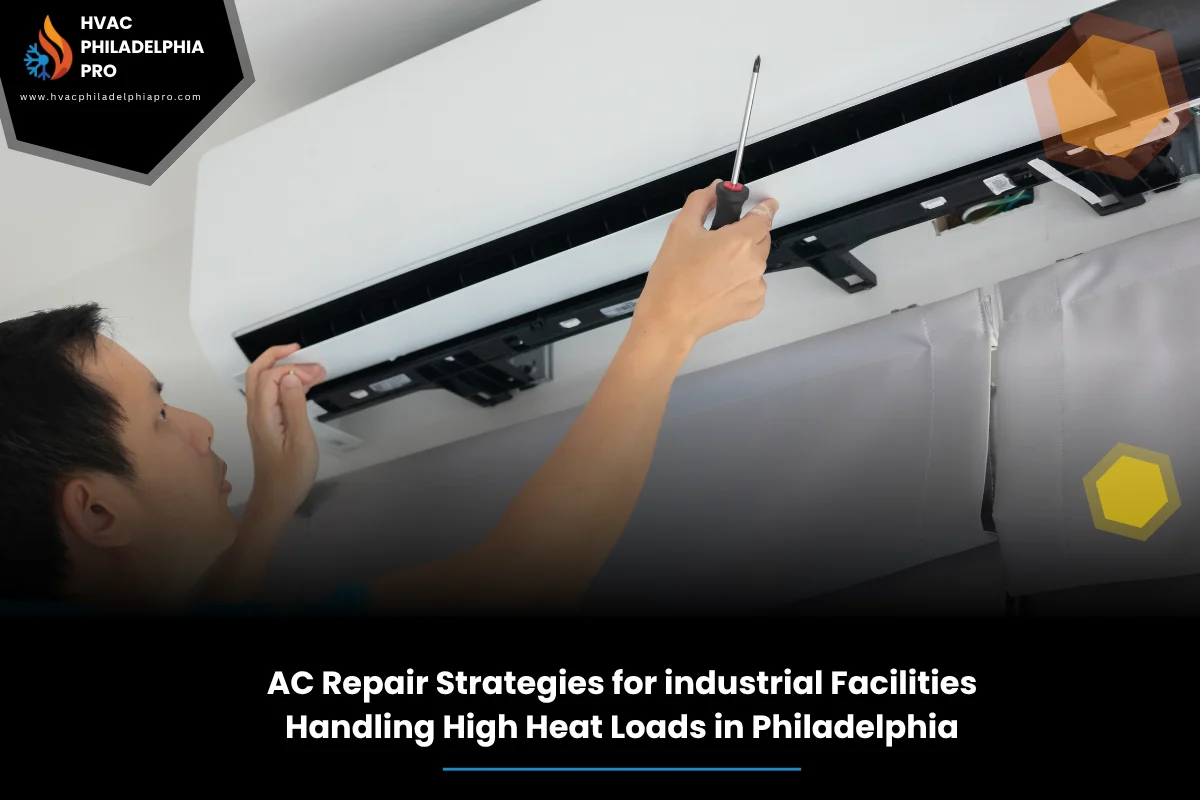
Industrial spaces run hot. Ovens, presses, welders, and nonstop shifts pile heat into the air, and the AC has to fight back all day. If the system stumbles, production slows and safety drops. That is why teams look hard at HVAC repair in Philadelphia PA as a planning item, not just a reaction when things break.
At HVAC Philadelphia Pro, we work with plants that deal with high internal heat and tight timelines. When you need educational guidance and a clear path to stabilize cooling, this article lays out field-tested steps you can use. If you decide to seek help, read more about HVAC repair in Philadelphia PA and keep it handy for urgent needs.
Table of Contents
Quick summary
High heat loads in industrial facilities push AC systems to the edge. The fix is not one big move. It is a set of small wins that add up. Start with a heat map of processes and zones. Balance fans and ducts. Improve condenser heat rejection. Build N+1 backup where it matters. Add sensors to catch drift early. Tighten filtration and make-up air. Then follow a steady maintenance cadence with parts on hand. These steps echo the thinking you will find in the complete guide to AC repair in Philadelphia PA, but here we aim at heavy process heat and round-the-clock operations.
Why high heat loads break AC systems in industrial facilities
Industrial gear throws off thousands of BTUs every hour. If that heat stays trapped, coils flood with heat, head pressure climbs, and compressors short-cycle. The room feels cool near vents and sweltering near the line. That mismatch often points to a weak thermal load profile and poor airflow control.
Seasonal spikes and long shifts make it worse. For a broader view of how AC systems behave under stress and what to check first, see the Complete Guide to AC Repair in Philadelphia PA for Comfortable Homes and Businesses. The ideas there apply to plants too, but you will scale them around machines, makeup air, and process zones.
Load mapping and zoning that target the real heat
Walk the floor and log temps by zone, machine, and shift. Mark return temps, supply temps, and surface temps near heat sources. This quick audit shapes your load mapping plan and points to the top three bottlenecks.
Use that map to set micro-zones. Add hard duct runs, curtains, or partitions where it helps pull heat away from people and sensors. Focus on moving hot air out of the space, not just blasting more cold air into it. That shift often drops runtime and evens out comfort.
Airflow and duct strategies for heavy process heat
Many plants fight the same pain: AC airflow problems. Kinked flex, blocked returns, or one big supply blasting a wide area all waste capacity. Start with total external static pressure, then adjust dampers and fan speeds to hit design airflow.
In zones with point heat, add capture hoods or high-temp returns above the source. That change sharpens airflow balancing and keeps heat off the evaporator coil. Seal leaks and insulate duct runs that cross hot bays to protect supply temps.
Heat rejection and condenser performance in hot summers
When outdoor temps soar, the AC lives or dies at the condenser. Coils need clean fins, strong fan motors, and good clearances. Small fixes here boost condenser capacity and lower head pressure fast.
If you plan for summer AC repair in Philadelphia, look at water source or adiabatic aids where allowed, shade structures that do not choke intake air, and staged condenser fans. Keep a plan for rinsing coils during dusty runs, and log head pressure daily when temps peak.
Redundancy and emergency readiness around critical zones
Production cells, server rooms, or QA labs often need backup. True N+1 redundancy means the loss of one unit will not stop you. That can be a spare rooftop unit on a transfer switch, a split system with extra capacity, or a portable chiller connection ready to roll.
For emergency AC repair in Philadelphia, do a dry run. Tag power points, confirm clear paths for portable units, and list contact details. Keep quick-connect hoses and fittings on site. A two-hour save beats a full shift lost.
Controls and monitoring that prevent slow drift
Sensors are your early warning. Place temp and pressure sensors near hot zones, returns, and condenser outlets. Tie them into alerts. With real-time monitoring, you catch creeping head pressure, rising discharge temps, or falling delta-T before comfort drops.
According to U.S. Department of Energy (2023), routine HVAC checks and filter changes help systems run better and avoid breakdowns by keeping heat transfer steady and airflow strong. U.S. Department of Energy: Maintaining Your Air Conditioner
Filtration, make-up air, and coil protection
High process heat often comes with dust, smoke, or fumes. Poor filters load fast and starve airflow. Pick the right MERV and schedule swaps based on pressure drop, not guesswork. Good make-up air keeps the building from pulling in grit through cracks and doors.
Protect coils with pre-filters where needed. Coat coils if you face corrosive air. Add access points so techs can clean without tearing down half the system.
Step-by-step framework to triage and fix high-heat AC problems
Use this simple path on a hot-day breakdown. It speeds root-cause triage and gets cooling back online safely. For deeper background and planning checklists, you can also read the complete guide on this topic and adapt it to industrial zones.
- Safety first. Lockout-tagout as needed. Verify clear air paths and remove obvious blockages.
- Airflow check. Measure return and supply temps and static pressure. If airflow is low, fix that before chasing refrigerant.
- Coil and filter status. Inspect filters, evaporator, and condenser fins. Clean or replace to restore heat transfer.
- Condenser health. Check fan operation and coil cleanliness. Log head pressure versus ambient.
- Refrigerant circuit. Only after airflow and coils are right, check superheat and subcooling against design.
- Controls sanity check. Confirm sensor reads, setpoints, and staging. Reboot controllers if needed.
- Temporary relief. If a unit is down, shift airflow, open bypass dampers, or deploy portable cooling for the hot zone.
- Root fix and follow-up. Document the cause, the fix, and new setpoints. Schedule a recheck at the next hot shift.
Cooling options comparison for high internal heat
Different plants need different tools. Use this quick view to align system type with process heat and maintenance skill on site.
| System type | Best for | Strengths | Watch-outs | Maintenance complexity |
|---|---|---|---|---|
| Packaged DX rooftop | General bays with moderate heat | Fast install, common parts | Capacity drop in high ambient | Low to medium |
| Chilled water with air handlers | Large plants, high process heat | Scalable, steady temps | Needs chiller upkeep and piping | Medium to high |
| Dedicated spot cooling | Point sources and hot cells | Targets heat at source | May not cool the whole bay | Low |
| Evaporative assist (where suitable) | Dry-air processes and makeup air | Lowers condenser load | Humidity control needed | Low to medium |
Maintenance cadence and parts planning that stick
Write a plan that fits shifts, not just calendar months. Tie tasks to runtime, seasonal spikes, and audits. Good preventive maintenance hits filters, belts, bearings, and coil cleaning on a tight loop.
Keep a small stock of fan motors, contactors, capacitors, and sensor spares. Log readings weekly on hot weeks. Trend head pressure, delta-T, and amperage. When numbers drift, act before the line feels it.
FAQs: AC repair for industrial high-heat environments
- How do I know if heat load is the real problem?
Compare supply and return temps and watch head pressure. If airflow and coils are fine but temps still rise near machines, the process heat is likely overwhelming the zone.
- What should I check first during a hot-day failure?
Start with airflow and filters, then coil cleanliness, then condenser fans. Only check refrigerant after those are right. This flow saves time and parts.
- Can balancing alone fix AC airflow problems?
Often, yes. Correct damper settings, sealed ducts, and clean filters can restore capacity. For stubborn spots, add capture hoods or short duct runs.
- When is N+1 worth it in an industrial bay?
Use it for zones that stop production if they overheat. A spare unit or portable-ready connection protects output during a failure or maintenance.
- How often should coils be cleaned in dusty plants?
Base it on pressure drop and visual checks, not just a calendar. In peak dust seasons, plan quick rinses weekly and deep cleans as needed.
- Do sensors and controls really reduce breakdowns?
Yes. Trend data shows drift early. Fixing fan speeds, setpoints, or clogged filters before a trip keeps lines stable and lowers repair costs.
- Is summer AC repair in Philadelphia different?
High ambient temps strain condensers. Plan extra coil care, shade that does not block intake air, and staged fans. Keep a hot-weather checklist ready.
- Should I replace or repair a struggling unit?
Look at age, runtime, repair history, and whether capacity fits the current heat load. If the process changed, a right-sized replacement may be smarter.
Conclusion
Industrial cooling is a game of details. Get the load map right, move hot air the smart way, and help the condenser dump heat even on the worst days. Plan backup for the zones that matter, watch sensors, and keep parts close. When you think about HVAC repair in Philadelphia PA, aim for steps that hold the line all summer and all shift.
This article pairs with the broader ideas from the complete guide to AC repair in Philadelphia PA and focuses them on hot, busy floors. If you want help putting this plan into action, contact HVAC Philadelphia Pro for expert assistance. Keep people safe, keep quality steady, and keep your lines moving.
continue reading
Related Posts

Learn practical steps for EV charger troubleshooting in Philadelphia. Keep distribution centers moving with safe triage, common fault cues, and when to call emergency help.
Learn Level 2 charger repair best practices for industrial sites using heavy equipment. Get safe workflows, diagnostic steps, breaker tips, and maintenance plans.
A clear plan for EV charging station repair in Philadelphia keeps manufacturing fleets moving. Learn failure modes, a root-cause workflow, parts to stock, safety steps, and a repair path that cuts downtime.