

Running a building means juggling comfort, uptime, and costs. When it comes to HVAC installation in Philadelphia PA, the choices you make before day one shape comfort and bills for years. Office floors, busy restaurants, retail spaces, and mixed commercial buildings each place different demands on airflow, zoning, and controls. A clear plan keeps surprises off your punch list.
The team at HVAC Philadelphia Pro works with owners who want practical answers, not noise. If you are mapping out upgrades or replacing worn equipment, start with your goals, loads, and schedule. For a deeper look at commercial options or to coordinate timing, read up first, then discuss scope with a pro. When you are ready to explore your options, check HVAC installation in Philadelphia PA to understand what the process involves for your type of building.
Table of Contents
Quick summary
Here is the short version. Match system type to space use, hours, and occupancy. Plan for right-sizing and airflow, not just equipment tonnage. Expect permits, staging, and some downtime, but you can phase work to keep doors open. Smart controls help split energy use by zone. Maintenance and training protect your warranty and your electric bill.
For offices, quiet operation and zoning matter. For restaurants, ventilation and hood makeup air lead the design. For retail, even temps and fast recovery count more. Keep records from day one, and verify performance at startup. A complete AC installation guide is helpful, but your final plan must reflect your actual loads and duct paths.
Philadelphia codes, climate, and building type basics
Local codes, winter cold snaps, and humid summers push equipment hard. Older commercial buildings may also have limited roof access or tight shafts that affect selection. In mixed-use properties, separating metering and zoning avoids billing disputes later. Prioritize code compliance early so your timeline does not slip during inspections.
If you want a deeper background on residential mechanics that also apply to small commercial settings, see the Complete Guide to AC Installation in Philadelphia PA for Reliable Home Cooling. It lays out core steps like sizing, duct checks, and startup testing that inform sound planning for light commercial spaces.
Sizing and load calculation for commercial spaces
Guessing on tonnage causes hot spots, short cycling, and high bills. A proper load calculation accounts for occupants, equipment, lighting, window orientation, and stack effect. Office Buildings and Retail Stores often see variable crowds, so diversity factors and schedules matter. Restaurants add latent loads from cooking and dish areas.
According to the U.S. Department of Energy (2023), accurate sizing and duct design improve comfort and efficiency while preventing humidity and cycling issues. This holds true across building types and climates. U.S. Department of Energy: Central Air Conditioning
Ductwork, ventilation, and indoor air quality
Ducts must deliver design airflow, stay sealed, and fit your ceiling plenum. Balance fans, exhaust, and outdoor air so pressure stays neutral. Plan for ventilation balance that meets kitchen hoods in Restaurants and restrooms in Commercial Buildings, without pulling in unfiltered air or causing drafts at entrances.
Filter choice affects both IAQ and static pressure. Higher efficiency filters catch more particles but may raise resistance, so size fans and ducts accordingly. Consider dedicated outdoor air units (DOAS) for tight envelope buildings, feeding dry, conditioned air to each zone.
System options: rooftop units, split systems, and VRF
Start with system selection shaped by roof space, interior ceiling height, noise targets, and service access. Rooftop units simplify service but need crane access and roof structure checks. Split systems fit small tenant spaces. VRF offers strong zoning and heat recovery for offices with shifting loads.
| System type | Best for | Pros | Cons | Typical footprint | Maintenance complexity |
|---|---|---|---|---|---|
| Packaged Rooftop Unit (RTU) | Retail Stores, Restaurants, low to mid-rise Commercial Buildings | All-in-one, easy service access, fast replacement | Needs roof structure support and crane, weather exposure | Roof curb and duct risers | Moderate |
| Split System (Condenser + Air Handler) | Small tenant spaces, back-of-house, individual suites | Flexible placement, quieter indoors | Line length limits, multiple condensers can clutter | Outdoor pad + indoor closet/mech room | Low to Moderate |
| VRF/VRV | Office Buildings with many zones | Excellent zoning, heat recovery, compact indoor units | Higher first cost, specialized service skills | Outdoor modules + slim ceiling cassettes | High |
Controls, zoning, and smart thermostats
Controls tie comfort to how your space is used. Good zoning trims waste when meeting rooms sit empty or dining rooms slow after lunch. For Retail Stores with glass fronts, separate a perimeter zone to handle solar gain. For Restaurants, integrate hood interlocks so makeup air and cooling move together.
Choose controls you can actually use. Dashboards should surface alarms, filter reminders, and energy trends. Plan user roles so managers can change schedules, while staff only adjust setpoints within limits.
Installation timeline, permits, and downtime planning
Permits, equipment lead times, and crane schedules can stack up. Create a phased scheduling plan: order long-lead gear early, stage demo off-hours, and keep a backup day for weather. Coordinate roof access with tenants and notify neighbors if a street lane will close for a lift.
Restaurants and Retail Stores often need weekend swaps. Office Buildings may prefer night changeovers to avoid noise and dust. Always protect inventory, IT closets, and kitchen gear from debris and vibration.
Energy efficiency and incentives
Choose high-efficiency equipment when it pays back within your hold period. Features like variable-speed fans, economizers, and heat recovery can cut run time. In offices, evening setbacks and morning recovery save energy without hurting comfort. On retail floors, door heaters and vestibules reduce temperature swings.
Track utility rates by time of day and avoid peak demand spikes with staged starts. Keep records of model numbers and commissioning data in case incentives or future benchmarking rules require proof.
Maintenance, warranties, and lifecycle cost
A solid preventive maintenance plan protects coils, belts, drains, and electronics. Quarterly checks often fit restaurant and retail schedules; offices may stretch longer, but filter changes should follow real dust loads. Keep spare filters and belts on site to speed service calls.
Register warranties and store start-up reports. If equipment trips often or energy use looks high, review commissioning data first. Small fixes like airflow balance or sensor calibration can bring systems back on spec.
Step-by-step framework for a smooth project
This simple project roadmap keeps work on track and your doors open.
- Define goals: comfort ranges, zones, noise, and energy targets for each space type.
- Assess loads: measure occupancy, plug loads, and hours by zone; document existing ducts and electrical.
- Select system: match RTU, split, or VRF to access, zoning, and service skill availability. For fundamentals, skim the complete guide on this topic before finalizing specs.
- Plan permits and staging: line up crane windows, material lifts, and tenant notices; protect finishes and stock.
- Install and commission: check airflow, refrigerant charge, controls, and safety devices; log results.
- Train and maintain: set schedules, lock ranges, and start your PM calendar on day one.
How this applies to replacement projects
When scoping HVAC system replacement in Philadelphia scenarios, confirm if the existing electrical and duct paths still suit new equipment. Older RTUs may lack curb adapters for current footprints. In tight shafts, you might shift to slim fan coils or compact cassettes to avoid major demo.
For home cooling system replacement in Philadelphia within mixed-use buildings, coordinate condo boards, elevator bookings, and delivery routes. Use quiet-hour rules and floor protection. Keep a spare day in the schedule for inspection timing.
Air conditioning installation details that affect comfort
Airflow is king. For any air conditioning system installation, verify supply and return placement to avoid drafts at desks or dining tables. Seal duct joints, set proper diffusers, and balance each branch. In open offices, consider high-induction diffusers to mix air without cold streaks.
Do a final walk with a light and smoke pencil. Check every grille for flow and every thermostat for location and labeling. Mark panels and disconnects so future service is fast and safe.
FAQ: What business owners ask about HVAC installation
- How long does a typical commercial HVAC install take?
Small tenant spaces can swap in a weekend with planning. Larger multi-zone projects may phase over several weeks around business hours. Lead time for equipment and permits often shapes the final timeline more than the actual on-site work.
- Can we keep operating during the install?
Yes, with phasing. Crews can handle noisy or dusty tasks off-hours. Temporary cooling or spot ventilation may bridge gaps. Protect stock, kitchens, and server rooms, and schedule lifts when foot traffic is light.
- What matters more, efficiency rating or proper sizing?
Both matter, but sizing and airflow come first. A well-sized medium-efficiency system can outperform an oversized high-efficiency unit. Good controls and sealing often unlock bigger gains than the nameplate alone.
- Do we need new ductwork for a replacement?
Not always. If ducts are tight, sized right, and accessible, you may keep them. Many projects still need fixes like sealing, resizing branches, or adding returns. A duct inspection should be part of your scope.
- What is commissioning and why does it matter?
Commissioning is a documented startup process that verifies airflow, charge, controls, and safety. It proves the system performs as designed. Those results also help support warranties and simplify service later.
- How should we train staff on new controls?
Keep it simple. Set schedules, alarm points, and lock ranges. Give managers full access and staff limited changes. Store a one-page quick start guide near the panel and share a digital copy.
- What are common pitfalls to avoid?
Skipping load calculations, ignoring duct leaks, pushing crane day without a weather backup, and failing to label zones. Another big one is not planning for filter access and future service clearance.
- When should filters be changed after startup?
Construction dust can load filters fast. Do an early change after the first few weeks, then follow your PM schedule based on hours and dust levels. Keep spares on site to avoid downtime.
Conclusion
Smart planning for HVAC installation in Philadelphia PA ties comfort, uptime, and cost into one clear plan. Get the load math right, pick systems that fit your space and staff, and protect the install with good staging. Verify performance at startup and keep logs. A little structure now saves big headaches later.
Contact HVAC Philadelphia Pro for expert assistance. We keep projects simple to follow and easy to maintain. With solid commissioning and ongoing maintenance, your system will run steady through summer heat and winter cold. Use this guide as your checklist, then tailor each step to your building, your hours, and your business goals.
continue reading
Related Posts

Learn practical steps for EV charger troubleshooting in Philadelphia. Keep distribution centers moving with safe triage, common fault cues, and when to call emergency help.
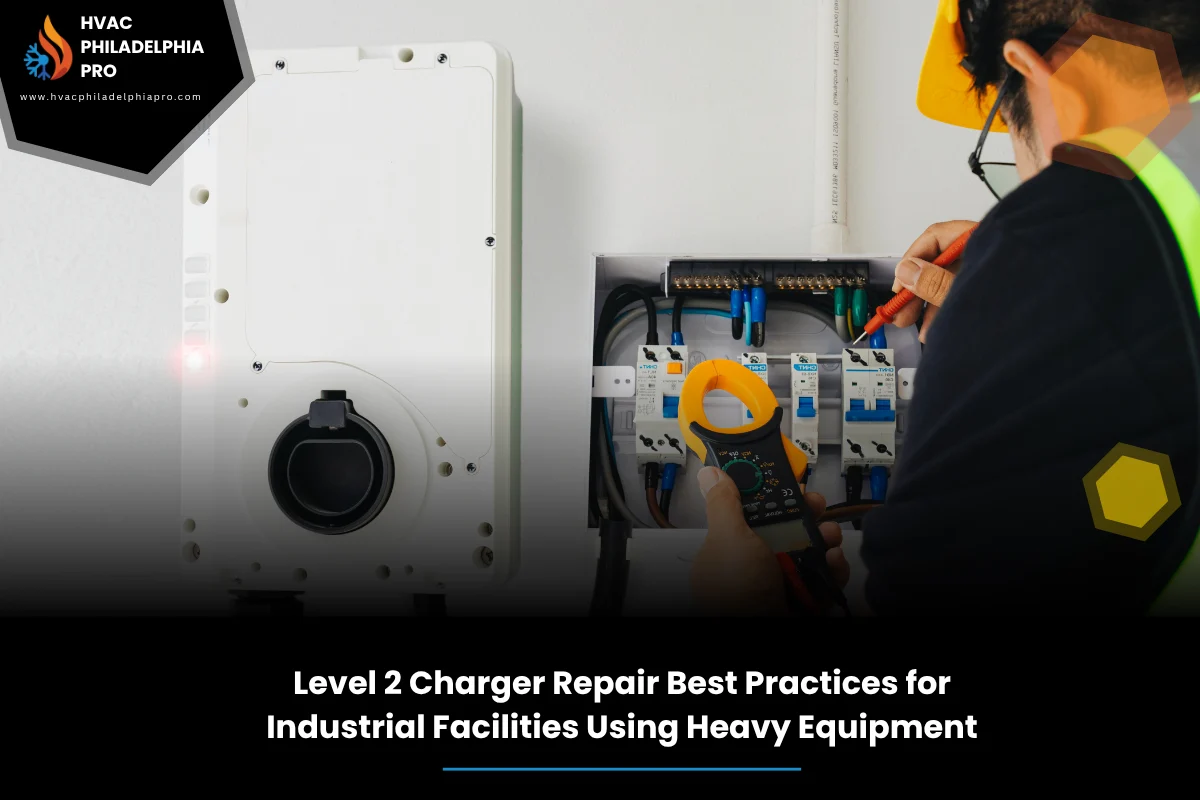
Learn Level 2 charger repair best practices for industrial sites using heavy equipment. Get safe workflows, diagnostic steps, breaker tips, and maintenance plans.

A clear plan for EV charging station repair in Philadelphia keeps manufacturing fleets moving. Learn failure modes, a root-cause workflow, parts to stock, safety steps, and a repair path that cuts downtime.