
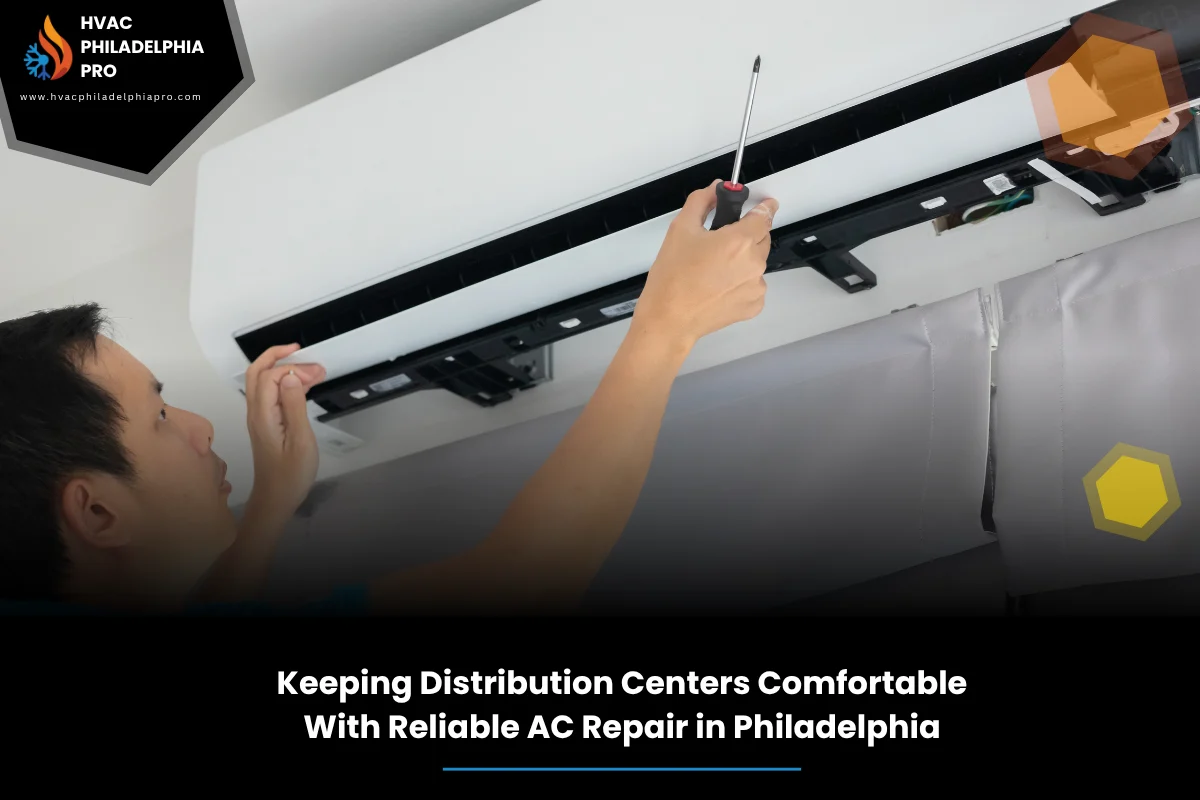
Big warehouses run hot and cold at the same time. Loading docks pull in humid air. Miles of aisles trap heat. People and machines never stop. If cooling slips, product quality and worker comfort suffer fast. For many facility leaders, planning HVAC repair in Philadelphia PA is really about keeping operations steady and safe.
When an air handler fails or a rooftop unit alarms, you need straight answers and a clear path. That is why HVAC Philadelphia Pro focuses on simple steps, clear communication, and steady follow-through. If you want to understand repair options or schedule help, learn more about HVAC repair in Philadelphia PA and how it fits into your site plan.
In this guide for distribution centers, we break down airflow, zoning, controls, safety, and speed. We also touch on preventive maintenance that prevents breakdowns and saves energy. Along the way, we reference the broader principles covered in the complete guide to AC repair in Philadelphia PA, but we tailor the talk to warehouse floors and busy docks.
Table of Contents
Quick Summary
Distribution centers need steady temperatures, dry air, and consistent airflow. That takes the right system type, strong maintenance, and smart monitoring. Build a simple playbook to triage alerts, choose fixes, and keep backup options ready. In short, design for uptime, plan for season peaks, and verify results. Add redundancy where one failure could stall shipping. Use data from sensors to react early. And when things go sideways, a clear decision path will cut downtime and stress.
Why Temperature Control Is Tricky in Distribution Centers
Warehouses have fast-changing loads. Dock doors open often. Lift trucks move air in odd ways. Tall racks create hot and cold columns. All that makes even cooling tough. Start by mapping where people work, where goods are sensitive, and where the building leaks air. Then you can target fixes and avoid chasing symptoms. In many buildings, defining heat zones beats trying to cool the whole space the same way.
How Warehouse HVAC Works at Scale
Most large sites rely on rooftop units, packaged systems, and makeup air to replace what is lost at docks. Big open spaces need big thinking: proper duct design, destratification fans, and balanced outside air. If sizing or airflow is off, nothing else will feel right. A careful load calculation and airflow test help set a clean baseline. For fundamentals and common fixes, see Complete Guide to AC Repair in Philadelphia PA for Comfortable Homes and Businesses for context that applies to both homes and busy facilities.
Airflow and Zoning With Tall Racks
Racks change airflow. Heat rises and stalls near the top. Workers feel drafts near aisles while pallets trap warm air. Use destratification fans to pull heat down in winter and smooth air layers in summer. Add controls so zones run only as needed. One pass of airflow balancing can calm hot spots and reduce short cycling. [IMAGE: Overhead plan showing airflow across racks, docks, and pick lines]
Maintenance Priorities That Cut Downtime
Cooling fails when small issues pile up. Dirty filters choke airflow. Loose belts slip at peak load. Sensors drift and mislead. Build a simple schedule that tracks filters, coils, belts, drains, and sensors. Roll it into a seasonal plan before heat waves. Smart preventive maintenance beats emergency calls, and it keeps your energy use steady.
Smart Monitoring and Real-Time Alerts
Trend data tells the story before comfort slips. Track supply and return temps, humidity, fan status, and door counts. Simple thresholds warn you when a coil is icing or a fan is slowing. Tie alerts to a playbook so the right person acts fast. With remote monitoring, you do not have to be on the roof to know what is going on.
Emergency Readiness: Same Day and After-Hours
When a unit dies on a hot afternoon, every hour matters. Keep a short list of critical parts on site: belts, filters, contactors, fuses. Know which zones you can flex and which must stay stable. Define who you call, what info to share, and how to stage people around the work. A clear emergency response plan turns chaos into steps you can run under pressure.
Indoor Air Quality for People and Products
Dust, exhaust, and moisture drift in from docks and forklifts. That mix affects worker comfort and product quality. Choose filter ratings that match your risks, seal gaps, and keep drains clear. Control humidity to protect packaging and reduce mold risk. Strong filtration plus steady airflow is a simple, durable combo.
According to OSHA (n.d.), employers should plan for heat illness prevention and focus on safe indoor conditions with airflow, hydration, and response steps.
Energy vs Uptime: What to Optimize
Energy matters, but uptime rules the floor. Choose where to save and where to spend. Use staging, night pre-cooling, and VFDs to cut peaks. Add backup for zones that cannot fail. If you pick the right mix, you protect shipments and lower bills. In many cases, variable speed drives pay back in smoother operation and fewer spikes.
| Strategy | Uptime impact | Energy cost | Notes |
|---|---|---|---|
| Run-to-fail | High risk | Unpredictable | Cheapest to start, costly when failures stack |
| Preventive maintenance | Low risk | Moderate | Steady comfort, fewer surprises |
| Redundancy N+1 | Very low risk | Higher | Backup capacity for critical zones |
| Variable speed drives | Low risk | Lower | Smoother loads, fewer spikes |
| Night pre-cooling | Medium risk | Lower | Helps during heat waves if envelope is tight |
A Simple 5-Step Framework for Fast AC Decisions
When an alert hits, use this quick path to stay calm and decisive. Keep it printed at the dock office.
- Stabilize: Move staff or goods if a hot spot forms. Log time and location.
- Verify: Check breakers, filters, belts, and sensor readings first.
- Triage: Is the zone critical? Can you throttle nearby units to help? Flag the decision tree step that applies.
- Call: Share model numbers, error codes, and recent changes. Note noise or smells.
- Follow-through: After the fix, confirm temps and humidity. Schedule a root-cause review.
If you want a broader view of parts, diagnostics, and common fixes, see the complete guide on this topic and adapt the steps to your warehouse layout.
Philadelphia-Specific Considerations for Distribution Centers
Summer heat and coastal humidity stress coils and drains. Winters swing from mild to icy, which can strain rooftop defrost cycles. Plan seasonal checks before the first heat wave and first freeze. Keep an eye on dock weather seals and makeup air settings. When temp and humidity jump, quick access to same day AC repair can steady the floor.
Search interest often spikes for phrases like AC repair in Philadelphia, emergency AC repair in Philadelphia, same day AC repair in Philadelphia, and even AC repair near in Philadelphia during heat waves. Use that as a signal to tighten your maintenance timing, confirm parts on hand, and finalize contact paths before the surge. The broader complete guide to AC repair in Philadelphia PA also explains why fast diagnostics matter in peak seasons.
FAQ: AC issues in distribution centers
- What is the most common cause of uneven cooling in warehouses?
Blocked airflow from tall racks and dirty filters. Balance fans, clear paths, and verify duct design before changing setpoints.
- How often should filters be changed in a dusty warehouse?
Check monthly at first. Set a cycle based on pressure drop and dust load, not just the calendar.
- Do I need extra capacity for dock areas?
Often yes. Docks leak air and swing fast. Zoned control and makeup air help keep nearby pick lines stable.
- Can I run fewer units at night to save energy?
Yes, if humidity stays in range and critical zones remain stable. Use sensors to confirm results by morning.
- What data should I trend for early warning?
Supply and return temps, humidity, fan status, and door cycles. Look for drift over days, not just single spikes.
- When should I add redundancy?
Add backup where a single failure would halt shipping, spoil goods, or risk safety.
- Why do coils ice even when filters are clean?
Low airflow, low refrigerant, or bad sensors can cause icing. Verify airflow and check superheat and subcool data.
- How do I prepare for a heat wave?
Clean coils, confirm belts, stock parts, test alarms, and pre-cool overnight if your envelope allows.
Conclusion
Cooling a distribution center is part science, part discipline. Map problem zones, tune airflow, and keep a sharp maintenance plan. Use data to spot trouble early. Build a simple response path so teams move fast when something fails. If you keep uptime first, operational continuity becomes the default, not a wish.
For location-specific help, planning, or urgent fixes, align your playbook with resources on HVAC repair in Philadelphia PA and keep contacts and parts ready before peak season. If you want a hand checking your plan or need guidance on next steps, contact HVAC Philadelphia Pro for expert assistance. The right mix of design, monitoring, and care will keep people comfortable and goods moving, day after day.
continue reading
Related Posts

Learn practical steps for EV charger troubleshooting in Philadelphia. Keep distribution centers moving with safe triage, common fault cues, and when to call emergency help.
Learn Level 2 charger repair best practices for industrial sites using heavy equipment. Get safe workflows, diagnostic steps, breaker tips, and maintenance plans.
A clear plan for EV charging station repair in Philadelphia keeps manufacturing fleets moving. Learn failure modes, a root-cause workflow, parts to stock, safety steps, and a repair path that cuts downtime.