
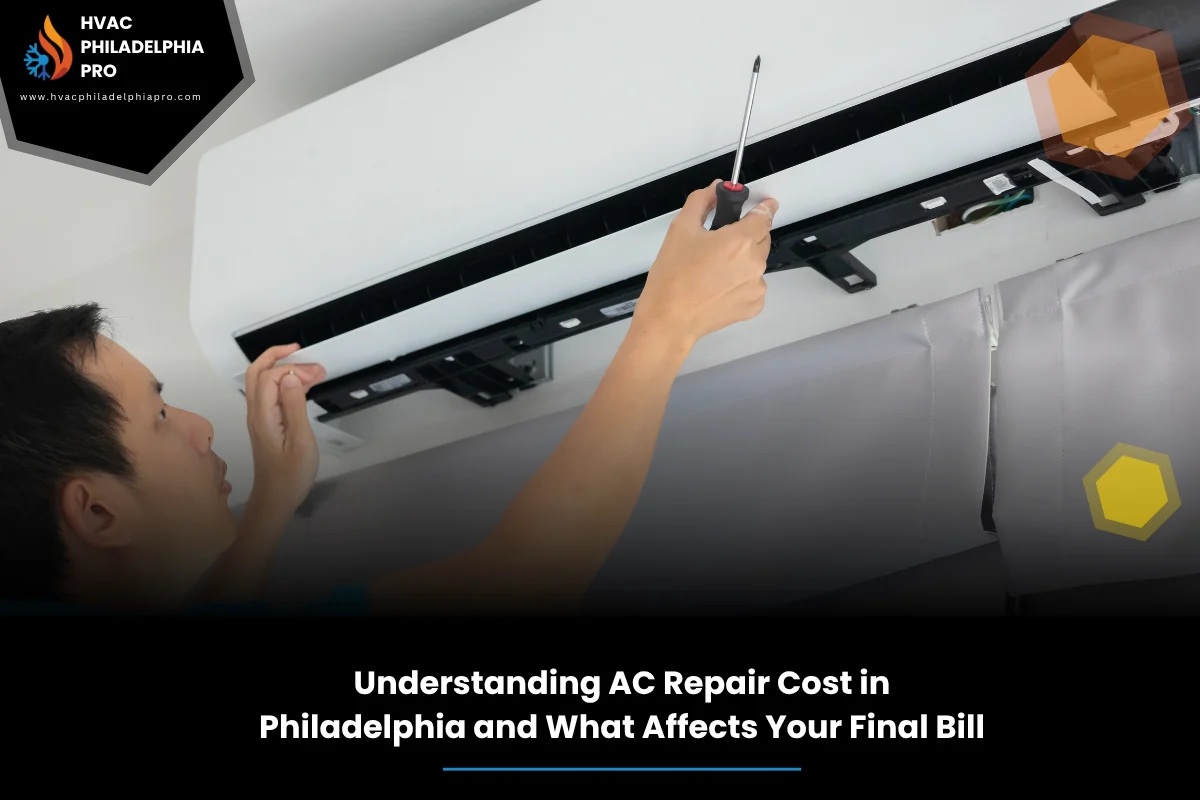
When the cool air stops, your next thought is the bill. Knowing the AC repair cost in Philadelphia helps you plan fast and avoid surprises. This guide breaks down the parts of a typical invoice, what drives price swings, and smart steps to keep costs under control without cutting corners.
The first time we mention our team, we mean HVAC Philadelphia Pro. We see what adds up on real jobs every day, and we keep the focus on clear choices, not pressure. If you want a deeper service breakdown, review AC repair cost in Philadelphia to compare typical tasks and scope.
We’ll cover common fixes, when emergency timing raises rates, and how techs estimate labor and parts. We’ll also connect the dots with ideas from the complete guide to AC repair in Philadelphia, so you can line up the right next step with confidence.
Table of Contents
Quick Summary
Most repair bills come from a few pieces: inspection, parts, labor, and refrigerant. Prices shift with system age, part availability, and how easy the unit is to reach. Timing plays a role too, especially after hours or on the hottest days.
Expect a range that starts low for simple fixes and climbs with big parts like motors, coils, or compressors. Small prep steps at home often trim time on site. Think clean filter, clear access, and any error codes ready. These small moves reduce wasted time on arrival.
If you want more step-by-step background on repair basics and safety checks, the bigger AC repair guide ties the details together for both homes and small workplaces.
What Drives AC Repair Cost in Philadelphia
Price starts with diagnosis. The tech confirms the fault, then factors system type, age, part brand, and access. Tight spaces, rooftop locations, or hard-to-reach air handlers raise time. Age matters too, since older systems can have stacked issues.
Seasonal rush hits hard when heat waves land. High call volume means fewer open slots and longer days. That fast-moving schedule can push rates higher due to seasonal demand and overtime. For deeper context on common fixes and timelines, see the Complete Guide to AC Repair in Philadelphia PA for Comfortable Homes and Businesses.
Part sourcing also shapes cost. OEM parts tend to cost more than universal parts but may match better and last longer. Supply chain delays can add a return trip, which affects labor total. Finally, urgency and safety risks (like electrical faults) can raise priority and price.
Typical Line Items You’ll See on an AC Repair Bill
First, expect an inspection charge. This covers a site visit and fault tracing. Many calls start with a diagnostic fee that the company may credit toward the repair if you approve the work.
Next comes labor, which is based on time on site and task difficulty. Parts show as separate items, like capacitors, contactors, fan motors, or boards. If refrigerant is added, it appears by type and amount.
You may also see disposal or environmental fees, especially for old parts or refrigerant handling. Travel or parking fees can appear in dense areas. Sales tax applies to parts in many cases. Read each line. If anything looks off, ask the tech to explain in plain terms.
Price Ranges in Philadelphia: Simple Tiers to Plan Your Budget
Use these rough tiers to set expectations. They reflect common repair paths and time on site. Your final invoice will depend on brand, access, age, and actual fault. Consider this a planning tool, not a quote.
| Tier | Scope | Estimated Range |
|---|---|---|
| Basic | Minor electrical fixes, capacitor, simple thermostat, small relay | $150 to $450 |
| Mid-range | Fan motor, leak check and minor repair, control board, drain issues | $450 to $1,200 |
| Advanced | Coils, compressor, major leak repair, complex electrical tracing | $1,200 to $4,500+ |
One key thought: advanced parts like a compressor or evaporator coil change the math. If an advanced repair lands close to replacement cost, weigh long-term energy savings, warranty coverage, and fewer future calls.
Note: Actual pricing may vary depending on scope and requirements.
Repair or Replace: A Simple Comparison
When a major part fails, compare the next 3 to 8 years of costs. Add expected repair spend, energy use, and any warranty value. A newer unit can save on power and reduce surprise breakdowns, but only if the current system is truly at the end of its life.
| Factor | Repair Now | Replace Now |
|---|---|---|
| Upfront Cost | Lower for small to mid repairs | Higher initial outlay |
| Downtime | Usually shorter for minor faults | May need scheduling and permits |
| Future Repairs | More likely on older units | Less likely with new warranty |
| Energy Use | Older systems use more power | New systems often use less |
| Long-Term Math | Lower now, may climb later | Higher now, lower ongoing |
List your total costs on paper, not just the invoice today. Include expected repairs, energy bills, and total cost of ownership. Then choose the path that fits your budget and comfort goals.
Timing and Urgency: How Emergency Calls Change the Bill
Heat waves fill calendars fast. Same-day or late-night calls can raise rates because teams work longer and shift crews. After-hours visits and holidays often include premium charges to cover staffing.
If you can wait safely until normal hours, ask for the next open slot. If it’s an urgent failure with seniors, kids, or health needs at risk, that’s different. Make the call you need, but expect after-hours rates to apply.
Planning ahead helps. Consider a spring tune-up to catch weak parts before summer. That small step often prevents the kind of sudden breakdown that forces an emergency visit.
Homeowner Checklist: A Simple Framework to Lower Your Final Bill
Follow this quick framework before you schedule the visit. It won’t fix every issue, but it can trim time and point the tech in the right direction fast.
Step 1: Safely check the filter. If it’s clogged, replace it.
Step 2: Confirm the thermostat mode and setpoint.
Step 3: Check the breaker and any outdoor disconnect.
Step 4: Note error codes on the thermostat or air handler, if any.
Step 5: Clear access to the indoor unit and outdoor condenser.
Step 6: Write down model and serial numbers.
Step 7: Record symptoms: no cooling, short cycles, odd noise, ice on lines, or water near the air handler.
Step 8: Schedule a time window when someone can walk the tech through the symptoms.
If you want a deeper walk-through of AC basics and common repair paths, see the complete guide on this topic for a broader view from diagnosis to fix.
According to the U.S. Department of Energy, replacing a dirty filter can lower your air conditioner’s energy use by 5 to 15 percent, which also reduces wear and tear over time (U.S. Department of Energy, n.d.). U.S. DOE Energy Saver: Central Air Conditioning
How Techs Estimate Time and Parts
Pros start with safety checks, power tests, and readings at key points. Then they isolate the fault: electrical, airflow, refrigerant, or control logic. Access and age shape the time budget, while brand and part type set the parts plan.
Many companies use flat-rate pricing to prevent surprises. The rate bundles labor and typical parts for a known task. If the fault is unusual, they’ll explain the change before moving ahead. Ask for the plan in simple terms so you can approve with clarity.
When parts are scarce, a stopgap fix might keep you cool while the main part ships. That avoids a second no-cool night, though it may add a small extra visit later. Good notes and photos help speed that return trip.
Warranties, Permits, and Rebates: What Can Change the Math
Check paperwork first. A valid manufacturer warranty can cover the part itself. Labor is often separate. If you installed the unit recently, you may have both parts and limited labor support. Keep model, serial, and install date handy.
Permits are usually tied to new installs or major changes, not basic fixes. When a repair touches bigger system changes, your contractor will advise what’s required. For rebates, utility programs tend to focus on new high-efficiency equipment rather than repairs, but it never hurts to ask.
Keep all invoices and serial numbers. If future issues arise, that paper trail saves time and can help with warranty claims down the road.
FAQ: AC Repair Cost Questions
- What is the average AC repair cost in Philadelphia?
It varies by fault and timing. Minor fixes sit on the low end, while big parts like coils or compressors raise totals. The tables above show broad ranges to help you plan before you call.
- Why do quotes vary between companies?
Methods differ. Some use flat-rate pricing, others use time and materials. Parts brand, warranty terms, and scheduling flexibility also shape the final number.
- Does emergency AC repair in Philadelphia always cost more?
Not always, but after-hours, holiday, or peak heat calls often include premium rates due to staffing and overtime. If safe, schedule during standard hours to reduce cost.
- Can I lower costs with simple steps at home?
Yes. Replace a dirty filter, confirm thermostat settings, and clear access to units. Share error codes and symptoms when you book. These steps speed diagnosis and may reduce labor time.
- When should I consider replacement instead of repair?
When a major part fails on an older unit and the repair price approaches a large share of replacement, compare long-term energy use, warranty value, and future repairs.
- Is affordable AC repair in Philadelphia PA the same as cheap?
Affordable should mean fair pricing for needed work, clear parts choices, and solid workmanship. Ask for options and an itemized plan rather than picking by the lowest number alone.
- How do I avoid surprise add-ons?
Request a written scope before work starts. Ask what’s included, what could change, and how they’ll communicate if the plan needs to shift during the repair.
- Does home air conditioner repair in Philadelphia differ from small business work?
The core tasks are similar. Access, power supply, and equipment size can differ. Clear site info and good access help either way.
Conclusion
You now have a clear picture of the main pieces behind AC repair cost in Philadelphia. From diagnosis to parts and timing, the factors are easy to follow when laid out step by step. Prep work at home, smart scheduling, and clear questions go a long way toward a fair, predictable bill.
Refer back to the pricing tiers and the repair-versus-replace table when a big decision lands. Use ideas from the broader AC repair guide to round out your plan, then choose the option that fits your budget and comfort goals. Contact HVAC Philadelphia Pro for expert assistance.
With the basics in hand, you can make quick, confident choices the next time your AC falters. Focus on value, clarity, and safety, and your final bill will make sense.
continue reading
Related Posts
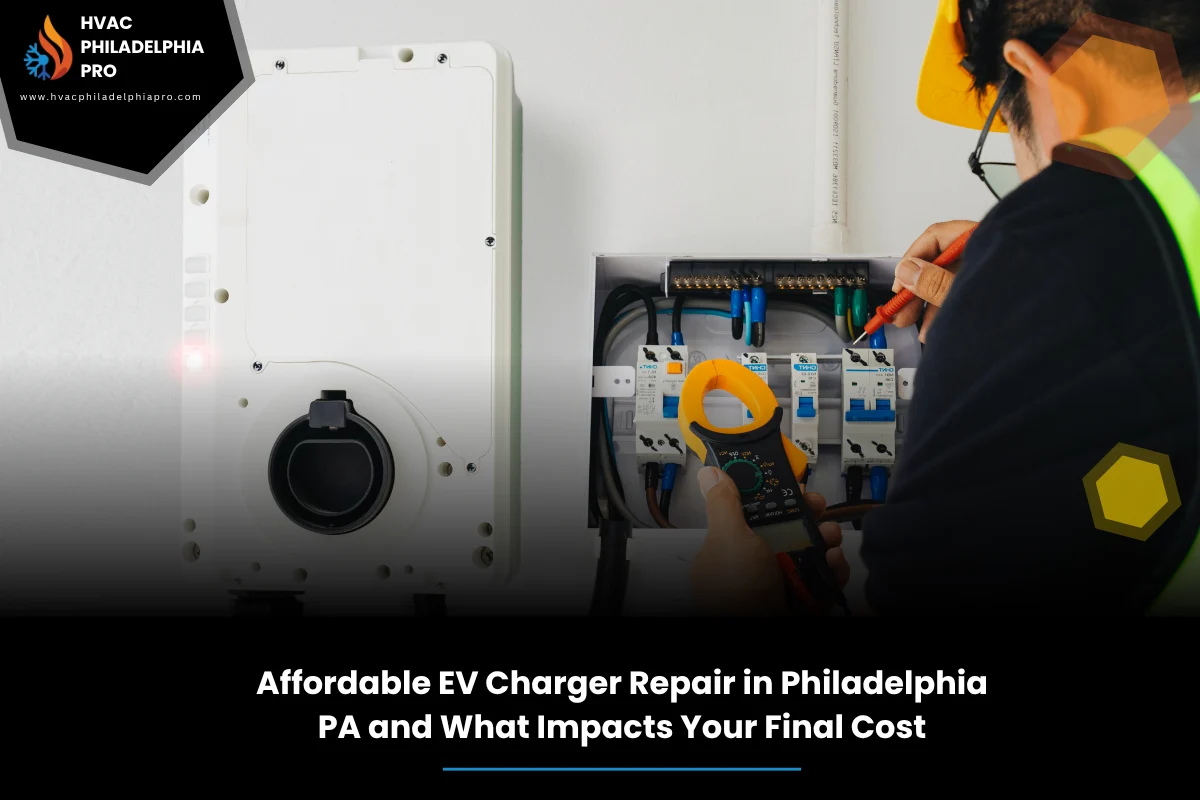
Learn what shapes affordable EV charger repair in Philadelphia PA. See cost drivers, safe DIY checks, pricing ranges, and a simple framework to avoid surprise bills.

See what drives EV charger installation cost in Philadelphia. Learn key factors, realistic price ranges, and a simple plan to avoid surprises and stay safe.

Plan affordable EV charger maintenance in Philadelphia PA with a simple yearly routine, DIY vs pro split, and a 5-step framework. Build safety, cut surprises, and keep charging reliable at home.