
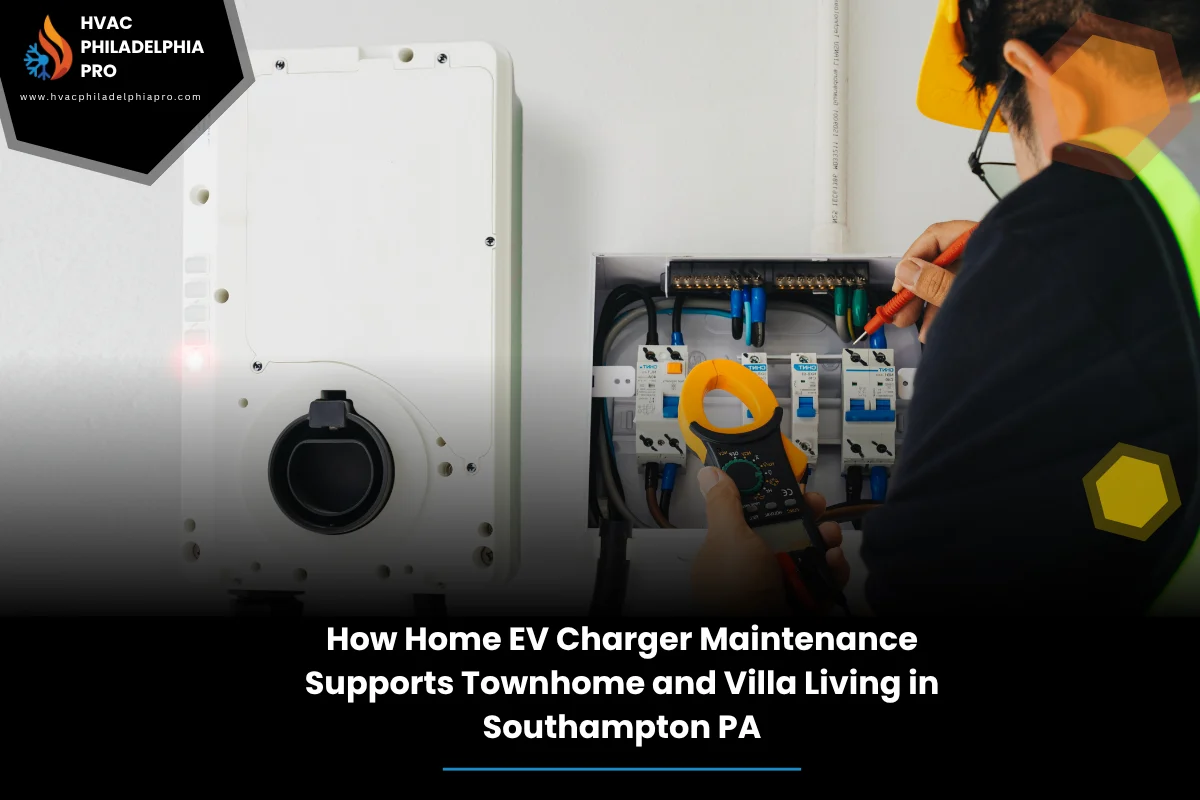
Owning an EV in a townhome or villa can feel simple, until small charger issues stack up. Good habits keep things smooth. When you handle home EV charger maintenance in Philadelphia well, charging stays safe, steady, and fast, even with tight garages or shared parking. In places like Southampton PA, smart care protects your gear and your peace of mind.
You do not need fancy tools or hours of work. You just need a plan that fits attached homes and private villas. If you want help setting a reliable routine, learn more about home EV charger maintenance in Philadelphia and build from there. The team at HVAC Philadelphia Pro can also walk you through options if you are unsure where to start.
Table of Contents
Quick Summary
Townhomes and villas have unique charging spots: tight garages, shared lots, and longer runs to panels. Maintenance keeps the cable, connector, and breaker healthy, so daily charging does not turn into a hassle. A simple monthly routine checks for wear, updates software, and keeps airflow clear. That means fewer tripped breakers and steadier charge speeds.
This guide breaks down layout tips for Southampton-style homes, a 3-2-1 monthly framework, and a quick comparison of charger setups that fit small bays or detached garages. We also cover safety steps, cable management, and when to call a pro. Use these steps to prevent surprise downtime and keep your EV ready every morning.
Why maintenance matters for attached-living homes
In attached homes, nearby walls, storage shelves, and cars leave less room for cable movement. Small scuffs add up fast. That is why preventative EV charger maintenance is so helpful: it spots loose holsters, worn connectors, and dust-clogged vents early. Many of the best practices match what you will find in EV charger maintenance in Philadelphia PA guidance.
If you want a deeper foundation before you build a routine, check the Complete Guide to EV Charger Maintenance in Philadelphia PA for Reliable Home Charging to understand how all the parts work together. Then tailor the details to your space and driving needs.
Southampton PA townhomes and villas: common setups
Many Southampton-style townhomes place the panel near the front of the garage, with a short run to a wall-mounted unit. Villas might have a detached or side-entry garage with longer conduit runs. In both, tight corners and winter storage boxes can pinch cables, so plan the path and holster height with care.
Sketch your space and mark door swings, tire paths, and shelf edges. A little charging layout planning avoids daily scraping. The same setup logic used in residential EV charger service in Philadelphia works well here: clear the cable path, mount at reachable height, and keep the connector off the floor.
Load, circuits, and panel space explained
Level 2 chargers usually need a dedicated 240V circuit. In attached homes, the panel might already feed HVAC, ovens, and dryers. Good load management helps avoid nuisance trips and keeps night charging steady. Many smart chargers let you set max current or schedule charging during lighter household loads.
If panel space is tight, consider a lower-amp setting or a load-sharing device rated for EV use. When in doubt, have a qualified electrician confirm wire size, breaker type, and grounding. That prevents heat buildup and protects the charger over time.
A simple upkeep checklist you can follow
Use this quick list each month to lock in connector care and steady performance. It is fast and keeps small issues small. You will also see steady EV charger efficiency improvement with a clean, well-ventilated unit.
- Connector and cable: Check for nicks, flattened spots, or bent pins. Clean dust from the holster area.
- Mount and hardware: Confirm the charger and holster are tight and level. Look for hairline cracks.
- Vents and airflow: Gently vacuum intake areas. Make sure boxes are not blocking vents.
- Settings and updates: Open the app. Install firmware updates and confirm your charge schedule.
- Ground and GFCI test: If your unit has a test function, use it monthly to verify protection.
Charger options compared for your space
Different layouts call for different hardware choices. Here is a quick look at setups that fit common townhome and villa parking. Choosing well upfront reduces wear, supports Level 2 charging performance, and cuts cable clutter.
| Scenario | Recommended level | Mounting | Cable management | Notes |
|---|---|---|---|---|
| Townhome single-bay garage | Level 2, 30–40A | Wall mount near garage door | Holster + simple hook | Short cable reduces tripping risk |
| Shared lot with assigned spot | Level 2, adjustable amps | Post or pedestal at head of space | Retractor reel if allowed | Clear markings help avoid damage |
| Villa with detached garage | Level 2, 40–50A | Interior wall near panel | Holster + overhead hook | Longer run may need thicker wire |
| Carport or open bay | Level 2, weather-rated unit | Protected wall or post | Enclosed holster | Use weather covers and seals |
3-2-1 monthly framework for reliability
Use this fast routine to keep things simple. It blends routine testing with light cleaning and smart settings. If you need deeper explanations, see the complete guide on this topic and adapt the routine to your charger model.
- 3 minutes: Visual sweep. Check cable, pins, mount, and vents. Wipe dust and clear boxes away.
- 2 checks: Confirm app schedule and max current. Test the safety function if your unit supports it.
- 1 short test: Plug in for five minutes. Watch for steady lights and normal temperatures.
Log findings in your phone notes. A quick photo each month helps you spot slow changes, like tiny cracks or a sagging mount.
Safety and cable management in shared areas
In narrow garages and shared lots, people and pets pass by the charge area. Keep the handle holstered, the cable off the ground, and walk paths clear. Try low-profile hooks and bright tape to mark the cable route. Good GFCI protection and a tidy path prevent trips and shocks.
If you charge outdoors, use a unit rated for wet locations and protect connectors from puddles. After storms, wipe the handle and check for grit in the latch. Dirt causes wear and poor contact over time.
DIY tasks vs when to involve a pro
Homeowners can handle cleaning, visual checks, software updates, and basic schedule tweaks. If you notice heat at the plug, repeated breaker trips, or rapid wear on the connector, pause and seek a professional inspection. Those signs point to wiring, breaker sizing, or grounding issues.
For cabling changes, panel upgrades, or conduit runs in finished walls, keep it to licensed work. The same goes for pedestal installs in shared lots. If you already use residential EV charger service in Philadelphia, ask about options to tune current, relocate the holster, or add cable guides that match your space.
Local tips for Southampton PA sites
Southampton homes see leaf piles in fall and slush in winter. Check drains and keep cables off wet floors to protect the connector. Simple weatherproofing like door sweeps and outlet covers helps, especially in detached garages. Periodic checks keep performance close to what EV charger maintenance in Philadelphia PA standards aim for across the region.
FAQs
- How often should I inspect my home EV charger in a townhome or villa?
Do a quick monthly check and a deeper look each season. Watch for cable wear, loose mounts, dust in vents, and app errors. This schedule fits most attached-home setups.
- What are the biggest wear points to catch early?
Focus on the connector pins, the holster latch, and the strain relief where the cable meets the charger. These spots move the most and show damage first.
- Can settings improve charge speed without upgrading hardware?
Yes. Off-peak schedules and healthy ventilation help sustain speed. Keeping contacts clean and cables untwisted supports stable delivery and better EV charger efficiency improvement over time.
- Is preventative EV charger maintenance different for outdoor carports?
Not much, but water and grit raise the stakes. Use a weather-rated unit, keep connectors covered, and inspect after storms. Clean more often in pollen or salt seasons.
- When should I lower the charger’s max current?
If the breaker runs hot, the garage gets unusually warm, or other large appliances run at the same time, reduce the amp setting. It protects wiring and keeps charging steady.
- What signs mean I should call an electrician?
Frequent breaker trips, buzzing at the panel, a hot plug, or visible cable damage. Stop charging and get a trained check before you plug in again.
- Do software updates really matter?
Yes. Updates improve safety checks, charging logic, and connectivity. They can fix glitches that look like hardware faults and can extend hardware life.
- Can I share one charger between two EVs in a villa?
Many smart units support load sharing or scheduled turns. Keep cords managed to avoid trips, and mount holsters for each car to protect connectors.
Conclusion
Townhome and villa living call for smart, steady care of your charging spot. With a simple plan, you protect parts, avoid crowding issues, and keep your car ready each day. When you focus on home EV charger maintenance in Philadelphia best practices and shape them to your space, you cut downtime and stretch the life of every component.
Use the quick checklist and 3-2-1 framework to stay on track. If deeper issues show up, let a qualified pro review wiring, grounding, and panel capacity before you plug in again. Contact HVAC Philadelphia Pro for expert assistance. With a clean setup and light monthly habits, your charger will serve you well in Southampton-style homes for years.
continue reading
Related Posts

Learn practical steps for EV charger troubleshooting in Philadelphia. Keep distribution centers moving with safe triage, common fault cues, and when to call emergency help.
Learn Level 2 charger repair best practices for industrial sites using heavy equipment. Get safe workflows, diagnostic steps, breaker tips, and maintenance plans.

A clear plan for EV charging station repair in Philadelphia keeps manufacturing fleets moving. Learn failure modes, a root-cause workflow, parts to stock, safety steps, and a repair path that cuts downtime.