
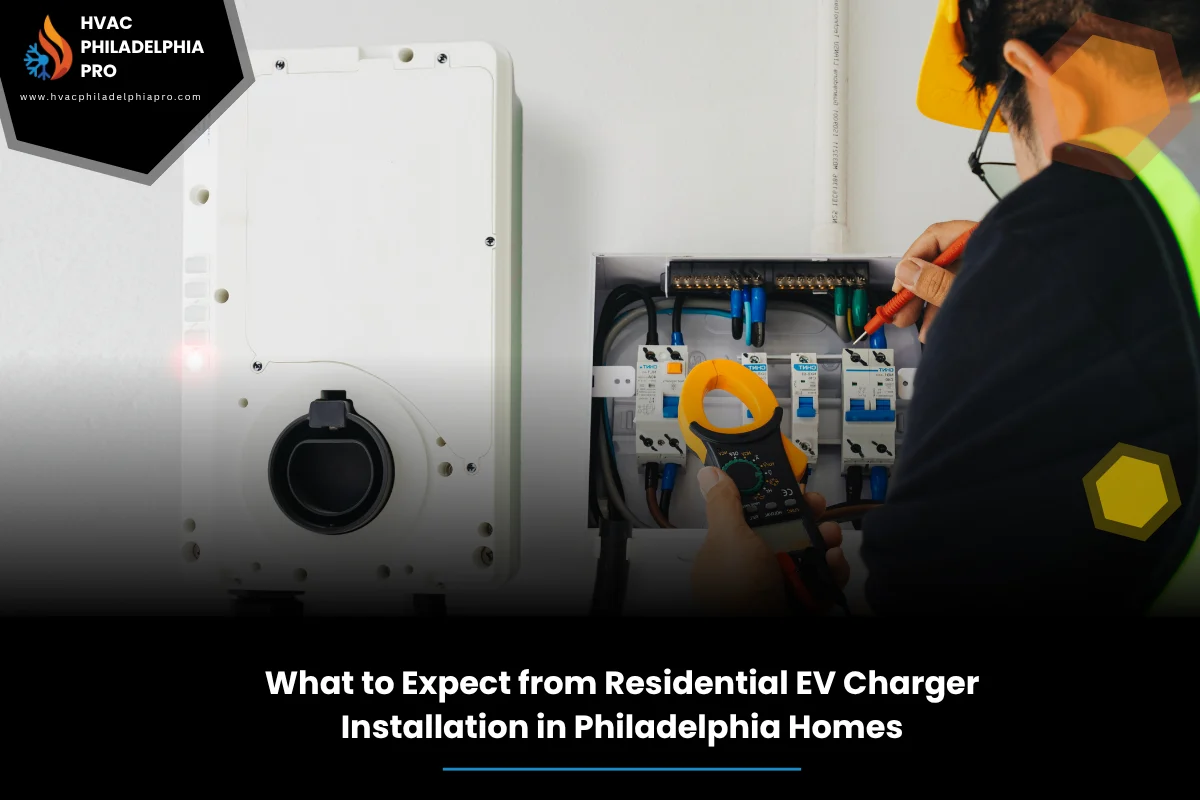
Switching to an electric car is exciting, but the home charging part can feel cloudy. Here’s what really happens with residential EV charger installation in Philadelphia so you can plan with confidence. We’ll cover timelines, permits, power needs, equipment choices, safety checks, and what the day of install looks like, step by step.
If you want a smooth process from start to finish, a licensed team matters. The first visit should be simple: a quick assessment, a clear plan, and straight answers. The crew from HVAC Philadelphia Pro follows that approach across electrical and home systems every day. If you’re ready to plan or compare options, see how residential EV charger installation in Philadelphia typically comes together for local homes.
Table of Contents
Quick Summary
Most homes do well with a Level 2 charger on a dedicated 240-volt line. Expect a panel check, permits, careful routing, and a final test. The job often takes a few hours for straightforward setups. More complex runs, older wiring, or a full panel upgrade can add time. Through it all, you should get plain updates and a safe result.
It helps to decide charger location early and confirm parking patterns, cord reach, and Wi-Fi signal for smart features. You’ll also hear about load management if your electrical panel is near its limit. A tidy install uses proper conduit, labeling, and bonding, and ends with an inspection if the city requires it.
What Happens Before We Start
After a quick call, a tech will check your panel, available amperage, and the path from panel to charger spot. This is where a simple plan forms: circuit size, conduit type, and charger placement. For deeper background on the whole process, see the Complete Guide to EV Charger Installation in Philadelphia PA for Homes and Small Facilities published on our site.
You’ll confirm where the car parks, how long the cord needs to be, and whether the charger will be hardwired or plug-in. The tech will explain panel capacity and whether you need upgrades. You should also review warranty basics and who handles permits so there are no surprises.
Power and Panel Basics
Home EV charging relies on a dedicated circuit sized to the charger’s draw, commonly 30 to 60 amps for Level 2. The electrician will perform a quick load calculation to be sure your panel can support the added demand. If your panel is full or near capacity, you may need a subpanel, load-shedding device, or a main panel upgrade.
According to the U.S. Department of Energy, Level 2 charging uses a 240-volt circuit and is the standard choice for overnight home charging (U.S. Department of Energy, n.d.). Alternative Fuels Data Center: Charging at Home
Permits and Inspections in Philly
For most installs, your contractor pulls the permit, completes the work, and then schedules an inspection. Expect a focus on proper grounding and bonding, conductor sizing, and protection devices. Keeping documentation handy speeds things up if inspectors have questions.
If you read our complete guide to EV charger installation for homes and small facilities in Philadelphia, you’ll see a deeper outline of the permit trail and inspection timing. In short, plan for city timelines in your schedule. It’s routine, and it protects you long term.
Choose the Right Charger: Level 1, Level 2, or Smart
Many homes upgrade from the basic Level 1 portable unit to a faster Level 2 wall unit. Level 2 gives you more miles per hour of charge and fits normal overnight routines. Smart chargers add scheduling, usage tracking, and sometimes load balancing with other home loads.
| Option | Power | Charge Speed | Best For | Notes |
|---|---|---|---|---|
| Level 1 | 120V | Slow | Light daily driving | Uses existing outlet, no new circuit |
| Level 2 | 240V | Fast | Daily commuters | Dedicated 240V circuit recommended |
| Smart Level 2 | 240V | Fast | Routine and tracking | App control, scheduling, energy data |
If you want help comparing brands, our complete guide to EV charger installation for Philadelphia homes covers feature sets and planning tips you can use before you buy.
Where to Place the Charger: Garage or Outdoors
In many rowhomes and single-family houses, a wall near the parking spot is ideal. For garage EV charger installation, think about where the vehicle’s charge port sits so you don’t stretch the cable across walkways. Keep the charger within easy reach but away from bump zones.
Outdoor installs need weather-rated equipment and secure mounting. You’ll want a sealed box, tight conduit, and a smart path that avoids tripping. For home EV charger installation in Philadelphia driveways, a post or wall mount with a tidy cable hook works well.
Installation Day: What It Looks Like
The crew arrives, reviews the plan, and confirms panel shutdown timing. They run conduit or cable, mount the charger, and land wires on the breaker and unit. After that, they label the circuit and test voltage and polarity. If it’s a smart unit, they also help with app setup and Wi-Fi.
Next comes functional testing: the car is plugged in, the charger starts, and indicators are checked. They verify the breaker size, cable support, and all terminations are tight. A tidy cleanup and a quick walkthrough finish the visit. If required, the inspection is scheduled right after.
Safety, Reliability, and Smart Features
Your electrician should prioritize ground-fault protection, proper conductor sizing, and clear labeling. Weather-rated parts are used outdoors, and drip loops keep water out of the enclosure. The install should look clean, with supported runs and protected bends.
Smart chargers add scheduling to use off-peak hours, usage logs to track energy, and firmware updates for long-term performance. If your panel is tight, load-shedding devices can delay charging until there’s room. These choices improve charger reliability and help you avoid nuisance trips.
Upkeep and Simple Fixes
There isn’t much to maintain. Now and then, check the cable, holster, and screws. Keep the charger dry and the cord off the ground when possible. A quick look at the breaker and any exterior conduit is a good habit for routine safety.
If charging slows or stops, start with the basics: confirm power at the panel, reseat the connector, and check the charger’s lights or app. Review any error code in the manual. If it persists, call an EV charger electrician in Philadelphia for a careful diagnosis.
A Practical Framework You Can Follow
Use this simple plan: Plan, Prepare, Install, Verify. It keeps the job on track and transparent. For added context, see the complete guide on this topic to deepen each step before you start.
Plan: Confirm parking, charger type, and panel capacity. Define cable path and cord reach. Choose smart features if you want scheduling and data. Prepare: Gather permit info, utility meter photos, and panel photos. Clear work areas. Install: Mount, wire, and label. Verify: Test charge, app connect, and inspection if required.
Home Timing: What Can Delay Things
Panel upgrades, long wire runs, and tricky surfaces like stone or brick can add time. Permitting schedules also vary, so plan a little buffer. Weather can slow exterior work. A crisp plan and early material choices help keep your Level 2 EV charger installation in Philadelphia on schedule.
Want a smoother path? Share photos of your panel, parking spot, and the route you expect for the conduit. Clear storage from the workspace. Small steps like these make the visit faster and cleaner.
FAQs
- Do I need a new electrical panel for a Level 2 charger?
Not always. Many panels have enough capacity. A load calculation will confirm it. If space or capacity is tight, a subpanel, load management, or a full upgrade may be recommended for safety and performance.
- How long does a typical install take?
Straightforward jobs often finish in half a day. Complex runs, exterior trenching, or panel work can extend to a full day or more. Permits and inspections add calendar time but not hands-on hours at your home.
- Is a dedicated circuit required?
Yes for most Level 2 chargers. A dedicated 240-volt circuit reduces overload risks and nuisance trips. It also ensures the charger can deliver its rated output without sharing power with other loads.
- Can I mount the charger outdoors?
Yes, with weather-rated equipment and proper sealing. Use listed enclosures, approved conduit, and good drainage practices. Outdoor units should be mounted securely and kept off the ground, with tidy cable management.
- What’s the difference between hardwired and plug-in?
Hardwired units have a direct connection and are preferred for higher amperage. Plug-in units use a 240-volt outlet and are easier to relocate. Your electrician can help choose the safest option for your setup.
- Do I need Wi-Fi for a smart charger?
It helps but isn’t required for basic charging. Wi-Fi enables scheduling, usage tracking, and updates. If the signal is weak in your garage, a simple extender usually solves it.
Conclusion
When you understand the steps in residential EV charger installation in Philadelphia, the path gets simple: confirm power, choose the right unit, permit properly, and test everything before calling it done. With a good plan, most homes get fast, safe charging that fits daily life.
If you want more depth, our complete guide to EV charger installation for homes in Philadelphia walks through planning, code items, and common snags. And if you want a pro to walk it with you, Contact HVAC Philadelphia Pro for expert assistance. The goal is a safe, clean install that charges your car every night without fuss.
continue reading
Related Posts
Learn how to choose the right EV charger electrician in Philadelphia for reliable repairs. Get a simple vetting framework, diagnostics, safety tips, and when to repair or replace.
See why hiring an EV charger electrician in Philadelphia is safer than DIY. Learn about load checks, code, GFCI, 240V outlet work, and a simple planning framework.
Learn how annual EV charger maintenance boosts efficiency and cuts energy waste. Get simple checklists, smart settings, and a 30-day framework to keep charging steady.