
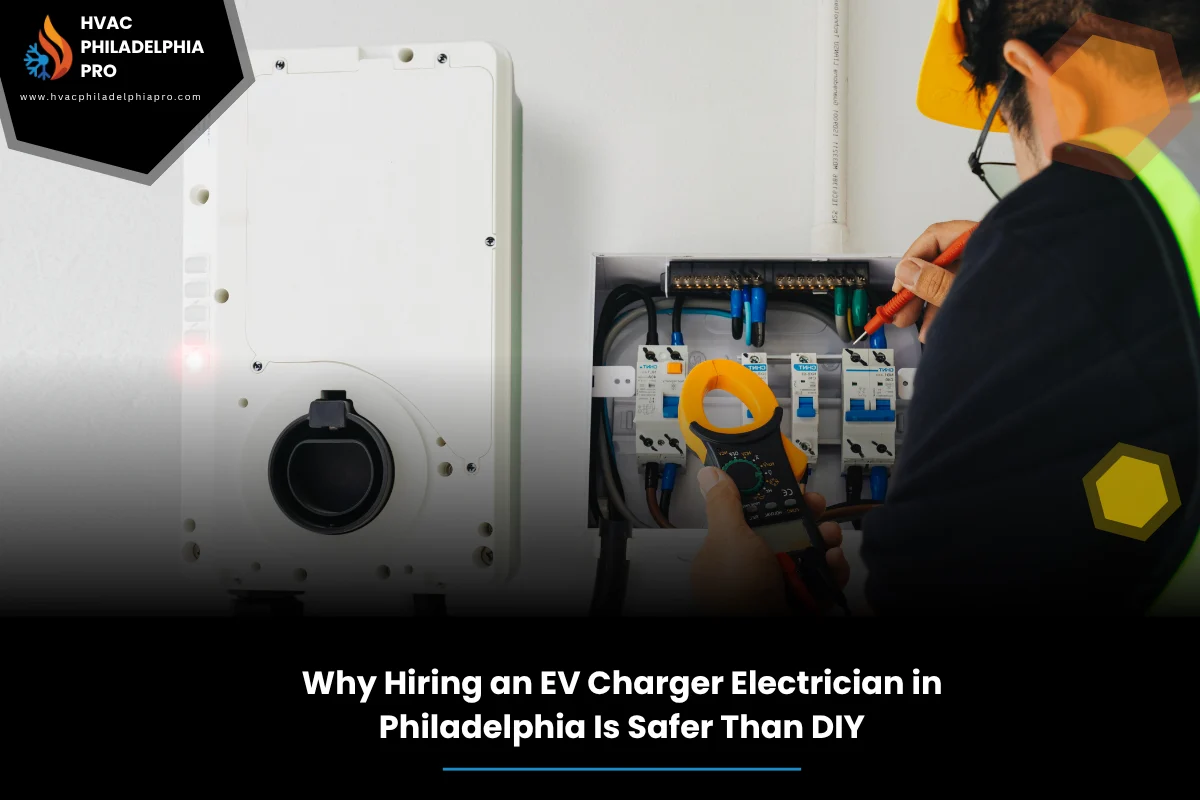
Adding a home charger should feel simple, but electrical work is never a small thing. One wrong step can overheat wires, trip breakers, or start a fire. When you work with an EV charger electrician in Philadelphia, you get code-safe wiring, the right breaker, and clean commissioning tests that protect your home and car.
If you are planning electric vehicle charger installation in Philadelphia and want it done right the first time, talk with an EV charger electrician in Philadelphia early. The first walkthrough and load check usually spot issues before they become big fixes. At HVAC Philadelphia Pro, we focus on clear steps, safe wiring, and steady results you can trust.
Table of Contents
Quick Summary
DIY can look cheaper and faster. But home EV wiring brings hidden risks you do not see until a breaker trips or a cable gets hot. A licensed pro handles permits, code, and testing so the system runs safe today and stays safe in the long run.
- Pros perform load calculation to confirm your panel can feed the charger.
- They size conductors and breakers for the charger’s continuous load.
- They add GFCI protection and proper grounding to reduce shock risk.
- They weatherproof outdoor runs and verify torque on all lugs.
Why DIY EV charging work can go wrong
EV chargers are continuous loads. That means the circuit must be sized at 125 percent of the nameplate current. Miss that, and you push wires and breakers too hard, which builds heat over time. DIY often skips these small but critical math checks.
Bad terminations also cause trouble. Loose lugs create resistance and heat at the panel or disconnect. If you want a deeper walk-through of typical steps and checks, see the Complete Guide to EV Charger Installation in Philadelphia PA for Homes and Small Facilities.
Pros follow safe work rules around energized parts. They test de-energized, lock out, verify absence of voltage, and only then land conductors. That habit alone prevents many surprises.
Code, permits, and inspection realities in Philadelphia
Most home EV charger jobs need a permit and an inspection. That protects you and documents the work for insurance and resale. A pro handles drawings, panel labels, and routing so the inspector can follow the plan.
Codes also cover working clearances, bonding, and conductor fill in conduit. A small miss on NEC code compliance can force a costly rework. Keeping records tied to the complete guide to EV charger installation in Philadelphia for homes and small facilities also helps future upgrades go smoother.
Electrical load and panel capacity basics
Before anyone lands a wire, you need a house load review. The goal is simple: confirm the service and panel can support the charger without nuisance trips. That means checking main rating, existing breakers, and large appliances that run at the same time.
Electricians do a formal load calculation based on your home’s loads and square footage. If the margin is tight, options include load management, a lower-amp charger setting, or, in some cases, a service upgrade.
240V outlet installation for EV charger: what pros check
Many chargers use a 240V circuit. That setup sounds basic, but details matter. Wire gauge must match breaker size, and the run length affects voltage drop and heat. Pros pick conductor size to keep drop low and performance strong.
They also verify breaker sizing for continuous load, use listed receptacles if it is a plug-in EVSE, and apply the right box and cover. Outdoor spots need in-use covers and raintight fittings that will not crack in winter.
Grounding, GFCI, and fault protection explained
Grounding gives a fault a safe path home. That path needs tight bonds and clean metal-to-metal contact. GFCI protection watches for tiny differences between hot and neutral, then trips fast if a fault leaks to ground. That quick action saves lives.
According to the U.S. Department of Energy, home EV charging should use listed equipment, proper grounding, and a dedicated circuit sized for the charger’s continuous load to reduce fire and shock risks. Alternative Fuels Data Center: Charging at Home
Pros verify fault protection during commissioning. They test GFCI trip, confirm polarity, and check insulation resistance when needed. Those tests catch hidden problems that simple plug-ins cannot see.
Framework: plan your home EV charger safely
Use this quick plan to keep your project on track. For a deeper blueprint that pairs steps with examples, see the complete guide on this topic before you buy gear.
- Start with a home walk-through and site assessment.
- Confirm panel space and do a basic load review.
- Pick charger amperage and decide plug-in vs hardwired.
- Plan the route: shortest safe path, dry if possible.
- Pull permits and prepare labeling and one-line sketch.
- Install, torque, test, and document the settings.
DIY vs Pro: risk and outcome comparison
Here is a quick look at common differences. It is not about pride. It is about managing risk assessment so the system works every day without drama.
| Aspect | DIY Approach | Licensed Electrician |
|---|---|---|
| Permits and Inspection | Sometimes skipped or delayed | Handled end to end with documentation |
| Circuit Sizing | May undersize for continuous load | Sized at 125 percent with proper wire gauge |
| Terminations | Hand-tight, not verified | Torqued to spec and rechecked |
| Protection | GFCI unclear or missing | Correct GFCI protection verified |
| Weatherproofing | Mixed fittings outdoors | Listed boxes, in-use covers, sealed |
| Testing | Plug and hope | Voltage, fault, and function tests logged |
After installation: testing and care
A charger should be tested before first use and after any panel work. That means voltage checks under load and a GFCI trip test. Keep the cord off the floor, protect it from cars, and clean dust from vents.
Plan a quick periodic inspection once a year. Look for heat marks on the receptacle, loose conduit fittings, and any nuisance trips. A short visit now can prevent a mid-winter surprise later.
FAQs
- Can I use an existing dryer outlet for my EV?
Sometimes, but only if the circuit size, location, and duty match the charger needs. A pro confirms load, outlet condition, and breaker rating before signing off.
- Is a permit really needed for residential EV charger installation in Philadelphia?
Most projects require a permit and inspection. It proves the work meets code and helps with insurance and resale down the road.
- What if my panel is full?
Options include tandem breakers if allowed, a subpanel, load management, or a service upgrade. A load study guides the best path.
- Do I need GFCI for a hardwired charger?
Yes, protection against ground faults is required. Many EVSE units include it, but the circuit still must be set up to meet code and manufacturer rules.
- How long does home EV charger installation in Philadelphia take?
Simple installs can wrap in a few hours. Longer runs, outdoor work, or panel changes can extend the timeline, especially when permits and inspections are included.
- What is the safest spot for the charger?
Close to the panel, out of splash zones, with clear space for cables. Avoid tripping paths and give the cord a protected route to the car.
Conclusion
DIY can be tempting, but safety, code, and long-term reliability favor a pro. An EVSE is a continuous load that demands the right breaker, wire size, and verified protection. Hiring an EV charger electrician in Philadelphia reduces risk and gives you clean documents for the future.
If you plan residential EV charger installation in Philadelphia, use the ideas here and keep the complete guide to EV charger installation in Philadelphia for homes and small facilities in mind as you plan. Contact HVAC Philadelphia Pro for expert assistance. With careful steps and solid testing, your charger will run smooth, charge fast, and stay safe for years.
continue reading
Related Posts
Learn how to choose the right EV charger electrician in Philadelphia for reliable repairs. Get a simple vetting framework, diagnostics, safety tips, and when to repair or replace.
Learn what really happens with residential EV charger installation in Philadelphia, from panel checks and permits to charger choice, placement, safety, and testing.
Learn how annual EV charger maintenance boosts efficiency and cuts energy waste. Get simple checklists, smart settings, and a 30-day framework to keep charging steady.