
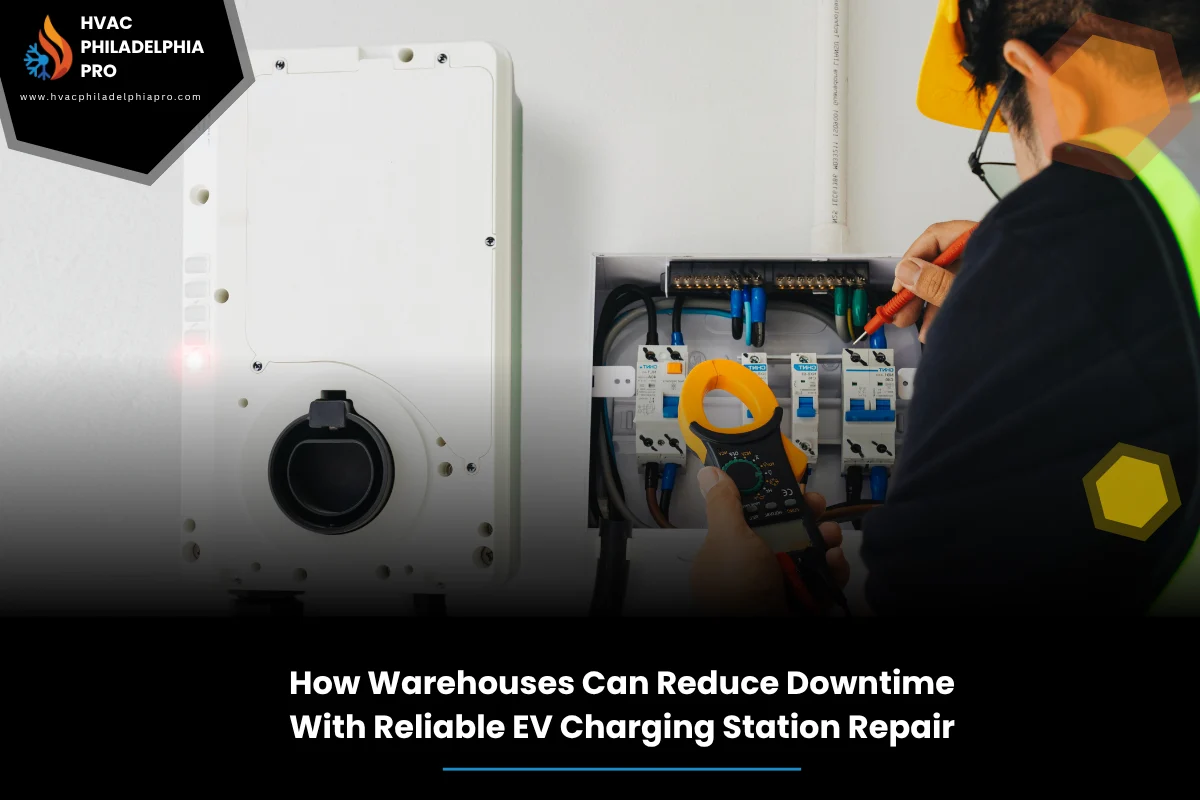
Warehouse schedules are tight. If even one charger stalls, forklifts and yard trucks wait, picks slow down, and orders slip. To keep freight moving, teams need fast fixes and steady routines that prevent repeat faults. That is why EV charging station repair in Philadelphia should be planned like any other critical asset program, not handled only when something breaks.
HVAC Philadelphia Pro supports complex facilities every day. We see the same patterns: a charger looks fine, then traffic spikes, heat builds, and a minor fault snowballs. With smart checks, clear playbooks, and a few spare parts on hand, you can cut delays and keep equipment ready for the next shift.
For location-specific help, your team can review options for EV charging station repair in Philadelphia so you know where to turn when a dock run hangs on a charge.
Table of Contents
Quick Summary
Downtime falls when you blend tight diagnostics, simple preventive care, and a fast response routine. Start with a short checklist that rules out common issues, like tripped breakers, blocked vents, loose connectors, or a frozen screen. Keep a small swap kit, track fault codes, and set alerts that ping the floor lead when a charger goes offline.
Use data from your chargers to spot weak spots before they turn into a stall. Train a few techs on safe lockout and basic resets. For deeper faults, lean on vendor support or a qualified electrician. Over time, dial in spares, firmware habits, and cleaning cycles so availability holds steady through peak hours.
Why Charger Downtime Hurts Warehouse Ops
A stuck charger can choke flow at the worst moment. When a lift is at 12 percent, any delay forces a swap, adds travel time, and stacks tasks for the next crew. That ripple hits pick rates, putaway, and dock turns by the hour.
Plan for high charger availability the same way you plan for dock door uptime. Map which routes depend on which chargers, track busy windows, and stage one backup bay close by. Small layout tweaks cut the pain when a unit drops.
Common Failure Patterns and Fast Diagnosis
Most issues fall into a few buckets: connector wear, cable strain, inverter heat, network loss, tripped protection, or outdated firmware. Start with an EV charger diagnostic service approach: confirm power, check breaker and ground, read current and voltage at the source, inspect the connector, then pull the error log.
If your team wants a deeper backdrop on repair steps, see the Complete Guide to EV Charger Repair in Philadelphia PA for Homes and Businesses for broader context that supports warehouse needs too.
For quick triage when an EV charger not working light pops up, isolate if it is a single port, all ports, or site-wide. A one-port fault points to connector or module issues. Multi-port faults signal cooling, network, or supply problems. Site-wide drops often trace to upstream power or controls.
Build a Rapid-Response Repair Playbook
Make a short, repeatable plan your floor techs can follow. In a busy warehouse, speed beats guesswork. Here is a clean framework you can tailor:
- Triaging: Confirm safety, post signage, and lockout if needed. Note the error code and charger ID.
- Visual checks: Look for cable damage, bent pins, blocked vents, and debris around the base.
- Power path: Verify panel breaker, disconnect, and upstream feed in order.
- Network: Check switch lights, PoE or cellular status, and local gateway state.
- Reset path: Safe reboot of HMI, power cycle per maker steps, and retry with a known-good vehicle.
- Escalate: Log details, attach photos, and route to vendor or electrical lead.
For a broader reference that aligns with this playbook, compare notes with the complete guide on this topic to round out training materials.
Preventive Maintenance Tasks That Actually Work
Set a small routine that fits shift breaks. Wipe vents and screens, blow dust from fans, check torque on lugs per maker specs, and test a sample charge session weekly. Track station temps and faults in a shared log so trends jump out fast.
According to the U.S. Department of Energy’s Alternative Fuels Data Center (2023), routine inspections, cleaning, and testing help maintain EVSE reliability and uptime. Alternative Fuels Data Center EVSE Deployment Guide
Do firmware on a set cadence and during low-traffic windows. Keep printed maker procedures in a binder near the panel. A short, steady preventive maintenance rhythm avoids rush jobs later.
Smart Spare Parts and Swap Strategy
Keep a basic kit so you can fix simple failures in minutes, not days. Stock one tested connector, a spare cable set if supported, fuses, contactors per model, and a known-good network gateway. For larger sites, add a pre-configured controller board if the maker allows swaps.
Here is a quick comparison you can adapt to your site size:
| Approach | Best For | Pros | Cons |
|---|---|---|---|
| Reactive repair only | Small fleets | Lower upfront cost | Longer outages, harder to plan |
| Swap kit on-site | Mid-size warehouses | Fast fixes, fewer parts waits | Training needed, parts tracking |
| Full redundancy | High-throughput sites | Highest uptime | Higher capex and floor space |
Practice one drill per quarter where a tech swaps a connector or gateway on a test unit. Treat it like a fire drill. Familiar hands plus ready hot-swap modules cut nerves and minutes when the line is hot.
Use Data, Alerts, and Remote Resets
Your software should flag faults fast, show which ports fail most, and chart heat and load across shifts. Tie alerts to the on-duty lead. A quick remote reboot clears many hiccups, and trend lines show which units need deeper work.
Make one person own the dashboard and uptime metric. With solid remote monitoring, you can catch stalls before operators feel them and schedule work in natural lulls.
When to Call for Emergency EV Charger Repair in Philadelphia
Call right away if you see burning smells, arcing, water intrusion, repeated breaker trips, or live damage to a cable. If a critical lane depends on one unit, treat any hard fault as urgent. Clear the area, post lockout tags, and log photos.
For after-hours or peak-season events, have a contact path for emergency EV charger repair in Philadelphia. Keep model numbers, serials, breaker sizes, and recent fault logs in one place so help can move faster on arrival.
Train People, Not Just Equipment
Short monthly huddles beat long annual classes. Teach floor teams how to spot cable strain, clean connectors, and report stutters early. Train leads on safe lockout and the triage steps above.
Post a one-page sheet next to the panel with error codes, who to call, and the safe reboot path. Practice once, then review what shaved time and what added risk. Small wins stack up.
Tie It Back to the Bigger Picture
Your warehouse is one piece of a wider charging plan. Concepts in the complete guide to EV charger repair in Philadelphia for homes and businesses still apply here: logs matter, firmware matters, and heat sinks hate dust. Use those ideas, then shape them to fit shift work and aisle layouts.
FAQs
- What should I check first when a charger stops mid-charge?
Confirm safety, look for visible damage, note the error code, and try a known-good vehicle. Verify breaker status and network lights, then follow the maker’s safe reboot steps.
- How often should warehouse chargers be cleaned?
Do a light wipe and vent check weekly and a deeper clean monthly, or more often in dusty areas. Keep airflow clear to avoid heat-related slowdowns.
- Does firmware really affect uptime?
Yes. Firmware fixes bugs, improves fault handling, and can add better thermal or load control. Schedule updates in low-traffic windows and test one unit first.
- Why do breakers trip on busy days?
High simultaneous load, loose lugs, or failing components can cause trips. Stagger start times, check torque on connections, and watch temperature trends.
- What causes an EV charger power failure?
Common causes include upstream faults, bad contactors or fuses, overheated inverters, damaged cables, or failed control boards. A stepwise test isolates the weak link.
- When is it unsafe to attempt a reset?
If you smell burning, see arcing, water ingress, or damaged insulation, stop and lock out the unit. Call a qualified technician before any further steps.
- How do we decide which spare parts to stock?
Review a year of faults, note long lead items, and start with connectors, fuses, and a network gateway. Expand to modules if your model supports quick swaps.
Conclusion
Reducing warehouse downtime starts with a clear plan, simple checks, and fast action. Treat chargers like any critical asset, train a few hands on safe resets, and keep a small swap kit ready. Use logs and alerts to find weak spots early. With steady habits, EV charging station repair in Philadelphia becomes predictable work, not a fire drill.
If you need help shaping a repair playbook or confirming a tricky fault, bring in a qualified pro for guidance and documentation. Contact HVAC Philadelphia Pro for expert assistance. Over time, your team will spend less time chasing errors and more time moving freight on schedule.
continue reading
Related Posts
Learn practical steps for EV charger troubleshooting in Philadelphia. Keep distribution centers moving with safe triage, common fault cues, and when to call emergency help.
Learn Level 2 charger repair best practices for industrial sites using heavy equipment. Get safe workflows, diagnostic steps, breaker tips, and maintenance plans.
A clear plan for EV charging station repair in Philadelphia keeps manufacturing fleets moving. Learn failure modes, a root-cause workflow, parts to stock, safety steps, and a repair path that cuts downtime.