
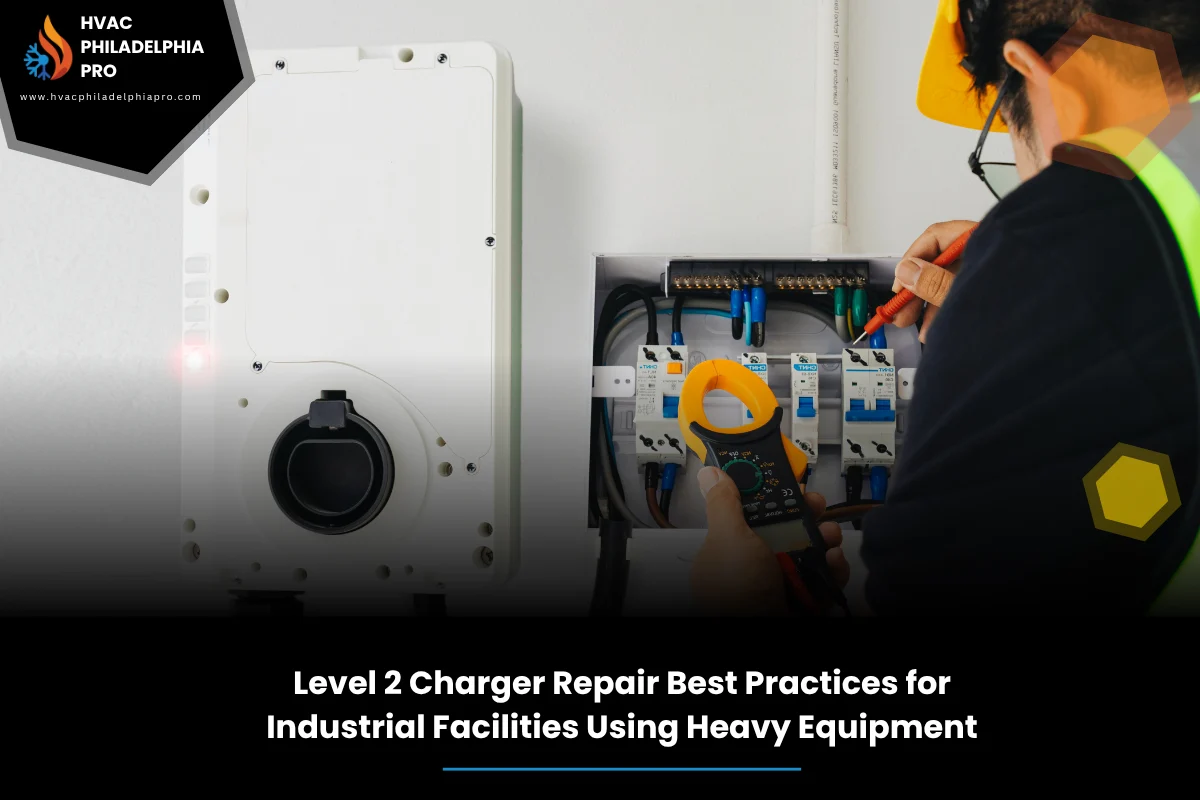
Industrial sites push charging gear hard. Forklifts cycle all day, pallet jacks swap batteries fast, and floor scrubbers pull current when shifts turn. In this setting, HVAC Philadelphia Pro sees one theme: design and process matter as much as hardware. Getting Level 2 charger repair in Philadelphia right means focusing on safety, power quality, and clean diagnostics.
Heavy equipment creates unique electrical stress. Long cable runs, high inrush currents, dust, vibration, and occasional water intrusions all stack risk. A good plan reduces downtime and protects panels, breakers, and the chargers themselves.
For a deeper look at practical steps or to map maintenance cycles to your shift schedule, see Level 2 charger repair in Philadelphia to align specs with your site’s operating needs.
Table of Contents
Quick Summary
If chargers trip, fault, or charge slowly, start with safety, then work the system from the panel outward. Grounding, bonding, cable integrity, and cooling often explain repeat issues. For broader fundamentals that apply across homes and businesses, review the Complete Guide to EV Charger Repair in Philadelphia PA for Homes and Businesses and adapt those ideas to industrial duty cycles.
Use a clear fault log, tighten connections on a schedule, and verify firmware settings after every update. Map each charger to its upstream breaker and feeder, then label everything. Keep spare parts organized and test new components before they touch a live bay. Preventive maintenance cuts most downtime long before it starts.
Why Industrial Sites Stress EV Chargers
Industrial floors run hot, dusty, and busy. Motors start and stop, creating dips and spikes. That can nudge chargers into protection mode, or mask real faults that look random to the untrained eye. Power quality checks help separate site noise from actual charger defects.
Loads also stack in waves. Breaks, shift changes, and end-of-line cleanups can align chargers at peak draw. This adds heat to conductors and panels, which can age components faster. Proper load balancing across phases keeps things cooler and steadier.
Common Fault Patterns in Heavy Equipment Environments
Loose terminations are common. Vibration and thermal swing loosen lugs, then resistance rises, then heat grows. You may smell a faint burn near a panel or see browning on insulation. Telltale: a charger that sags under load but looks fine when idle. Plan routine torque checks to stop this early.
Ingress is next. Moisture and dust sneak in and bridge surfaces. You see nuisance ground faults, tripped GFCI, or odd errors after washdowns. Here, EV charger electrical fault repair starts with cleaning, drying, replacing gaskets, and rechecking insulation resistance before power is restored.
Safety First: Lockout, Tagout, and Verification
Every repair starts with safe isolation. Apply lockout/tagout, test for absence of voltage, and discharge stored energy. Confirm the charger’s DC stage is safe to touch before pulling covers. Document your steps. Then and only then, begin tracing the fault.
According to OSHA (n.d.), controlling hazardous energy prevents unexpected startup during service and maintenance. It is the foundation of safe electrical work and should be verified on every task, even quick checks.
Diagnostic Workflow for Technicians
A steady process saves time. Before diving deep, skim error logs, check LEDs, and listen for relays or fans. If you need a broader context, reference the complete guide on this topic and map it to your industrial floor. Use this flow to drive root-cause isolation fast.
- Safety and isolation: Lockout, verify, discharge capacitors. Photograph the setup before you touch anything.
- Visual inspection: Look for discoloration, corrosion, or broken strain reliefs. Check labels and torque indicators.
- Upstream checks: Verify breaker size, trip curve, and feeder condition. Confirm tightness and phase balance.
- Grounding and bonding: Measure continuity and inspect bonds. Poor bonding mimics ground faults.
- Cable and connector tests: Inspect wear, bent pins, or cracked jackets. Confirm insulation resistance and continuity.
- Power quality: Log voltage and current under load. Look for sags, harmonics, or phase imbalance during peaks.
- Firmware and settings: Confirm firmware versions, pilot signal levels, and current limits. Reset to known-good profiles if needed.
- Functional test: Re-energize, monitor a test charge, and record temperatures at key points.
- Document and label: Capture findings and update the maintenance log so the next tech sees the full story.
Electrical Panel and Breaker Issues
If your EV charger circuit breaker keeps tripping, step back and look upstream. Breakers trip because they should, either from overload, short, or ground fault. But the reason might be phase imbalance from nearby motors, or a loose lug heating under load. Infrared scans during peak time often reveal the real cause.
Check the breaker type and curve. Some chargers want specific trip curves to ride through inrush without nuisance trips. Size matters too; right-size it to both code and the charger’s profile, and confirm feeder ampacity. When in doubt, measure under real use, not just at idle.
Data and Firmware: When Software Causes Hardware Pain
Modern chargers are smart. Firmware controls pilot signals, current limits, ground fault thresholds, and cooling fans. If settings drift, you can see slow charging, handshake failures, or odd errors at shift change. A solid EV charger diagnostic service always checks logs, versions, and config baselines.
Keep a change log. After updates, run a short monitored session and confirm temperatures, load draw, and any error counters. If errors rise after an update, roll back to the last stable version and retest the same vehicle and cable to compare apples to apples.
Preventive Maintenance Cadence and Checklists
Match maintenance to your usage. Daily visual checks, weekly quick torque checks on high-use bays, and quarterly deep inspections cover most sites. Clean filters and louvers, verify cooling paths, and keep spare contactors, fuses, and cable ends on the shelf.
Pair logs with predictive maintenance. If a bay runs hotter than its neighbors, or shows more faults per hour of use, pull it forward in the rotation. Trend the data, then fix the cause, not just the symptom.
Industrial Example: Troubleshooting in Philadelphia
Picture a warehouse running forklifts and sweepers on a busy Friday. Peak charging starts at lunch, and a bay faults with a GFCI trip. A quick check finds a damp cable jacket from a washdown. Dry, recheck insulation, replace the strain relief, and you are back in service.
That type of EV charger troubleshooting in Philadelphia highlights the basics: keep water out, protect cables from pinch points, and verify grounding. The same steps apply anywhere, but timing fixes to shift patterns makes a real difference.
Charger Options in Industrial Context: Quick Comparison
| Charger Type | Power and Speed | Best Use on Site | Pros | Trade-offs | Impact Upstream |
|---|---|---|---|---|---|
| Level 1 | Slow, low power | Light carts, overnight top-offs | Simple, minimal heat | Too slow for shift turnover | Minimal load on panels |
| Level 2 | Moderate, shift-friendly | Forklifts, floor machines | Good balance of speed and cost | Needs solid wiring and cooling | Manage phase balance and breaker curves |
| DC Fast | Very high, rapid turns | Critical assets, quick turns | Fast recovery during peaks | High heat, higher complexity | Major demand on feeders and utility |
When to Pause Operations and Call Specialists
Shut a bay down if you smell burning, see melted insulation, or the same breaker trips after you have tightened and tested. If a vehicle shows damage at the inlet, do not guess. Tag it, log it, and isolate both sides until each passes inspection.
Lean on specialists when faults cross between charger, vehicle, and upstream power. That is common in industrial settings with fluctuating loads. A clear log, photos, and thermal images will help any expert find the root cause faster.
FAQs
- Why do chargers fail more often around shift changes?
Loads stack during breaks, creating brief sags or spikes. Heat also climbs as multiple bays charge at once. Balance phases, verify breaker curves, and stagger start times to ease the peak.
- What is the first thing to check when a charger stops mid session?
Start with safety, then confirm upstream power at the panel. Next, inspect the cable and connector for heat or damage. Pull error logs before you reset anything.
- How do I stop nuisance ground fault trips?
Keep water out, replace cracked gaskets, and test insulation resistance. Check bonding and ground paths. If trips return after cleaning, review firmware thresholds and pilot settings.
- Should I upgrade wiring when adding new chargers?
Often yes. Map load, feeder ampacity, and spare breaker space first. If you see phase imbalance or hot spots now, fix those before adding more load.
- What tools speed up diagnostics the most?
A calibrated torque wrench, thermal camera, insulation resistance tester, and a power quality logger save time. Good photos and a clean fault log help too.
- How often should we torque-check terminations?
For heavy-use bays, spot-check weekly at first, then set a monthly or quarterly cadence based on data. Always verify after any thermal event or breaker trip.
- Do firmware updates really affect charging reliability?
They can. New settings change pilot behavior and current limits. Test after every update, and keep a rollback plan in case new errors appear.
- When is a charger safe to return to service?
After it passes insulation tests, visual checks, and a monitored load test without abnormal heat or errors. Log the results and label any replaced parts.
Conclusion
Industrial charging thrives on good process. Start safe, work upstream to downstream, verify settings, then test under real load. Keep logs, trend temperatures, and repair the cause, not just the symptom. Do that well, and Level 2 charger repair in Philadelphia becomes steady, predictable work instead of a scramble during peak demand.
If you need deeper context beyond these best practices, the broader guide to EV charger repair for homes and businesses pairs well with this industrial roadmap. Keep teams trained, parts on hand, and checklists short and clear. Contact HVAC Philadelphia Pro for expert assistance, and keep your chargers ready when your shifts need them most.
continue reading
Related Posts
Learn practical steps for EV charger troubleshooting in Philadelphia. Keep distribution centers moving with safe triage, common fault cues, and when to call emergency help.
A clear plan for EV charging station repair in Philadelphia keeps manufacturing fleets moving. Learn failure modes, a root-cause workflow, parts to stock, safety steps, and a repair path that cuts downtime.
Learn how warehouses can cut delays with EV charging station repair in Philadelphia. Get fast triage steps, upkeep routines, and parts strategies to keep chargers online.