
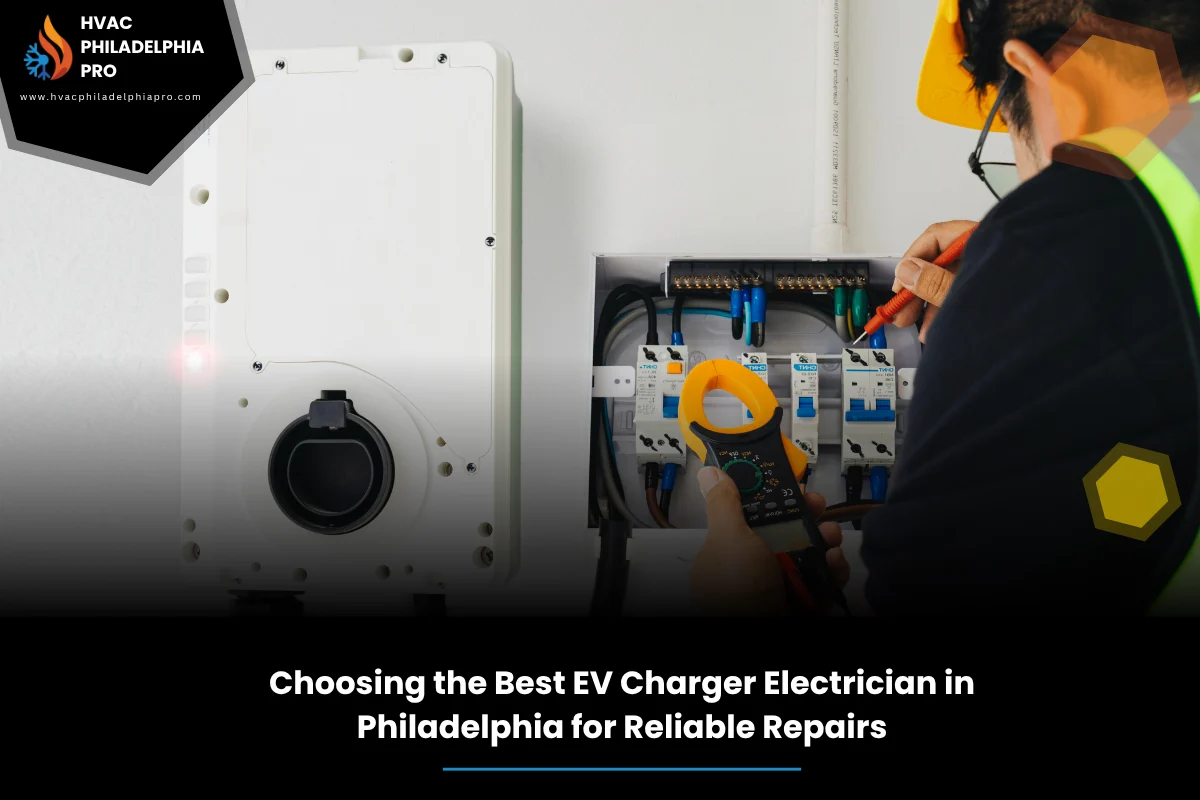
Picking the right pro to fix your home EV charger should feel simple, but it rarely does. You want fast help, safe work, and a clear answer on what went wrong. A great choice comes down to training, tools, and honest communication. That is what you should expect from any EV charger electrician in Philadelphia. And yes, a solid safety inspection should be part of every visit.
You do not need to figure it out alone. If you want a local, licensed tech who can diagnose and fix charger faults without drama, consider booking an EV charger electrician in Philadelphia for a proper inspection and repair plan.
Table of Contents
Quick Summary
Here is the short version. Look for a repair-focused electrician with hands-on EVSE training, the right test gear, and clear reports. You want fast response time, code-safe work, and parts access for your brand. Ask about warranty steps, how they test ground faults, and how they plan to prevent repeat failures. Use a simple vetting framework, compare repair vs replace, and avoid quick-fix myths that can hide bigger hazards. If you need deeper detail on failure types and safety checks, the complete guide to EV charger repair in Philadelphia for homes and businesses can help you plan the next step with confidence.
What Makes a Repair-Focused EV Charger Electrician Different?
A repair-minded pro does more than swap parts. They trace the fault from the breaker to the charger head, then into firmware and network settings when needed. They carry EVSE-grade meters, adapters, and a way to simulate a vehicle load. This lets them verify wiring, bonding, and ground fault testing before calling a part bad.
They also know common patterns across brands: loose terminals from heat cycling, worn connectors from daily use, or nuisance trips tied to moisture. If you want a bigger picture on failure types and safe fixes, check the Complete Guide to EV Charger Repair in Philadelphia PA for Homes and Businesses for foundational steps and context.
Safety and Code Basics You Should Expect
Good repairs start with power off, lockout-tagout, and a visual check. Expect torque checks at lugs, inspection of insulation, and verification of GFCI protection. A capable tech also performs a proper load calculation to confirm your panel and circuit can support the charger under real use.
According to U.S. Department of Energy guidance, routine inspection, correct circuit sizing, and ground fault protection are core parts of safe EVSE operation (U.S. Department of Energy, 2024). Alternative Fuels Data Center: Electric Vehicle Infrastructure
A Simple Framework to Vet Your EV Charger Repair Pro
Use this quick framework to choose well and avoid repeat issues.
- Credentials: Ask for EVSE experience, brand familiarity, and proof of licensing and insurance. Request one recent, similar repair example.
- Diagnostics: Ask what tests they will run, and how they separate charger faults from supply problems at the panel.
- Plan: Request a step-by-step scope of work, parts list, and estimated downtime before authorizing repairs.
- Safety: Confirm GFCI verification, bonding checks, and torque specs on all terminations.
- Documentation: Expect a simple report with photos, test readings, and final settings after the fix.
If you need a deeper checklist to pair with this framework, see the complete guide on this topic for practical steps and examples you can use during the visit.
Diagnostic Playbook: How Pros Find Faults Fast
Great diagnostics follow a path. First, confirm supply power and breakers. Next, verify ground and neutral paths. Then test the charger output using an EVSE simulator or a known-good vehicle. Only after these checks should firmware, app settings, or the network connection come under review. That order avoids guesswork.
A careful EV charger diagnostic service also includes moisture checks at the connector, testing for voltage drop under load, and looking for heat marks at lugs and terminals. These small steps catch the hidden problems that make new parts fail early.
Common Repair Scenarios and What They Mean
Nuisance tripping often points to ground faults, moisture intrusion, or a failing internal sensor. Slow charging or no charging can be a supply issue, a damaged cable, or a handshake fault between charger and vehicle. Random restarts may mean a weak power supply board or unstable Wi-Fi on smart models.
Wear items are expected over time. A worn handle, cracked cable jacket, or bent pins can call for connector replacement before they create heat or arcing. Internal boards fail less often, but when they do, you will want a parts source that matches your charger’s exact model and firmware.
Repair vs Replace: Quick Comparison
You do not want to replace a good unit too soon, but you also do not want to chase bad parts. A smart choice weighs age, safety, parts access, and total lifecycle cost. Use this table as a simple guide.
| Factor | Repair Makes Sense | Replace Makes Sense |
|---|---|---|
| Age of Charger | Under 5 years, well-supported model | Older model with limited parts support |
| Symptom Severity | Isolated issue, clear failed part | Multiple boards failing, repeated trips |
| Safety Risk | No heat damage, wiring intact | Heat damage, melted connector, scorched lugs |
| Downtime | Parts available now, quick fix | Parts backordered, long lead times |
| Warranty Impact | Repairs keep warranty valid | Out of warranty, upgrade path is better |
| Future Needs | Current amperage suits your vehicle | Planning higher amperage or smart features |
Preventive Care to Avoid Repeat Failures
Most failures give warnings: a warmer-than-normal plug, a stiff handle, or a breaker that trips after rain. Catch them early with simple checks each month. Look and feel for heat, listen for buzzing, and watch charge speed after normal drives. These basics, plus annual preventive maintenance, keep surprises low.
Also keep the cable off the ground when possible and coil it loosely. Do not tape over small cracks; replace damaged parts. For outdoor units, inspect gaskets and covers after storms. A dry, tight enclosure and clean connector pins go a long way.
Questions to Ask Before You Book
Good questions save time. Ask if the electrician has the adapters for your connector type and if they bring a load tester. Confirm brand familiarity and how they will protect your data if your charger is on Wi-Fi. Ask what readings they will share after testing.
Finally, ask how repairs affect warranty coverage and what they do if the fix does not hold. Clear answers tell you a lot about their process and follow-through.
Philadelphia-Specific Considerations for EV Charger Repairs
Many local homes have older panels and tight spaces. A quick check of available amperage and panel capacity helps prevent nuisance trips and slow charging. In shared buildings, scheduling power-off windows with neighbors or management can make the job smoother.
Weather also matters. Outdoor chargers face moisture and freeze-thaw cycles that stress seals and connectors. Ask your electrician how they test for moisture intrusion and what they do to protect the enclosure after the repair.
Red Flags and Quick Fix Myths to Avoid
Watch for anyone who promises a fix sight unseen. Real pros do not confirm parts until they run tests on site. Be careful with advice to upsize breakers without checking wire size and terminations. That shortcut can hide a hazard.
Avoid tape-and-go repairs on damaged cords or handles. And do not trust full diagnoses over the phone. A proper visit beats an over-the-phone diagnosis every time, because voltage drop, grounding, and moisture cannot be proven from a photo.
FAQs: Choosing an EV Charger Electrician
- How do I know if the breaker or the charger is the problem?
Start with supply checks. If other loads on the same circuit show issues, the breaker or wiring might be at fault. A pro confirms with meter readings and verifies GFCI protection, bonding, and voltage under load before opening the charger.
- What should a proper diagnostic visit include?
Expect a visual inspection, torque checks, ground and neutral verification, measured voltage under load, and a charger test using a simulator or vehicle. You should get simple notes and photos after.
- Can a Wi-Fi issue stop charging?
Yes. Smart chargers may not start or may stop early if network settings block needed updates or authentication. A pro will test offline mode and confirm firmware before calling parts bad.
- How often should I maintain my charger?
Do a quick monthly visual check and schedule a yearly professional inspection, or sooner if you notice heat, cracks, or repeated trips.
- What brands can most electricians repair?
Many can service common Level 2 chargers if parts and documentation are available. Ask about your exact model and firmware to confirm support.
- Is replacement better if my charger is older?
If the unit is old, parts are scarce, and issues repeat, replacement can be smarter. Compare downtime, safety, and future needs before deciding.
- Will repairs affect my vehicle warranty?
Charger repairs typically do not affect a vehicle warranty, but confirm charger warranty terms and keep repair documentation.
- How fast can most repairs be done?
Simple fixes may take a short visit if parts are on hand. Complex board or wiring issues can take longer, especially if parts need ordering.
Conclusion
Choosing the right HVAC Philadelphia Pro style of partner matters less than choosing the right process. Focus on training, tests, and a clear plan. A strong report with readings and photos proves the work and helps future service. The best pick feels steady and safe, not rushed.
Use the steps in this guide to screen options, weigh repair vs replace, and plan basic care so problems stay small. If you want quick, safe results and plain answers from an EV charger electrician in Philadelphia, book a visit and keep records for next time. Contact HVAC Philadelphia Pro for expert assistance.
continue reading
Related Posts
See why hiring an EV charger electrician in Philadelphia is safer than DIY. Learn about load checks, code, GFCI, 240V outlet work, and a simple planning framework.
Learn what really happens with residential EV charger installation in Philadelphia, from panel checks and permits to charger choice, placement, safety, and testing.
Learn how annual EV charger maintenance boosts efficiency and cuts energy waste. Get simple checklists, smart settings, and a 30-day framework to keep charging steady.