
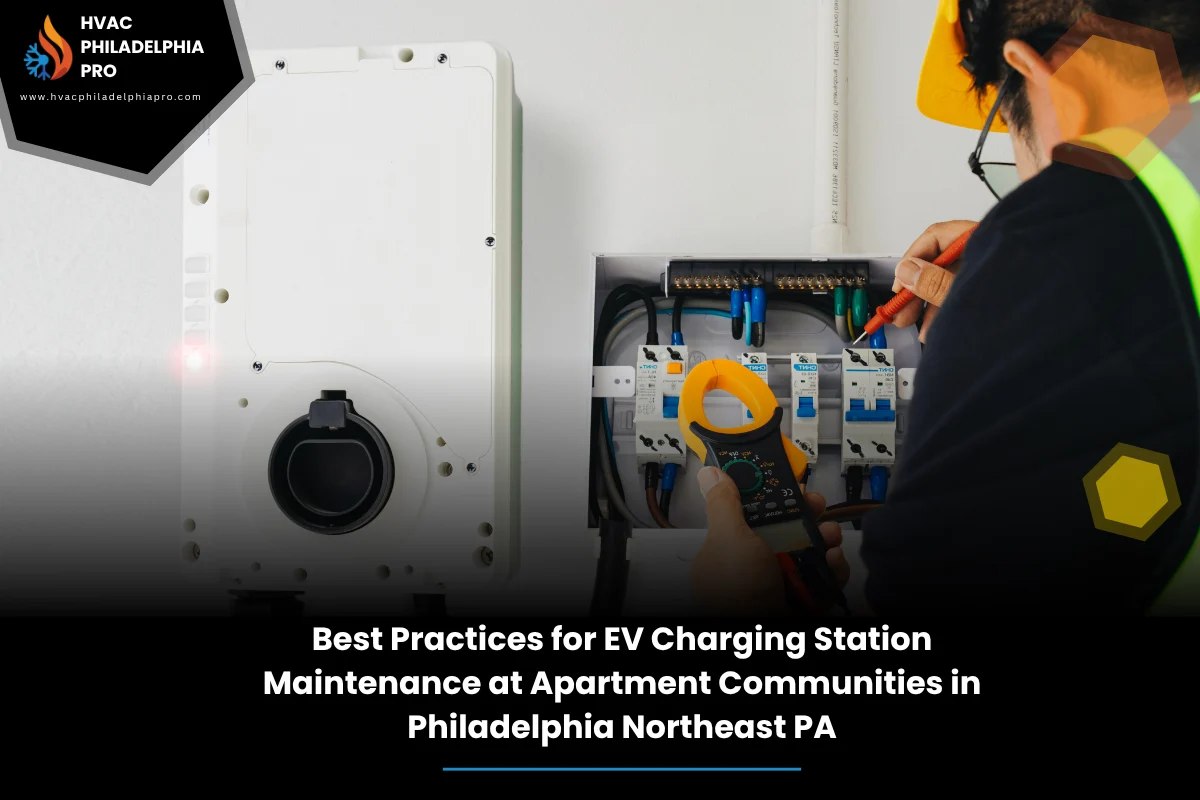
More residents drive electric now, and they expect chargers that work every time. Strong upkeep helps your property avoid outages, cut complaints, and protect your investment. If you manage apartments or condos, make a simple plan for EV charging station maintenance in Philadelphia and keep it steady through the seasons.
For on-site education and planning, start with a baseline. If you need professional support for scheduling, inspections, or repairs, read about EV charging station maintenance in Philadelphia to understand what a service visit should cover before you book anything.
The team at HVAC Philadelphia Pro works across buildings every day, so we see what goes wrong and what keeps stations humming. We’ll walk through simple routines that any property team can use. These steps keep apartment chargers safe, clean, and ready. Think of this as your quick field guide to apartment charging maintenance.
Table of Contents
Quick Summary
Apartment and condo chargers last longer when you stick to predictable care. Do quick weekly checks, deeper monthly cleaning, and quarterly tests. Track usage, watch connectors and cables, and keep bays tidy with clear signs. Plan for winter in Northeast Philly, and train your front desk or super to flag issues fast.
Use a basic log, a labeled kit, and one point person. Start with a short weekly routine to catch small problems early. Support it with a quarterly walk-through that tests charging speed, network status, and safety devices. When you need help, call a qualified electrician or EV tech, but keep learning from your own notes first.
Why Preventive Care Beats Emergency Fixes
Most charger downtime starts small. A sticky connector, a loose sign, a frayed cable sleeve. Catching these early is easier than racing to fix a full outage. You can see the full context in the Complete Guide to EV Charger Maintenance in Philadelphia PA for Reliable Home Charging, which lays out how steady care at home prevents surprise failures.
According to the U.S. Department of Energy, routine inspection, cleaning, and smart cord management help public and shared chargers stay reliable by reducing wear and trip hazards (U.S. Department of Energy, n.d.). Alternative Fuels Data Center
For buildings, preventive maintenance means short, frequent checks and clear logs. It’s simple, and it works. You reduce repair calls, improve uptime, and keep residents happy.
Core EV Charger Maintenance Checklist for Apartments
Keep a printed EV charger maintenance checklist on site. Mark each task as weekly, monthly, or quarterly. A checklist helps any staffer do the same steps the same way.
- Weekly: Walk the bays. Look for damage, debris, blocked access, or vandalism. Check screens for errors.
- Weekly: Wipe connectors and holsters. Coil cables neatly. Confirm signs are clear and visible.
- Monthly: Inspect cable jackets for cracks. Confirm connector latch action. Test card reader or app session start.
- Quarterly: Verify output with a test session. Review logs for any repeated faults. Update firmware with vendor guidance.
- Quarterly: Tighten mounting hardware if allowed by vendor manuals. Review surge protection status where applicable.
Level 2 Charger Care: What Property Managers Should Know
Most apartment sites use Level 2 chargers. Plan for steady, medium-speed charging in the evening and overnight. Good Level 2 charger maintenance is mostly about clean connectors, healthy cables, and good ventilation around the unit.
To support Level 2 charger maintenance in Philadelphia, keep these habits: avoid letting cables sit in puddles or salt, clean contact areas with approved wipes, and confirm the network shows accurate status. If a unit shows reduced output, log it and schedule a test session when the lot is calm.
For deeper background, the complete guide to EV charger maintenance for reliable home charging explains how small habits like cable management and dust control prevent faults over time. The same ideas carry over to shared chargers.
Keeping Chargers Efficient and Resident-Friendly
Uptime matters, but so does speed. Small moves can drive EV charger efficiency improvement without big upgrades. Keep vents clear. Set smart schedules so peak loads don’t throttle every port at once. Calibrate pricing and session limits so more drivers get a fair window to charge.
Look at usage data. If chargers sit full after reaching high state of charge, adjust on-dwell limits. If you see queues at 6pm, consider staged starts. Clear signs about etiquette cut idle time and complaints.
For older hardware, check firmware notes from the vendor. Patches often improve charge curves, card readers, and error handling. Log version changes in your maintenance records.
Roles: Site Team vs Vendor Support
Decide what your staff does in-house and what a vendor handles. Clear lines reduce confusion and speed fixes. A balanced model keeps daily care on site and technical work with a pro.
| Task | In-house | Vendor |
|---|---|---|
| Daily bay check, trash, signage | Yes | Optional |
| Connector wipe, cable coiling | Yes | Optional |
| Network errors, firmware updates | Log and report | Yes |
| Electrical diagnostics, repairs | No | Yes |
| Warranty claims coordination | Assist | Lead |
This split keeps your team focused on simple routines and clear reports, while pros handle testing and repairs. That way, you get fast response without overextending staff. Consider this the core of your in-house vs vendor maintenance model.
A Simple Framework to Plan Quarterly Maintenance
Use one page, one person, and one calendar. That’s the framework. Keep it light so it actually happens, quarter after quarter.
- Plan: Set dates for weekly walks, monthly cleaning, and a quarterly test session. Print the checklist.
- Do: Run the steps. Take photos of issues. Note charger IDs, time, and weather.
- Review: Compare logs. Are faults repeating on one port? Are queues forming at set times?
- Adjust: Update signs, refine start times, or call the vendor with clear notes.
If you want a deeper walkthrough, see the complete guide on this topic for how home routines translate into steady building-level care. Keep it simple and steady, and your quarterly plan will stick.
Safety, Access, and Recordkeeping
Keep the area safe first. Mark trip zones, keep cables off the ground, and fix cracked mounts fast. Post contact info for reporting issues. Good logs speed any pro visit.
Store a binder or shared drive with serial numbers, warranty info, vendor contacts, and last firmware version. Include photos of normal connector appearance. That makes it easy to spot change.
During checks, verify GFCI indicators where present, look for heat marks near ports, and listen for unusual fan noise. Log findings. These safety checks don’t take long but catch real risks early.
Resident Communication and Signage Tips
Clear rules avoid most arguments. Post time limits, idle fees if used, and a simple etiquette note. Tell residents how to report a fault and what info to include.
Use short messages in the elevator or app during outages: what happened, what you’re doing, and when you’ll update again. People relax when they feel informed.
Good resident communication speeds turnarounds. It also shows you value fair access to charging for everyone, not just early birds.
Troubleshooting Basics and When to Escalate
Teach your team a few fast checks: reboot per vendor guide, try a known-good connector, test a short session, and confirm the network portal status. Log codes exactly as shown.
If you see burned pins, cut or exposed cables, water inside housings, or repeated ground faults, stop and call a qualified pro. Do not open sealed units unless the vendor authorizes it.
Simple troubleshooting steps can clear soft faults, but leave electrical issues to certified technicians. Keep residents safe and protect warranties.
Weather and Winter Prep in Northeast Philly
Cold, salt, and slush are tough on cables and connectors. Place rubber mats where puddles form. Keep snow cleared around pedestals. Wipe salt residue from housings and holsters to slow corrosion.
Before the first freeze, check gaskets, covers, and cable sleeves. After storms, do a quick inspection pass. These winterization steps reduce surprises and preserve hardware.
In deep cold, some vehicles charge slower. Post a short note to set expectations. It helps residents plan longer sessions without stress.
How This Ties Back to Home Charging Care
Apartment and condominium chargers benefit from the same steady habits used for home units: light cleaning, safe cords, and clear logs. The complete guide to EV charger maintenance in Philadelphia PA for reliable home charging makes this point well. Shared spaces just add more users and a need for clear rules.
If you already manage residential EV charger service in Philadelphia for townhomes or small condos, you can reuse those routines here. Scale your logs and signs, and add a rotation for busy hours.
Consistency across properties makes training easier. Staff can move between sites with the same playbook and keep uptime steady.
When to Bring in a Professional
Call a pro when you have repeated faults on one port, visible damage, water intrusion, or network failures that survive a reboot. If firmware updates stall or breakers trip, stop and escalate.
When you schedule help, share your logs, photos, and exact error codes. Good notes cut visit time and get the right parts on the first truck.
Choose neutral, informational help. Avoid overhauls without a clear reason and a cost-benefit review. Keep your maintenance scope tight and based on real findings.
- How often should we inspect chargers at apartments?
Do a quick weekly walk-through, a monthly cleaning and function test, and a deeper quarterly review with logs. Add a fast check after major storms.
- What belongs on our EV charger maintenance checklist?
Bay cleanup, connector and cable check, screen or app errors, signage, firmware version, test session results, and photos of any damage. Keep initials and dates.
- How do we improve charger efficiency without upgrades?
Keep vents clear, manage cables, set smart schedules, and align time limits with demand. Firmware updates can also smooth charge curves and reduce faults.
- What is unique about Level 2 charger maintenance in Philadelphia Northeast PA?
Plan for winter salt and freeze-thaw cycles. Keep cables dry and clean, wipe housings, and inspect gaskets before and after storms.
- When should we call a professional?
Visible damage, water inside enclosures, repeated ground faults, tripping breakers, or network issues that persist after vendor-guided resets.
- Do we need resident training?
Short signs and app messages are enough. Share etiquette, time limits, and how to report problems. Clear rules reduce idle time and conflicts.
- How do we track performance over time?
Keep a simple log of errors, busy hours, and firmware changes. Review quarterly to spot patterns and plan small fixes.
- Can we reuse home charger tips for shared stations?
Yes. Cleaning, cable care, and simple logs apply. Just scale the process and add access rules for shared use.
Conclusion
Apartment and condo sites thrive on simple, steady care. Set a checklist, keep a log, and schedule a quarterly review. Most problems shrink when you spot them early. That’s the heart of planned maintenance for shared chargers.
The same ideas that keep home units reliable also work here: clean connectors, tidy cables, clear signs. Keep those habits, and your stations will be ready when residents need them. For questions or a second opinion, Contact HVAC Philadelphia Pro for expert assistance.
With a calm routine, your property can lead in EV charging station maintenance in Philadelphia, reduce downtime, and make charging easy for everyone.
continue reading
Related Posts
Learn practical steps for EV charger troubleshooting in Philadelphia. Keep distribution centers moving with safe triage, common fault cues, and when to call emergency help.
Learn Level 2 charger repair best practices for industrial sites using heavy equipment. Get safe workflows, diagnostic steps, breaker tips, and maintenance plans.
A clear plan for EV charging station repair in Philadelphia keeps manufacturing fleets moving. Learn failure modes, a root-cause workflow, parts to stock, safety steps, and a repair path that cuts downtime.