
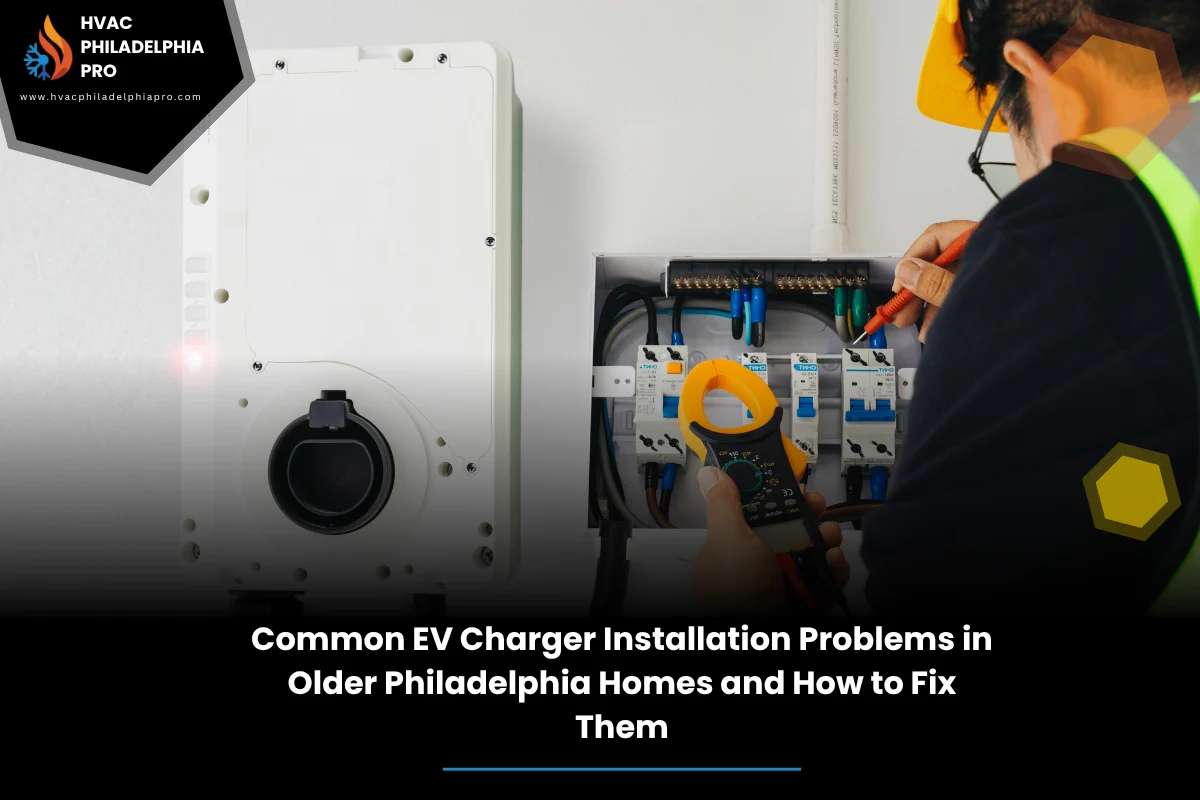
Older Philly homes have charm, but the wiring and panels can be stubborn. If you plan an electric vehicle charger installation in Philadelphia, the age of your electrical system matters. Early signs like tripping breakers, warm outlets, and flickering lights mean the setup is not ready for steady charging loads yet.
HVAC Philadelphia Pro works in historic rowhomes, twins, and small multifamily buildings every week. We see the same patterns: limited panel space, aging branch circuits, weak grounding, and outdoor mounting challenges. If you need guidance or want to review options for safe upgrades, check out our service page for electric vehicle charger installation in Philadelphia. This article focuses on how to spot issues and map a clear, code-aware fix without stress.
Table of Contents
Quick Summary
Most problems come from three places: the main panel cannot handle the extra load, the wiring is too old or mixed, or the grounding and GFCI protection are missing. Fixes usually include a proper load calculation, a new dedicated 240V circuit, better grounding, and weatherproof gear for outdoor installs. If you want broader context on charger levels, permitting, and timelines, see the Complete Guide to EV Charger Installation in Philadelphia PA for Homes and Small Facilities. Use this cluster post as a troubleshooting map, and then plan upgrades with a trusted pro.
Panel capacity and breaker limits in older rowhomes
The biggest roadblock is panel capacity. Many older homes still run on 60–100 amp service, packed with tandem breakers and little room left. EV charging is a steady, high draw, so the panel must have space and enough service amperage to carry it safely.
The fix starts with a proper load calculation. This math checks all major appliances, HVAC, and typical usage to see if the service can support Level 2 charging. If the numbers are tight, the answer may be a panel upgrade or a load management device that schedules when the charger can draw power.
We also look for worn breaker slots, signs of heat, and mixed brands inside the panel. If you see rust, buzzing, or frequent trips, stop and plan a correction before adding a new circuit.
Aging wiring and the need for a dedicated circuit
Many older homes use a mix of cloth-insulated copper, aluminum branch circuits, or even active knob-and-tube. These systems were never designed for continuous charging loads. Spliced neutrals, old junction boxes, and overfused circuits add more risk.
Level 2 charging needs its own dedicated circuit from the main panel to the charger location. That means a new two-pole breaker, fresh copper wire sized for the charger amperage, and clean terminations. If aluminum wiring exists, use approved connectors and antioxidant, or replace that run to reduce heat and resistance.
Route wires along serviceable paths. Basements, unfinished ceilings, and utility chases help avoid tearing into plaster walls.
Getting a safe 240V outlet installation for EV charger
For plug-in units, a correct 240V outlet installation for EV charger is key. The outlet type and breaker size must match the charger’s rating and cord cap. Mount the receptacle at a reachable height, protect the cable path, and label the breaker.
According to U.S. Department of Energy, Level 2 charging typically uses 240V circuits and can add significant range per hour compared to Level 1. This makes wiring quality and breaker sizing even more important for safety and performance (U.S. Department of Energy, 2023). Alternative Fuels Data Center
Hardwired units remove the receptacle but still need correct wire gauge and a matching breaker. In both cases, tight connections, torque to spec, and clear labeling matter a lot over time.
Grounding, GFCI, and shock protection
Old houses often have weak grounds, metal raceways as ground paths, or missing grounding electrodes. For EV charging, you need a solid equipment ground and proper ground fault protection to cut power fast if a fault occurs.
We verify grounding electrode conductors, bonding to water service, and continuity back to the panel. Many modern EVSE units include internal GFCI, but branch-circuit GFCI rules may still apply. Do not stack protection in ways that cause nuisance trips. Match the device and breaker to the listing and follow manufacturer instructions.
If you feel a tingle near metal parts or see GFCI trips in damp weather, stop using the outlet and inspect the grounding and bonding right away.
Outdoor and garage installs on brick, block, or stucco
Philadelphia homes often place chargers outside, on brick or block walls, or in tight garages. Moisture, salt, and freeze-thaw cycles can stress enclosures and conduit. Use a proper weatherproof enclosure, with in-use covers for receptacles and fittings rated for wet locations.
Seal penetrations, use UV-rated conduit, and keep drip loops to prevent water from entering fittings. Mind cable reach so you do not strain the connector. In rowhome alleys and driveways, consider bollards or guards to protect the charger from vehicles.
Permits, code updates, and inspection basics
Even small changes can trigger permits or inspection. Codes update often, and older work may no longer meet today’s requirements. A clean paper trail protects you when selling the home or renewing insurance.
Plan for a clear scope: new circuit, breaker size, wire type, and mounting details. Submit details on the charger model and location. Expect the inspector to check labeling, terminations, and bonding. Treat permit and inspection steps as part of safety, not red tape.
If your charger plans touch the service equipment, expect closer scrutiny. Keep manufacturer instructions on site for the inspection.
Comparison: common problems and fixes
| Problem | Symptoms | Likely Fix |
|---|---|---|
| Undersized panel | Trips during charging, warm panel cover | Perform load calculation, add load management or upgrade service |
| Mixed or old wiring | Flickers, hot receptacles, brittle insulation | New dedicated circuit with copper conductors |
| Poor grounding | GFCI trips, tingle on metal parts | Update grounding electrodes and bonding, verify continuity |
| Outdoor exposure | Corrosion, water in box | Install weatherproof enclosure and wet-location fittings |
| Mismatched outlet | Charger will not start or overheats | Correct 240V outlet installation for EV charger and breaker size |
Step-by-step framework to fix EV charger issues in older homes
Use this quick plan to keep work tidy and safe. It also pairs well with the guidance in the complete guide on this topic.
- Step 1: Do a house walk. Note panel size, open breaker spaces, distance to parking spot, and any damp or outdoor areas. Identify obvious hazards like loose covers or corroded boxes.
- Step 2: Run a formal upgrade plan. Calculate loads, pick charger amperage, and decide on hardwired vs plug-in. Select breaker size and wire gauge to match. Choose a location with short, protected runs.
- Step 3: Build the dedicated circuit. Pull copper conductors on a tidy path. Make torqued, labeled terminations. Use GFCI as required and avoid stacking protections that fight each other.
- Step 4: Verify grounding and bonding. Check electrodes, clamps, and continuity. Bond metal boxes and conduits. Test GFCI before first charging session.
- Step 5: Weatherproof and finish. Seal penetrations, mount the EVSE level, and protect cables. Keep the manual in a safe spot for inspection and later service.
When to call an EV charger electrician in Philadelphia
If your panel is full, wiring looks brittle, or you see repeated trips, it is time for a pro. An EV charger electrician in Philadelphia handles load math, permits, safe routing, and clean finishes. That reduces risk, prevents rework, and speeds up inspection approvals.
For homes with old aluminum branch circuits, active knob-and-tube, or damp basements, do not guess. Bring in a licensed electrician to confirm the plan before you buy equipment.
This keeps the project simple and avoids hidden costs later.
Planning tips for home EV charger installation in Philadelphia
Pick the charger size that fits your panel and driving pattern. Sometimes a lower amperage Level 2 is enough and avoids a panel upgrade. Good cord reach and clean parking alignment reduce strain on the connector.
Label everything. Keep photos of the install, breaker labels, and permits together. If you live in a shared driveway or alley, add bollards or a post to protect the unit.
These small steps make residential EV charger installation in Philadelphia smoother and safer.
FAQs: Older Philadelphia homes and EV chargers
- Do I need a panel upgrade for Level 2 charging?
Not always. A proper load calculation decides this. Some homes use load management to avoid a full upgrade.
- Can I use an existing dryer outlet?
Only if it matches the charger rating, wiring, and breaker, and the circuit is dedicated. Often, a new circuit is the safer choice.
- What wire size do I need?
It depends on charger amperage and run length. Follow the manufacturer rating and code tables to pick the correct copper gauge.
- Is GFCI always required?
Most modern EVSE include GFCI. Some circuits also need GFCI breakers. Avoid stacking protections that cause nuisance trips.
- Can I mount a charger on brick?
Yes. Use suitable anchors, a weatherproof backer or enclosure, and seal all conduit entries to block water.
- How long does installation take?
Simple installs can be done in a day. Panel upgrades, permits, or long wire runs can extend it to several days.
- Who handles permits and inspection?
Usually the electrician. Keep the charger manual handy and expect checks on labeling, grounding, and terminations.
- What if I have knob-and-tube wiring?
Plan a new dedicated circuit from the panel. Do not tie into old lighting circuits designed for lighter loads.
Conclusion
Older homes can charge EVs safely with the right plan. Check panel capacity, add a dedicated circuit, verify grounding, and weatherproof the setup. If you are mapping an electric vehicle charger installation in Philadelphia, start with clear goals and a simple, code-aware path. Contact HVAC Philadelphia Pro for expert assistance.
Use this article to troubleshoot common hurdles, then compare your options with the broader topics covered in the complete guide to EV charger installation for homes and small facilities. A careful plan now prevents headaches later and keeps your home ready for the miles ahead.
continue reading
Related Posts
Breaker tripping with EV charging? Learn what to do when your EV charger circuit breaker keeps tripping. Follow safe checks, a simple framework, and real fixes that last.
Stuck because your EV charger won’t charge vehicle? Use this clear homeowner checklist to fix power, settings, cable, and app issues before calling a pro.
Learn how to tackle outdoor EV charger installation in tight Philadelphia spaces. Get tips on power limits, weatherproofing, routing, and permits, plus a simple framework.