
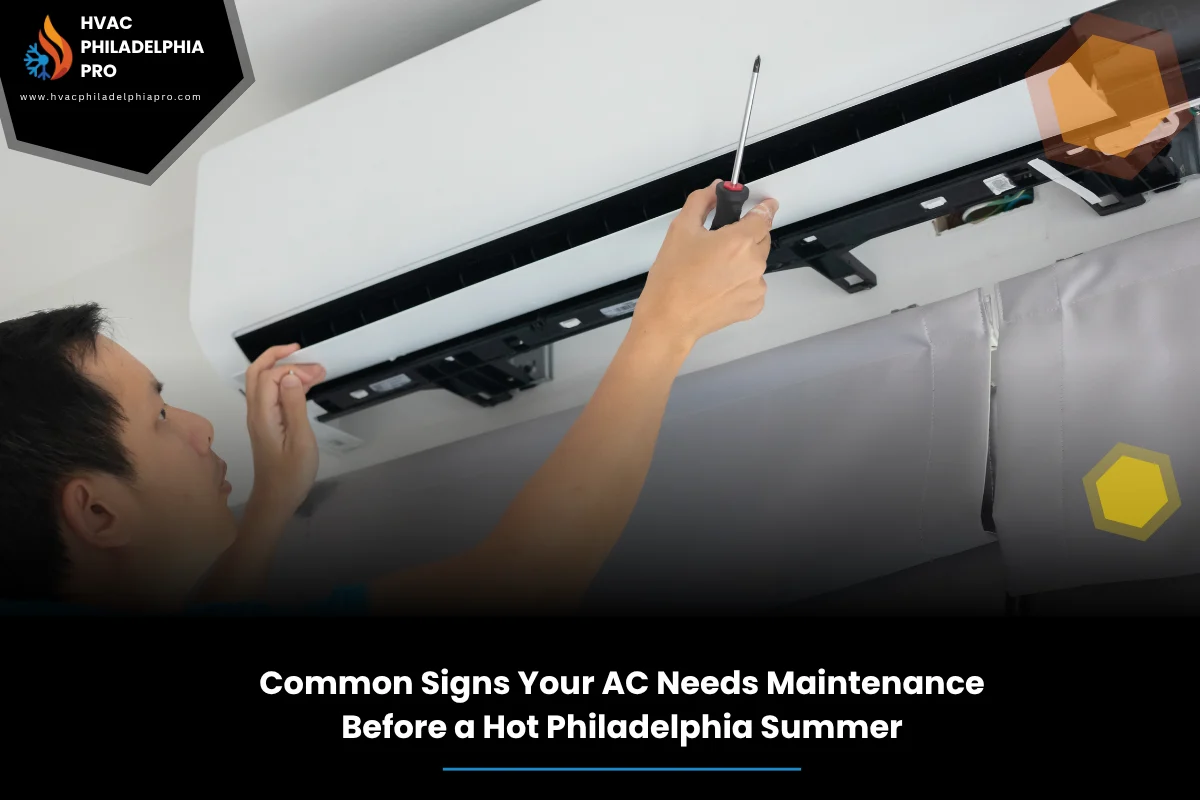
When the first heat wave hits, you don’t want to wonder why the air feels stuffy. You want cool air right away. Knowing the signs your AC needs maintenance helps you avoid surprise breakdowns before a hot Philadelphia summer. A few minutes of checking now can save hours of sweat later.
Here’s the good news. Most warning signs are easy to spot: weak airflow, warm supply air, puddles near the unit, odd smells, and rising energy bills. These small clues often point to simple issues you can fix fast. Others mean it’s time to schedule a checkup so your system runs steady when it’s 90 outside.
We’ll walk through each common symptom, what it likely means, and how to act on it. Along the way, we’ll tie it to summer HVAC maintenance in Philadelphia, so you’re set before the real heat. If you need help, HVAC Philadelphia Pro is ready, but this guide keeps the focus on what you can understand and plan first.
Table of Contents
Quick Summary
Before summer, look for weak cooling, uneven temps, short cycling, musty smells, water near the indoor unit, and rattling or buzzing sounds. These signs point to dirty coils, clogged filters, a clogged condensate drain line, thermostat problems, or airflow issues. Catching them now makes AC maintenance before summer in Philadelphia smoother and cheaper.
Start with simple checks: filter, vents, thermostat settings, and the outdoor unit’s clearance. If the system still struggles, schedule a tune-up. Use this article as your checklist and pair it with the complete guide to AC maintenance in Philadelphia PA concepts to plan your next steps with confidence.
Why AC problems spike before a Philly heat wave
Spring swings in temperature make your system start and stop more than usual. Dust builds up. Filters clog. By June, small issues turn into comfort problems. For a deeper walkthrough of seasonal prep, see the Complete Guide to AC Maintenance in Philadelphia PA for Reliable Home Comfort. It explains how regular care keeps performance steady when demand jumps.
Philadelphia humidity adds stress too. Moist air pushes your AC to pull more moisture out, which can expose weak airflow or dirty components. That’s why summer HVAC maintenance in Philadelphia is not nice-to-have. It’s often the difference between steady cooling and sticky rooms.
Watch for short cycling as the first hint. The system starts, stops, then starts again within minutes. That wastes power and barely cools. It often points to a dirty filter or a thermostat placed in direct sun.
AC not cooling efficiently: what it means
When you notice AC not cooling efficiently, start simple. Check your filter. If it’s gray or dusty, swap it. Make sure supply vents are open and return grilles aren’t blocked by furniture. These quick steps restore airflow and can fix many weak-cooling problems on the spot.
If that doesn’t help, look at the outdoor unit. It needs about two feet of clear space. Brush off leaves and lint. Gently rinse the fins from the outside in. If you still have warm air at the registers, your system may need a deeper coil cleaning or a thermostat calibration.
Uneven room temps are also a clue. Hot upstairs and cool downstairs often means duct balancing or fan speed adjustments are needed. Past that, low refrigerant or a worn blower can reduce cooling output and raise bills.
Dirty AC coil symptoms you can spot
Dirty coils choke heat transfer. Inside, a dusty evaporator coil can freeze into a block of ice. You’ll feel warm air from the vents or no air at all. You might also see frost on the line set near the air handler. Turn off cooling and run the fan to thaw the ice, then call for a coil cleaning.
Outside, the condenser coil gathers pollen and cottonwood. If the top fan runs but the side fins look matted, the unit can’t dump heat fast enough. That drives up head pressure and lowers cooling. A gentle rinse can help, but if grime is deep in the fins, a pro cleaning is safer.
With clean coils, the system cools faster, cycles less, and keeps indoor humidity stable. It’s a core idea in any complete guide to AC maintenance in Philadelphia PA.
Clogged condensate drain line and water leak clues
Water where it shouldn’t be is a big red flag. A clogged condensate drain line causes the pan to overflow or trip a float switch that shuts the system down. Look for water around the indoor unit, rust streaks, or a musty smell near the closet or basement.
Algae or dust often cause the clog. You can try vacuuming the outside drain line. If the water comes back or the unit keeps shutting off, schedule a cleaning and trap check. Keep in mind, steady drainage is key to both cooling and indoor air quality.
Many homeowners add a simple maintenance step each spring: clear the drain, check the float switch, and confirm the water exits outside.
Sounds, smells, and airflow: quick checks
Use your senses. A burning smell can point to an electrical issue. Sour odors often mean a damp coil or dirty pan. Rattling can be a loose panel. Buzzing might be a contactor or weak capacitor. Each of these hints at a different fix, but together they nudge you toward preventive maintenance.
Stand by a supply vent. If airflow feels weak, remove a vent cover and check for visible dust. Then test a nearby return grille. If air barely pulls in, the filter or duct may be blocked. Small checks like these help you explain symptoms clearly if you decide to call.
Also peek at the thermostat. Make sure it’s level, away from heat sources, and set to cool with the fan on auto. Wrong settings can mimic a real fault.
A simple summer-ready framework: the 5-by-5 AC check
Use this quick framework to prep for AC maintenance before summer in Philadelphia. It’s five areas, five minutes each. If any step reveals a problem, stop and schedule a tune-up.
1) Filter and returns: look, replace, and unblock. 2) Outdoor unit: clear a two-foot zone and gently rinse fins. 3) Thermostat: confirm mode, temperature, and schedules. 4) Drains: find the condensate line and check for steady drip. 5) Airflow: walk the home, feel each vent, note any hot rooms. Together, these steps form a simple baseline inspection.
If you want a deeper process with maintenance intervals and tasks, read the complete guide on this topic. It pairs well with this checklist and helps you plan the whole season, not just a one-time fix.
Keep notes as you go. Dates, filter sizes, and any weird sounds. That short log speeds up any future visit and prevents repeat issues.
When DIY is fine and when to call a pro
DIY works for filters, basic cleaning, and clearing debris. If you see icing, water leaks that return, short cycling, or breaker trips, you likely need expert testing with gauges and electrical checks. Those issues can hide a bigger fault, and guessing tends to cost more later.
If you’re unsure what your symptoms mean, review these common signs your AC needs maintenance and compare them with what you see at home. That page explains what a tune-up usually covers and how it ties back to steady summer comfort.
Remember, it’s not about fear or sales pressure. It’s about protecting your system before peak heat, so the cold air keeps coming on the hottest week of July.
Routine tune-up vs repair vs replacement: a quick comparison
Planning for summer is easier when you know your options. Here’s a side-by-side view to frame your next step. Use it with your notes from the 5-by-5 check.
| Option | Best for | Typical scope | Timeframe |
|---|---|---|---|
| Tune-up | Systems that run but show mild issues | Cleaning, testing, minor adjustments | Same day |
| Repair | Systems with clear faults | Fix or replace failed parts | Hours to a day |
| Replacement | Old systems with frequent failures | New equipment and setup | 1 to 2 days |
Start with a tune-up when the unit still cools but feels off. Choose repair when a key part fails. Consider replacement when repairs pile up and comfort never stabilizes.
Link this table back to what you feel indoors: airflow, temp swings, and run time. Your home’s symptoms often point to the right path.
Putting it all together for a Philadelphia summer
Philadelphia summers test every weak part of your AC. Treat pre-season checks as a standing plan. Focus on coil cleanliness, clear drains, solid airflow, and correct thermostat settings. These basics fix most cooling complaints and set you up for reliable comfort.
It all echoes the ideas from the complete guide to AC maintenance in Philadelphia PA: simple, regular steps beat last-minute scrambles. When in doubt, schedule a quick look long before the first heat advisory.
With that, you dodge breakdowns, save energy, and keep indoor humidity under control when it matters most.
FAQ: common pre-summer AC questions
- How often should I change my AC filter before summer?
Check monthly and replace at least every 60 to 90 days. In busy households or with pets, monthly replacements keep airflow strong.
- Why is my AC running but not cooling enough?
Often it’s a dirty filter, dirty coils, or blocked vents. If simple fixes fail, you might have low airflow or a refrigerant issue that needs testing.
- What causes water around my indoor unit?
Usually a clogged condensate drain line or a full drain pan. Clear the line if you can. If leaks return, call for a thorough cleaning.
- Is a short cycling AC dangerous?
It’s not safe to ignore. Short cycling stresses parts and can raise bills fast. Fix the cause before peak heat arrives.
- Should I hose off my outdoor unit?
Yes, gently from the outside in. Keep the power on so the fan can’t pull water in. Avoid high pressure that can bend fins.
- Can a thermostat cause big comfort swings?
Yes. Bad placement, wrong settings, or a weak sensor can cause short cycling or warm rooms. Calibrate or replace if needed.
- Do I need AC maintenance every year?
Annual checks catch small problems early. In Philadelphia’s humid summers, a yearly tune-up keeps cooling and dehumidifying on track.
Conclusion
Spotting the early signs your AC needs maintenance is the easiest way to stay cool before a hot Philadelphia summer. Start with filters, airflow, coils, drains, and basic thermostat checks. Use the 5-by-5 framework and your notes to decide if you need a tune-up or a repair.
Keep your plan simple. Tackle the easy wins now, then schedule help if symptoms persist. This approach mirrors the pillars of pre-season care taught in complete AC maintenance guides and keeps your system steady when demand spikes. Contact HVAC Philadelphia Pro for expert assistance.
continue reading
Related Posts
Breaker tripping with EV charging? Learn what to do when your EV charger circuit breaker keeps tripping. Follow safe checks, a simple framework, and real fixes that last.

Stuck because your EV charger won’t charge vehicle? Use this clear homeowner checklist to fix power, settings, cable, and app issues before calling a pro.

Learn common issues and fixes for electric vehicle charger installation in Philadelphia. From panel limits to 240V circuits, grounding, and permits, get a clear, safe plan.