
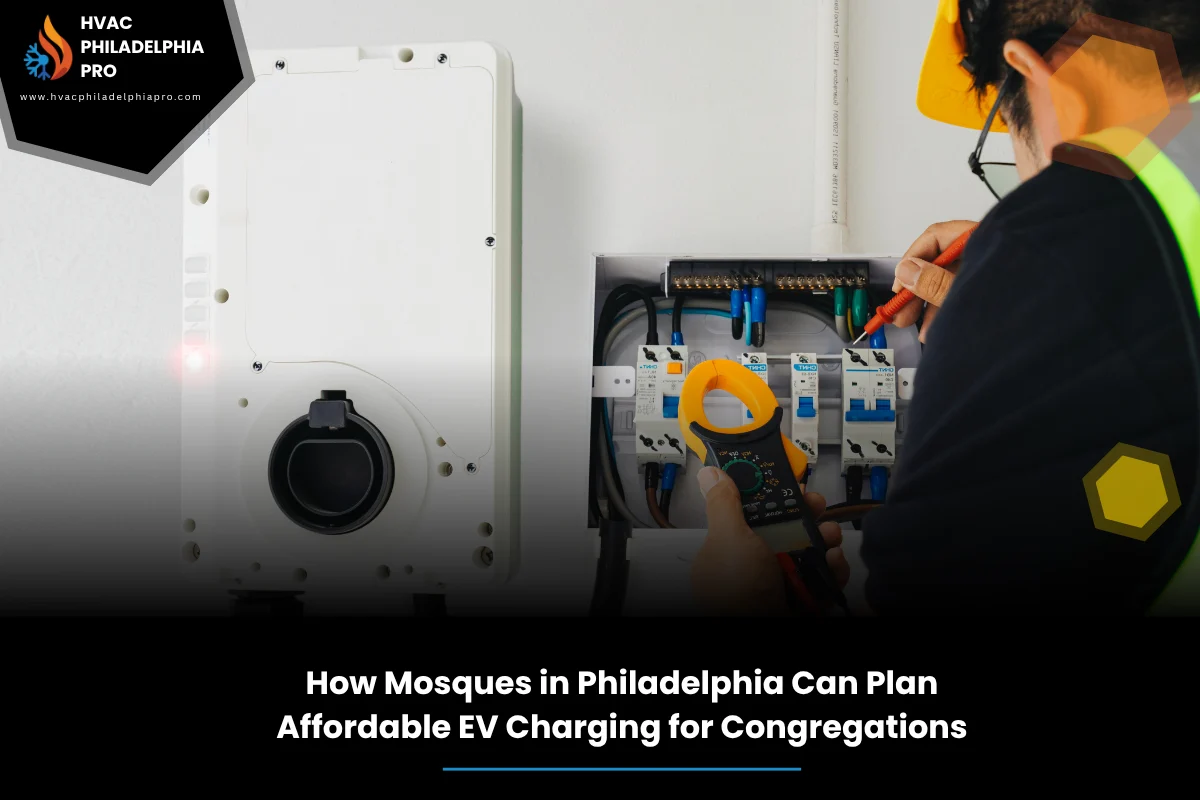
More worshipers are driving electric, and weekend peaks can make parking lots feel busy fast. Planning ahead lets mosques support members, welcome guests, and manage power safely. This guide focuses on Philadelphia needs, from power checks to smart scheduling, so boards can move with clarity and keep costs under control.
If your board is mapping options for commercial EV charger installation in Philadelphia, start with a simple plan, compare realistic budgets, and build in room to grow. With help from HVAC Philadelphia Pro, you can understand the electrical picture, choose the right equipment, and phase the project without pressure. For specific project work or bids, see commercial EV charger installation in Philadelphia.
Table of Contents
Quick Summary
Set goals first. Decide if you want member-only charging, guest access, or both. Walk the site, note panel capacity, and choose locations with safe traffic flow and lighting. Pick Level 2 chargers for most cases and plan for future ports. Phase work to match funding.
Use load management to share power across ports and avoid costly service upgrades. Consider smart features only if they improve access, payment, or reporting. Build a simple policy, train volunteers, and start with a small pilot. For deeper background across homes and small facilities, the complete guide to EV charger installation in Philadelphia can offer broader context without getting too technical.
Why EV charging makes sense for mosques
Weekend prayers cluster drivers at set times. A few well-placed Level 2 ports can top off cars during Jumuah or evening programs. That reduces range stress, supports families who travel farther, and signals care for community needs.
If you want a fuller primer on permits, wiring basics, and equipment choices, read the Complete Guide to EV Charger Installation in Philadelphia PA for Homes and Small Facilities. It frames the big picture, while this article narrows the plan for mosque boards and property teams.
Charging levels and equipment options
Most mosques will rely on Level 2 charging. It balances speed, cost, and grid impact. Level 1 is too slow for short visits. DC fast is fast but pricey and better for travel corridors, not parking lots used a few hours per week.
According to the U.S. Department of Energy’s Alternative Fuels Data Center (2024), Level 2 charging fits many community sites because it adds meaningful range in a few hours and works with common electrical service sizes. U.S. DOE AFDC: Electric Vehicle Charging Infrastructure
Focus on rugged enclosures, clear displays, and cords that rewind cleanly. Choose units with replaceable parts and accessible support. If you go networked, verify software fees, uptime guarantees, and data export options before you sign.
Site and electrical assessment basics
Walk the property when it is busy. Watch traffic flow, stroller routes, and elder access. Note lighting, snow plow paths, and where bollards may be needed. Pick stalls that do not block main aisles or fire lanes.
- Distance to panel: shorter conduit runs mean lower cost
- ADA access: plan one accessible EV stall where possible
- Lighting and cameras: place chargers under existing lights if you can
- Drainage: avoid puddle spots to protect equipment bases
- Signage: reserve EV stalls during certain hours only, if needed
Document breaker sizes, spare spaces, and main service rating. Note any old equipment, corrosion, or water ingress risks. Photos help your electrician give accurate guidance.
Power capacity and load management
Many mosques can add two to four ports without upgrading service if they shape demand. Load management lets multiple chargers share a single circuit or cap total output to stay under a set limit.
Consider panel capacity, feeder size, and transformer rating. Ask your EV charger electrician to model worst-case draw during Jumuah. A smart cap reduces peak demand while still giving each car useful energy.
Build a simple emergency shutdown plan and label disconnects. Confirm grounding and GFCI rules are met. Keep cable reach safe and avoid trips. Future-proof with spare conduit runs if trenching is open.
Budget tiers and hidden costs
Set a realistic budget before equipment shopping. Think in tiers and include trenching, permits, signs, and software. A phased plan can add ports later without redoing the whole job.
| Tier | Typical setup | Estimated range | Good for |
|---|---|---|---|
| Basic | 1–2 non-networked Level 2 ports, short conduit run | $3,000–$7,000 | Small lots, pilot use, member-only access |
| Mid-range | 2–4 networked Level 2 ports, some trenching, signage | $7,000–$20,000 | Weekend peaks, simple payment or access control |
| Advanced | 4–8+ networked ports, long runs, panel upgrade possible | $20,000–$60,000+ | Large campuses, events, multi-tenant lots |
Note: Actual pricing may vary depending on scope and requirements.
Watch for hidden items: asphalt repairs, bollards, wheel stops, labeling, snow removal changes, and software subscriptions. Ask vendors to list these clearly so you can compare apples to apples.
Smart features and user experience
Networked systems add control and data. Use them when they solve a clear need. Examples include member RFID cards, guest texts with session status, or simple pay-as-you-go. If you do not need billing, skip it and save.
Smart EV charger installation can time-share power, set mosque-only hours, and log usage for grants. Confirm that admins can add users easily and export reports. Test the app with non-tech users before committing.
Make stalls welcoming. Use shade if possible, add clear signs, and keep cables tidy. A small poster with QR help steps cuts confusion. Share basic etiquette: move when done, do not block, and wind cords.
Step-by-step planning framework
Use this simple path to keep decisions on track. It is designed for boards with limited time and mixed technical backgrounds.
- Set goals: member-only, guest-friendly, or revenue-neutral
- Gather data: panel rating, spare breakers, busy hours, member EV count
- Choose locations: shortest safe runs, good lighting, ADA route
- Pick power strategy: fixed amperage or dynamic load sharing
- Select equipment: rugged Level 2; networked only if truly needed
- Plan budget and phasing: start small, leave room to add ports
- Draft policies: time limits during Jumuah, guest rules, reporting
- Pilot: install one or two ports and adjust based on real use
- Scale: add ports as adoption grows and funding allows
For step details like permits and inspection timing, see the complete guide on this topic. It pairs well with this framework when planning mosque projects.
Common pitfalls and how to avoid them
Do not oversize early. Two smart ports beat four unmanaged ones that trip breakers. Start with a pilot and grow.
Avoid long trenching runs when a closer stall works. Conduit routing can make or break the budget. Measure twice and consider surface-mount options on existing walls.
Do not forget operations. Assign a point person, train a backup, and write a short cheat sheet. Review usage monthly and adjust policies with real data.
FAQs
- How many chargers should a mosque start with?
Begin with one or two Level 2 ports. Track usage for a few months, then add ports if stalls stay full during peak times. Phasing keeps costs predictable.
- Do we need DC fast charging?
Usually no. DC fast is costly and best for highway stops. Level 2 covers typical mosque visits and classes, giving meaningful range in a few hours.
- Can we avoid a service upgrade?
Often yes. Use load management to cap draw and share power across ports. Have an EV charger electrician in Philadelphia check panel capacity first.
- Should we enable payments?
Only if needed. Many sites cover power costs with a small fee, but member-only free charging can work. If billing adds complexity, skip it.
- How do we handle ADA considerations?
Plan one accessible EV stall and a clear route to entrances if possible. Place chargers near lighting, keep cable reach safe, and add simple signage.
- Who maintains the equipment?
Most vendors offer warranties and support. Keep a basic maintenance log, inspect cables monthly, and update firmware on schedule.
- What permits are required?
Expect electrical permits and inspections. Your licensed electrician will file paperwork and schedule inspections. Budget time for approvals.
- How do we prevent cars from sitting all day?
Post polite time limits, send app nudges if supported, and announce etiquette during Jumuah. A volunteer can check stalls at set times.
Conclusion
With a clear plan, mosques can add EV charging that fits weekend peaks, protects budgets, and improves access for worshipers. Start small, use load management, and pick Level 2 hardware that is easy to run. Keep policies simple and review real data after a short pilot.
When you are ready to sketch your site plan for commercial EV charger installation in Philadelphia, focus on short conduit runs, strong lighting, and future expansion. For background across homes and small facilities, the complete guide to EV charger installation in Philadelphia helps round out your understanding. Contact HVAC Philadelphia Pro for expert assistance.
continue reading
Related Posts
Learn practical steps for EV charger troubleshooting in Philadelphia. Keep distribution centers moving with safe triage, common fault cues, and when to call emergency help.
Learn Level 2 charger repair best practices for industrial sites using heavy equipment. Get safe workflows, diagnostic steps, breaker tips, and maintenance plans.
A clear plan for EV charging station repair in Philadelphia keeps manufacturing fleets moving. Learn failure modes, a root-cause workflow, parts to stock, safety steps, and a repair path that cuts downtime.