
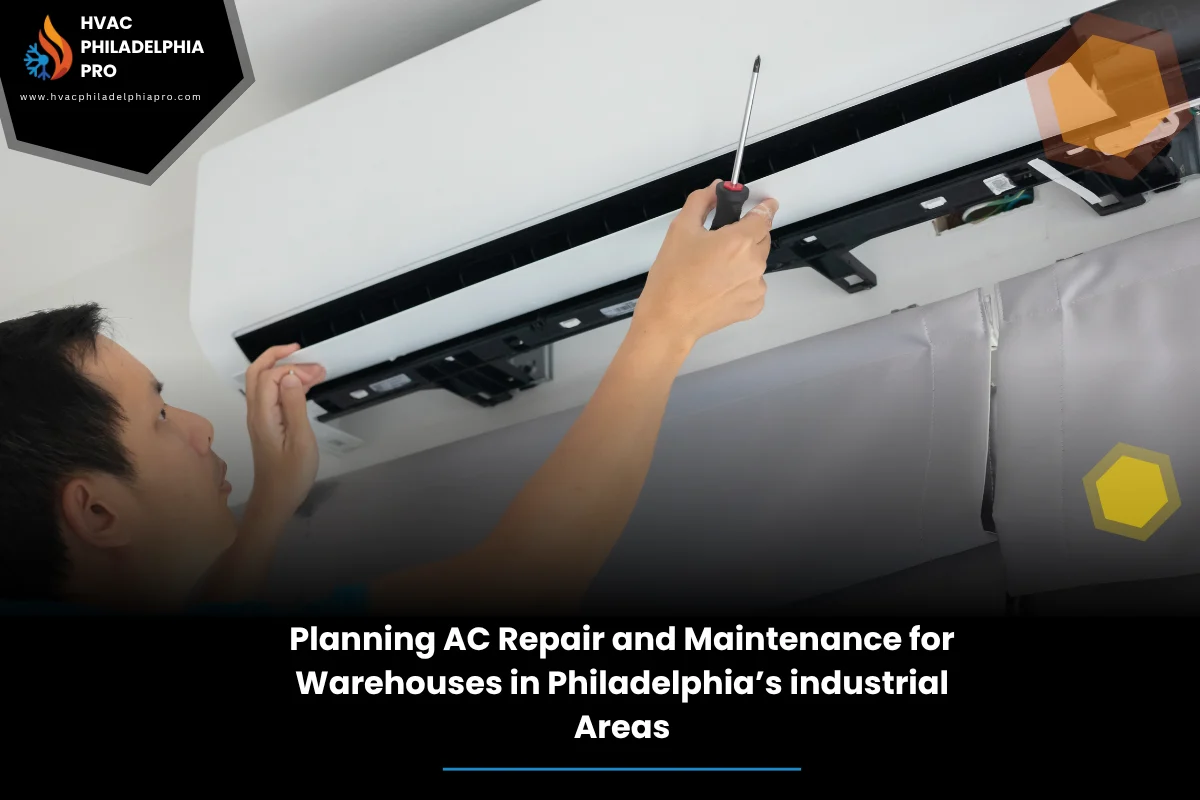
Warehouse cooling is not a simple thermostat tweak. High ceilings, long aisles, dock doors, forklifts, and heat from equipment all push your systems hard. HVAC Philadelphia Pro works with busy operations every day, so we know that a solid plan keeps comfort steady and costs under control.
That plan starts with clear steps for inspections, fast fixes, and upgrades tied to your loads and hours. Done right, HVAC repair in Philadelphia PA becomes predictable instead of stressful. You spot problems early, keep air moving, and avoid those midsummer scrambles.
If you need help mapping tasks to your site, you can review scheduling options and practical support for HVAC repair in Philadelphia PA in a straightforward, no-drama way.
Table of Contents
Quick Summary
For warehouses, reliable AC depends on a few simple habits. Map your heat sources. Balance airflow to zones, not just square footage. Build a seasonal checklist and follow it. Watch a few key metrics like supply air temp, static pressure, and compressor short-cycling. Keep an emergency playbook with spare parts and vendor contacts.
Pick gear that fits your roof space, ceiling height, and dock traffic, then budget for repairs and eventual replacements. Track work orders and filter changes so you spot patterns early. Many basics match what you would see in a complete guide to AC repair in Philadelphia for homes and small businesses, but warehouses need extra focus on airflow, loading patterns, and uptime.
Why Warehouse AC Is Different
Warehouses face wide temperature swings within the same building. Pallet stacks can block returns, aisles channel air, and dock doors leak. You need planning that blends equipment capacity with heat load mapping and air paths, not just thermostat setpoints. [IMAGE: overhead warehouse layout showing supply, return, and hot zones]
For a broader foundation on system basics and repair steps, review the Complete Guide to AC Repair in Philadelphia PA for Comfortable Homes and Businesses. It covers the core repair flow that also applies here, then you adapt it to racking, forklifts, and long hours.
Think in zones. Packaging lines, pick aisles, and staging areas each load the system in different ways. Split your checks and setpoints by how people work and how heat builds up through the day.
Zoning and Airflow That Actually Works
Big rooms trick people into thinking air spreads evenly. It does not. Use air balancing to confirm supply volumes, then guide air along aisles and over hot spots. Fabric duct socks or diffusers with throw control help reach deep runs without blasting one area.
Returns matter more than supplies. Keep returns low where heat pools, and leave clear paths above racks for air to travel. Seal gaps where air bypasses occupied areas. A few smart changes to ducting and grilles can cut runtime while keeping the floor comfortable.
Do a quick smoke test or use anemometers to see flow, not guess. Adjust and recheck. Save the readings so you can repeat the setup after repairs.
Seasonal Maintenance Roadmap
Make a simple checklist and stick to it. Tie tasks to the calendar and to run hours, and document each visit. For deeper context on repair flow and how techs diagnose common faults, see the complete guide on this topic and adapt the steps to your warehouse zones.
- Spring: Clean coils, check belts, verify drains, and run a preventive maintenance start-up. Baseline temperatures and static pressure when weather is mild.
- Early summer: Recheck coil approach temps, inspect contactors and capacitors, confirm refrigerant charge within manufacturer guidance, and validate airflow at the hottest zones.
- Mid-season: Spot-audit 10 to 20 percent of units. Compare readings to your spring baseline. Investigate any short-cycling or abnormal compressor amps.
- Late summer: Inspect insulation on suction lines, verify economizer operation if present, and confirm sensor accuracy. Plan any non-critical repairs for shoulder months.
- Fall: Deep clean, seal ducts, service dampers, and update setpoints for cooler weather. Capture final seasonal performance notes.
- Winter: Address IAQ items, tighten electrical connections, and prep parts bins so you are ready when the next heat wave hits.
Monitoring and KPIs You Should Watch
Keep it simple and consistent. Track supply air temperature, return temperature, and delta T. Add static pressure at key trunks and a log of compressor starts per hour. This small set tells you if airflow is healthy and if equipment is straining.
Flag trends. Rising static with a falling delta T points to dirty coils or filters. Frequent starts hint at controls or charge problems. Use these signals to plan service before comfort drops. Over time, this becomes your early warning system for failures.
Connect these readings to work orders. When a unit fails, compare to prior logs. A pattern will jump out, and you will fix faster the next time.
Choosing Equipment: What Fits a Warehouse
Different buildings, different tools. Look at roof space, ceiling height, access, and how often doors open. Match gear to air paths and maintenance access. One strong concept to weigh is the rooftop unit for easy service and clear duct runs, but it is not the only fit.
| Option | Pros | Cons | Best For |
|---|---|---|---|
| Packaged rooftop units | Service access on roof; compact footprint | Roof penetrations; crane needed for major work | Large open bays with clear duct routes |
| Ducted split systems | Flexible indoor placement; good zone control | More components to coordinate | Mixed-use areas and retrofit projects |
| Make-up air with cooling | Replaces air lost at docks; controls humidity | Needs careful sizing and controls | Heavy dock traffic and leaky envelopes |
Whichever path you pick, leave space for service, and plan ducting for returns as carefully as supplies.
Emergency Preparedness and Downtime Playbook
Heat waves and breakdowns happen. Build redundancy where you can and put a few fast moves on paper. Keep key spares on site like belts, fuses, contactors, and fan motors. Label panels and disconnects clearly.
Map a call tree and escalation steps. Train a small team to read gauges, note alarms, and shut down a failing unit safely. Stage portable spot coolers for sensitive zones. A one-page plan saves hours when the floor is hot and loud.
Indoor Air Quality for Busy Floors
Warehouses stir dust, exhaust, and humidity. Good filtration and fresh air keep people comfortable and equipment cleaner. Pick a MERV filtration level that matches your dust load, and change filters by pressure drop, not guesswork.
Balance outside air with cooling load. If doors stay open, consider make-up air tied to door switches. Dry coils, sealed ducts, and clean drains also keep odors and mold at bay.
Budgeting and Lifecycle Planning
Repairs are part of the journey. A simple budget by tier helps you plan. Include quick fixes, mid-scope repairs, and bigger jobs like compressor swaps. Track age and condition so you can move from repairs to replacement at the right time. Keep an eye on lifecycle cost, not just today’s invoice.
| Tier | What’s Included | Estimated Range |
|---|---|---|
| Basic | Inspections, filter changes, belts, minor electrical parts | 200 to 500 per visit |
| Mid-range | Coil cleaning, contactors, capacitors, fan motors, minor refrigerant work | 400 to 1,200 per repair |
| Advanced | Compressors, coils, controls retrofits, major leak repairs | 1,500 to 5,000 per event |
Note: Actual pricing may vary depending on scope and requirements.
Documentation and Recordkeeping
Write it down or it did not happen. Keep work order logs with readings, parts, and notes on each visit. Save photos of coil conditions and panel wiring after service.
Use the same format every time. You will spot patterns fast, and the next repair will go smoother. Solid records also protect warranties and explain spend when budgets get tight.
Local Considerations for Philadelphia Warehouses
Hot spells and humidity strain big rooms, especially with lots of dock activity. Plan filter changes around pollen peaks and dusty seasons. When crews search for quick help, they often use phrases like AC repair in Philadelphia, emergency AC repair in Philadelphia, summer AC repair in Philadelphia, or even AC repair near in Philadelphia.
Use those moments to feed your plan, not fight fires. Keep a short vendor list, spares on hand, and a standing schedule for checks during peak months. The same structure behind a complete guide to AC repair in Philadelphia PA applies here, just tuned to long aisles and constant motion.
- How often should warehouse filters be changed?
Change by pressure drop or dust load, not only by date. Many sites land between monthly and quarterly, depending on use.
- What delta T should I expect across coils?
Most systems target a steady range that matches manufacturer guidance. Track your baseline after service and watch for drift.
- Do I need more returns or more supplies?
Often both. Returns are missed more. Verify with an air balance test and adjust based on readings, not guesses.
- Why do compressors short-cycle?
Causes include incorrect charge, bad sensors, airflow issues, or control settings. Check one variable at a time.
- When is a rooftop unit better than splits?
When roof access is simple and ducts can run cleanly. Splits fit tight retrofits or mixed-use interiors.
- How do I plan for dock door heat?
Use make-up air with cooling and tie it to door activity. Seal gaps and guide airflow across staging lanes.
- What KPIs matter most?
Supply and return temps, delta T, static pressure, and compressor starts per hour. Keep them in one log.
- When should I replace instead of repair?
When repair cost and risk keep rising and efficiency keeps falling. Use age, failure history, and energy use to decide.
Conclusion
Warehouses run hot, loud, and busy, so your plan must be steady and simple. Map heat, balance airflow, schedule checks, and watch a few key numbers. With that foundation, HVAC repair in Philadelphia PA turns into a routine, not a rush. You control the work instead of the weather calling the shots.
Keep your team trained, your logs current, and your spares close. When bigger questions come up, use complete AC repair guides as a base and tune them to your zones and dock doors. Contact HVAC Philadelphia Pro for expert assistance. Your crews will feel the difference on the floor, day after day.
continue reading
Related Posts

Learn practical steps for EV charger troubleshooting in Philadelphia. Keep distribution centers moving with safe triage, common fault cues, and when to call emergency help.
Learn Level 2 charger repair best practices for industrial sites using heavy equipment. Get safe workflows, diagnostic steps, breaker tips, and maintenance plans.
A clear plan for EV charging station repair in Philadelphia keeps manufacturing fleets moving. Learn failure modes, a root-cause workflow, parts to stock, safety steps, and a repair path that cuts downtime.