
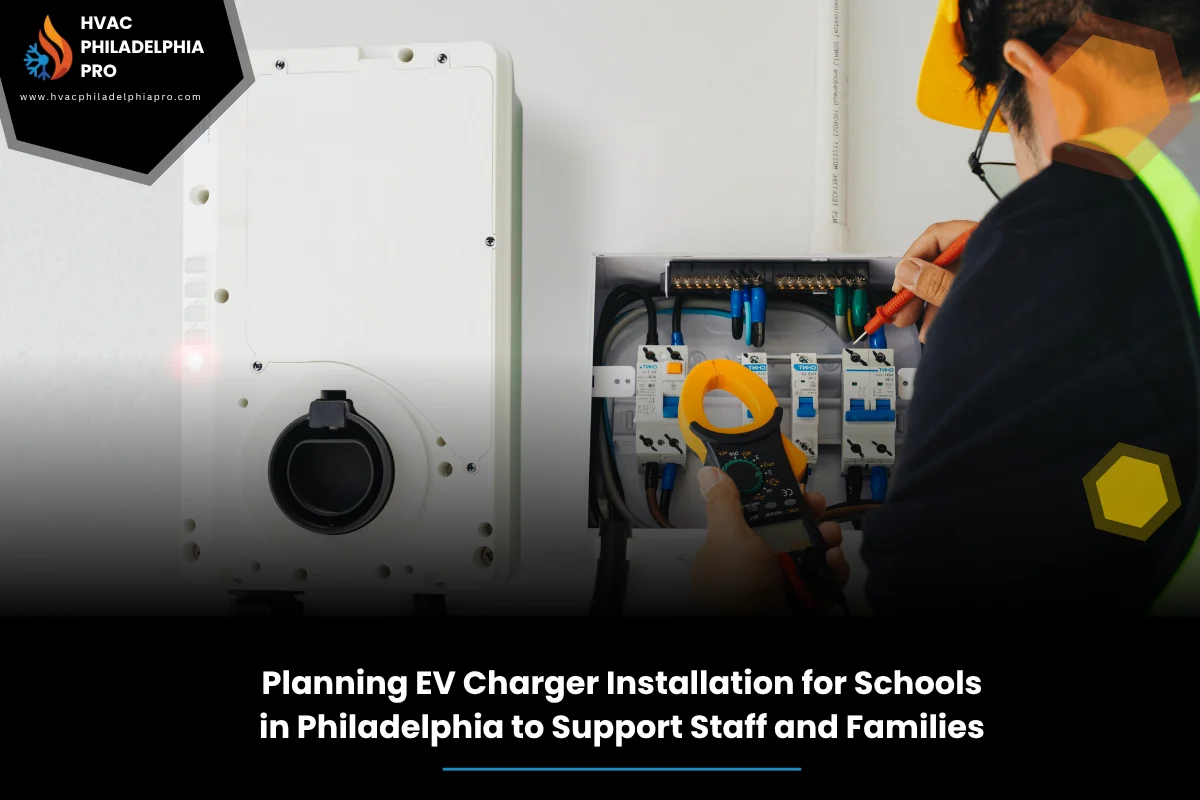
Schools in Philadelphia feel the shift to electric every day. Teachers, aides, and parents show up with EVs, and they need a simple way to plug in while they work or wait at pickup. Thoughtful planning helps you add charging without crowding parking, tripping breakers, or causing morning traffic jams. It is all about fit for your campus routine.
HVAC Philadelphia Pro works across building systems, so we see what makes school sites succeed with charging. For planning, keep the audience clear. Staff need daytime charging. Families need short, predictable stops. Start small, design smart, and leave room to grow. That is the recipe schools use to avoid headaches later.
When you explore commercial EV charger installation in Philadelphia, focus on safety, code, and daily flow first. If you want a service overview or help mapping needs to equipment, review commercial EV charger installation in Philadelphia to understand how design and coordination come together on real campuses.
Table of Contents
Quick Summary
School charging works best when it matches your bell schedule, parking layout, and power capacity. Start with a parking and electrical walk-through. Pick mostly Level 2 chargers for staff lots. Add a few short-stay spots near pickup lines. Use smart controls to limit load and set time rules. Plan clear signs and payment, and set a simple use policy.
Leave room on the panel, and put conduit in the ground for growth. Train office staff on basic checks, and track use for future grants or board updates. A small pilot, then a step up, keeps risk low and momentum steady. One well-run site beats five confusing ones. Build clarity first, then add scale with load management.
Why Schools Should Plan EV Charging Now
EVs keep rising among teachers and families, and the school day offers perfect dwell time for charging. Adding chargers makes commuting easier, supports clean air goals, and helps recruit staff. It also reduces scramble charging after school, which can be tough for parents juggling activities.
You can start with a few spaces and expand when usage data proves the case. For background on equipment, permits, and safety steps, see the Complete Guide to EV Charger Installation in Philadelphia PA for Homes and Small Facilities, then adapt the ideas to school hours and parking rules.
Many leaders search EV charging station installation near me and get vendor lists. But first map your traffic patterns, ADA needs, and electrical limits. That short prep avoids costly rework and lets you pick gear that fits your campus.
Charger Types That Fit School Use
Most school sites lean on Level 2 charging because it balances speed and cost. Level 1 may help for long-stay fleet vehicles. DC fast chargers are rare on K-12 campuses due to cost, power needs, and safety concerns around busy pickup lanes.
| Type | Typical Power | Best Use at Schools | Pros | Considerations |
|---|---|---|---|---|
| Level 1 | 120V, low kW | Long-stay staff or fleet overnight | Low cost, easy install | Slow, limited turnover |
| Level 2 | 208-240V, moderate kW | Daytime staff, visitors, after-school events | Good speed, flexible use | Requires panel capacity, permits |
| DC Fast | High kW | Special cases only | Very fast | High cost, heavy power, complex siting |
According to the U.S. Department of Energy (2024), most workplaces rely on Level 2 charging because it provides a practical balance of speed, cost, and electrical demand that suits daily routines like a school schedule. Alternative Fuels Data Center: Workplace Charging
Electrical Capacity and Load Strategy
Before you pick hardware, check your main service, spare breakers, and transformer limits. A short audit shows how many chargers you can add without upgrades. You can stage gear now and leave conduit and space for a second phase later. That keeps first costs in check.
Use smart load sharing to cap the total draw when several cars plug in at once. Some systems adjust power by time or by priority group, which fits school bell times. If your panel is tight, a managed Level 2 setup may beat a big upgrade now, especially during trial rollout.
When you need new circuits or a panel change, work with an EV charger electrician in Philadelphia who knows permitting, labeling, and inspections. Clear as-builts and one-line diagrams will save time when you expand next year.
Smart Controls, Access, and Use Policies
Modern platforms let you set group access, time windows, session caps, and rates. For schools, keep rules simple: staff during school hours, visitor or parent spots with short time limits. That way cars rotate and no one blocks a bay all day.
Choosing smart EV charger installation helps track use, support alerts, and manage fees if the board approves billing. Start with free charging if needed to build adoption, then move to a small fee tied to session or time. Keep the policy clear and posted on the lot signs.
If your district updates sustainability reports, export kWh and session data each quarter. This record helps with future funding and shows real results from your pilot.
Site Layout, Safety, and Code Basics
Pick stalls that do not conflict with bus loops or fire lanes. Avoid tight turns, blind spots, and crowded crosswalks. Place equipment away from heavy play areas and keep cords off walking paths. Do not block snow removal or trash pickup routes in winter months.
Follow ADA access guidance for slopes, aisle width, and reach ranges. Add wheel stops, bollards, clear signs, and pavement markings. Good lighting and cameras near chargers improve safety and use rates. Remember future conduit paths when planning landscaping and curbs.
Permits and inspections help confirm grounding, labeling, and GFCI where required. Final line markings and signage should match your policy on time limits and user groups.
Maintenance and Operations Plan
Set a simple routine: weekly visual checks, monthly test of network and payment, and quarterly cable and connector inspection. Wipe screens, check signs, and verify stall markings are visible. Keep spare parts like holsters and signs on hand.
Assign one office contact for user questions and one facilities lead for technical issues. Most platforms support remote diagnostics. Use them before rolling a truck. Log all issues and fixes. A tidy record streamlines warranty support and future upgrades.
Train front desk staff on basic resets and how to find charger IDs. Short scripts help them guide families during pickup if a charger is busy.
Stakeholder Communication and Education
Share a one-page guide with staff and parents before launch. Include map, hours, time limits, and who to call. Post the same notes online. Keep it simple. People follow rules when they are easy to find and read.
Mark a few visitor-friendly bays near the main office for short stays. For staff, pick a cluster in the long-stay lot. Celebrate the pilot in a newsletter and invite feedback. Early feedback helps tune time limits, pricing, and space count.
If you plan student learning tie-ins, add a small dashboard screen in the lobby that shows energy use and emissions saved. Make it part of science projects or green club work.
Step-by-Step Planning Framework for Schools
Use this simple framework to move from idea to ribbon cutting without chaos. It keeps people, power, and parking aligned. Adjust the steps to match your district’s process and budget cycle.
- Scope: Define users, hours, and first-phase stall count. Set one clear goal like staff daytime charging.
- Site: Walk lots, map traffic, pick safe stalls, and note ADA access. Leave room for growth with future conduit.
- Power: Review panel capacity, breakers, and transformer. Decide on managed load or upgrades.
- Hardware: Choose Level 2 units with cable length, holsters, and weather rating that fit school use.
- Controls: Set roles, time caps, and rates. Test the app with a small group before go-live.
- Permits: Submit drawings, one-line, and site plan. Plan inspection timing around school events.
- Launch: Paint, sign, test, and send a one-page how-to to staff and parents.
- Review: Track kWh, sessions, and dwell time. Adjust rules and decide on phase two.
If you want deeper technical background on equipment and steps, see the complete guide on this topic and align it with school-specific traffic and access policies.
FAQ: School EV Charger Planning
Here are quick answers to common questions schools ask when planning Level 2 deployment and smart policies.
- How many chargers should a school start with?
Run a short staff survey and start with a pilot of 4 to 8 Level 2 ports in the staff lot. Expand after three to six months of usage data.
- Can we mix staff and parent charging in one area?
Yes, if rules are clear. Mark staff bays for long stays and set strict time limits for visitor bays to keep turnover high.
- Do we need networked chargers?
Networked units enable access control, reporting, payments, and load management. Most schools benefit from these features.
- Who handles permits and inspections?
Work with an experienced EV charger electrician in Philadelphia. They prepare drawings, coordinate permits, and support inspections.
- What about Level 2 EV charger installation in Philadelphia for older buildings?
Older panels may be tight. Use load sharing first, then plan upgrades during breaks when downtime is easier to manage.
- Should we charge fees to users?
Start free if needed, then move to modest fees to encourage turnover and cover costs. Communicate the policy clearly.
- How do we manage cables safely?
Choose holsters, wheel stops, and clear striping. Keep cords off walkways and away from play areas.
- What if we have buses and vans to electrify later?
Reserve space and conduit paths now. Separate fleet stalls from visitor areas and plan power for future phases.
Conclusion
Good school charging feels simple because the planning was sharp. Start with people and parking, then match power and controls to the day’s rhythm. Use data from a pilot, keep signs clear, and scale in clean steps. With this steady approach, you support staff and families without straining your campus.
As you consider commercial EV charger installation in Philadelphia, remember that the best design fits your bell schedule, lot flow, and electrical headroom. Keep permits, safety, and training front and center. When you need guidance aligning plans with real-world school operations, Contact HVAC Philadelphia Pro for expert assistance. Your first phase can be small, smart, and ready to grow.
continue reading
Related Posts
Learn practical steps for EV charger troubleshooting in Philadelphia. Keep distribution centers moving with safe triage, common fault cues, and when to call emergency help.
Learn Level 2 charger repair best practices for industrial sites using heavy equipment. Get safe workflows, diagnostic steps, breaker tips, and maintenance plans.
A clear plan for EV charging station repair in Philadelphia keeps manufacturing fleets moving. Learn failure modes, a root-cause workflow, parts to stock, safety steps, and a repair path that cuts downtime.