
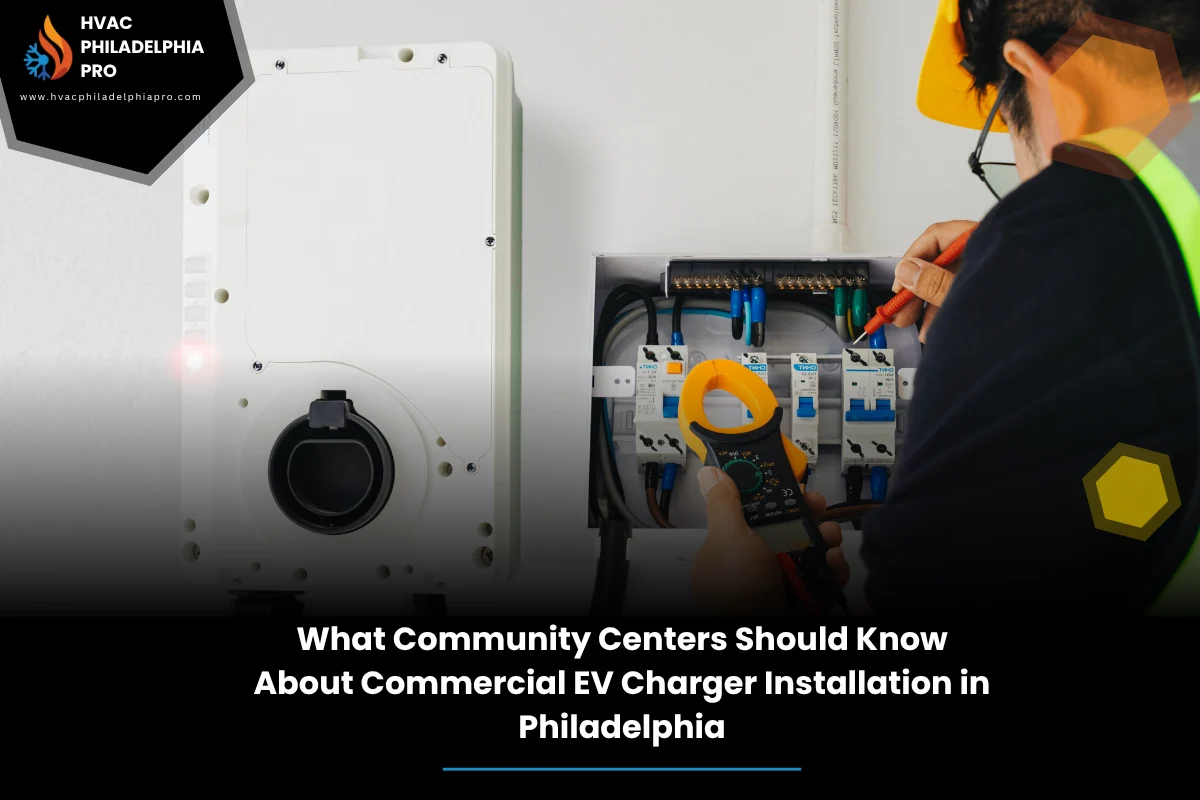
Community centers sit at the heart of neighborhood life. People come to learn, play, vote, and meet. Adding EV charging can make these visits easier while helping your center support cleaner travel in Philadelphia.
Before you start design or permits, set a clear goal. Will you serve staff, visitors, or the wider public? The first step is understanding your site power, parking flow, and the basics of commercial EV charger installation in Philadelphia. With the right plan, chargers can fit smoothly into daily routines without straining your building or budget. The team at HVAC Philadelphia Pro works with shared spaces often, so this guide focuses on practical steps community centers can use.
If your board needs a service overview and scope examples, review commercial EV charger installation in Philadelphia to see how professional projects come together from assessment to activation.
Table of Contents
Quick Summary
EV charging in a community center should be simple to use, safe for your building, and easy to maintain. Start by setting purpose: staff-only, member-only, or public access. Then confirm power capacity and pick charger levels that match typical visit times. Most centers do best with Level 2 charging because visitors stay 1 to 3 hours.
Plan a clear site layout with marked stalls, lighting, and accessible routes. Decide on payment or free use, and set rules for time limits. Smart features help manage power and track use. Build a light maintenance plan and assign daily checks. For deeper technical steps, your facility team can reference a complete guide to EV charger installation in Philadelphia for homes and small facilities as background, then tailor the details for a shared community space.
Why community centers are ideal for EV charging
Community centers draw a steady mix of staff, parents, seniors, and event visitors. That means parked cars sit long enough for practical charging. For a deeper foundation on planning and safe setup, read the Complete Guide to EV Charger Installation in Philadelphia PA for Homes and Small Facilities and keep those principles in mind for shared spaces.
These sites often have predictable schedules. That helps with load management during busy times and reduces surprise spikes. Chargers also support your center’s mission. You offer a helpful amenity, support cleaner air, and make it easier for staff and neighbors to switch to EVs.
Power basics and charging levels for shared facilities
EV chargers come in levels. Level 1 uses a standard outlet and adds range slowly. Level 2 uses a dedicated 240V circuit and gives a steady, practical charge while people attend classes or events. DC fast charging is fast but draws far more power and suits highway stops more than small centers.
According to the U.S. Department of Energy’s Alternative Fuels Data Center (n.d.), charging speed depends on power level and vehicle acceptance rate, with Level 2 commonly serving destinations where vehicles park for hours. Alternative Fuels Data Center: Electric Vehicle Charging Levels
In many cases, Level 2 EV charger installation in Philadelphia works best for community centers. It matches typical dwell times, fits common panel capacities with planning, and keeps installation simpler than DC fast charging. Your facility team can use the pillar’s broader residential and small-facility concepts as a baseline, then scale them for your visitor flow.
Electrical capacity, load management, and safety
First, check your main service size and spare capacity. A licensed EV charger electrician in Philadelphia can perform a load calculation and advise on new circuits, panel upgrades, or managed power. Good planning avoids nuisance trips and keeps core building systems safe.
Next, consider smart load management. Many networked chargers share power across ports so you can add more stalls without maxing the service. For older buildings, this can prevent expensive upgrades. Add clear labeling, lockable breakers where needed, and weather-rated equipment outdoors.
Finally, think about future growth. Conduit runs sized for expansion can save money later. Log your as-builts, circuit IDs, and charger settings so staff can troubleshoot quickly without guesswork.
Site planning, parking flow, and accessibility
Pick stalls that are easy to find, well lit, and close to the building without blocking high-turnover spots. Keep pedestrian paths clear and leave room for door swing and carts. A simple site layout sketch prevents headaches once hardware arrives.
Plan an accessible route from sidewalk to charger and post clear signage. Mark time limits on the pavement or sign to keep chargers turning over. If you expect event surges, reserve one stall for staff or volunteers who need to move vehicles in a pinch.
Run conduit in protected paths along curbs or islands when possible. Fewer cuts and patches mean less maintenance later. Think about snow storage, landscaping, and plowing so cables stay safe year-round.
Hardware choices: smart vs simple
You can choose simple Level 2 units or networked models with user accounts and reports. For most centers, smart EV charger installation helps by balancing power and tracking use. If you plan to set fees or control access after hours, networked units make that easy.
Simple units cost less and work fine for staff-only charging. But you will trade away data, remote support, and flexible rules. If your board wants grants or reporting, networked chargers often meet those platform needs better.
Ask vendors about cable management, outdoor ratings, and replaceable parts. A unit with a swing-arm or retracting reel can reduce trip risks and wear on cables.
Access control, time limits, and payment policies
Decide who can use the chargers and when. For staff-only, a basic RFID setup is enough. For wider use, you may want access control with app-based accounts and time windows. Set a fair time limit to keep stalls turning over during peak hours.
Payment can be free, flat-fee, or per kWh where allowed. Keep it simple. Post the rules at the charger and on your website. If people search “EV charging station installation near me,” they should quickly see your hours, rates, and parking notes.
Plan an exceptions list for emergencies and special events. A short policy avoids staff debates in the parking lot. Review the rules once a year based on actual use data.
Level comparison for community centers
Use this quick view to match charger levels with your campus needs. Most centers will select Level 2 for visitor timing and power limits, while Level 1 can help staff. DC fast is rare on small sites due to high power and cost.
| Level | Typical Power | Typical Dwell Time | Install Complexity | Best Fit at a Community Center |
|---|---|---|---|---|
| Level 1 | Low | Overnight or full workday | Low | Staff-only, backup, or overflow |
| Level 2 | Moderate | 1 to 3 hours | Moderate | Main visitor and staff charging |
| DC Fast | High | 20 to 60 minutes | High | Rare; special cases with strong power |
A simple rollout framework for community centers
Use this step-by-step plan to keep things moving. It draws on ideas you will also see in the pillar’s broader residential and small-facility guide, then adapts them for a public-serving site.
1) Define purpose and users
Write a one-page brief. Name your users, hours, and target stalls. Call out a pilot size and success metrics like average sessions per week.
2) Check power and confirm scope
Have an electrician confirm capacity, breaker space, and any upgrades. Choose Level 2 count and cable lengths. Note trenching or core drilling needs.
3) Layout and signage
Sketch stall locations, conduit paths, and signage. Include lighting and accessible routes. Reserve space for future conduit pulls.
4) Hardware and network selection
Pick networked or simple units based on data and control needs. Shortlist two options and compare warranty and service. Keep a spare holster or cable kit on hand.
5) Policy and pricing rules
Set time limits, access windows, and payment method. Document admin rights and user support steps. Post rules online and at the lot.
6) Install, commission, and train
Schedule installation to avoid heavy traffic days. Commission chargers, test payments, and train front-desk staff. Save admin logins and vendor support numbers.
7) Monitor and improve
Review usage each month and adjust rules. Add a second pair of chargers if stalls are full most evenings. For deeper planning context, compare your steps with the complete guide on this topic to stay aligned on fundamentals.
Operations, maintenance, and uptime
Assign a staff lead for weekly walk-throughs. Look for tripped breakers, damaged cables, or blocked stalls. A light but steady maintenance plan prevents small issues from becoming big ones.
Keep spare parts like holsters and labels. Set a simple ticket path: front desk logs issues, facilities confirms power, vendor checks software. For onsite electrical fixes, plan who to call, and keep contact info for an experienced EV charger electrician in Philadelphia.
Review uptime monthly. If a port fails often, document the cause and escalate with the vendor. Track warranty dates and software renewals.
Common pitfalls and how to avoid them
Skipping a load calculation leads to surprise trips. Installers should confirm spare capacity and use load management when needed. Another pitfall is poor cable reach. Measure parking spaces and buy the right cable length.
Unclear rules cause stall hogging. Post a two-hour limit for visitors and enforce gently. Finally, forgetting future growth can box you in. Place conduit now for two extra stalls later, even if you do not install them yet.
If you feel stuck comparing options, remember the concepts from the complete guide to EV charger installation in Philadelphia for homes and small facilities. Those fundamentals still apply; you just add shared-use policies on top.
How to choose partners and coordinate stakeholders
List your stakeholders early: facilities, front desk, finance, and IT if you use networked units. Define who approves site layout, who handles payments, and who owns vendor management. Short, clear roles reduce back-and-forth later.
When reviewing vendors, look for strong references in shared spaces, clear warranty terms, and remote diagnostics. Ask how they handle parts and how fast they ship replacements. Keep your board updated with photos and short progress notes.
If you also run programs at schools or libraries, try to standardize hardware to simplify training. Fewer platforms mean faster support and easier reporting.
FAQs
- How many Level 2 chargers should a small community center start with?
Start with two ports if parking is limited, or four if you see daily EV traffic. Review usage for three months, then add more if stalls stay full during peak times.
- Do we need new electrical service for Level 2 EV charger installation in Philadelphia?
Not always. A load calculation may show room for a few Level 2 ports. If capacity is tight, managed power or phased installation can avoid a service upgrade.
- Should we choose smart EV charger installation or simple units?
If you need user control, payments, and reports, go smart. For staff-only charging without fees, simple units can work. Many centers pick smart to keep options open.
- What maintenance do chargers need?
Weekly visual checks, cleaning holsters, and testing sessions monthly. Keep cables off the ground when possible. Contact support if you see errors or damaged parts.
- How do we set fair charging time limits?
Match the limit to your average visit. Two to three hours works for classes and events. Post the rule at the stall and remind users during busy times.
- Where should we place chargers in the lot?
Pick visible, well-lit spots near the entrance but not in the most in-demand spaces. Ensure an accessible route and clear signage to reduce confusion.
- Can we offer free charging?
Yes, many centers do. If demand grows, you can add a small fee or time limit later. Smart systems make those changes easier without new hardware.
- Who handles electrical work and permits?
A licensed EV charger electrician in Philadelphia should handle circuits, protection, and permits. Your facilities team can coordinate layout, signage, and daily operations.
Conclusion
Community centers can add real value by planning EV charging the right way. Start small, confirm power, pick solid hardware, and set simple rules that match how people use your site. With steady checks and clear roles, commercial EV charger installation in Philadelphia becomes a smooth facility upgrade, not a headache.
This guide kept the focus on shared-use needs so you can apply the fundamentals with confidence. If your team wants a deeper technical walkthrough, use the pillar concepts as a baseline and adapt them to your campus. Contact HVAC Philadelphia Pro for expert assistance, and move forward at a pace that fits your budget and community goals.
continue reading
Related Posts
Learn practical steps for EV charger troubleshooting in Philadelphia. Keep distribution centers moving with safe triage, common fault cues, and when to call emergency help.
Learn Level 2 charger repair best practices for industrial sites using heavy equipment. Get safe workflows, diagnostic steps, breaker tips, and maintenance plans.
A clear plan for EV charging station repair in Philadelphia keeps manufacturing fleets moving. Learn failure modes, a root-cause workflow, parts to stock, safety steps, and a repair path that cuts downtime.