
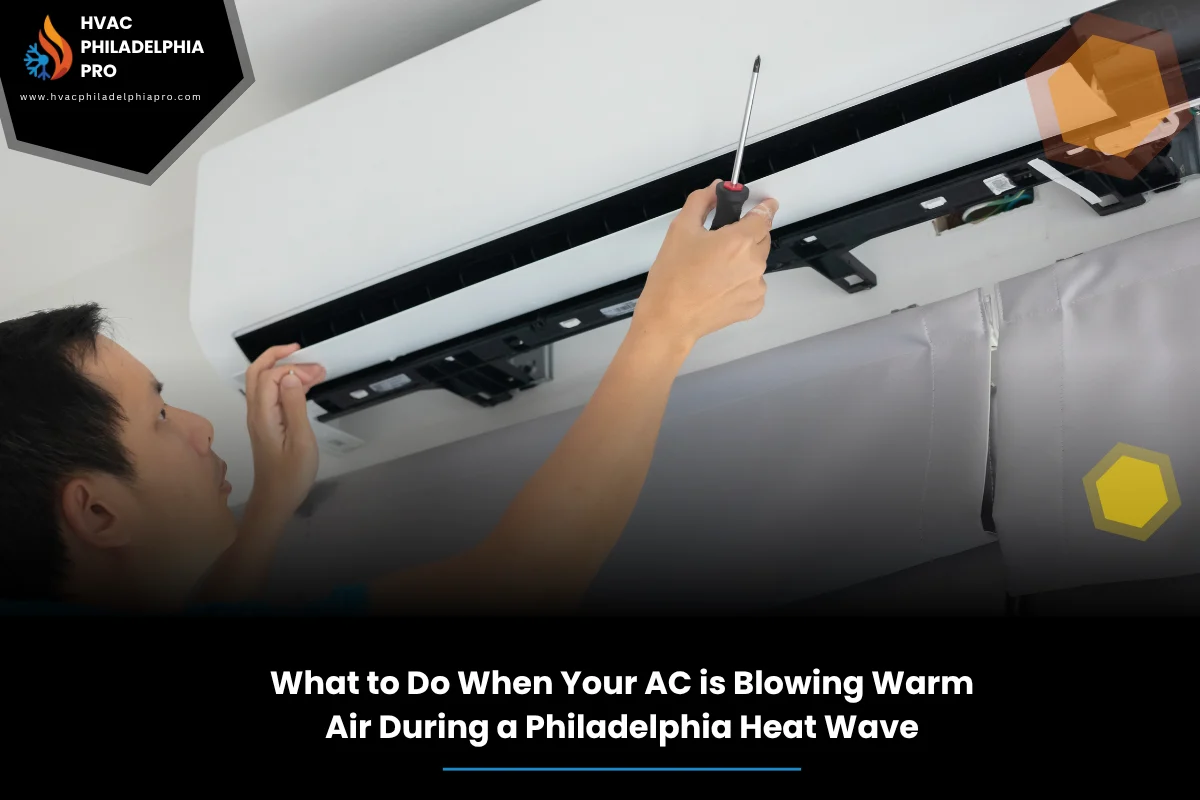
Heat waves push cooling systems hard. When you feel AC blowing warm air instead of cool, it can spike stress fast. Don’t panic. Many warm air problems come from simple issues you can check in minutes. Others need a pro, but you can still narrow things down and keep your home safe while you wait.
In this guide, you’ll learn the most common causes, how to do safe checks, a quick framework to triage, and when to call in help. We’ll keep it simple and clear. You’ll see how thermostat settings, airflow, and outdoor unit health all play a role. We’ll also show how heat load and short cycling can fool you into thinking the system failed when it just needs a reset and a little time.
The goal is steady comfort without guesswork or wasted steps. Follow along, and you’ll be better prepared the next time a heat wave tries to beat your AC.
Table of Contents
Quick Summary
Warm air from your vents often tracks back to thermostat mis-settings, dirty filters, iced coils, tripped breakers, or blocked outdoor airflow. Start with easy checks: confirm Cool mode, lower the setpoint, inspect the filter, verify the outdoor fan spins, and look for ice. Give the system 10 to 15 minutes after each change.
If the air still feels warm, listen for short cycling, look for water at the air handler, and check for weak airflow. At that point, deeper issues like low refrigerant, a failing capacitor, or control faults may be involved. Use the framework below to triage. If needed, document symptoms and contact a qualified technician for a clean diagnosis and fix.
Why AC Blows Warm Air Under Extreme Heat
During a heat wave, your home gains more heat than usual. That extra heat load demands perfect airflow and full refrigerant capacity. If the filter is dirty or the outdoor coil is clogged, the system can’t reject heat, and the supply air warms up. Short cycling worsens this by cutting run time before the coil can cool down.
For a longer, structured walk-through of parts, symptoms, and fixes, see the Complete Guide to AC Repair in Philadelphia PA for Comfortable Homes and Businesses and connect these basics with full-system repair steps.
Quick Checks You Can Do Safely
Set the thermostat to Cool and Auto, then lower the setpoint 3 to 5 degrees below room temp. Wait a few minutes and hold your hand to a supply vent. If it’s still warm, turn the fan to Auto if it was on On. Fan On can make air feel warm between cycles.
Inspect the air filter. If it looks dusty or gray, replace it. A clogged filter chokes airflow and warms supply air. Step outside and make sure the outdoor unit fan spins and nothing blocks the coil fins. Trim plants back at least two feet. Gently rinse debris with a garden hose from the inside out if accessible and safe.
Check breakers. If the outdoor unit breaker tripped, reset it once. If it trips again, stop and call a pro. Repeated trips point to deeper electrical or motor issues.
The Warm-Air Fix Framework: Step-by-Step in 10 Minutes
This simple framework helps you rule out the most common causes before you call. It also gives a clean symptom list if you need a technician. If you want pro-level context behind each step, skim the complete guide on this topic while you work.
Step 1: Thermostat. Confirm Cool, Auto fan, and a setpoint 3 to 5 degrees below room temp. Replace thermostat batteries if it has them. This aligns with the complete AC repair in Philadelphia PA guide approach.
Step 2: Filter. Replace the filter if dirty. Note the date for next time. Strong airflow needs a clear path.
Step 3: Outdoors. Clear debris, confirm the fan spins, and listen for a steady hum. A buzzing fan that won’t start may signal a weak capacitor.
Step 4: Electrical. Verify the AC breakers are on. Try one safe breaker reset. If it trips again, stop.
Step 5: Wait. Run the system for 10 to 15 minutes. Measure with feel: is the air getting cooler? If not, move to detailed checks below.
Thermostat and Control Issues
Wrong mode or fan settings make air feel warm. So can a drifted sensor. If the room reads 75 but feels 80, the thermostat may need recalibration or replacement. Some smart thermostats misbehave after power glitches and need a reboot or firmware update.
Loose low-voltage wires behind the thermostat or at the air handler can stop the outdoor unit while the indoor fan still runs, pushing room-temperature air. A quick wire check and thermostat calibration often solve this without major parts.
Airflow and Filter Problems
Airflow is the backbone of cooling. Closed or blocked vents, crushed ducts, and dirty indoor coils all reduce heat transfer. When that happens, supply air warms up and humidity creeps higher. Listen for weak airflow at far vents; that can hint at duct issues.
Open every supply and return grille, clear furniture from in front, and replace restrictive filters. If icing occurred, turn the system off to let the ice melt before restarting. Target obvious blocked vents first to restore even cooling.
Refrigerant, Compressor, and Short Cycling
Low refrigerant, a failing compressor, or a weak capacitor can all lead to warm supply air. If the outdoor unit starts then stops within a minute and repeats, that’s short cycling. An low refrigerant condition can also cause icing on the indoor coil and a slow fade to warm air as ice builds.
Listen for harsh starts, loud buzzing, or clicking. Note if the outdoor fan runs but the compressor seems silent. These clues help a pro decide if you need AC compressor repair, a contactor, or an AC short cycling fix tied to controls or charge.
When to Get Professional Help in Philadelphia Heat Waves
If you tried the framework and still feel AC not cooling in Philadelphia conditions, it’s time to document symptoms and call for service. Note sounds, breaker trips, icing, drain water, and exact thermostat readings. Share recent changes like new filters or any electrical issues.
For hands-on troubleshooting, diagnosis, and repair options when you find your AC blowing warm air, a trained technician can test capacitors, check charge, and confirm sensor accuracy without guesswork. If your room temps drift, consider quick thermostat repair in Philadelphia during peak heat to keep control stable.
Pros use gauges, thermometers, and meters to run diagnostic testing that confirms cause before parts are changed. That saves time and prevents repeat failures once the heat wave returns.
Compare Common Causes and Solutions
Use this quick table to match symptoms with likely causes and next steps. It helps you decide what to try now and what to leave for a technician.
| Symptom | Likely Cause | Quick Check | DIY or Pro |
|---|---|---|---|
| Air feels warm | Wrong mode/fan | Thermostat on Cool, Auto | DIY |
| Weak airflow | Dirty filter/vents | Replace filter, open vents | DIY |
| Outdoor silent, indoor runs | Breaker/capacitor | Check breaker once | Pro if repeat trip |
| Iced lines or coil | Airflow or low charge | Thaw, new filter | Pro if repeats |
| Starts, stops fast | Short cycling | Thermostat, charge, sizing | Pro |
Use this as a quick map for next steps and to avoid guess replacements. Solid preventive maintenance keeps most of these from showing up during a heat wave.
Preventive Maintenance Before the Next Heat Wave
Plan two filter checks per season. Keep vegetation trimmed around the outdoor unit and rinse the coil gently each spring. Inside, a yearly cleaning of the blower and coil removes dust that steals capacity and raises energy use.
According to U.S. Department of Energy (n.d.), proper airflow and clean filters improve performance and can reduce energy use while helping your system cool more effectively in hot weather.
Maintaining Your Air Conditioner
Schedule a spring inspection to confirm refrigerant levels, electrical health, and safeties. Ask the technician to measure temperature split across the coil and verify drain clear. A focused coil cleaning and test run now means fewer surprises later.
Frequently Asked Questions
- Why is my AC suddenly blowing warm air?
Common reasons include wrong thermostat settings, a clogged filter, outdoor unit blocked by debris, or a tripped breaker. Start with those simple checks.
- Can a dirty filter really make air feel warm?
Yes. A dirty filter chokes airflow so the coil cannot absorb heat well, which makes supply air feel warmer and can even cause icing.
- What is short cycling and why does it matter?
Short cycling is rapid on off cycling. It prevents proper cooling, stresses parts, and often points to control, charge, or sizing issues.
- How long should I wait after changing settings?
Give the system 10 to 15 minutes to stabilize after a thermostat change, filter swap, or breaker reset before judging results.
- Should I run the fan in On or Auto?
Use Auto during cooling. Fan On can push air that feels warm between compressor cycles, which can confuse diagnosis.
- Is icing always low refrigerant?
No. Icing can come from low airflow or low charge. Thaw the ice, replace the filter, and if it returns, call a pro to test.
- Could the thermostat be the whole problem?
It can be. Mis-calibration, dead batteries, or wiring faults can stop the outdoor unit while the indoor fan still runs warm air.
- When should I stop DIY and call a technician?
If breakers trip again, you hear harsh noises, or warm air continues after basic checks, get professional testing to avoid damage.
Conclusion
When a heat wave hits and you get AC blowing warm air, start simple. Confirm mode and setpoint, replace the filter, clear the outdoor unit, and try one safe breaker reset. Give the system time to catch up. If warm air continues, short cycling, low charge, or control faults may be involved.
Keep notes on sounds, ice, breaker trips, and temperature readings. That speeds diagnosis and protects parts. Contact HVAC Philadelphia Pro for expert assistance. A careful check of refrigerant levels, controls, and system airflow will pinpoint the cause and set you up for steady, cool comfort before the next heat wave rolls in.
continue reading
Related Posts
Breaker tripping with EV charging? Learn what to do when your EV charger circuit breaker keeps tripping. Follow safe checks, a simple framework, and real fixes that last.
Stuck because your EV charger won’t charge vehicle? Use this clear homeowner checklist to fix power, settings, cable, and app issues before calling a pro.
Learn common issues and fixes for electric vehicle charger installation in Philadelphia. From panel limits to 240V circuits, grounding, and permits, get a clear, safe plan.