
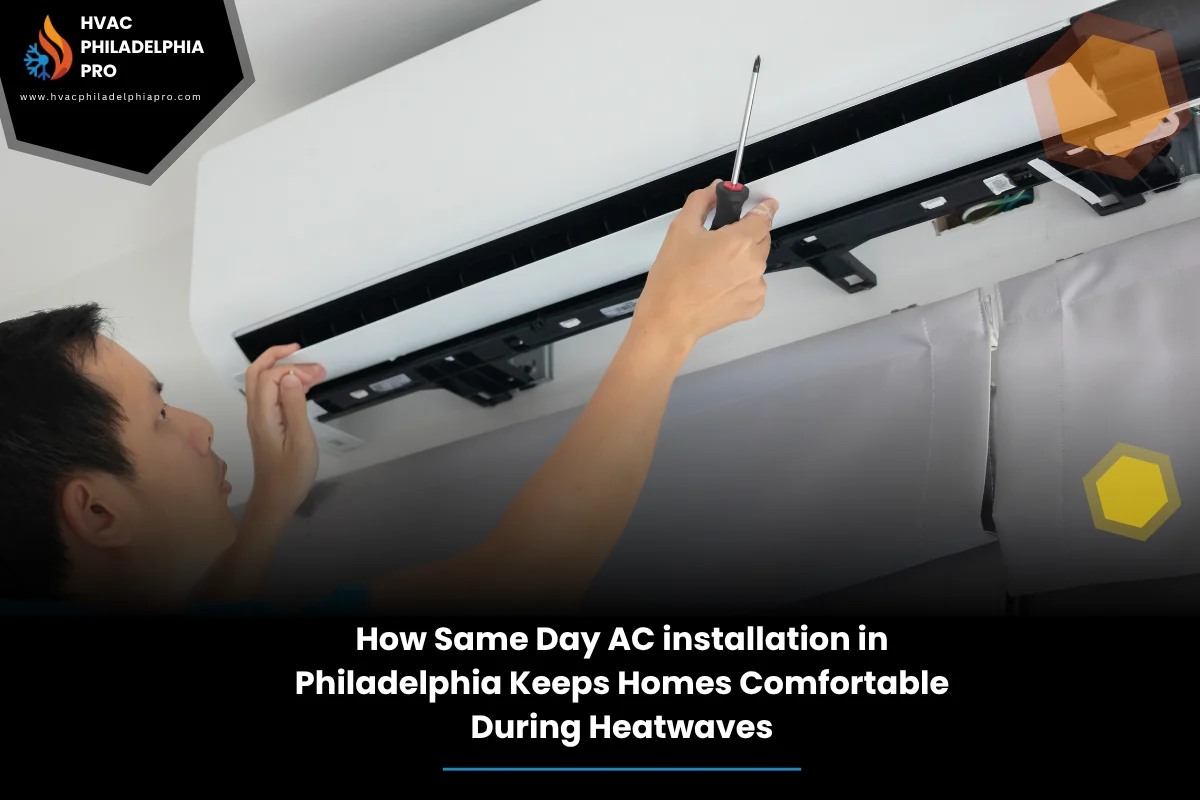
When a heatwave hits, a house can warm up fast. Rooms feel stuffy. Sleep gets hard. Pets pace. In moments like this, speed matters. That is where HVAC Philadelphia Pro focuses on clear steps, safe work, and steady results. You want cool air today, not next week. The idea of same day AC installation in Philadelphia sounds bold, but with the right plan, it is doable and safe.
In this guide, you will learn how same day work fits into the larger picture of AC installation in Philadelphia and why timing, prep, and good checks make all the difference. If your home needs cooling right away, see how same day AC installation in Philadelphia can align with smart setup and long term comfort. We cover what to expect, what tasks come first, and how to avoid rushed mistakes.
We also point you to deeper topics like load sizing, duct health, and thermostat controls. You will see how these parts tie back to everyday choices during a summer AC installation in Philadelphia, so your system holds up on the hottest days.
Table of Contents
Quick Summary
Same day installs help during heatwaves because they reduce downtime and stabilize indoor temps fast. The work still needs careful steps: sizing, safe wiring, sealed ducts, correct refrigerant, and a clean startup test. A quick job does not mean a sloppy job. It means a tight process with fast turnaround and clear roles.
In the sections below, we explain what happens in a rapid install, what you can do before the crew arrives, and how to check the system before bedtime. We also compare same day vs standard scheduling, and show a simple framework to make fast choices without regret. Along the way, we connect key ideas back to AC installation in Philadelphia so your setup fits the house and the climate.
Why Heatwaves Overwhelm Homes
Heatwaves pile on extra sun, high humidity, and longer hot evenings. All that adds to your home’s heat load. Brick and row homes can hold heat late into the night. Open windows bring in warm, damp air. That is why fast action helps. For more context on setup choices and sizing, see the Complete Guide to AC Installation in Philadelphia PA for Reliable Home Cooling and match your plan to the building.
When your old unit is undersized or failing, rooms never settle. During these spikes, quick AC replacement in Philadelphia PA can keep things safe, not just comfy. But the speed has to come with method.
What Same-Day Installation Really Involves
A true same day install focuses on scope control. The crew sets a tight sequence: rapid assessment, removal of old equipment, base and line prep, set the new condenser and air handler, make clean electrical and refrigerant connections, and run test cycles. Each step is short but must be done right.
If ductwork is suspect, they seal obvious leaks and confirm air flow for key rooms. If ducts need major fixes, note them for a follow up. The point is to restore safe cooling now without cutting corners that hurt the system later.
Philadelphia Heat and Home Readiness Factors
Row houses, shared walls, and older wiring can change the plan. Tight basements and narrow yards affect unit placement and service clearances. Humid nights push indoor moisture higher. A solid building envelope helps hold the cool, but many homes need tweaks like weather stripping or shade on west windows.
In these cases, a quick install pairs with simple wins: seal easy gaps, set realistic thermostat schedules, and use ceiling fans to mix air. Your long term list can include bigger duct fixes and smart controls.
Right-Sizing and Efficiency Basics
Right sizing matters more than speed. An oversized unit short cycles and leaves air clammy. Undersized runs nonstop and still misses the mark. A fast load check uses home size, insulation level, window area, and sun exposure to guide tonnage. A basic Manual J load calculation or a streamlined version keeps choices grounded.
Efficiency ratings guide energy use. Higher SEER2 models often cool with less energy, but only when matched to ducts and charge. According to U.S. Department of Energy guidance, correct sizing, duct sealing, and verified refrigerant charge are critical to performance and comfort (U.S. Department of Energy, 2023). U.S. DOE Energy Saver: Central Air Conditioning
Same-Day Readiness Framework: 6 Steps
Use this quick framework to move from hot house to cool home without regret. It gives you a clear decision path while leaving room for follow up work later. For deeper background on planning and setup details, you can also review the complete guide on this topic and align choices with your house.
- Stabilize the space: close windows and blinds, run fans, and reduce heat sources like ovens.
- Quick home check: note warm rooms, breaker panel access, and any water near the air handler.
- Scope the job: confirm if it is a straight swap or if line set, pad, or thermostat upgrades are needed.
- Pick the unit class: match size and efficiency to load and budget. Avoid oversizing.
- Plan follow ups: if ducts need more work, stage it after the heatwave.
- Verify startup: confirm cooling on a hot cycle, air flow room to room, and condensate drain.
What You Can Do Before the Crew Arrives
Clear a path from the door to the air handler and to the outdoor pad. Pets should be safe in a closed room. Move cars if they block work space. This access and clearance saves minutes that add up and helps the team finish before the evening peak.
Have your thermostat location in mind. A move off a hot wall or sunny hallway can improve comfort. Gather any old manuals or breaker notes to help the techs.
Same-Day vs Standard Scheduling
Not every job fits a single day. Complex duct changes, panel upgrades, or major layout shifts often need more time. Still, a well run rapid install restores safe temps fast. The table below compares the two modes and shows where downtime reduction matters most.
| Factor | Same Day Install | Standard Scheduling |
|---|---|---|
| Goal | Restore cooling quickly | Optimize long term plan |
| Typical Scope | Straight swap, minor fixes | Full upgrades, duct changes |
| Time Window | Hours, same calendar day | One to several days |
| Comfort Impact | High, fast drop in temp | High, but slower start |
| Risk | Rushing choices | More chance to refine |
| Best For | Heatwaves, urgent failure | Planned remodels |
Common Pitfalls to Avoid During Rush Installs
Speed can tempt shortcuts. Do not skip proper breaker sizing or tight wire terminations. Avoid mismatched indoor and outdoor units. Watch for kinked lines or sloppy drain traps. Steer clear of shortcut wiring that might work today but fail next week.
Ask for a quick duct check and air flow reading on key rooms. It takes minutes and helps balance comfort.
Post-Installation Checks During Heatwaves
Once the system starts, verify a 15 to 20 degree drop between return and supply air, measured at the vents. Listen for odd noise. Check the outdoor fan and indoor blower for smooth starts. This simple airflow verification helps catch issues before bedtime.
Confirm the condensate drain is clear and moving water. A clogged line during a humid spike can cause leaks fast.
Smart Thermostat and Zoning Tweaks
Set a steady target temp during a heatwave. Avoid big swings that force short cycling. If you have zones, cool lived in spaces first. Good thermostat placement away from heat sources keeps readings fair and cycles smooth.
Use fan auto mode for normal use, then bump to on for short periods to mix air if rooms feel uneven.
Safety and Electrical Considerations
Confirm the disconnect and breaker match the unit specs. Proper overcurrent protection reduces nuisance trips and protects equipment. The crew should torque lugs to spec and route cables cleanly.
Keep clearances around the condenser so it can breathe. Trim plants and avoid blocking the coil.
FAQs
- Can a full AC replacement be done the same day?
Often yes, when it is a straight swap with similar sizing and no major duct or electrical changes. Complex layouts may need added days. The goal is safe, stable cooling first, then plan bigger upgrades after the heat eases.
- How do I know if my home needs a larger unit?
Size should follow a load check, not guesswork. Factors include home size, insulation, windows, and sun exposure. Oversizing can cause clammy air and short cycles. Ask for a quick load review before choosing tonnage.
- What should I check right after startup?
Look for cool supply air, a steady outdoor fan, no error codes, and water moving through the condensate line. After 15 minutes, rooms should start to feel cooler and less sticky.
- Do ducts need to be perfect for a same day install?
No, but major leaks and blockages should be addressed soon. A quick seal on easy leaks and a basic air flow check can hold you over until a full duct review.
- Will a higher efficiency unit always save more?
Usually, but only if sized right, ducts are sealed, and charge is correct. A high SEER2 unit with poor air flow will not meet its ratings. Pair efficiency with good setup and maintenance.
- Is a smart thermostat worth adding during a heatwave?
It can help, but do not let it slow the install. If time allows, set it up. If not, use a simple stat now and upgrade later. Proper placement is more important than extra features on day one.
- How fast should rooms cool after installation?
Most homes feel better within an hour. Full pull down may take longer on extreme days, especially in larger or sun heavy spaces. Keep doors and blinds closed to help the system catch up.
- What maintenance should I plan after the rush?
Replace or clean filters, verify drain line flow, and schedule a duct review if needed. A spring tune up each year keeps performance steady and can prevent surprise failures during peak heat.
Conclusion
Heatwaves do not wait, and neither should your comfort. With a tight plan, same day AC installation in Philadelphia can bring fast, stable cooling without risky shortcuts. Keep the focus on sizing, safe wiring, sealed ducts, and a clean startup test. These steps link back to smart AC installation in Philadelphia choices year round.
If you set a calm pace, even a rapid install can feel orderly and secure. Make a quick plan today and list follow ups for later. Contact HVAC Philadelphia Pro for expert assistance. With clear steps and steady checks, your home can stay cool, dry, and ready for the next spike.
continue reading
Related Posts
Breaker tripping with EV charging? Learn what to do when your EV charger circuit breaker keeps tripping. Follow safe checks, a simple framework, and real fixes that last.
Stuck because your EV charger won’t charge vehicle? Use this clear homeowner checklist to fix power, settings, cable, and app issues before calling a pro.
Learn common issues and fixes for electric vehicle charger installation in Philadelphia. From panel limits to 240V circuits, grounding, and permits, get a clear, safe plan.