
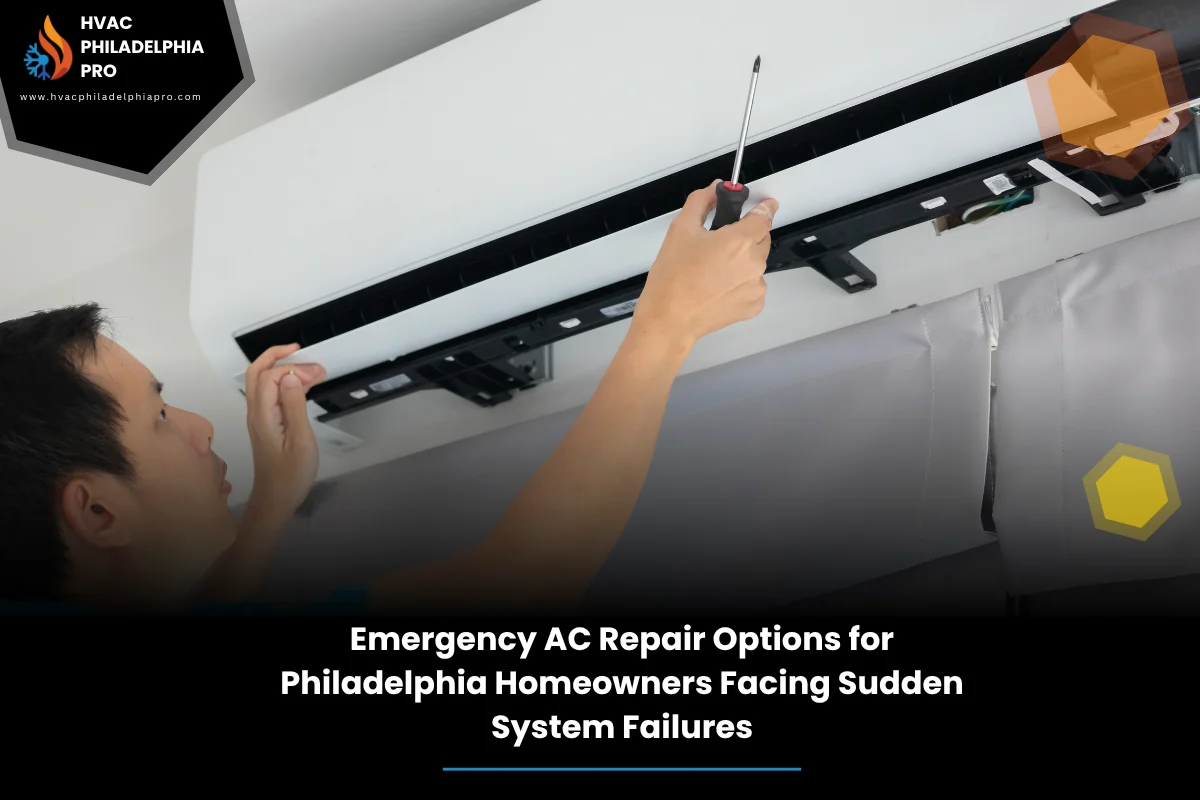
When your air conditioner dies on a hot afternoon, it feels urgent fast. You want cool air back, and you want clear options that work. If you need help right away, emergency AC repair in Philadelphia can keep your home safe and your family comfortable without delay.
In this guide, we break down what counts as an emergency, what to check first, and how to choose between 24 hour, same day, and scheduled repairs. You will learn a simple plan to act in under an hour, plus ways to prevent the next breakdown.
We keep it straight and simple. You will see what to do, when to call, and how to prepare for a fast fix. And if you need a trusted local team, HVAC Philadelphia Pro shows up on time and explains every step so you know what comes next.
Table of Contents
Quick Summary
System off, no cooling, or odd smells can mean trouble. Start with safe checks, like the thermostat, breaker, and air filter. If the system still will not run or you see water or smell burning, stop and call for help. Use quick triage to pick the right response window.
Need help overnight or on a holiday? 24 hour AC repair in Philadelphia is for urgent, unsafe issues. If the house is hot but safe, same day AC repair in Philadelphia often works. If the risk is low and you can wait, schedule for the next open slot. Keep notes, clear the unit area, and be ready to explain the symptoms.
What Counts as an AC Emergency
Not every warm room is an emergency. True emergencies involve safety, system damage risk, or medical concerns. Signs include burning smells, constant breaker trips, smoke, water pooling near electrical parts, or indoor temps that can harm kids, older adults, or pets.
For a deeper overview of systems, parts, and routine fixes, see the Complete Guide to AC Repair in Philadelphia PA for Comfortable Homes and Businesses. It gives broad context so you can judge if your issue is urgent or can wait for a normal visit.
Use a simple rule: if you feel unsafe or the unit shows signs of damage, it is an emergency. If the home is warm but stable, you can choose a faster or standard appointment based on comfort and timing.
When in doubt, turn the system off at the thermostat and at the breaker. This protects the unit and your home from more harm.
First Checks When the System Fails
If the AC stops, do a few safe checks before you call. Confirm the thermostat is set to cool and the batteries are good. Make sure the breaker and any outdoor switch are on. Replace a clogged filter and clear leaves from the outdoor unit.
If you hear buzzing or the fan stalls, stop and do not keep trying to start it. Repeated starts can burn out parts. A quick reset may fix a small glitch, but if it trips again, use a safety shutoff and seek help.
Note what you see, hear, and smell. Write down any error codes. These clues speed up diagnosis and can save a trip fee or extra labor time.
Understand Your Response Options
Philadelphia homeowners often weigh 24 hour AC repair in Philadelphia, same day service, or standard scheduling. Your choice depends on comfort risk, safety, and budget. If you see smoke, sparks, or smell burning plastic, call right away. If it is just warm air at night, try a fan and aim for the morning.
Many people type AC repair near in Philadelphia when the heat spikes. That is fine, but vet the option you pick. Check availability, response time, and what the visit includes.
You can use one of these paths depending on urgency and timing:
| Option | Best For | Response Window | Pros | Cons |
|---|---|---|---|---|
| Emergency 24 hour | Unsafe or severe failures | 1–4 hours | Fast help, protects home | Higher after-hours cost |
| Same day | Hot but stable homes | Same calendar day | Quick relief, lower than overnight | Limited slots on heat waves |
| Scheduled | Low risk issues | 1–3 days | More choice of time | Wait time without cooling |
Match the situation to the speed you need. Fast action matters, but so does fit. For true emergencies, choose 24 hour service. For hot but manageable homes, same day is often enough.
The 60-Minute Emergency AC Game Plan
This simple framework helps you act fast, stay safe, and avoid extra damage while you wait for help.
1) Stabilize: Turn the thermostat to off. If you smell burning or see smoke, cut power at the breaker too. 2) Check basics: Thermostat, breaker, filter. 3) Document: Short notes on symptoms, any new noises, and when it started. 4) Decide: Use the table above to pick response speed. 5) Prepare: Clear space, secure pets, and stage notes.
If you want deeper background while you wait, read the complete guide on this topic. It pairs well with this fast plan and helps you talk with a tech clearly.
This plan works in heat waves and on quiet nights. Use it as a quick decision tree to keep stress down and move with purpose.
Common Causes of Sudden Failures in Philly Homes
Heat and humidity strain AC parts. A weak start part, like a capacitor, can keep the compressor or fan from spinning. You may hear a hum, then silence. Other times, the outdoor fan runs but air stays warm.
Clogged filters or blocked returns cause ice on the indoor coil. The unit may shut down or blow little air. Low refrigerant from a leak can freeze coils too. Water can then drip from the pan or ceiling.
Bad thermostats, loose wires, or tripped float switches stop systems as well. If your AC unit not turning on even after a reset, do not keep cycling power. That can make a small issue much worse.
Safety and Prevention Tips
Keep the area around the outdoor unit clear by at least a couple of feet. Change filters on time, and use the size the system calls for. Look for water near the indoor unit, and check that the drain line is not clogged.
According to the U.S. Department of Energy (2023), clean filters and clear coils help systems run better and avoid freeze-ups.
U.S. Department of Energy: Central Air Conditioning
Simple steps like regular filter swaps, coil cleaning, and a spring tune-up can prevent many emergency calls. These habits support steady airflow and preventive maintenance that keeps parts from failing under stress.
When to Call a Pro vs DIY
Do the easy checks, then stop if the issue remains. Electrical smells, breaker trips, or ice on coils call for help. Coolant issues, control boards, and compressor faults need tools and training for a safe fix and a professional diagnosis.
If the house is unsafe or heat-sensitive family members are at risk, choose urgent help. You can find emergency AC repair in Philadelphia when you need fast support from a skilled local team.
If the home is warm but steady, same day can be fine. For lower risk, schedule the next open slot and plan to use fans, blinds, and chilled water to get through the wait.
How to Prepare for a Tech Visit
Clear a path to the indoor unit, thermostat, and electrical panel. Move cars or bins that block the outdoor unit. Crate pets or keep them in a separate room so the tech can work without stress.
Gather model numbers, filter sizes, service notes, and any error codes. This simple documentation cuts guesswork and guides faster tests.
List the timeline. Did the issue start after a storm, power blink, or filter change? Small details help link symptoms to causes right away.
FAQ: Emergency AC Repair for Philadelphia Homeowners
- What should I do first if my AC stops suddenly?
- Is warm air always an emergency?
- Why does my AC trip the breaker?
- Can I run the fan only while I wait?
- What if my AC unit not turning on after a storm?
- How fast is 24 hour AC repair in Philadelphia?
- Will same day AC repair in Philadelphia fix everything in one visit?
- How can I prevent another emergency?
Turn the thermostat off, check the breaker, and replace a dirty filter. If it still fails or you smell burning, shut power at the breaker and call for help.
No. Warm air without other danger signs may allow for same day or scheduled repair. Use fans and shade while you wait.
It could be a failing motor, shorted wire, or compressor issue. Do not keep resetting. This can cause more damage and safety risk.
Yes, fan-only can help cool people, not the space. If the coil is iced, turn the system off to let ice melt before any more tests.
Power surges can damage capacitors or controls. Try one reset. If it fails again, stop and call a pro to avoid further harm.
Response varies by demand and time of day. Many teams aim for a few hours, but heat waves can stretch times.
Many issues can be fixed on the spot. Some parts may need pickup or ordering, which can add time.
Change filters on schedule, keep coils clean, clear debris, and get seasonal maintenance. Fix small issues before peak heat.
Conclusion
Sudden AC failures are stressful, but a simple plan makes them manageable. Start with safe checks, match your need to the right response window, and stay clear of risky DIY work. Use notes and prep to speed up the visit, and always choose safety first with emergency AC repair in Philadelphia when the signs point to danger.
For steady comfort and fewer surprises, keep up with filters and routine care. When you need help, choose a clear path forward, ask questions, and stay close to the plan. Contact HVAC Philadelphia Pro for expert assistance. With the right steps, your home can get back to cool air fast and stay that way when the next heat wave hits.
continue reading
Related Posts
Breaker tripping with EV charging? Learn what to do when your EV charger circuit breaker keeps tripping. Follow safe checks, a simple framework, and real fixes that last.
Stuck because your EV charger won’t charge vehicle? Use this clear homeowner checklist to fix power, settings, cable, and app issues before calling a pro.
Learn common issues and fixes for electric vehicle charger installation in Philadelphia. From panel limits to 240V circuits, grounding, and permits, get a clear, safe plan.