
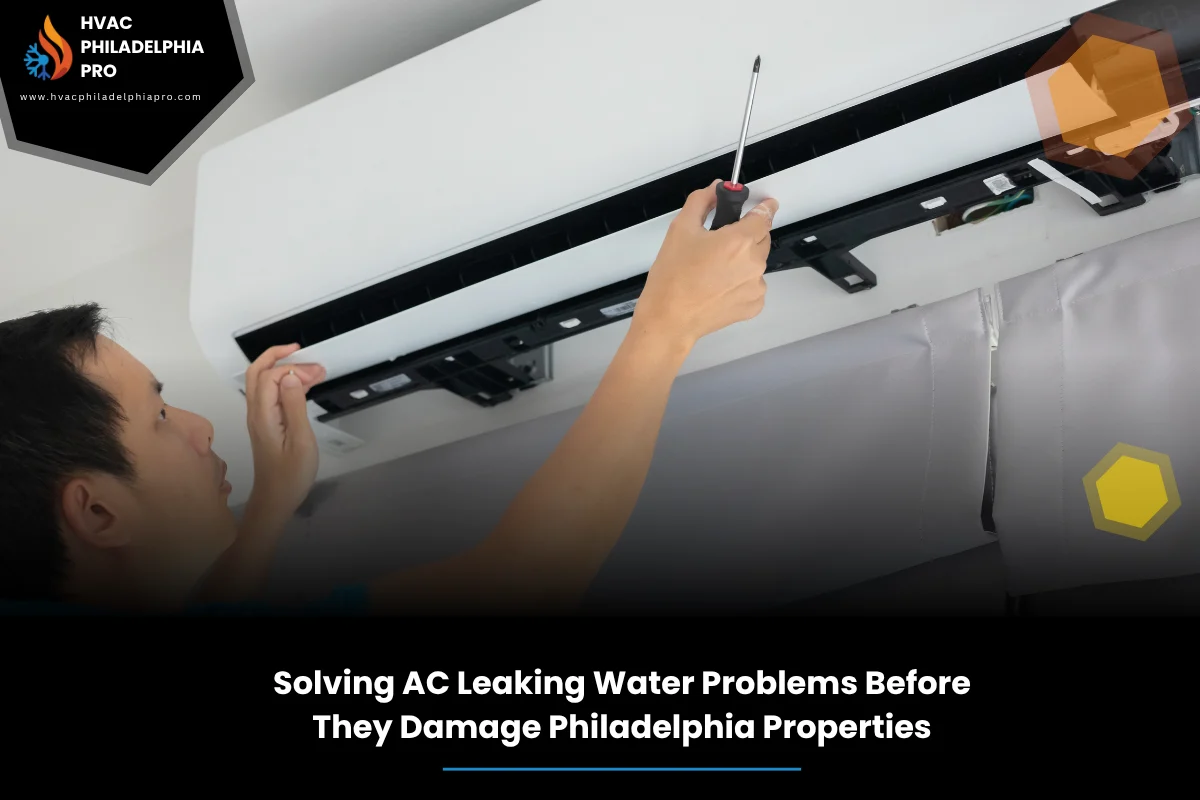
Water on the floor near your air conditioner is a warning sign. It can ruin floors, trigger mold, and knock your cooling off-line on the hottest day. This guide walks through what causes leaks, what to check first, and how to stop damage fast. We also explain when AC leaking water repair needs a trained tech.
You can try a few safe steps before you call. If the leak keeps coming back, or the unit also stops cooling, that points to a deeper issue. We focus on simple moves you can do without tools and how to spot problems that need parts, gauges, or electrical work.
If you see puddles now, pause and take action. This article is purely educational. If you decide you need service after your checks, use this link to learn more about AC leaking water repair. For larger issues, the team at HVAC Philadelphia Pro can help you plan the next step without pressure.
Table of Contents
Quick Summary
Most AC water leaks start with a clogged drain, a dirty filter that chokes airflow, a frozen indoor coil that melts, or a cracked pan. Start by turning the thermostat to off and switching the fan to on. Replace a dirty filter, empty the pan if you can, and check the drain line at the indoor unit.
If the leak is steady or the air feels warm, avoid running the system. Water and electricity do not mix, and more run time can flood the area. Use the checklist below to narrow the cause. Then decide if it is a safe DIY fix or a job for a pro who has the right tools and parts.
Why AC Systems Leak Water Indoors
Central air pulls moisture from indoor air. That water should flow down a condensate drain line into a safe discharge point. When the line clogs with dust, algae, or lint, water backs up. The pan overflows, or a safety switch trips and shuts the unit down to prevent a mess.
Low airflow is another common cause. The indoor coil gets too cold, ice forms, then it melts and overwhelms the pan. Damaged or rusted pans also drip slowly for weeks before anyone notices. For a broader view of related repair topics and how leaks connect with cooling issues, read Complete Guide to AC Repair in Philadelphia PA for Comfortable Homes and Businesses to connect the dots.
Sometimes the drain is fine, but the line was installed without a proper trap, or the slope is wrong. Water sits still and breeds sludge. In rare cases, a miswired or failed safety switch lets the system run while the pan is full.
Fast Checks When AC Is Not Cooling or Dripping
Start simple. Replace the air filter if you cannot see light through it. A clogged filter chokes airflow, ices the coil, and then the meltwater spills over. Make sure supply and return vents are open and not blocked by furniture or rugs.
Next, look at the indoor unit. Is the pan full? Is there a small PVC pipe near the coil cabinet that is wet or dripping? If you have a shop vacuum, you can try to clear the drain from the outside port. If the house feels warm and no air is moving, shut the system off and let ice melt for an hour before retrying.
Core Causes: Airflow, Drainage, and Parts
Clogged drains cause many leaks, but not all. Low airflow, driven by filter buildup or collapsed ducts, can freeze the evaporator coil. When it thaws, the pan floods. Also, a refrigerant undercharge can lower coil temps and make icing more likely.
Look for signs of a cracked or rusted pan under the coil. Check for a missing or failed safety float. In wall or attic installs, a secondary pan may catch overflow. If that pan is wet, the primary drain is not doing its job.
Outdoors, check that the condenser is not buried by weeds or debris. While outside issues do not make water indoors by themselves, a struggling condenser raises system stress and can add to icing inside over time.
DIY vs Pro: What You Can Do Without Risk
Some tasks are safe for homeowners. Others need gauges, nitrogen, or electrical testing. Use this comparison to pick your path. A wet-dry vacuum at the drain cleanout is a common and safe first try. Anything that involves refrigerant, coil opening, or electrical should wait for a licensed technician.
| Task | What it fixes | DIY safe? | When to stop |
|---|---|---|---|
| Replace air filter | Restores airflow, reduces icing | Yes | Filter is clean but leak continues |
| Vacuum drain line from outside | Clears sludge and algae | Yes | No suction, line stays clogged |
| Flush drain with a small amount of white vinegar | Discourages algae growth | Yes | Drain backs up right away |
| Level and secure drain line | Improves slope and flow | Maybe | PVC is glued or hard to reach |
| Replace or wire safety float | Stops overflow before damage | No | Electrical and code compliance needed |
| Repair cracked pan | Stops persistent drips | No | Pan is rusted or under coil |
| Check refrigerant levels or charge | Prevents icing due to low charge | No | EPA-certified handling required |
Step-by-Step Framework to Stop and Prevent Leaks
Use this simple plan to act fast and avoid damage. If you want more context beyond leaks, the broader system topics are covered in the complete guide on this topic so you can see how airflow, coils, and drains work together.
Step 1: Turn the thermostat to off. Set fan to on for 20 to 30 minutes to dry the coil.
Step 2: Swap the filter if it is dusty or damp.
Step 3: Use a shop vacuum on the outside drain port for one to two minutes to clear sludge.
Step 4: Pour a cup of vinegar into the indoor drain access if one exists.
Step 5: Verify the pan is not cracked and the drain line has a steady slope.
Step 6: Check that the safety float switch is mounted and wired. If it is missing or the leak returns, it is time to call a pro.
Step 7: After clearing, run cooling for 15 minutes. If it leaks again or the air is still warm, keep it off to prevent more water and get a technician involved.
Philadelphia Watch-outs: Humidity, Buildings, and Basements
Older rowhomes and brick buildings can trap moisture. High summer humidity means more condensate each hour, so drains clog faster. In basements, drains sometimes run long distances to reach a sink or floor drain. Any low spot can hold water and grow slime, which then clogs the line. If you see repeated icing and warm air, that overlaps with AC not cooling in Philadelphia and deserves a deeper system check.
Historic homes often have tight chases and tricky access around the indoor coil. That is why evaporator coil repair in Philadelphia can be more involved than a typical suburban install. Street-facing outdoor units collect soot and debris, so condenser unit repair in Philadelphia might also include coil cleaning and straightening fins to keep head pressure in check.
Maintenance That Keeps Water Where It Belongs
Make a simple plan and stick to it. Change filters every one to three months during peak season. Clear the outdoor unit perimeter so it can breathe. Once a year, schedule an annual tune-up to check drains, test safeties, and clean coils.
According to the U.S. Department of Energy, regular AC maintenance improves performance, helps prevent moisture issues, and can reduce energy waste over time (U.S. Department of Energy). Energy Saver: Central Air Conditioning
When to Pause the System and Call a Technician
Shut the system off if water is near electrical parts, the pan is overflowing, or ice is visible on the coil or lines. If your drain line clogs again within days, something deeper is wrong. That could be a trap design flaw, a cracked pan, or a low refrigerant charge driving freeze-ups.
Call a pro when you suspect electrical faults, need to replace a safety device, or see rust through the pan. Also call if you hear gurgling in the drain line after cleaning. That may mean the slope is wrong and air is entering the line instead of water flowing out.
FAQs
- Why is my AC leaking water all of a sudden?
Most sudden leaks come from a clogged drain line or a frozen coil melting after the system cycles off. A dirty filter or recent drywall dust can push debris into the drain and cause a quick backup.
- Is it safe to run the AC if it is leaking?
It is not a good idea. Water can reach wiring, and running time can flood the pan. Turn the system off and try basic checks like filter change and drain vacuuming before restarting.
- How do I clear a clogged AC drain line?
Use a shop vacuum on the outside drain port for one to two minutes. Then add a small amount of white vinegar at the indoor access to slow algae growth. If suction fails or the line refills, call a technician.
- What causes the coil to freeze?
Low airflow from a dirty filter or blocked return, low refrigerant, or very low indoor temperatures can freeze the coil. When it thaws, the meltwater can overflow the pan and leak.
- Can a leaking AC damage my home?
Yes. Water can stain ceilings, swell wood, and trigger mold in days. Address leaks as soon as you notice damp spots, and use an overflow safety switch to shut the unit down if the pan fills.
- What is that float device in the drain line?
It is a safety switch that stops cooling when the pan gets full. It helps prevent overflow while alerting you that the drain is blocked and needs clearing.
- Why does my drain keep clogging again?
Long horizontal runs, poor slope, or warm, humid air entering the line can breed algae and sludge. A pro can add a proper trap, adjust slope, and install a cleanout for easier care.
- When do I need a professional for AC leaks?
Call when leaks return after cleaning, the pan is rusted or cracked, safety switches fail, or you suspect low refrigerant or electrical issues. These need tools, parts, and proper handling.
Conclusion
Water leaks from your AC are fixable if you act fast and work step by step. Start with a filter change, drain vacuum, and a short fan-only cycle to dry the coil. If puddles return, or cooling drops off, that is the point to shift from DIY to trained AC leaking water repair support.
Use the framework here to stay safe and prevent damage. If you need wider context about cooling performance and parts that interact with the drain system, the complete guide to AC repair in Philadelphia PA is a helpful companion read. When you are ready to get help or just want a clear plan, contact HVAC Philadelphia Pro for expert assistance.
continue reading
Related Posts
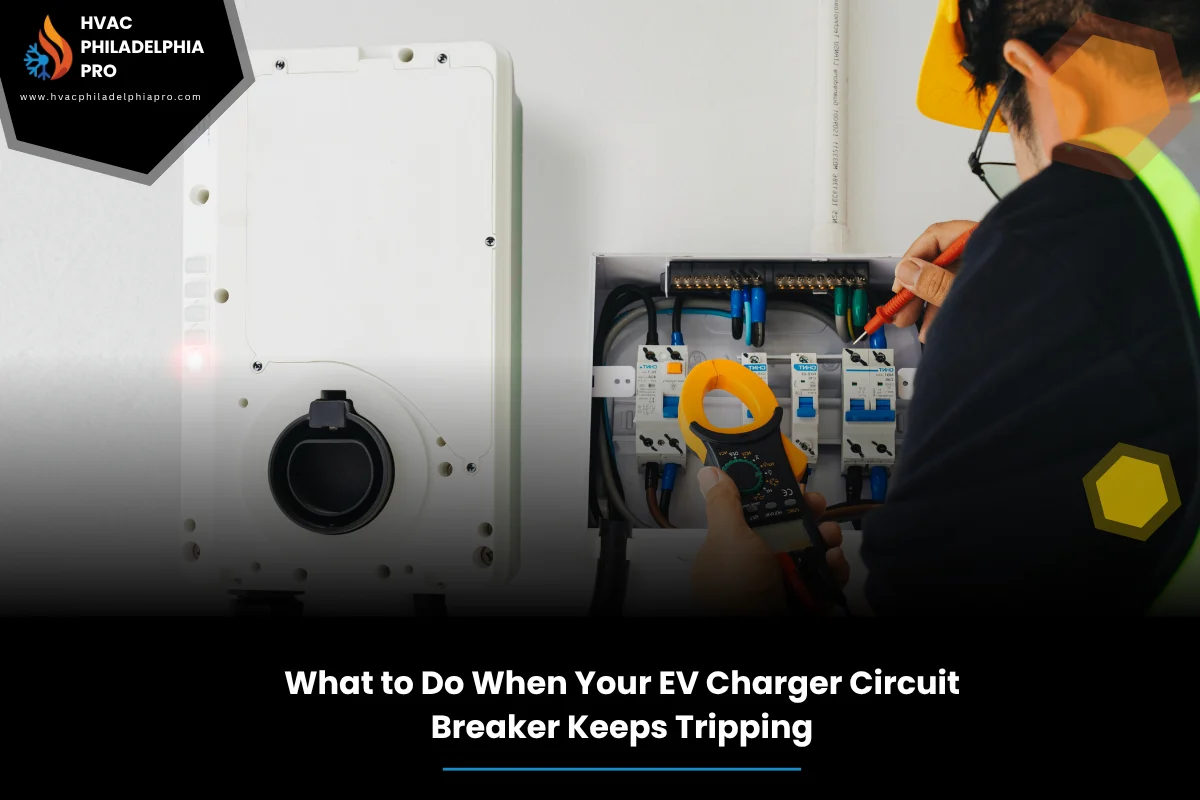
Breaker tripping with EV charging? Learn what to do when your EV charger circuit breaker keeps tripping. Follow safe checks, a simple framework, and real fixes that last.

Stuck because your EV charger won’t charge vehicle? Use this clear homeowner checklist to fix power, settings, cable, and app issues before calling a pro.

Learn common issues and fixes for electric vehicle charger installation in Philadelphia. From panel limits to 240V circuits, grounding, and permits, get a clear, safe plan.