
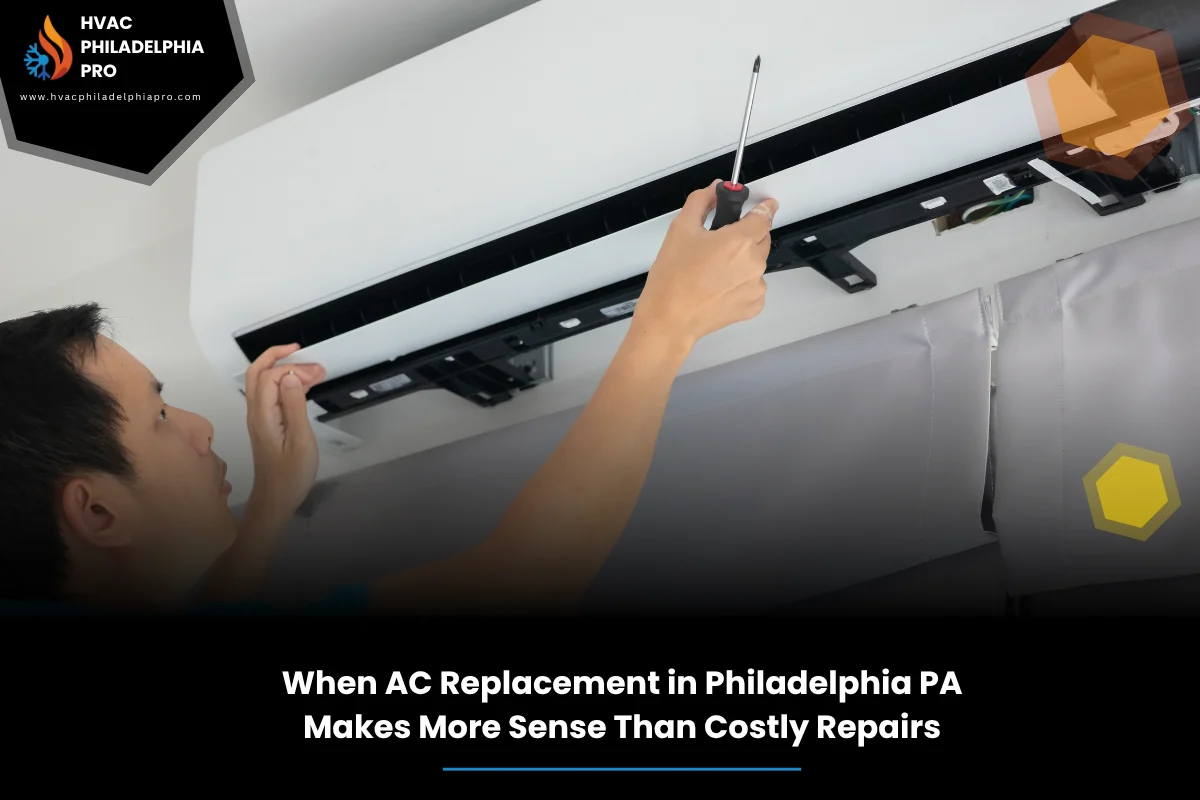
Philadelphia summers feel heavy, and when your air conditioner limps along, decisions get stressful fast. Sometimes a fix is fine. Other times, AC replacement in Philadelphia PA saves money and stops the cycle of repeat calls. In this guide, we keep it simple: signs to watch, real costs, and a clear plan to decide.
We work with homes and small businesses daily at HVAC Philadelphia Pro, and we see the same patterns. Older systems that break often, high bills, rooms that never cool, and parts with long waits. If that sounds familiar, learn what matters most before the next heat wave. For details on service options, see AC replacement in Philadelphia PA for the process and scheduling.
This article stays neutral. We compare repair and replacement across age, efficiency, comfort, risk, and timelines. You’ll also find a quick framework to make the call with less guesswork.
Table of Contents
Quick Summary
If your system is older, breaks often, or never cools evenly, a new unit may be smarter than another patch. Look at the whole picture: repair history, energy use, and comfort. Run the math on total cost of ownership over the next 5 to 10 years, not just the next bill.
Repairs make sense when the unit is newer, issues are minor, and parts are easy to get. Replacement makes sense when repair costs keep stacking up, efficiency is poor, or summer reliability feels shaky. This article also points to installation factors covered in the broader AC installation guide so you understand how setup affects results.
Repair or Replace: The Breakpoint
Start with age, reliability, and comfort. A system that needs frequent service, struggles on the hottest days, or leaves rooms uneven is telling you something. If a single repair will cost a big slice of a new system, consider the long game. Your summer comfort and downtime risk both matter.
If you decide a new unit may be the better path, read the Complete Guide to AC Installation in Philadelphia PA for Reliable Home Cooling to understand how good planning, sizing, and duct checks set your replacement up for success. Keep an eye on your personal repair threshold so you don’t overspend on short-term fixes.
The Math: Total Cost Over the Next Decade
Look past today’s invoice. Add up likely repair costs, energy use, and the chance of a mid-summer breakdown. Then compare that to payments and energy savings with a newer system. Include any utility rebates or warranties that reduce risk over time.
Focus on lifecycle cost: purchase plus install, energy, maintenance, and expected repairs. If the old unit eats money every summer and your bills rise, you may reach breakeven faster than you think. That’s when replacement starts to feel like the safer move.
Energy and Comfort Gains With New Systems
Newer equipment often cools better at lower energy use, especially with correct sizing and clean ductwork. You may see steadier temps, quieter operation, and fewer hot spots. Good setup also protects the compressor and extends equipment life.
According to ENERGY STAR (2024), correct sizing and quality installation strongly affect performance, comfort, and reliability across the system’s life. ENERGY STAR Heating and Cooling
A higher efficiency rating can trim summer bills, but only when paired with solid install practices and proper airflow. That is why the broader Philadelphia AC installation topic matters so much when you plan a swap.
Pricing Benchmarks in USD: Repairs vs Replacement
These ballpark ranges help you plan. Use them to compare short-term fixes with long-term value. Actual numbers shift with system size, home layout, and parts availability.
| Scope | Typical Range |
|---|---|
| Basic repair (capacitor, contactor, minor leak check) | $200 to $600 |
| Mid-range repair (fan motor, control board, moderate leak repair) | $600 to $1,200 |
| Advanced repair (compressor, coil replacement, major refrigerant work) | $1,200 to $2,500+ |
| Basic replacement (standard efficiency, straightforward install) | $5,000 to $9,000 |
| Mid-range replacement (better efficiency, some duct tweaks) | $9,000 to $13,000 |
| Advanced replacement (high efficiency, duct upgrades, extras) | $13,000 to $18,000+ |
Note: These are estimates for planning only. Budget planning should reflect your home, load needs, and scope. Actual pricing may vary depending on scope and requirements.
5-Step Decision Framework You Can Trust
Follow this simple playbook to avoid second-guessing.
- List the last two years of repairs and costs.
- Estimate energy use with your current unit on peak months.
- Price a realistic repair and a comparable replacement.
- Compare 5-year totals: repair plus energy vs replacement plus energy.
- Weigh summer risk: heat wave breakdowns and part delays.
As you review steps 3 and 4, skim the complete guide on this topic to see how install choices affect comfort and bills from day one. Ask for a load calculation so the new system is sized right.
Common Triggers for Replacing Old Units in Philadelphia
Humidity and long heat streaks strain older systems. If you’re replacing old AC unit in Philadelphia because of frequent outages, uneven rooms, or rising power bills, you’re not alone. Many homes also face duct leaks that make the system work harder than it should.
When you weigh age of equipment against performance, check airflow, ducts, and thermostat wiring too. That way, an HVAC system replacement in Philadelphia addresses root causes, not just the box outside. If you plan new AC unit installation in Philadelphia, also review insulation and air sealing to hold the gains.
Installation Factors That Matter on Day One
The install can make or break results. Solid line set work, tight ducts, clear condensate drain, and correct refrigerant charge help the system last. Smart thermostat setup and a proper test run finish the job.
These details echo the wider AC installation topic. Good crews document static pressure, verify airflow, and confirm charge for a smooth start. A thorough proper commissioning process protects your investment and ensures the comfort you expect.
Timeline Planning for the Summer Rush
Repairs can happen fast if parts are in stock, but peak season slows everything. Replacements may need permits, delivery, and a day of install. Shoulder seasons offer more flexible scheduling and sometimes better equipment availability.
Talk through expected lead time before you decide. If your unit is shaky and the forecast is hot, a well-timed replacement may beat an emergency call during a heat wave.
Repair vs Replace: Quick Check Table
Use this at-a-glance view to guide your next step. It is not a rulebook, but it helps you spot patterns fast.
| Factor | If This Is True | Lean Toward | Why |
|---|---|---|---|
| Age | System is older and breaks often | Replace | Lower risk, better efficiency, fewer surprises |
| One Big Repair | Cost is a large share of a new system | Replace | Avoid sinking money into short life left |
| Comfort | Hot rooms and uneven cooling | Replace | Fresh start with right sizing and airflow fixes |
| Energy Bills | Summer bills keep rising | Replace | New units can reduce use when installed right |
| Minor Issue | Simple, one-time fix | Repair | Low cost and little downtime |
| Parts Access | Common parts, quick turnaround | Repair | Fast solution, less disruption |
| Budget | Short-term cash only | Repair | Buys time while you plan next steps |
Mark your main decision criteria and choose the path that best fits your comfort, risk, and budget.
FAQ
- How old is too old for an AC in Philadelphia?
There is no magic number, but frequent repairs, comfort issues, and rising bills together suggest planning for replacement. Look at costs over the next five years, not just this summer.
- Will a single expensive repair justify replacement?
If one repair equals a big share of a new system, replacement may be smarter. Add expected energy savings and fewer future repairs to your comparison.
- How do I know if my AC is sized correctly?
A proper load calculation looks at your home’s size, insulation, windows, and ducts. Right sizing cuts humidity and improves comfort on the hottest days.
- Do ducts affect my decision?
Yes. Leaky or undersized ducts waste cooling and strain equipment. If you replace, fix ducts during the install for better comfort and lower bills.
- What if the unit still cools but my bills are high?
High bills can signal poor efficiency or airflow problems. Compare energy use with a newer system and decide if savings plus comfort justify a swap.
- Can better maintenance delay replacement?
Yes, regular cleaning, filter changes, and tune-ups can extend life. But if major parts fail often, maintenance alone may not stop rising costs.
- How long does a typical replacement take?
Most installs fit into a day once equipment is on site. Complex duct changes or add-ons can take longer, especially in peak season.
- Do I need to upgrade my thermostat with a new unit?
Not always, but many new systems work best with compatible controls. Ask if your current thermostat supports features you plan to use.
Conclusion
When you face another big repair, pause and look at the next five years. Compare repairs, energy use, comfort, and risk. For many homes, AC replacement in Philadelphia PA beats repeat fixes by cutting bills, improving comfort, and reducing surprise breakdowns when the city heats up.
If you do replace, plan the install details as carefully as the equipment. Good sizing, airflow, and commissioning protect your money and comfort. Contact HVAC Philadelphia Pro for expert assistance. With a clear plan and the right setup, you avoid wasted spend and keep cool when it counts.
continue reading
Related Posts
Breaker tripping with EV charging? Learn what to do when your EV charger circuit breaker keeps tripping. Follow safe checks, a simple framework, and real fixes that last.
Stuck because your EV charger won’t charge vehicle? Use this clear homeowner checklist to fix power, settings, cable, and app issues before calling a pro.
Learn common issues and fixes for electric vehicle charger installation in Philadelphia. From panel limits to 240V circuits, grounding, and permits, get a clear, safe plan.