
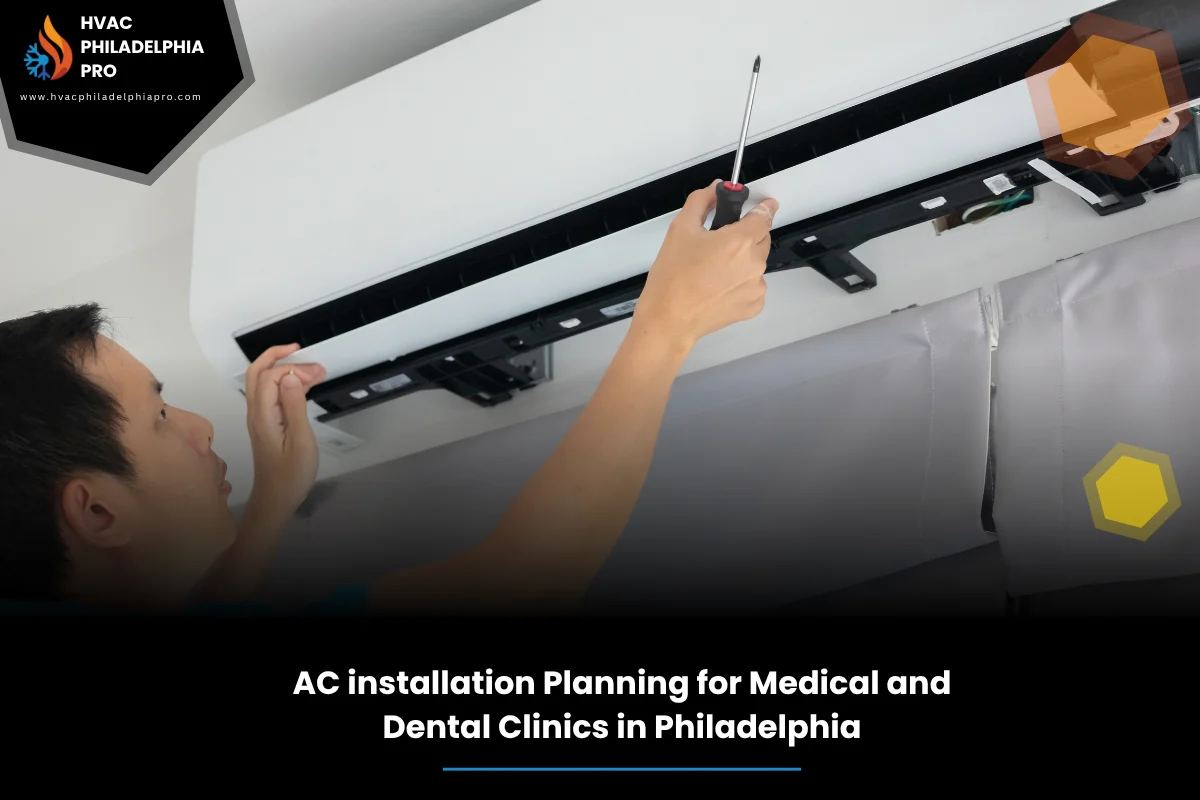
Planning HVAC for a clinic is not the same as cooling a house. Patient comfort, infection risk, and strict airflow needs all collide in one tight space. Before any duct or wire moves, map the rooms, uses, and air paths. A solid plan for air conditioning system installation protects staff and patients and keeps daily work smooth.
You will still face choices on system type, zoning, filtration, and controls. If you want a clear view of the nuts and bolts for putting a project in motion, review our air conditioning system installation details as a starting point for build steps and coordination.
Table of Contents
Quick Summary
Medical and dental clinics need HVAC that balances clean air, quiet rooms, and steady temperatures. Good planning starts with room-by-room loads, pressure targets, and a layout that supports treatment flow. Pick a system type that fits the building and future changes, then design filtration and ventilation for each space.
Focus on dust and aerosol control in operatories, sound near waiting rooms, and easy service access. Look for efficient equipment to cut costs while keeping airflow and humidity in range. Build a simple control scheme staff can trust. Commission the system, document the settings, and schedule routine care to keep performance steady all year.
Why Clinic HVAC Planning Is Different
Home cooling tips only go so far for clinics. For a helpful primer on residential basics that can give useful context, see the Complete Guide to AC Installation in Philadelphia PA for Reliable Home Cooling. Then adapt those ideas to clinical needs like pressure, filtration, and air changes.
In a clinic, patient rooms, operatories, labs, and sterilization areas all ask for different airflows. Infection control depends on keeping air moving in the right direction and at the right rate. That means careful duct routing, seal quality, and control logic matter as much as the unit size.
You also have gear heat from lights, compressors, autoclaves, and imaging machines. Those internal loads swing fast and can push rooms out of range. Plan for short bursts and summer peaks, not just averages, to avoid warm spots and complaints.
Airflow, Ventilation, and IAQ Controls
Three things drive healthy air in clinics: outside air, filtration, and pressure. Vents must bring in enough fresh air to dilute indoor pollutants. Filters should be matched to the risk in each room, and fans must hold the target pressure between spaces like operatories and corridors.
According to ASHRAE, Standard 170 sets ventilation design criteria for many health care spaces, guiding outdoor air rates, pressure relationships, and filtration that support safer indoor air. ASHRAE Standard 170: Ventilation of Health Care Facilities
Use dedicated returns where you need clean direction of air. Seal ducts to avoid leaks that break pressure control. Add sensors where it counts and set simple alarms for off-range conditions. In this section, one anchor concept to hold tight is ventilation rates, since they set the baseline for every downstream decision.
Choosing the Right AC System Type
Pick equipment for how your clinic is built today and how it may grow. Rooftop units can serve multiple zones with economizers for fresh air. Ducted split systems offer quiet indoor heads near suites. VRF can flex loads and give fine zoning in tight spaces. Chilled water is rare in small clinics but can fit larger sites.
| System type | Best for | Pros | Watch-outs |
|---|---|---|---|
| Packaged rooftop (RTU) | Small to mid clinics with roof access | All-in-one, easy service, add economizer | Duct noise if not treated, roof structural needs |
| Ducted split system | Suites needing quiet indoors | Lower indoor noise, flexible layout | Refrigerant line lengths, condensate routing |
| VRF/VRV | Many small zones, uneven loads | High part-load efficiency, precise zoning | Complex controls, trained service needed |
| Water-source heat pump | Multi-tenant medical buildings | Scalable, shared loop efficiency | Loop maintenance, water treatment |
Match filtration and outside air strategy to the unit. If the system does not handle enough fresh air on its own, add a DOAS unit to feed tempered air to zones. Keep an eye on system selection trade-offs: first cost, service skill, noise, and control complexity.
Load Calculation and Zoning for Suites and Operatories
Do a room-by-room Manual J style calc or equivalent. Include plug loads from compressors, autoclaves, PCs, lights, and people. Dental operatories swing fast when lights and suction start up. Medical exam rooms see shorter but steady visits. Aim for tight control in these spaces.
Build zones by use, not just by walls. Group operatories with similar loads. Keep imaging, lab, and sterilization zones separate. Use zoning to hold target temps without overcooling halls.
Place thermostats where staff can reach them without blocking vents. Add discharge air sensors in tricky zones. If rooms vary a lot, use terminal boxes or fan coils to trim each space without spiking static pressure.
Noise, Vibration, and Patient Comfort
Patients notice noise more than you think. Size ducts for slower air, add lined sections near grilles, and keep velocity in check. Pick low-sone diffusers for operatories and waiting areas. Mount air handlers with isolation to limit transfer through walls and ceilings.
Route suction pumps and compressors away from treatment areas. Wrap lines where needed. Seal returns to stop whistling. Balance each branch so air hits the diffuser softly. Make sound attenuation part of the design, not a patch later.
Comfort is more than air temp. Aim for steady humidity, gentle airflow at the chair, and no drafts on a patient in a gown. A quiet, even room calms nerves and helps staff stay focused.
Energy Efficiency and Operating Costs
Clinics run long hours, so even small gains add up. Look for units with strong part-load performance, not just full-load ratings. Choose efficient fans and set smart schedules for occupied and unoccupied times. Focus on heat recovery where outside air loads are high.
Right-size equipment to avoid short cycling. Bring outside air only as needed and condition it well. Tune setbacks so rooms recover fast before the first patients arrive. Check filter pressure drop when picking MERV levels so fans do not work harder than needed. A practical marker to weigh is the SEER2 rating, but match it with real part-load data and your ventilation plan.
High efficiency air conditioner installation can cut costs without giving up airflow or humidity control. Simple dashboards for staff help keep setpoints steady and stop waste.
Philadelphia Climate and Code Considerations for Clinics
Summer humidity and cold winters push systems hard. Plan for moisture control on muggy days, including reheat or hot-gas bypass to keep supply air dry without overcooling. In older buildings, check envelope leaks that can break pressure control and raise loads.
When planning HVAC installation in Philadelphia PA, align with local permit steps, utility programs, and any landlord rules in medical office buildings. Look for energy efficient AC installation in Philadelphia options that balance rebates with long-term service access and filter changes. If older units fail often, time an HVAC system replacement in Philadelphia around slower seasons to avoid patient disruption.
Pay special attention to dehumidification in operatories and sterilization rooms. Steady humidity helps tools, surfaces, and patient comfort, and it keeps odors down in tight suites.
Controls, Monitoring, and IAQ Integration
Keep the control plan clear. Use a simple schedule for open hours, a morning warm-up or cool-down, and holiday modes. Tie in CO2 sensors where large waiting rooms can overfill. Link humidity sensors to reheat or dehumidification logic so setpoints hold without constant tinkering.
Build a small dashboard with alarms for filter time, high humidity, and pressure drift between key rooms. Train front-desk or lead assistants on how to switch modes and who to call for service. The backbone here is trend logging, which helps you spot issues before patients feel them.
Connect portable air cleaners only as a supplement, not a replacement for proper ventilation. Make filter sizes and types easy to see on the panel label and the O&M manual.
Step-by-Step Planning Framework for Clinics
Use this simple path to keep projects on track. It mirrors ideas from the clinic side while building on residential basics you can find in the complete guide on this topic.
Step 1: Define spaces and risks. List rooms, uses, and pressure goals. Step 2: Do load calcs with internal gains. Step 3: Choose system type and outside air approach. Step 4: Design ducts, diffusers, and acoustics. Step 5: Build the control story and alarms. Step 6: Install and seal carefully.
Step 7: Test and balance, then document setpoints. Step 8: Train staff on filters and schedules. Step 9: Plan seasonal checks and filter cycles. Treat commissioning as a must-have, not a nice-to-have. A thorough startup saves months of callbacks and uneven rooms.
Maintenance, Replacement, and Future Upgrades
Set a routine: filters by pressure drop or months, coils cleaned before summer, belts and drains checked each visit. Keep extra filters and a spare thermostat on hand. Log readings so trends stand out. When comfort slips, use data before guessing.
Plan replacements before failure. Track repair spend and energy use year to year. If noise, humidity swings, or uneven temps keep returning, a targeted upgrade may beat more band-aids. When expanding, leave room for ducts and service clearances now, not later.
Build a simple preventive maintenance matrix that the office manager understands. Pair it with your test and balance report so changes stay in range after each visit.
FAQs
- How many air changes per hour do clinics need?
It depends on room type and risk. Exam rooms need fewer than sterilization areas or some dental operatories. Follow healthcare ventilation guidance and match it to your local code and design goals.
- What filters should a dental operatory use?
Pick filters based on your system’s fan capacity and target capture level. Many clinics use MERV 13 or higher if the fan can handle it. Balance filtration with airflow so you do not lose pressure control.
- Do we need negative pressure rooms?
Most small clinics do not, but some procedures or isolation cases may call for it. Plan pressure relationships by room use and set alarms if pressure drifts out of the target range.
- Which AC system is quietest for operatories?
Ducted splits or VRF with indoor fan coils are often quieter when designed well. Focus on diffuser choice, duct velocity, and isolation to keep sound low where patients sit.
- How do we control humidity in summer?
Use proper coil selection, slower airflow across the coil, and reheat or dedicated dehumidification if needed. Keep supply air dry enough to hold room setpoints without overcooling.
- What if our clinic adds more operatories later?
Design with growth in mind. Pick systems that handle added zones, leave space for future ducts, and size electrical and condensate routes for expansion where possible.
- How often should we change filters?
Follow pressure drop, not just months. Many clinics change every 1 to 3 months, but higher MERV filters or dusty jobs may need more frequent changes. Log readings to set the right cycle.
- Why is commissioning so important?
It proves airflow, pressure, and controls work as designed. Proper testing and balancing catch issues early, reduce callbacks, and keep rooms comfortable and safe from day one.
Conclusion
Great clinic comfort starts with a clear plan for air, equipment, and controls. Treat HVAC Philadelphia Pro as a resource, and keep your goals tight: clean air, even temps, quiet rooms, and a simple control story your staff trusts. Build your air conditioning plan around use, not just walls.
If you are mapping out air conditioning system installation for new rooms or a retrofit, follow the steps above, test what you build, and document every setpoint. When you need practical help or a sanity check on design decisions, contact HVAC Philadelphia Pro for expert assistance. That way, your clinic runs calm, clean, and steady, season after season.
continue reading
Related Posts

Learn practical steps for EV charger troubleshooting in Philadelphia. Keep distribution centers moving with safe triage, common fault cues, and when to call emergency help.
Learn Level 2 charger repair best practices for industrial sites using heavy equipment. Get safe workflows, diagnostic steps, breaker tips, and maintenance plans.

A clear plan for EV charging station repair in Philadelphia keeps manufacturing fleets moving. Learn failure modes, a root-cause workflow, parts to stock, safety steps, and a repair path that cuts downtime.