
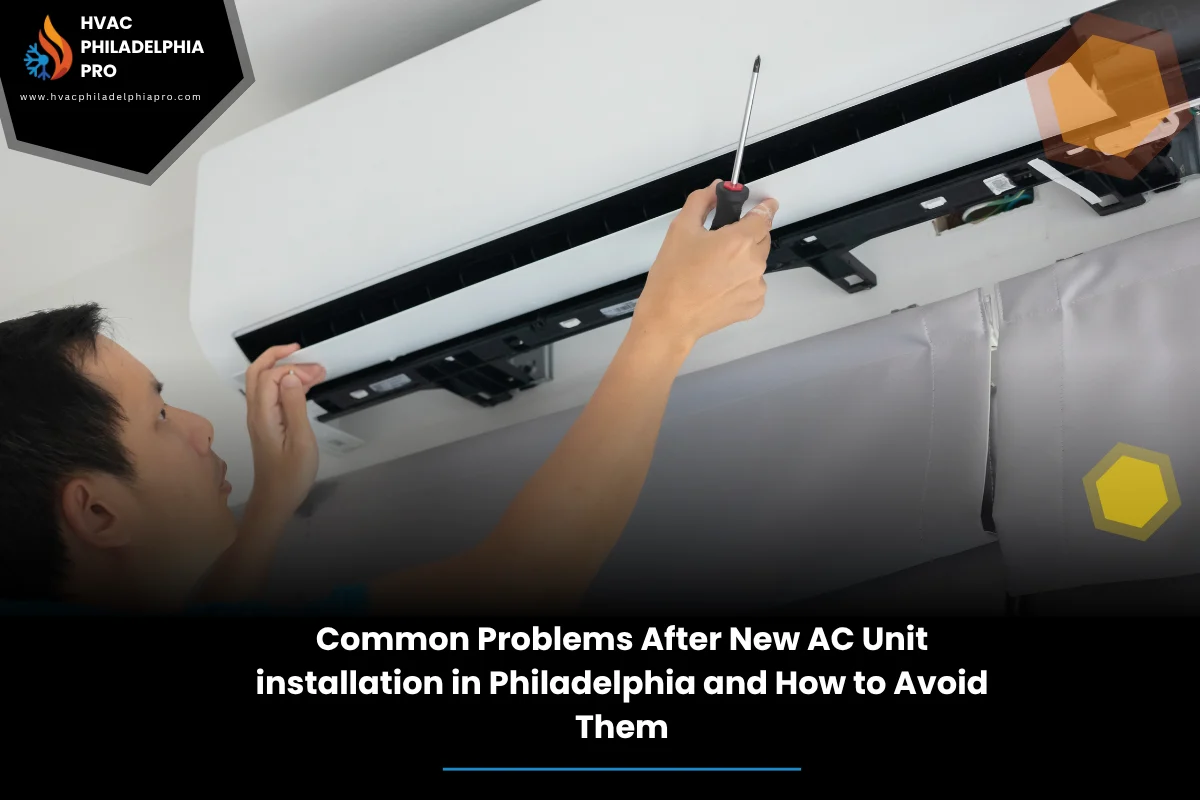
Right after a new AC unit installation in Philadelphia, many homes feel cooler fast. Then small hiccups show up. Rooms run uneven. Energy bills spike. Or the system short cycles in the afternoon heat. These are common, fixable issues. With a bit of know-how, you can spot early signs and keep the new system on track.
The team at HVAC Philadelphia Pro sees these patterns every summer. If you need a walkthrough or you want to double-check work after day one, start with a simple plan. If you prefer help from a pro, learn what matters first, then decide. You can also read how service visits align with a smooth new AC unit installation in Philadelphia when timing and follow-up are key.
This guide sticks to education, not a sales pitch. We will cover AC sizing in Philadelphia, ductwork checks, airflow, thermostat setup, and what to watch with same day AC installation in Philadelphia. We will also share a short framework you can use right away.
Table of Contents
Quick Summary
Most post-install hiccups fall into a few buckets: wrong size equipment, leaky or dirty ducts, poor airflow, thermostat misplacement, or small electrical oversights. Fixes start with simple checks you can do in minutes. If you keep notes and follow a short routine in the first month, your system settles in well.
Focus on three things first. Confirm you got the right size unit for your home and climate. Make sure ducts are clean, sealed, and balanced. Check that the thermostat reads true and the airflow is steady at the supply vents. These steps build a strong base for air conditioning system installation success.
Why Problems Happen Right After Installation
Install day moves fast. Crews swap equipment, connect lines, and test basics. Small details can slip. That is why many homes see uneven cooling or short cycling during the first hot spell. For a deeper walkthrough of planning and execution, see the Complete Guide to AC Installation in Philadelphia PA for Reliable Home Cooling which explains how design choices affect day-two comfort.
Homes in older Philadelphia buildings may have tight returns, undersized ducts, or long refrigerant runs. Even when set up right, those limits can strain a brand-new system. A short follow-up visit or your own checklist can catch early drift before it turns into louder noise or higher bills.
Keep an eye on three early signs. If the unit runs in short bursts, cools some rooms but not others, or the outdoor unit sounds harsh, note the time and outside temp. This helps pinpoint the cause later.
AC Sizing in Philadelphia: What Goes Wrong
Oversized systems cool fast but leave humidity behind. Undersized units run nonstop and still miss the mark at 4 p.m. Proper AC sizing uses home load calculations, not rough guesses. According to the U.S. Department of Energy (2023), correct sizing and sealed ducts are key for comfort and efficiency. U.S. DOE Energy Saver: Central Air Conditioning
Ask if a Manual J load was done. If not, you may notice wide swings in temperature room to room. In Philadelphia rowhomes, solar gain on front rooms and older windows can skew loads. That is why AC sizing in Philadelphia must factor shade, insulation, and air leakage.
What to do this week: track indoor humidity and runtime during the hottest hour. If humidity stays high or the unit cycles on and off too fast, sizing or airflow may be off.
Ductwork Inspection for AC Installation: Hidden Issues
Leaky or dirty ducts steal cold air before it reaches the rooms that need it. A quick ductwork inspection for AC installation can reveal gaps, crushed flex, or clogged filters near returns. Even a one-inch gap near a plenum can undo a lot of cooling.
Shine a light on visible joints and look for dust lines that point to leaks. Open a few supply registers to check for steady, even airflow. If two rooms read 10 to 20 degrees apart, balancing may be off or a branch could be undersized.
Simple fixes help. Replace the filter, seal obvious leaks with mastic, and clear blocked returns. More complex issues, like resizing a trunk, need a tech to measure static pressure and air changes.
Thermostats, Airflow, and Electrical Basics
A thermostat on a sunny wall will lie all afternoon. Move heat sources, close shades, and check calibration. Proper thermostat placement improves runtime and comfort without touching the equipment.
Next, check airflow. Feel for strong, cool air at multiple vents. Weak flow can signal a dirty filter, closed dampers, or blower settings that are too low. Note fan speed settings in the installer menu if your model allows it.
On electrical, listen for clicking relays, dimming lights, or breaker trips. Those signs call for a quick safety check. Loose lugs or miswired low-voltage lines can show up right after install.
Same Day AC Installation in Philadelphia: What to Watch
Same day AC installation in Philadelphia helps when heat hits early, but speed can hide small misses. Confirm a startup checklist was followed: refrigerant charge verified, drains tested, and delta-T recorded at the vents.
Ask for the final readings. A simple record of supply and return temps, static pressure, and superheat or subcool gives you a baseline. Keep those numbers with your manual.
Before the crew leaves, walk the home. Feel airflow in far rooms, listen at the outdoor unit, and check the condensate line for steady flow. Ten minutes here prevents days of second guessing.
A Simple 7-Step Post-Install Framework
Use this quick plan for the first week after install. If you want deeper context on each step, see the complete guide on this topic which pairs design choices with day-to-day setup and care.
- Record baseline: note outdoor temp, indoor temp, and humidity at noon, 3 p.m., and 6 p.m.
- Check filters: confirm correct size and MERV rating, then set a monthly reminder.
- Measure vents: pick three rooms and feel for steady flow; note weak spots.
- Inspect drains: look for clear, downhill routing and no drips at fittings.
- Verify thermostat: compare its reading with a separate room thermometer.
- Listen outdoors: steady hum is normal; rattles or loud buzz need a look.
- Review paperwork: load calc summary, charge report, and static pressure readings.
If any step looks off, jot it down with time and conditions. Patterns help you and a tech solve the real issue fast.
Common Symptoms vs Likely Causes
Match what you feel at home with what could be happening inside the system. Use these as starting points before you call. One quick check per symptom can rule out the obvious and guide a smarter next step in your airflow troubleshooting.
| Symptom | Likely cause | What to check first |
|---|---|---|
| Short cycling | Oversized unit, thermostat location | Thermostat near heat source, delta-T at vents |
| Warm back rooms | Leaky or unbalanced ducts | Register airflow, visible duct gaps |
| High humidity | Oversized unit, low fan run time | Fan speed, runtime length |
| Loud outdoor unit | Loose mounting, line set vibration | Pad level, line set supports |
| Water near air handler | Clogged drain or trap issue | Clear drain, proper trap and slope |
| Higher electric bill | Continuous runtime, duct leaks | Filter, duct seals, thermostat schedule |
If these quick checks do not solve it, the next step is measuring static pressure and verifying refrigerant charge. Keep your baseline notes handy.
First 30 Days: Maintenance and Monitoring Checklist
The first month sets the tone for years. Keep it simple and steady. A short maintenance routine helps find small drifts before they grow.
- Week 1: verify airflow and drain line; clean the area around the outdoor unit.
- Week 2: recheck thermostat accuracy; confirm your schedule fits daily use.
- Week 3: inspect visible ducts and seals; listen for new rattles.
- Week 4: repeat baseline temps and humidity; compare to week 1 notes.
Also, skim your warranty terms and keep receipts, model numbers, and reports in one folder. If a service call is needed, you are ready.
FAQs
- Why is my brand-new AC short cycling already?
Common causes include an oversized unit, a thermostat near heat or sunlight, or low airflow. Start by checking thermostat location and filter condition.
- How can I tell if my ducts are the problem?
Look for dust streaks at joints, weak airflow at far rooms, or big temp gaps between rooms. Sealing and balancing often fix these issues.
- Do I need a Manual J for AC sizing in Philadelphia?
Yes. A load calculation helps match equipment to your home’s real heat gain and loss. It prevents short cycling and poor humidity control.
- My upstairs is hot but the downstairs is cold. Now what?
Check dampers, returns, and supply vent positions. You may need duct balancing or a zoning discussion if differences stay large.
- Is same day AC installation in Philadelphia risky?
It can be fine if a clear checklist is followed. Ask for startup readings, drain tests, and final airflow numbers before the crew leaves.
- What should delta-T be at the vents?
Most systems show a 16 to 22 degree drop between return and supply under normal load. Consistent readings matter more than a single number.
- How often should I change my AC filter after a new install?
Check monthly at first. Replace when dirty or at least every 60 to 90 days, depending on dust, pets, and filter type.
- When should I call a professional?
If you hear loud noises, see water leaks, trip breakers, or readings drift week over week, call for a diagnostic visit.
Conclusion
Most issues after a new AC unit installation in Philadelphia come from sizing, ducts, airflow, or thermostat setup. The good news: simple checks in the first week catch most problems. Keep notes, verify airflow, and confirm your thermostat reads true. If something still feels off, bring your baseline data to a tech.
Save your startup readings, plan a 30-day check, and review your warranty folder. Small steps now protect comfort and energy costs for years. Contact HVAC Philadelphia Pro for expert assistance. And if you want a deeper dive on planning and install best practices, pair this guide with the complete guide to AC installation so the system you bought is the system you actually feel.
continue reading
Related Posts
Breaker tripping with EV charging? Learn what to do when your EV charger circuit breaker keeps tripping. Follow safe checks, a simple framework, and real fixes that last.
Stuck because your EV charger won’t charge vehicle? Use this clear homeowner checklist to fix power, settings, cable, and app issues before calling a pro.
Learn common issues and fixes for electric vehicle charger installation in Philadelphia. From panel limits to 240V circuits, grounding, and permits, get a clear, safe plan.