
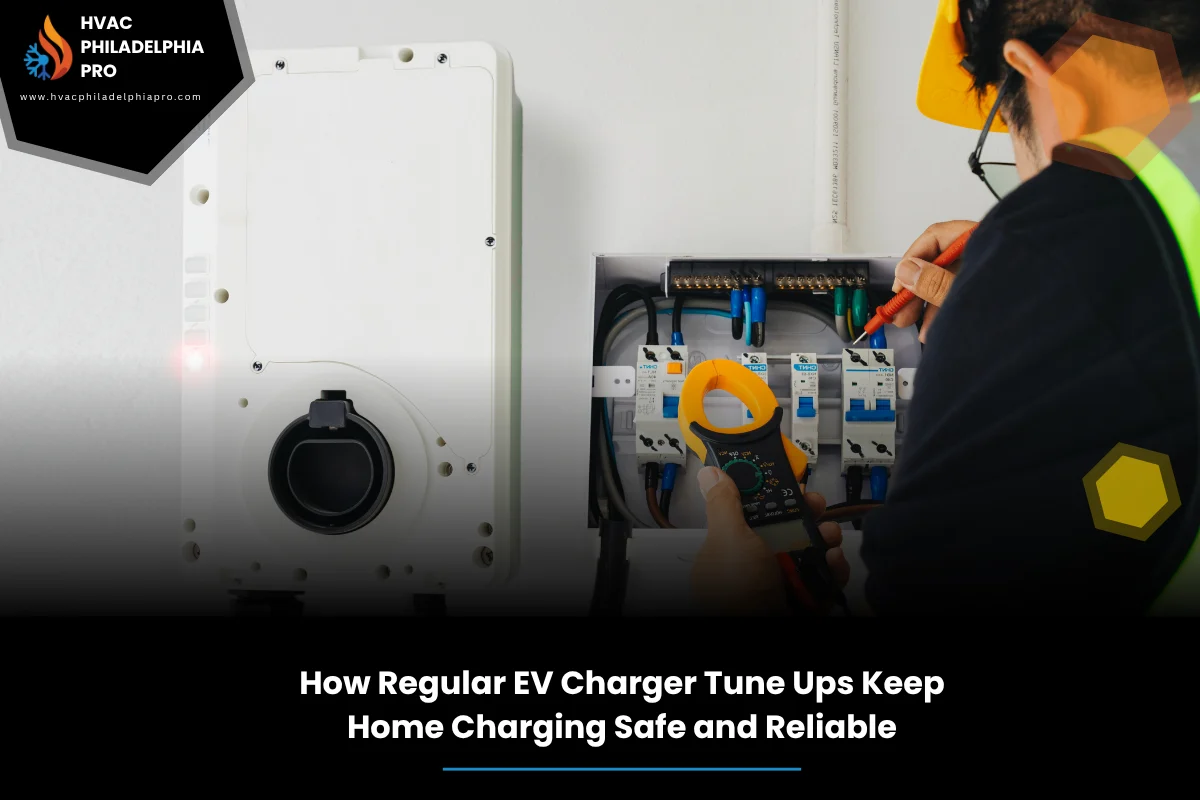
Home charging should feel simple and safe. That is the promise of a good routine. With a regular EV charger tune up in Philadelphia, you avoid surprise shutoffs, warm plugs, or slow sessions that waste your time. The first small checks catch the big problems. And they keep your charger and wiring healthy for the long haul.
HVAC Philadelphia Pro helps many homes and small buildings stick to smart care plans, but this guide focuses on what matters and why. If you need a quick path to action, schedule an EV charger tune up in Philadelphia and use the steps below to keep your setup steady between visits.
We will walk through safety checks, simple upkeep, and when to call a pro. You will see how tune ups support the bigger theme in the complete guide to EV charger maintenance in Philadelphia by keeping every part working together, from breaker to cable tip.
Table of Contents
Quick Summary
Regular tune ups make home charging safe, fast, and predictable. A short inspection of the breaker, wiring, outlet or hardwire lugs, and cable strain points prevents overheating and nuisance trips. Clean terminals and snug connections cut resistance and heat. Firmware updates and test charges keep the unit smart and responsive. One more tip: build a simple log so you spot changes early.
Think of this as preventative EV charger maintenance. A few careful checks twice a year protect the charger, the branch circuit, and your car’s charging port. The steps are easy to stack into a rhythm: look, clean, tighten, test, and record. Over time, these small moments of care save you from big headaches and keep charging reliable for daily life.
Why tune ups prevent common charger issues
Most charging problems start small. Dust creeps into vents. Lugs loosen a touch. A cable bends the same way every day and slowly breaks inside. A routine tune up finds these weak spots early and fixes them before they stop a charge or hurt a connector.
If you want a deeper walkthrough of maintenance basics and safety points for our area, read the Complete Guide to EV Charger Maintenance in Philadelphia PA for Reliable Home Charging. Use this cluster post as your quick playbook, then dive into that larger guide when you need extra detail.
Thermal checks matter most. Warm covers or hot plugs point to resistance. A tune up adds cleaning and tightening to bring temps down and restores full charging speed without stress.
Safety checks that matter in Philadelphia homes
Safety starts with the electrical path. Inspect the breaker size, labeling, and trip history. Check for proper GFCI protection when required, and make sure the ground path is clean. Look for discoloration on outlets, faceplates, and wire insulation. No scorch marks, no melted plastic, no loose hardware.
According to U.S. Department of Energy (2023), home charging safety improves with correct circuit ratings, grounded equipment, and compliant installations that match charger specs. Alternative Fuels Data Center: Charging at Home
Finally, run a short controlled charge. Watch for breaker trips, error lights, and cable warmth. A stable test means your ground fault protection and upstream wiring support the load as expected.
Level 2 charger maintenance basics
Level 2 charger maintenance in Philadelphia centers on a few parts: the wall unit, the cable, the plug or hardwire, and the vehicle connector. Keep vents clear and dry. Wipe the cable clean and avoid sharp bends. Confirm the wall mount is secure and the unit sits straight with no wobble.
For plug-in models, check the receptacle grip by gently inserting and removing the plug. Any looseness or heat means wear. For hardwired units, confirm torque on terminal screws and lugs to stop arcing. A healthy system charges fast and stays cool.
Update firmware when offered by the maker. Smart updates fix bugs and improve charging logic. This is a simple but powerful form of annual EV charger maintenance.
Preventative checklist for homes, apartments, condos, townhomes, and villas
Each property type sees different stress. Homes may have garages with dust or cold snaps. Apartments and condominiums often share parking and see cable strain. Townhomes and villas can face wind-driven rain or sun that bakes plastics. Tuning your list to the setting makes care easier.
Use this simple list: clear debris and cobwebs, inspect cable sheath, confirm drip loops, tighten visible lugs, clean connector pins, test GFCI, run a 10-minute charge, and record temps and any error codes. This is your core preventative EV charger maintenance routine.
If your building has shared stations, assign a monthly visual check. Rotate duties and keep one log so small issues do not get lost.
Annual tune up timing and intervals
Plan two touchpoints each year. Do a spring check after winter, then another in early fall. Heat and cold both stress plastics and metal. Two passes catch seasonal shifts. Add a quick mid-summer look if your charger sits in direct sun.
Mark a yearly deep check for connections, firmware, and cleaning. Treat it like your annual EV charger maintenance milestone so you never forget it.
Keep a simple log. Date, ambient temp, cable condition, connector cleanliness, test charge result, and any notes. Over time, the log proves what changed and when.
DIY vs professional: where each makes sense
Many tasks are easy to handle yourself. Clean, observe, and test short sessions. But any sign of heat, discoloration, breaker trips, or loose hardware at terminals calls for a licensed electrician. That line keeps you safe and protects the system.
| Scope | DIY Checks | Pro Tune Up | Full Maintenance |
|---|---|---|---|
| Visuals | Dust, debris, cracks, cable kinks | Internal inspection, mounting, strain relief | Unit teardown if needed, replace worn parts |
| Electrical | Test charge, listen for clicks, watch lights | Torque checks, thermal scan, breaker labeling | Circuit changes, component swaps, load tests |
| Software | Basic app check | Firmware update, settings review | Network config, advanced diagnostics |
| Outcome | Quick reassurance | Correct small faults | Restore like-new performance |
When in doubt, choose a professional tune up. It confirms the parts you cannot see and secures the system for daily use.
A simple 6-step tune up framework
Use this repeatable plan: Inspect, Clean, Tighten, Update, Test, and Log. It fits homes, apartments, condominiums, townhomes, and villas. The framework works for most Level 2 units and helps you spot trends before they grow.
- 1) Inspect: cabinet, cable, connector, mount.
- 2) Clean: vents, pins, and housings.
- 3) Tighten: covers and lugs if accessible and safe.
- 4) Update: firmware and app.
- 5) Test: 10 to 20 minutes at normal load.
- 6) Log: temps, notes, errors.
For context beyond these steps, see the complete guide on this topic for broader maintenance thinking.
Treat the framework as your maintenance playbook. Once it feels routine, your charging stays steady and predictable.
Troubleshooting signals between visits
Watch for longer charge times at the same state of charge, a warmer than usual cable, or flickering status lights. These hints often show up before a failure. Catch them early and you can fix the cause in minutes.
Listen for relays clicking on and off during a session. Check the breaker panel for fresh trip marks. Re-seat the connector and look for dirt on the pins. When you see repeat errors, plan a targeted inspection right away.
Keep your notes. If the same outlet warms every August evening, you have a pattern. That is a clue worth acting on.
Weather and environment factors in Philadelphia
Heat, cold, and moisture test plastics and seals. Summer heat can raise unit temperature even before charging begins. Winter cold makes cables stiff and easier to crack if bent. Moisture brings corrosion to metal pins and lugs.
Shield the unit from direct sun if possible. Use proper drip loops so water runs away from the connector. Wipe the cable after rain or snow. These small habits are simple forms of environmental protection.
If your charger lives in a garage, sweep dust and salt. Both build up and find their way into vents and contacts.
Maintaining reliability in multi-unit buildings
Shared stations in apartments, condominiums, and townhomes need structure. Post simple care rules near the unit. Store the cable on a hook to stop kinks. Keep a joint log so every user can note errors or heat.
Set a monthly five-minute check: cable, connector, mount, and test charge. Rotate who does it. Small shared effort avoids large shared repairs. This is community maintenance that protects everyone’s charging time.
If usage grows, consider adding units or balancing schedules. Overworked stations fail faster. Right-sizing protects uptime.
How tune ups support the bigger maintenance picture
Regular tune ups are one piece of a larger plan that also includes correct installation, proper circuit sizing, and safe habits at the connector. The broader idea, much like the complete guide to EV charger maintenance in Philadelphia, is that small, steady care prevents risky spikes and downtime.
Tie your tune ups to other home checks. Change HVAC filters, test smoke alarms, and then walk through the charger routine. Bundling tasks keeps you on track. It is simple, repeatable system care.
Over time, this rhythm extends equipment life, holds energy costs steady, and keeps your EV ready every morning.
FAQs
- How often should I do a basic EV charger check?
Do a quick look monthly and a deeper review twice a year. Add a full annual review with cleaning, tightening, and a longer test.
- What temperature is too hot to touch?
Warm is normal under load, but hot enough to feel uncomfortable suggests resistance. Stop, let it cool, and plan a safety inspection.
- Can I use an extension cord with my charger?
No. Most makers forbid it and it creates heat and drop. Use the correct circuit and length the unit was designed for.
- Do firmware updates really matter?
Yes. Updates fix bugs, improve charging logic, and may add safety checks. They are quick and free.
- What if my breaker trips during charging?
Note the time and conditions, then inspect for heat or loose parts. Reduce load and call a pro if trips repeat.
- How should I store the cable?
Hang it on a hook at a gentle radius. Avoid tight coils and sharp bends. Keep the connector off the floor and dry.
- Is plug-in or hardwired safer?
Both can be safe when installed correctly. Hardwired removes a wear point at the receptacle. Choose based on your setup and code needs.
Conclusion
Small steps keep your charger safe, steady, and ready. A routine maintenance schedule, a short test charge, and a simple log stop little problems from growing. For many homes and shared buildings, a regular EV charger tune up in Philadelphia is the easiest way to protect your circuit, your equipment, and your time.
Treat your charger like any other home system. A bit of cleaning, a few checks, and smart notes go a long way. When you want a second set of eyes or need a deeper review, contact HVAC Philadelphia Pro for expert assistance. Pair that with the habits above, and your EV will greet every day with a full battery.
continue reading
Related Posts
Learn how an EV charger diagnostic service finds the real reason your charger fails. Follow clear steps, tools, and safety tips to fix power, signal, or app issues at home.
Plan safe and smooth home EV charger installation in Philadelphia. Learn permits, panel checks, Level 2 basics, 240V circuits, and site planning. Stay code-safe.
Learn how to install new air conditioner in Philadelphia step by step. From sizing and ducts to safe startup and tuning, this plain-English guide keeps your project on track.