
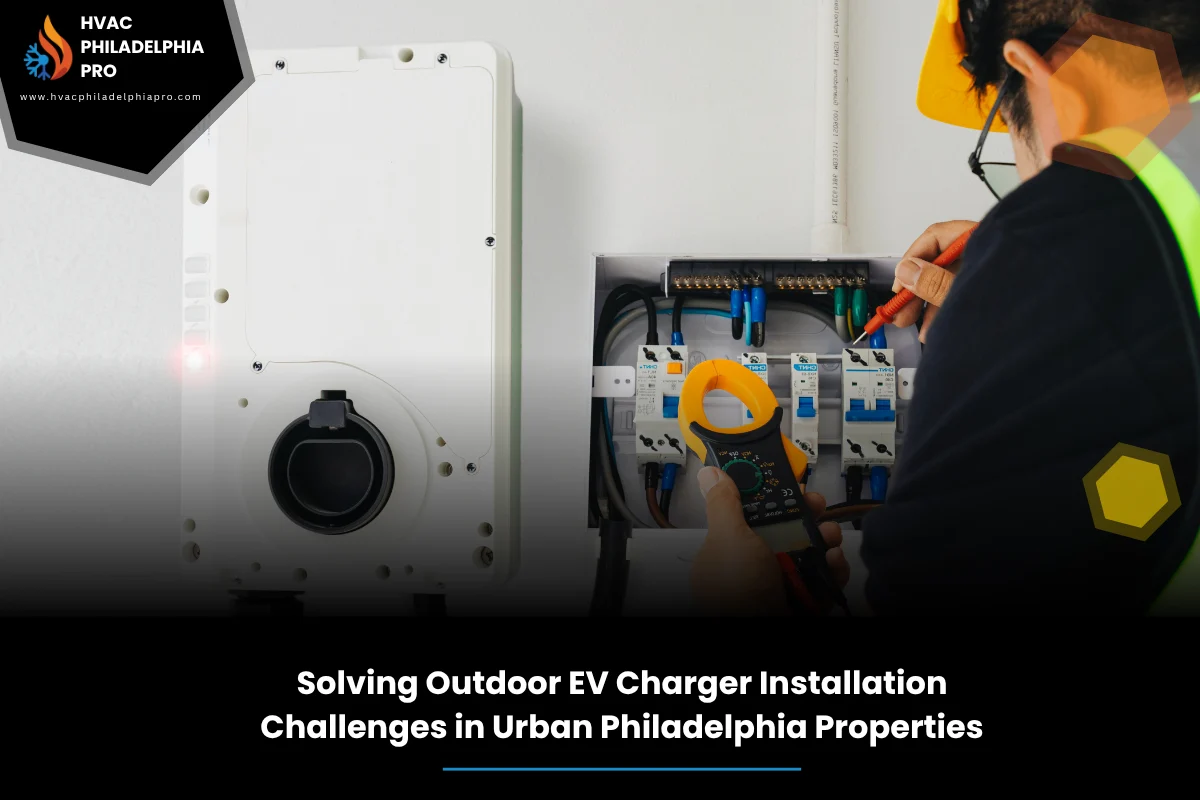
Rowhouse blocks, narrow alleys, and shared walls make outdoor EV charger installation feel tricky in Philadelphia. Space is tight. Power panels are older. Weather swings hard. Still, with a smart plan, you can charge safely at home without turning your facade into a cable jungle. We will walk through common hurdles and practical fixes.
The team at HVAC Philadelphia Pro works in dense neighborhoods every day. If you need a deeper dive into process and options, see the anchor links we include below. For readers ready to act, learn what to expect and where to start with outdoor EV charger installation so you can plan the right setup for your property.
Table of Contents
Quick Summary
Outdoor charging in the city hinges on four things: a safe mounting spot, weatherproof gear, enough electrical capacity, and cable paths that do not trip anyone. Start with a fast site survey, map the shortest code-friendly conduit run, and confirm your panel can handle a new 240V circuit.
From there, pick weather-rated equipment, set clearances for vents and windows, and protect the cable with guards. In shared or tight areas, plan load management and clear parking rules. If you want deeper background beyond these tactics, the complete guide to EV charger installation in Philadelphia provides the full picture of permits, equipment types, and timelines.
Why Outdoor Chargers Are Tough in Rowhouse Streets
Rowhouses often push the meter and panel to a basement or back wall, while parking sits out front or in a narrow rear lane. That gap makes routing cable tough. It also raises questions about protection from rain and snow plows, and how to keep the charging cable off the sidewalk.
If you are new to home charging in the city, read the Complete Guide to EV Charger Installation in Philadelphia PA for Homes and Small Facilities to understand the full process from panel checks to inspections. The big takeaway: map your shortest, safest path first, then select hardware that fits the layout, not the other way around.
Begin with a quick site survey. Note where the vehicle parks most nights, which wall can carry the load, how far the panel is, and where water flows during heavy rain. These small notes decide 80 percent of the design.
Power and Panel Constraints in Older Homes
Many older homes run on 100-amp service and carry multiple large loads already. Adding a Level 2 charger may push the limits. Before buying anything, complete a load calculation to see if your panel can support a new 240V circuit without nuisance trips.
Remember, Level 2 charging uses a 240V circuit and can draw significant current. According to the U.S. Department of Energy’s Alternative Fuels Data Center (2023), Level 2 typically adds more range per hour and suits daily home charging best. Home Charging for Electric Vehicles, U.S. DOE AFDC
If your math is tight, plan for upgrades now instead of rerunning wire later. Options include load-sharing chargers, a subpanel, or a full service upgrade. If you need a 240V outlet installation for EV charger use, place it as close to the parking spot as practical to shorten cable runs.
Weatherproofing and Safety Outdoors
Outdoor gear must be listed for wet locations. Choose an enclosure with a solid gasket and a tight cover. A weatherproof enclosure keeps rain and snow out and extends equipment life. Also look for UV-resistant cables and fittings.
Mount the unit high enough to avoid splash zones but low enough for easy cable reach. Keep at least a few inches of clearance around vents and drip edges. Add cable hooks and guards to keep the cord off walkways.
Safety devices matter. Ground fault protection, correct breaker size, and tight terminations prevent many issues. Protect exposed conduit and fittings from impact where cars or snow equipment may graze them.
Mounting, Routing, and Curb Appeal
Every bend and foot of conduit adds cost and small voltage drops. Plan a straight, short route. Use conduit routing that hugs corners and avoids doors or windows. Seal penetrations cleanly to keep water and pests out.
On front-facing walls, choose a compact charger and a neutral color. Hide conduit along trim lines. Where a wall is not practical, a low-profile pedestal may look cleaner and keep the cable where the car parks.
Shared Driveways and Multi-Unit Settings
Shared spaces need ground rules. Mark the charging spot, post basic etiquette, and route the cable so it never crosses a common path. Consider load management features if two or more vehicles will share one circuit.
In multi-unit buildings, metering and billing raise extra questions. A dedicated circuit tied to each unit’s meter is cleanest. If that is not possible, use smart chargers that log energy per session for fair cost tracking.
Label everything clearly. A simple sign and bright cable guards reduce trips and confusion. Keep emergency disconnects accessible but out of the way.
Permits, Utility Coordination, and Inspections in Philadelphia
Most cities, including Philadelphia, expect permits for new circuits and often for charger mounts. Plan time for approvals and inspections. Good documentation and photos help the inspector see hidden runs and fasten points.
Call your utility before big panel changes or when service upgrades might be needed. Most utilities support EV charging and can advise lead times. Keep your paperwork tidy for smooth permits and inspections.
Schedule inspection when the weather is dry if possible. Clear access, labeled breakers, and neat cable work go a long way. The complete guide to EV charger installation in Philadelphia explains typical steps from application to final sign-off.
Practical Framework: PLAN, PLACE, PROTECT, POWER
Use this simple framework to get it right the first time. It keeps you focused on the few steps that matter most for safety and performance in the city.
PLAN: Map parking, panel distance, and hazards. Confirm capacity with a load calc. Short runs save cost. PLACE: Pick the exact mount spot and cable path. Keep reach easy and eyesore risks low. PROTECT: Add cable hooks, guards, and rated enclosures. POWER: Size breakers and wire correctly and consider load balancing if you expect more than one EV.
For background on charger types, wiring, and readiness steps, read the complete guide on this topic before you finalize equipment choices. It pairs well with this framework so you avoid backtracking.
Equipment Choices and Cable Management
Outdoors, simplicity wins. Hardwired units avoid plug exposure and weather at the receptacle, while plug-in units help with serviceability. Match cable length to your parking layout. Too short is annoying; too long is a tripping risk.
If you need Level 2 EV charger installation in Philadelphia, pick a model with a sealed case, sturdy hanger, and flexible cable in cold weather. Mount the hanger at a natural height so wrapping the cord is easy every time. Consider a compact pedestal when walls are far away.
When an outlet is preferred, a clean 240V outlet installation for EV charger use should be in a sheltered spot with in-use weather covers. For fixed installs, a hardwired unit reduces wear at connections and usually looks tidier on the facade.
| Option | Pros | Cons | Best For |
|---|---|---|---|
| Plug-in Wall Mount | Easy swap, simple service | Exposed receptacle, more parts | Renters and temp setups |
| Hardwired Wall Mount | Clean look, fewer failure points | Harder to relocate | Permanent home parking |
| Pedestal Mount | Flexible placement off-wall | Costly, needs anchor footing | Spots far from walls |
Power Ratings and Charge Speeds
More power is not always better. Many rowhouse circuits are tight, and cars do most charging overnight. Set the charger to match panel capacity, not just max output. A slightly lower setting may avoid upgrades and still fill the battery by morning.
Use a smart charger to schedule sessions during off-peak times if your rate plan allows it. Choose a model with clear current settings and solid circuit protection. In older homes, careful settings often solve capacity limits.
When in doubt, talk with an experienced EV charger electrician in Philadelphia about panel health, balanced loads, and breaker spaces. A quick panel tidy-up can free room and improve reliability.
Testing, Commissioning, and Upkeep
Before first charge, check torque on lugs, verify breaker labeling, and run a sample charge session. Confirm the car reaches expected current and that cable routing stays clear of footpaths. Log your settings for later.
Monthly, test the charger’s ground fault feature per the manual. A simple GFCI test can prevent surprises. Inspect hooks, guards, and any exposed conduit after storms or snow work.
If you see discoloration, loose fittings, or nuisance trips, stop and investigate. Many small issues trace back to moisture or a loose connection. Early fixes keep the system safe and steady.
FAQ: Outdoor EV Charging in Philadelphia Settings
- Where should I mount the charger on a narrow rowhouse?
Pick the closest spot to your parking area that keeps the cable off public walkways. A side wall with a short conduit run is ideal. Use a cord hanger to keep the loop tidy.
- Do I need a permit for a new circuit?
Most places require permits and an inspection for a new 240V circuit and charger mount. Check local rules before work starts to avoid delays during final sign-off.
- Is Level 2 always better than Level 1 for city homes?
Level 2 is faster and fits daily use well, but it needs more panel capacity. In some cases, Level 1 works fine for short commutes. Match charging speed to your driving and electrical limits.
- What if my panel is full?
You may add a subpanel, use load management, or plan a service upgrade. A load calculation shows the best path. Avoid double-tapping or other unsafe shortcuts.
- How do I keep the cable from becoming a tripping hazard?
Use hooks, wall guides, or low-profile guards. Place the charger so the cable reaches the car without crossing shared paths. Keep extra slack coiled and secured.
- Can I use a standard outlet outdoors?
For Level 1, use a properly rated outdoor receptacle with an in-use cover. For Level 2, a dedicated 240V circuit and appropriately rated outlet or hardwired unit is typical. Weather protection is key.
- Who should handle the final electrical work?
A qualified EV charger electrician in Philadelphia who understands outdoor gear, permits, and inspections should do the wiring. Proper terminations and testing matter more than brand choice.
Conclusion
City blocks can be tight, but safe and clean outdoor EV charger installation is very doable with a clear plan. Pick a sturdy mount, protect the cable, confirm panel capacity, and choose weather-rated gear. Most problems fall away when you survey first and route the shortest safe path.
Use the ideas here along with the broader context from the complete guide to EV charger installation in Philadelphia to shape your design. If you want a sanity check or need help sizing circuits or mapping conduit, Contact HVAC Philadelphia Pro for expert assistance. A careful plan today makes charging simple every night.
continue reading
Related Posts
Breaker tripping with EV charging? Learn what to do when your EV charger circuit breaker keeps tripping. Follow safe checks, a simple framework, and real fixes that last.
Stuck because your EV charger won’t charge vehicle? Use this clear homeowner checklist to fix power, settings, cable, and app issues before calling a pro.
Learn common issues and fixes for electric vehicle charger installation in Philadelphia. From panel limits to 240V circuits, grounding, and permits, get a clear, safe plan.