
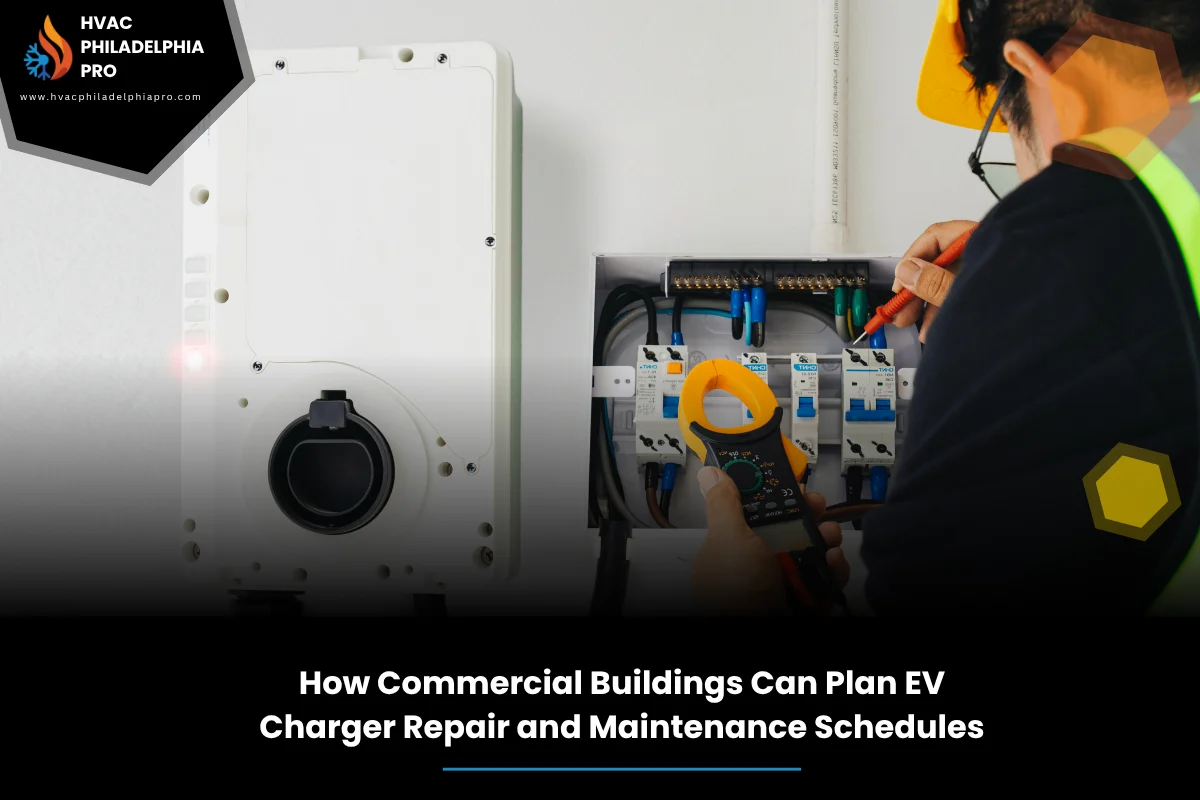
Commercial sites need steady uptime and clear plans. A simple calendar and a few habits can prevent messy outages and long lines at the chargers. If you run a garage, office tower, or mixed-use site, a plan keeps drivers happy and protects your gear. It also supports safety and lowers surprise costs.
Your plan should map every unit, log firmware and cables, and set a repair path when something breaks. It should also include who to call, what to document, and how to track issues. If you ever need EV charging station repair in Philadelphia right away, use your plan to move fast and keep the site running. For urgent fixes, see EV charging station repair in Philadelphia.
At the first sign of trouble, work the basics: check power, network, and connectors. Save detailed notes so technicians can find the root cause faster. The team at HVAC Philadelphia Pro deals with complex building systems daily, so the planning mindset here borrows from proven playbooks that keep HVAC and electrical assets stable year-round.
Table of Contents
Quick Summary
Start with a full list of chargers, parts, and warranty terms. Set monthly visual checks and quarterly deep tests. Log every alert, session, and fault code. Create a simple flow: diagnose, isolate, fix, and verify. Keep spare parts that fail often, like cables, holsters, and RFID readers. Train staff on safe lockout before any hands-on work.
When a unit stalls, run a fast triage: power, network, payment, then components. Use data to time preventive tasks for quiet hours. Review uptime each month and adjust the schedule by site demand. If you need a deeper walk-through of repair paths, see Complete Guide to EV Charger Repair in Philadelphia PA for Homes and Businesses for a broader context that pairs well with this scheduling approach.
Why a Maintenance Schedule Matters for Commercial Buildings
A schedule reduces chaos. It lowers driver wait times and shields your brand from public complaints. With a clear cadence, you fix small issues before they turn into major outages. That means fewer emergency calls and faster returns to normal after a hiccup.
A schedule also improves safety. Staff know when to inspect, what to touch, and what not to. Clear checklists and logs speed root-cause work. Over time, patterns appear, and you can plan smarter. This is the same logic behind strong preventive maintenance on other building systems.
Finally, a schedule supports budgeting and contracts. You can set realistic SLAs, track vendor results, and prove compliance. It also aligns with the larger topic of a complete guide to EV charger repair in Philadelphia for homes and businesses, where hardware fixes meet steady planning.
Build an Asset Inventory and Health Baseline
List every charger with model, serial, firmware, connector type, location, and network. Add install date, warranty end, and the last repair. Note common failure points from past tickets. Keep photos of the pedestal, labels, and panel feeds. This becomes your single source of truth.
Set a baseline for each unit: normal load, average session time, and typical faults. Compare future data to this baseline to spot drift. Mark units with high use and plan extra checks for them. A clean map helps crews move quickly on busy days.
Use a simple asset register worksheet or a CMMS. Include spares on hand and vendor contact info. Update it after every change.
The 5-3-1 Planning Framework for EV Charger Upkeep
Use this simple cadence to balance checks and downtime. It keeps work predictable and easy to train. You can scale it from a few ports to dozens with little change. Keep it flexible so you can shift tasks to low-traffic hours.
5: Five-minute weekly walk-bys. Look for cable wear, broken holsters, cracked screens, and tripped breakers. Note any alerts on the screen. Light touch, fast wins. This reduces surprise failures.
3: Thirty-minute monthly checks. Run card tests, verify network, inspect terminations, clean vents, and confirm firmware policy. Review logs for repeated errors. This is also a good time to test payment flows.
1: One-hour quarterly deep dive. Open panels safely, torque-check per maker guidance, verify insulation resistance, test GFCI, and review all session data. Update docs and reset the next dates. For a broader repair playbook that fits inside this cadence, see the complete guide on this topic.
Name the model, train staff, and post it near your control room. This is your living maintenance framework. Update it when you add ports or change software.
Diagnostics: What to Test and When
Plan routine diagnostics so small glitches do not pile up. Put them on the calendar and stick to it. Time tests for off-peak hours to avoid driver friction. Track pass and fail counts per charger to find weak points early.
Key items include cable condition, connector latch, holster springs, screen health, and card reader function. Verify network strength and backend status. Confirm OCPP or vendor portal shows clear heartbeat. Always note firmware and config changes.
If a site needs deeper checks, schedule an EV charger diagnostic service day. Run power quality checks, ground testing, and simulated sessions. This uncovers hidden issues that cause odd drop-offs and slow starts.
Handling Common Faults: Power Failure and Not Working Cases
When a unit shows an fault triage alert or stalls, follow a set path. First, verify upstream power and breakers. Next, check network and payment systems. Then inspect the charger’s contactors, relays, and temperature sensors.
For an EV charger power failure, confirm panel feeds, phase balance, and any GFCI trips. Check for water ingress or heat damage. Re-seat connectors and look for loose terminations. If the unit still fails, isolate the charger and log a ticket with detailed steps taken.
If an EV charger not working shows a user-facing error, capture the exact code and time. Try a known-good cable. Run a test card. Review logs for recent firmware changes. Document the fix or the handoff to vendors so you can learn and prevent repeats.
Data, Alerts, and Uptime KPIs
Data makes planning honest. Track uptime per unit, mean time between failures, and mean time to repair. Watch repeat faults after firmware updates. Set alert thresholds that trigger checks before users feel pain.
Choose a small set of numbers to keep it simple. Uptime by port, first-time fix rate, and spare usage are solid. Post them where teams can see progress. This helps guide future tasks and parts stocking.
| Approach | What it looks like | Pros | Risks | Best for |
|---|---|---|---|---|
| Reactive | Fix when broken | Low routine labor | Long downtime, angry drivers | Low-use sites |
| Preventive | Planned checks and parts | Higher uptime, fewer surprises | Needs discipline and tracking | Most commercial sites |
| Predictive | Data-driven forecasts | Least downtime | Needs strong data and tools | Large networks |
Pick your mix and track uptime KPIs. Review monthly. Adjust the schedule and spare list when the numbers drift the wrong way.
Working With Your EV Charger Electrician in Philadelphia
Have a named point of contact and a simple call tree. Share the asset list, photos, and past tickets. Clear info saves time and site visits. It also helps your vendor bring the right parts on the first trip.
Set an SLA for response and resolution that matches your site’s traffic. Agree on after-hours rules and safety steps. Keep shared docs in one place so nothing gets lost between teams. Review performance each quarter to tune the plan.
When complex electrical or networking issues hit, a seasoned EV charger electrician in Philadelphia will isolate faults fast. Your clean logs and baselines make that work even faster and safer.
Safety, Compliance, and Documentation
Post simple steps for safe shutdown and startup. Use a clear lockout/tagout routine before opening panels. Train anyone who touches the gear. Keep PPE handy and dry. Never bypass safety interlocks to rush a fix.
Document every task: date, person, steps, readings, and outcomes. Add photos of panels, terminations, and replaced parts. Store records for warranty and audits. Good notes also prevent repeat mistakes.
According to the U.S. Department of Energy’s Alternative Fuels Data Center (2021), consistent operations and maintenance planning improves reliability and reduces lifecycle costs for EV charging equipment. Alternative Fuels Data Center EVSE O and M Best Practices
Spare Parts and Swap Strategy
Keep a small kit of wear items: cables, holsters, RFID readers, and screen covers. Stock fuses and contactors that match your models. Store parts dry, off the floor, and labeled by unit type and vendor.
Use a simple swap and test plan. Replace the likely bad part, verify the fix, and send the failed part for review if covered. Log the serial of the new part. This avoids long outages while you wait for RMA processing.
Rotate stock so older parts get used first. Review usage each quarter and restock before busy seasons. Tie the kit list to your fault patterns.
Seasonal and Site Conditions
Heat, cold, and salt can beat up hardware. Plan extra checks for harsh seasons. Inspect seals, vents, and drains after storms. Clear snow and ice from pedestals and cable paths to prevent damage.
Dusty garages need more filter and vent cleaning. Coastal air needs corrosion checks. High-usage retail sites need more frequent cable and latch checks. Adjust your preventive inspections to match the environment.
Before holidays or events, add a light tune-up pass. After peak periods, review logs and note any spikes in faults. This keeps the plan fresh and realistic.
Incident Response and Post-Mortem
Create a short checklist for outages. Assign roles, communication steps, and driver messaging. Keep signage for temporary closures ready. Fast, clear info calms the site during issues.
After you fix it, run a short review. What failed, why, how fast did we spot it, and how can we prevent it next time. Update procedures and training. Share wins and lessons learned.
Over time, these reviews build a tight system. They also guide future purchasing and contract terms. Tie them to your standard operating procedures so improvements stick.
Framework: From Plan to Daily Practice
Turn the schedule into a one-page play. Map weekly walk-bys, monthly tests, and quarterly deep dives. Assign owners and a backup for each task. Put the page where everyone can see it.
Use the same four steps every time: identify, isolate, repair, verify. Log it and move on. Keep the language simple so anyone on duty can follow it under pressure. This beats confusion during a busy afternoon.
Pair this with a quick orientation for new team members. Show them the map, the spare kit, and the contacts list. This keeps your site steady and aligns with the broader concepts discussed in the complete guide to EV charger repair for homes and businesses.
FAQs
- How often should we inspect commercial EV chargers?
Do quick weekly walk-bys, monthly functional tests, and quarterly deep checks. Adjust by usage and environment. High-traffic sites may add mid-month spot checks to stay ahead of wear.
- What causes most EV charger power issues?
Common causes include tripped breakers, weak terminations, worn cables, water ingress, and network errors that look like power faults. Start with power and network, then move down to components.
- What should we document during each service?
Record date, tasks, readings, firmware, replaced parts, photos, and who did the work. Add the outcome and next due date. Consistent notes cut repeat problems and speed future repairs.
- How do we handle an EV charger not working during peak hours?
Post a clear notice, route drivers to nearby ports, and start triage. Capture the error code and time. If the fix is not quick, log a ticket and return during off-peak hours to finish.
- When should we call an electrician?
Call for persistent faults, panel work, hot spots, damaged terminations, or repeated GFCI trips. An EV charger electrician in Philadelphia can safely test and repair upstream issues.
- Do firmware updates need a schedule?
Yes. Batch updates during low-demand windows. Test on a single unit first, then roll out. Log versions and watch for new fault patterns after the change.
- Which spare parts should we stock on site?
Keep cables, holsters, card readers, and common fuses and relays that match your models. Review usage quarterly and restock before busy seasons or large events.
- How can we improve uptime over time?
Track a few KPIs, review them monthly, and adjust the schedule. Focus on repeat faults and parts that fail often. Tight logs plus small, steady improvements raise uptime.
Conclusion
A strong plan turns chaos into calm. With a clean asset list, steady checks, clear logs, and trained people, your site will recover faster and fail less. For busy properties, this means happier drivers and fewer headaches for your team. Keep the schedule short, visible, and updated as your site grows.
If you face an outage or need a deeper fix, route work through your playbook and call the right pro at the right time. When timelines matter, plan ahead and act early. For fast help with EV charging station repair in Philadelphia, follow your response steps and loop in a trusted team. Contact HVAC Philadelphia Pro for expert assistance.
continue reading
Related Posts
Learn how to choose and manage EV charger maintenance near me for apartments and townhomes. Get checklists, a simple A-C-T framework, and tips for uptime and safety.
A practical playbook for commercial buildings to plan summer AC repair in Philadelphia. Learn risk ranking, tenant communication, scheduling, and heat-wave prep.