
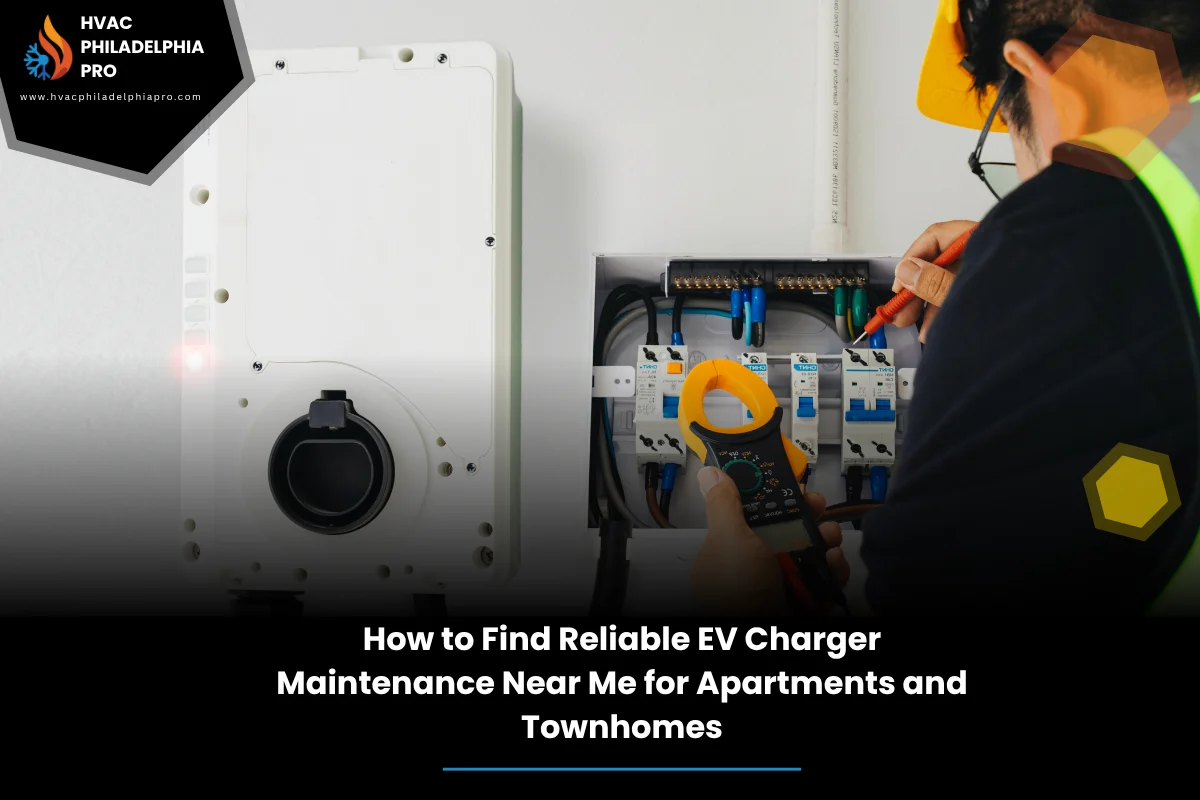
Finding EV charger maintenance near me can feel tricky when you manage shared parking, resident schedules, and different charger brands. In apartments and townhomes, the right plan keeps stations safe, open, and easy to use. You want simple steps to filter options, compare what they offer, and set up a routine that prevents surprises.
If you need a starting point or a quick next step, check schedules and coverage from a local provider through EV charger maintenance near me. That way you can confirm service windows, parts availability, and emergency response before something breaks.
HVAC Philadelphia Pro serves homes and small businesses every day across HVAC, plumbing, electrical, generators, and more. We focus on clear checks, clean work, and steady follow-up. This guide explains how any property team can choose and manage charger care without guesswork.
Table of Contents
Quick Summary
Apartment and townhome chargers need more than a quick wipe-down. They need a simple plan: routine inspection, safe power checks, firmware updates, cable care, and a clear process for resident reports. Start by mapping what you have, then decide who handles what. Track a few key numbers like uptime, average wait time, and repair turnaround.
When you compare providers, look past slogans and dig into response times, parts on hand, and proof of similar multifamily sites. Set windows for work so residents are not blocked. Use a shared log for issues and fixes. And when in doubt, lean on a checklist shaped around reliable home charging needs, the same core theme covered in the broader guide to charger upkeep in Philadelphia homes.
What reliable maintenance looks like for apartments and townhomes
Reliable care starts with clear goals: high uptime, safe power, and short waits. In shared lots, small snags snowball fast. A loose connector can turn into lines of frustrated drivers. A steady routine prevents that. It should include visual checks, cleaning, cable care, firmware updates, load checks, and a simple process for resident tickets.
If you want deeper context, see the principles outlined in the Complete Guide to EV Charger Maintenance in Philadelphia PA for Reliable Home Charging and adapt them to shared parking. Your mix of Level 2 stations, visitor spots, and overnight charging needs a plan that fits peak times and HOA or property rules.
Safety and compliance basics every property should track
Shared sites depend on safe power first. Keep an eye on panel capacity, NEC compliance, ground-fault protection, and labeling at each port. Confirm cords and connectors are free from cracks, burns, or loose pins. Test emergency shutoff, and document every check. If you add chargers, coordinate permits and load studies to avoid nuisance trips and hot breakers.
Make firmware updates part of the plan so safety features and metering stay accurate. Store lockout instructions near panels and include vendor numbers on the station label. A tidy, labeled setup helps residents report problems fast and helps techs work safely in tight rooms.
How to vet a provider without guesswork
Skip buzzwords and focus on proof. Ask for recent multifamily references, average response time by severity, and a sample inspection checklist. Confirm training on your station brands and network. Check that they stock common parts like connector holsters, cable management pieces, faceplates, and fuses.
People often search for the best EV charger maintenance company in Philadelphia, but the better filter is simple: documented process, clear SLAs, clean reporting, and real photos from similar sites. If cost matters, ask for tiered options so you can start small and grow later instead of locking into an oversized plan.
Scheduling and access for multifamily sites
Nothing wrecks a good plan like missed access. Agree on work windows, garage entry steps, and a single point of contact who can authorize fixes. Set a simple resident notice template for short outages. Keep temporary signs ready so drivers know which spots are offline and when they will reopen.
Batch work when you can. Cleaning, firmware, and light repairs fit well in one visit. Save escalations for hours when lots are quiet. Treat cable care as part of routine tasks so you catch frays before they trip a breaker or damage a port. Good access control keeps the day smooth.
Same-day vs scheduled care: choose the right response
Not every alarm needs a truck today. Use simple rules. If there is heat at the plug, visible sparks, a burning smell, or a tripped main breaker, request urgent help. That is a triage case. If it is a slow reader or a cracked holster, schedule it next visit. Prioritize safety first, then convenience.
Keep a short flow: isolate the affected unit, post a notice, try a safe reset if your training allows, then log details. A consistent approach limits downtime even before a tech arrives. Residents feel informed and protected, not left in the dark.
Local notes for Philadelphia apartments and townhomes
If your property is in Philadelphia, align routine checks with seasonal load swings, salt on winter lots, and garage moisture. Ask for brand-specific parts stocking during peak seasons. When people look for affordable EV charger maintenance in Philadelphia PA, they usually need tiered options that cover cleaning, testing, and small fixes without a full overhaul.
Searches for same day EV charger maintenance in Philadelphia often point to emergency needs. Set clear thresholds for urgent calls versus next-day visits to control cost and still protect safety. And make room in your plan for periodic EV charger inspection in Philadelphia, especially after panel work, renovations, or storm events.
A-C-T framework to pick and manage EV charger maintenance
Use this simple A-C-T framework to steer decisions:
A is Assess. Map every charger, breaker, cable length, network status, and last service date. Note peak hours and hot spots. C is Coordinate. Assign contacts, access steps, and notice templates. T is Track. Log uptime, outage causes, and repair turnaround. Adjust the plan each quarter.
If you want a deeper walkthrough before you roll this out, read the complete guide on this topic and use it to refine your A-C-T steps for shared lots and townhome clusters.
In-house vs outsourced: pros and cons
Some properties keep light tasks in-house and call a vendor for heavier work. Others fully outsource. Blend the two to match skills and budget. In-house teams can clean, label, and reboot. Vendors tackle diagnostics, wiring, firmware issues, and warranty parts. Smart outsourcing keeps residents safe and shortens downtime.
| Criteria | In-house | Outsourced |
|---|---|---|
| Expertise | Basic checks and resets | Advanced diagnostics and repairs |
| Response | Immediate for simple issues | Scheduled or emergency dispatch |
| Cost control | Lower for light tasks | Predictable with SLAs |
| Liability | Higher risk if untrained | Vendor carries trade risk |
| Resident experience | Fast for minor items | Faster fixes for complex faults |
Resident-facing communication checklist
Clear updates ease tension when a port goes offline. Use this quick list to keep messages short and useful.
- State which charger or space is affected and for how long.
- Share the safe alternative: nearby ports or times.
- Mention the issue type if known, without technical jargon.
- Post the next update time, even if it is just a status check.
- Invite reports with a single email or ticket link.
A practical inspection checklist you can start today
Print this and walk your site monthly. It catches small problems early and speeds up vendor visits.
- Power: look for tripped breakers, warm spots, or buzzing sounds.
- Cables: check for cuts, kinks, or crushed sleeves.
- Connectors: look for loose pins, burns, or cracked shells.
- Mounts: confirm tight bolts and clean, readable labels.
- UI: test start, stop, reader, and indicator lights.
- Network: confirm stations show online in the app or portal.
- Cleanliness: remove grit and salt from docks and holsters.
- Logs: record findings and photos with date and initials.
Common pitfalls and how to avoid them
Waiting for a failure is the biggest trap. Set a cadence and stick to it. Another trap is vague tickets. Ask residents for charger ID, time, and photo. That detail cuts diagnosis time. Finally, do not skip labels. A tidy label with panel and breaker info saves minutes in an emergency.
Tie your routine back to the same themes covered in the broader guide to reliable home charging: steady checks, safe power, and fast fixes. The steps are simple, but they add up fast when the lot is busy.
- How often should we schedule maintenance for shared Level 2 chargers?
Monthly light checks plus a deeper quarterly review works for most multifamily sites. Increase frequency during winter salt season or when usage spikes after move-ins.
- What should be in a basic EV charger inspection?
Power panel status, cable and connector condition, mount stability, UI functions, network check, and a quick cleanup. Log results with photos and note any smells or heat.
- When is same-day service worth it?
Any time there is heat, arcing, a burning smell, or tripped mains. Also if multiple stations fail at once and resident access is blocked, treat it as urgent.
- Do firmware updates really matter?
Yes. Updates fix bugs, improve safety features, and keep metering accurate. Plan updates during low-use hours and confirm version numbers in your log.
- How do we reduce cable damage in busy lots?
Use cable management arms or guides, add clear return signage, and choose parking layouts that avoid tight bends. Train residents with a short how-to near each unit.
- What KPIs should we track?
Uptime percentage, average repair turnaround, repeat fault rate, and resident ticket volume. Review them each quarter and adjust your plan accordingly.
- Should we stock spare parts on-site?
Keep small items like holsters, labels, and screws. For electrical parts, coordinate with your vendor to avoid warranty or safety issues.
- How do we handle chargers under warranty?
Document the fault with photos and logs, then contact the manufacturer or approved vendor. Avoid unapproved repairs that could void the warranty.
Conclusion
Finding truly reliable EV charger maintenance near me comes down to a clear plan and steady habits. Set your goals, pick a team with real multifamily proof, and track results so uptime stays high. Use checklists to catch small issues early, reserve same-day calls for real risk, and keep residents informed with short, useful updates.
As you refine your routine, revisit the principles of reliable home charging and apply them to shared lots. If you need help shaping or stress-testing your plan, contact HVAC Philadelphia Pro for expert assistance. With a simple framework and the right partners, your stations stay safe, ready, and easy for everyone to use.
continue reading
Related Posts
Learn how to build a simple, reliable plan for EV charging station repair in Philadelphia. Map assets, schedule checks, track data, and handle faults fast to keep uptime high.
A practical playbook for commercial buildings to plan summer AC repair in Philadelphia. Learn risk ranking, tenant communication, scheduling, and heat-wave prep.