
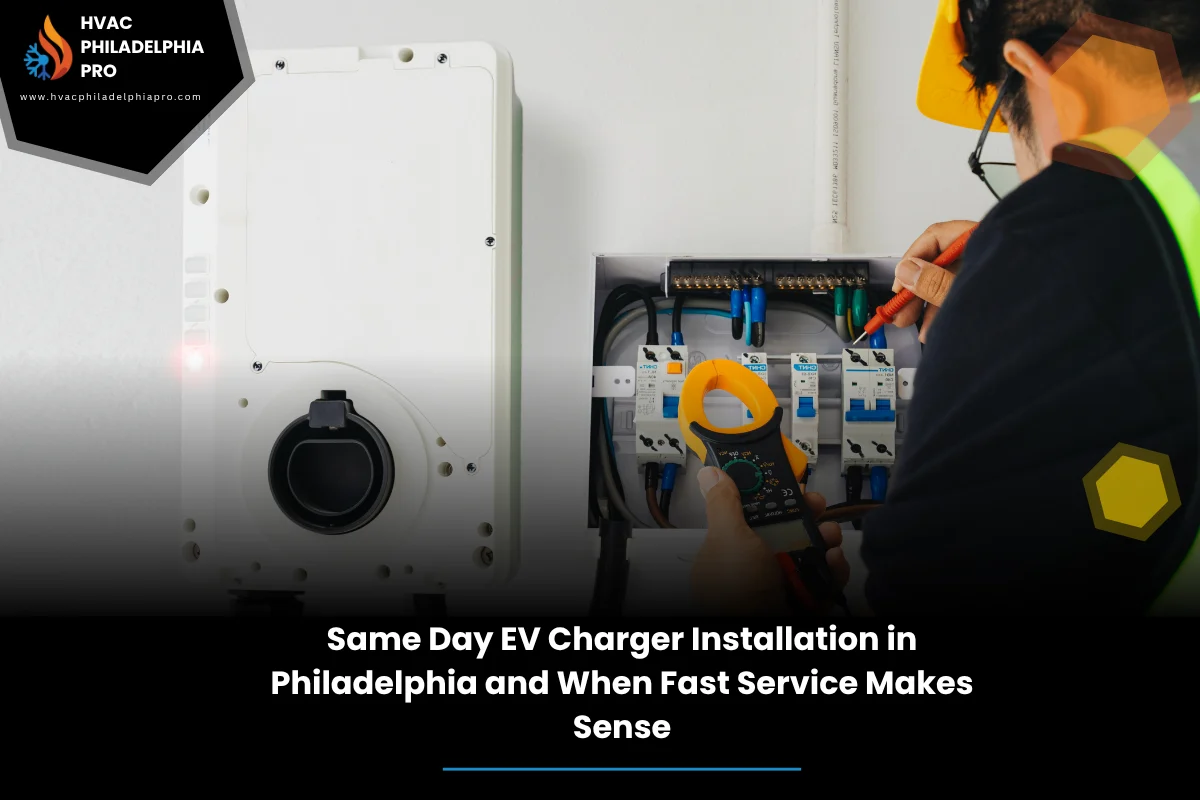
Waiting days to charge at home can throw off your routine. If you just bought an EV, share one car, or need reliable charging before work tomorrow, same day EV charger installation in Philadelphia can be a smart move. It is not always the right call, though. Some setups need planning, permits, and parts you should not rush.
The team at HVAC Philadelphia Pro handles urgent electrical needs daily. We know when fast service works, and when a short delay saves headaches. If you need speed with safety, you can start with same day EV charger installation in Philadelphia and then decide if a follow-up upgrade makes sense.
This guide explains when same-day installation is realistic, what can slow it down, and how to prep your space so the visit goes smoothly. We also point you to deeper planning resources and a clear framework to decide fast without cutting corners.
Table of Contents
Quick Summary
Same-day installs work best when your panel has spare capacity, the charger location is close to the panel, and your home already has good grounding and bonding. In these cases, the electrician can complete a safe install and testing without delays. A brief safety check still comes first.
If you need a panel upgrade, long conduit runs, trenching, or a special mount, schedule a planned visit. You can also use a short-term Level 1 cord until the bigger work is done. This article shows when to move fast, when to plan, and how to prepare so either option lands on time and within scope.
When Same-Day EV Charger Installation Makes Sense
Same-day service fits clear, simple jobs. If your panel has room for a 2-pole breaker that matches your charger specs, the run to the parking spot is short, and there are no visible hazards, an installer can likely finish in one trip. This is common with newer homes or recent service upgrades.
For a deeper planning dive, see the Complete Guide to EV Charger Installation in Philadelphia PA for Homes and Small Facilities for code basics, charger types, and layout tips that support long-term reliability.
If you rely on a single car for work, or public chargers near you are often busy, the case for speed grows. In these moments, define your urgent charging need and confirm the basics: panel capacity, breaker size, and a safe mounting point. If those check out, same-day makes sense.
When You Should Wait and Plan
If your lights flicker under load, the panel is already full, or you have an older service with unknown wiring, slow down. A panel upgrade or subpanel might be the right first step. That work can future-proof the home and support more loads like heat pumps or an induction range.
Longer conduit runs, a detached garage, or masonry wall mounts can also add hours. You may need special materials, trenching, or permits that cannot be pulled and closed the same day. In these cases, a planned visit will be smoother, safer, and often cheaper.
Temporary plan: use the charger’s Level 1 cord on a dedicated outlet while you wait. It is slower, but it protects your EV schedule until the permanent circuit is ready.
What Affects Timeline and Feasibility
Distance from panel to parking spot might be the biggest swing factor. Ten feet of EMT on an open basement wall is quick. Fifty feet through finished walls with tight turns is not. Expect more time for drilling, protection plates, and neat surface runs.
Your electrician must perform a load calculation. This checks total demand across big loads like electric ranges, dryers, HVAC, and the new charger. If the numbers exceed your service rating, you need a different plan, like load management or a service upgrade.
Charger type matters too. According to U.S. Department of Energy (2024), Level 1 charging is slow but simple, Level 2 fits most homes, and DC fast needs far higher power and special equipment that homes typically do not support. U.S. DOE: Charging an Electric Vehicle
Safety and Code Notes You Should Not Skip
Even under time pressure, do not skip grounding, bonding, or GFCI where required. NEC compliance guides breaker sizing, wire gauge, and protection. Improper sizing can trip breakers, overheat conductors, or void warranties.
Outdoor installs add weatherproofing steps. Use listed enclosures, proper fittings, and support the conduit. Indoors, protect cables from damage and respect working clearances around the panel and charger.
Permits and inspections vary. Same-day might cover rough-in and testing, with final inspection later. Ask your EV charger electrician in Philadelphia to outline what will be completed today and what the inspector will review after.
Same-Day Decision Framework for Homeowners and Small Properties
Use this simple triage checklist to decide fast without regret. It helps you avoid rework and keep the visit focused.
- Step 1: Define need. Do you truly need a full Level 2 charge by tomorrow, or will overnight Level 1 cover your miles for a few days? If not sure, read the complete guide on this topic to understand charging rates and daily driving fit.
- Step 2: Panel snapshot. Open the panel door, count spare spaces, note service rating on the label. Snap clear photos of the panel overview and any open breaker spots.
- Step 3: Path planning. Measure panel-to-parking distance and note obstacles: finished ceilings, brick, or long outdoor runs. Short, straight paths favor same-day installs.
- Step 4: Charger choice. If you own the charger, record its amperage and mounting style. If not, ask for a recommended model that matches your panel and wire path.
- Step 5: Permit path. Ask what can be done today versus what waits for inspection. If the plan needs special approvals, schedule the full install and use Level 1 meanwhile.
Comparison: Same-Day vs Scheduled Installation
Use this table to weigh speed against scope and future plans. Think about uptime, budget, and your tolerance for mid-project changes. Align the choice with your risk tolerance and long-term power needs.
| Factor | Same-Day | Scheduled |
|---|---|---|
| Best for | Simple, short runs, spare panel space | Panel upgrades, long runs, complex mounts |
| Uptime need | High, charging needed now | Moderate, can use Level 1 temporarily |
| Permits | Pulled quickly, inspection later | Full plan review before work |
| Material lead time | Common parts in stock | Special gear and custom hardware |
| Future expandability | Limited immediate changes | Optimized for growth and redundancy |
| Total project control | Good for urgent basics | Best for multi-load planning |
What to Expect During a Same-Day Visit
The electrician starts with a visual site assessment. They confirm panel capacity, verify main bonding, and walk the install path. Photos you shared ahead of time help speed this up.
Next, they mount the charger backplate, run conduit or cable, pull conductors, and land the breaker. After labeling and torque checks, they power up and test. Expect them to verify the app connection if your charger uses Wi-Fi or Bluetooth.
They will also explain basic load behavior. If you share the circuit with other big loads, they will set limits in the charger app or recommend a follow-up plan. Keep this guidance handy.
After the Install: Testing, Apps, and Upkeep
Ask for a brief walk-through: breaker location, charger settings, and how to use any load-sharing features. Run a test session to confirm charging speed and stable operation. Set a reminder for a periodic inspection of connections and cord wear.
Update the charger firmware and log into the app. Check energy use and schedule off-peak charging if your utility offers time-of-use rates. If you plan to add a second EV, note that you may need a future subpanel or load management device.
Bookmark a deeper planning resource. A complete guide to EV charger installation in Philadelphia for homes and small facilities is useful when you consider upgrades or add more loads later.
Finding the Right Help Without Losing a Day
If you search for EV charging station installation near me, focus on clear communication over flashy claims. Share panel photos, charger specs, and distance estimates to get a quick yes or no on same-day feasibility.
For home EV charger installation in Philadelphia, ask about permits, inspection timing, and what parts they stock on the truck. A prepared team can finish more on the first trip and leave a tidy workspace.
For ongoing needs, note how they document the job. Photos, labels, and a simple report make future service faster and safer for anyone who visits your home.
Residential Considerations That Often Get Missed
Homes vary, even on the same block. Basements can be damp, framing can be tight, and siding can split if rushed. A careful installer will map studs, seal penetrations, and protect conductors along exposed paths during residential EV charger installation in Philadelphia.
Think about parking patterns. If you back in, place the charger where the cord reaches the port without dragging. If two cars share a space, choose a mount that avoids trip hazards and door dings.
Finally, plan for storms. Outdoor chargers need drip loops, in-use covers, and firm mounts to handle wind. Small steps here save repair calls later.
FAQs
- Can every home support a Level 2 charger on the same day?
No. The panel needs spare capacity and a safe path for wiring. If the load calc is tight or the run is complex, plan a follow-up visit or a service upgrade.
- Is a permit always required for a home charger?
Many areas require a permit and inspection for a new circuit. Your installer can advise on what can be started today and what needs the inspector’s sign-off later.
- How long does a simple same-day install take?
Often 2 to 4 hours if the panel has space, the run is short, and materials are on hand. Add time for outdoor work or tight spaces.
- Will a Level 1 cord work while I wait?
Yes. It is slower but reliable for short daily miles. It is a good bridge while you schedule a panel upgrade or longer conduit runs.
- Do I need Wi-Fi for the charger?
Not always. Many chargers work without Wi-Fi, but the app helps set schedules, limits, and track energy. Wi-Fi also enables firmware updates.
- What if my panel is full?
You may need a subpanel, load management device, or service upgrade. These steps are best planned and inspected rather than rushed.
- Can weather stop an outdoor same-day install?
Heavy rain or freezing temps can slow safe mounting and sealing. In that case, indoor prep may be done first, with outdoor finishing later.
- Who should perform the work?
Use a licensed electrician experienced with EV chargers. They will follow code, size the circuit correctly, and test the system before leaving.
Conclusion
Fast charging at home can be a lifesaver, but speed should never replace safety. When the basics check out, same day EV charger installation in Philadelphia is a smart choice. When they do not, a short wait protects your home, your EV, and your wallet.
Use the framework here to decide quickly and confidently. If you need deeper planning around loads, permits, and layouts, lean on the broader guidance from our complete guide. And if you want a clear path from today’s needs to tomorrow’s upgrades, contact HVAC Philadelphia Pro for expert assistance. Keep it simple, safe, and ready for your next drive.
continue reading
Related Posts
Breaker tripping with EV charging? Learn what to do when your EV charger circuit breaker keeps tripping. Follow safe checks, a simple framework, and real fixes that last.
Stuck because your EV charger won’t charge vehicle? Use this clear homeowner checklist to fix power, settings, cable, and app issues before calling a pro.
Learn common issues and fixes for electric vehicle charger installation in Philadelphia. From panel limits to 240V circuits, grounding, and permits, get a clear, safe plan.