
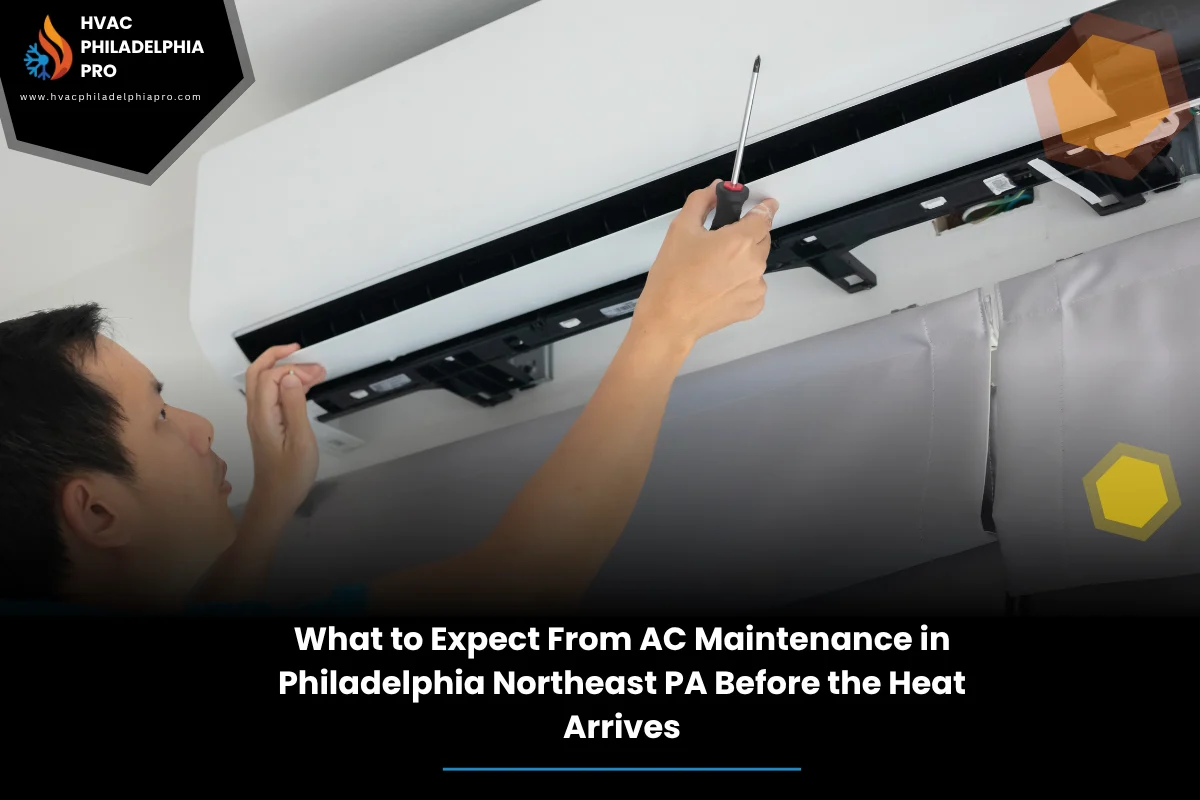
Hot days hit fast in the Northeast, and a sluggish air conditioner can turn a normal week into a rough one. If you plan a checkup early, your system runs smoother, uses less power, and lasts longer. Here is what homeowners should expect when booking AC maintenance in Philadelphia PA before summer shows up.
HVAC Philadelphia Pro sees the same pattern each year: filters clog, coils get dusty, and small issues grow into big repairs. A careful tune up finds those weak spots before they cause noise, leaks, or warm air. We will break down the visit step by step, explain what you can do yourself, and share when to call in a pro for seasonal care across Philadelphia Northeast PA.
Table of Contents
Quick Summary: What Happens During Pre-Summer AC Care
A pre-summer tune up checks airflow, refrigerant levels, electrical parts, safety devices, and thermostat settings. Techs clean coils, flush drains, tighten connections, test capacitors, and measure temperature split. This type of preventive maintenance aims to stop surprise breakdowns and restore steady cooling before the first heat wave hits. For extra context, see the Complete Guide to AC Maintenance in Philadelphia PA for Reliable Home Comfort which expands on steps and care intervals.
Homeowners can help too. Swap or wash filters, clear the outdoor unit, and listen for odd sounds after the first test run. If you want fewer repair calls in July, plan AC maintenance before summer in Philadelphia so you can fix little things on your schedule, not in a rush.
Why Pre-Summer Checks Matter in Northeast Philadelphia Homes
Winter dust and early spring pollen clog filters and coat the outdoor coil. That buildup strangles airflow and makes the system work harder. A focused visit clears the blockage and resets performance. That keeps rooms cooler, shortens run times, and lowers bills during peak months of summer HVAC maintenance in Philadelphia.
Heat and humidity also stress parts. A weak capacitor or loose wire may work on a mild day, then fail during a hot afternoon. Catching small wear with seasonal AC maintenance gives you time to replace parts before they strand your family in the heat.
What a Standard AC Tune Up Includes
Expect a visual inspection, electrical testing, refrigerant checks, coil cleaning, drain clearing, fan and motor checks, and thermostat calibration. On many calls, techs also measure supply and return air temps to confirm proper temperature split. That quick reading helps flag airflow or charge issues fast.
The tech should also review their findings, answer questions, and note anything to monitor. If access is tight, they may suggest small changes like clearing storage around the indoor unit to improve serviceability. One core task is careful coil cleaning so heat can move efficiently out of your home.
| Type | Scope | When it helps most | Risk level |
|---|---|---|---|
| Pre-summer professional tune up | Full system checks, cleaning, testing | Spring and early summer before heat spikes | Low with proper testing and parts |
| DIY basic care | Filter changes, clearing debris, gentle rinse | Monthly or as needed all season | Low if power is off and methods are gentle |
| Emergency peak-season repair | Breakdown diagnosis and part replacement | During heat waves or after failure | Higher stress, longer waits, higher stakes |
Signs Your System Needs Attention Before Summer
Warm air from the vents, weak airflow, or extra long run times are early flags. So are banging or buzzing sounds, musty smells near the air handler, or water around the indoor unit. Your bill jumping without a heat wave is another common clue.
Outside, watch for ice on the refrigerant line, grass or leaves pressed against the condenser, or a fan that starts slow. Any of these points to restricted airflow or a strain on parts. Address the cause now to avoid short cycling and mid-summer failures.
Step-by-Step Framework to Get Your AC Ready
- Replace the air filter: Use the right size and MERV that matches your system. Mark the date so you remember the next change.
- Clear the outdoor unit: Cut back plants 2 to 3 feet. Gently rinse the fins from the outside in after shutting power off.
- Check vents and returns: Open supply registers, vacuum grilles, and move furniture that blocks airflow.
- Test the thermostat: Set to cool, run for 15 minutes, and note how long it takes to reach your set temp.
- Listen and look: Watch the condenser fan, listen for clicks or hums, and look for water at the indoor unit.
- Schedule a tune up: Book early so you get a calm appointment window before the first heat spike.
If you want a deeper checklist with pro-level detail, read the complete guide on this topic which pairs nicely with this framework and helps you track what was checked each season.
Service and Scheduling Tips for Philadelphia Northeast PA
Spring fills up fast in the Northeast. Aim for late March through May if you can. Mornings often allow easier rechecks the same day if a part needs swapping. Weekend slots are limited, so plan ahead when you can. For same-day issues, keep a short list of symptoms to speed diagnosis.
If you prefer a single place to book care and keep records, many homeowners choose AC maintenance in Philadelphia PA through a local plan. It keeps notes, dates, and readings in one place so the next visit starts smarter. That also helps with home AC tune up near in Philadelphia searches when you want a familiar team that already knows your system.
Indoor Air Quality and Efficiency Gains From Seasonal Maintenance
Fresh filters catch pollen and dust before they cycle through bedrooms and living rooms. Clean coils remove a common source of musty smells and let heat move faster, which cools rooms without those long, noisy runs. Good air and steady temps keep sleep better on sticky nights.
Ask about filter options and MERV ratings that fit your unit. Higher MERV is not always better for older systems, since dense media can reduce airflow. A balanced choice helps both air quality and efficiency for AC tune up in Philadelphia homes.
What Technicians Do During the Visit
First, the tech confirms operation, then shuts power off. They open the indoor panel, inspect wiring, tighten lugs, and test capacitors and contactors. Outside, they clear debris, check the fan motor, inspect the coil, and verify refrigerant pressures or temps based on the system type.
They also clear the condensate line, test the float switch, and confirm defrost and heat mode if it is a heat pump. Before leaving, they start the system, confirm thermostat settings, and share notes. Expect clear talk on any risks, options, or parts to monitor tied to their safety checks.
After the Visit: Track Performance and Plan Next Steps
Keep a simple log: filter changes, dates of service, and any noises or hot spots by room. Note your normal temperature split between return and supply air, since that baseline reading helps you spot drift during heat waves. If something feels off, you will have details ready.
If your system is older or had repeat issues, talk about repair versus replace timing. A small part now can buy more years, while repeated coil or compressor problems may point to a future upgrade. Contact HVAC Philadelphia Pro for expert assistance.
FAQs
- How often should I schedule seasonal AC maintenance in Philadelphia?
Once a year is typical for most homes. Book before peak heat so you can fix minor issues without long waits or rush fees.
- What can I do myself before a technician arrives?
Change the filter, clear plants from the condenser, open all vents, and write down symptoms. These steps speed the visit and reduce noise and hot spots.
- Is a tune up the same as a repair?
No. A tune up is preventive. It cleans and tests the system to avoid breakdowns. Repairs fix specific failures after something stops working.
- Will a tune up lower my cooling bill?
It often does. Clean coils and proper airflow shorten run times, which can reduce energy use. Results vary based on system age and home conditions.
- What if my system still struggles after service?
Call the provider with your visit notes. They may recheck airflow, thermostat, or refrigerant. Sometimes duct issues or insulation are the root cause.
- When is it time to replace instead of repair?
If major parts fail on an older unit or repairs stack up, it may be time to compare costs and comfort gains. A pro can help you weigh options.
Conclusion
Smart planning makes summer easier. With the right checks, cleaning, and tests, your system will be ready when the first heat wave rolls through. Book early, handle simple care at home, and use notes from each visit to guide the next one. That approach turns stress into a smooth routine.
Focus on steady airflow, clean coils, and tight electrical connections. Those basics prevent many mid-season surprises. If you keep your system on a yearly plan, AC maintenance before summer in Philadelphia feels quick and simple. Most of all, you will step into June with confidence, because you already handled your AC maintenance in Philadelphia PA and set your home up for a cooler, calmer season.
continue reading
Related Posts
Learn how to choose EV charger repair near me with clear safety checks, a simple shortlist framework, and provider comparisons so you can fix issues fast and right.
Power failures can freeze business chargers. Learn fast triage, common faults, and safe fixes for Marlton NJ sites, plus when to use emergency EV charger repair in Philadelphia.
Practical guidance for Springfield PA businesses on EV charging station repair in Philadelphia, with fast triage steps, safety basics, network vs standalone tips, and industry-specific advice.