
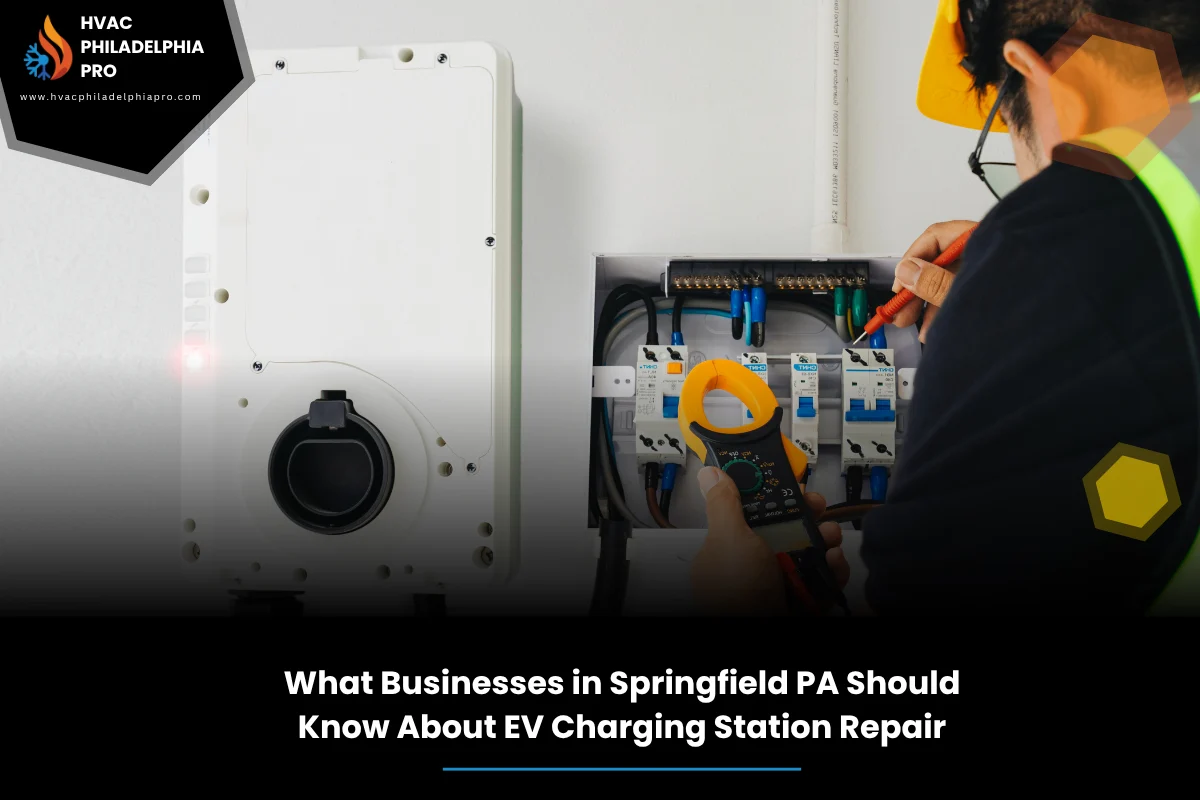
EV chargers keep fleets moving, visitors happy, and loading docks on schedule. When a unit fails, minutes count. This guide shows ops teams how to prevent avoidable downtime, spot early signs, and work smarter with technicians. It also keeps the focus on safety and clean handoffs to reduce repeat calls.
HVAC Philadelphia Pro supports busy facilities every day, so we wrote this for managers and techs who want practical steps, not fluff. If you manage multiple sites, build a simple playbook that fits your gear and crews. It will pay off when a charger throws an error at 6 a.m. on a Monday.
You will also see how EV charging station repair in Philadelphia differs when chargers are networked, tied to access control, or mounted outdoors. For service details and scope, review EV charging station repair in Philadelphia to align your internal plan with professional support.
Table of Contents
Quick Summary
Downtime hurts schedules and trust. Most charging issues start as small warnings: slower charge rates, random reboots, sticky connectors, or payment glitches. Train staff to log symptoms, confirm power, and note timestamps before calling a pro. That single page of notes speeds fixes and cuts return visits.
Use a short triage framework: safety first, simple resets, power checks, cable inspections, and network tests. Keep spare parts that fail most often, like holsters or labels. Networked chargers need careful firmware and account checks. Standalone units lean on clean power and good cabling.
Finally, create site standards: where to place labels, how to gather logs, and who calls whom. A clear playbook turns confusion into action when a charger faults during peak shifts.
Why charger uptime matters for busy facilities
For warehouses and distribution centers, one failed bay can ripple into missed windows and extra idling. Manufacturing and industrial sites depend on reliable fleet charging to hit shifts and shipments. Good uptime is not luck. It comes from simple routines, clean records, and fast decisions.
If you need deeper background before building your plan, see the Complete Guide to EV Charger Repair in Philadelphia PA for Homes and Businesses for a fuller picture of parts, workflows, and repair paths.
Common EV charger failures you can spot early
Look for clues long before a hard fault. Slow sessions point to heat, cable wear, or upstream power limits. Random restarts hint at firmware issues or poor network signals. Payment or RFID errors often trace to portal settings, expired certificates, or time drift on the unit.
Physical checks matter. Warped handles, stuck latch buttons, and frayed cables cause intermittent stops. Discolored outlets suggest heat or loose terminations. When you see these, start a quick photo log. Clear photos make symptom mapping faster and help a technician plan parts.
If problems recur across multiple units, group them by charger model and software version. That pattern speeds EV charger troubleshooting in Philadelphia and helps avoid chasing one-off ghosts.
Fast triage: an on-site framework that works
Use this seven-step triage checklist before calling for help. It is simple, safe, and saves time for everyone.
- Step 1: Safety. Confirm the area is dry and clear. If you smell burning or see arcing, stop and isolate power.
- Step 2: Visuals. Photograph screens, error codes, cables, and labels.
- Step 3: Power. Verify breakers, disconnects, and any local indicators.
- Step 4: Reset. If allowed by your policy, perform a soft reboot and note any changes.
- Step 5: Network. Check cell or Ethernet link lights, and confirm the charger shows online status in the portal.
- Step 6: Session test. Try a controlled test with a known-good vehicle or test adapter.
- Step 7: Record. Log timestamps, weather, and load on the panel.
For a broader playbook on cause-and-effect and parts replacement paths, compare your notes with the complete guide on this topic so your team speaks the same language as the technician.
Safety basics for on-site checks
Never open enclosures unless you are qualified and authorized. Use lockout-tagout if a unit shows signs of damage. Keep water, metal tools, and traffic away from open work areas. Post a quick sign at the bay so drivers do not try to plug in during checks.
Focus on safe isolation before touching hardware. If you must touch the connector, wear suitable gloves and inspect for heat marks. When in doubt about exposed conductors or suspected short circuits, stop and request EV charger electrical fault repair from a licensed electrician.
Networked vs standalone chargers: what changes in maintenance
Standalone stations lean on stable power and solid cabling. Networked units add portals, accounts, and updates to the stack. If a session fails on a networked charger, confirm firmware version, time sync, and portal status before hardware swaps. These checks save on unnecessary site visits.
Keep a short list of firmware updates that fixed issues in the past. Track which units run which versions. For sites with spotty cellular coverage, consider external antennas or wired backhaul to reduce dropouts during peak hours.
| Charger type | Where used | Common issues | First check | Escalate when |
|---|---|---|---|---|
| Level 2 | Commercial buildings | Connector wear, tripped breakers | Inspect cable and breaker | Heat damage or repeated trips |
| DC fast | Warehouses, distribution hubs | Cooling faults, contactor errors | Logs and status LEDs | Persistent high-load faults |
| Networked | All industries | Portal or SIM failures | Portal online status | No data or failed updates |
What to prepare before a technician arrives
A little prep cuts repair time a lot. Print or save the last three error codes, charger model and serial, and breaker size. Add photos of the site, panel labels, and cable strain points. Put everything in one email or shared folder for the visit.
Stage cones and clear parking so the tech can work without delays. A short parts checklist helps too: spare holsters, signage, and labels are cheap and fix common headaches fast. For fleets, park a known-good vehicle nearby for test sessions.
Industry-specific guidance that actually helps
Warehouses and distribution centers should watch for cable impact damage from tight turns and pallets. Manufacturing and industrial facilities see more power events from large motors, so keep panel torque checks and IR scans on a schedule. Commercial buildings often face access or payment issues during peak visitor hours.
Tailor your preventive maintenance by site. Outdoors, clean debris from pedestals and check gaskets before rainy spells. Indoors, keep an eye on ventilation, dust, and forklift lanes near cables. For all sites, a quarterly review of portal settings prevents silent failures.
When issues recur at night or weekends, plan contacts for emergency EV charger repair in Philadelphia so staff know who to notify and what to send, without guesswork.
Springfield PA: local factors to keep on your radar
In Springfield PA, many chargers sit near busy lots shared with retail or office traffic. Post clear wayfinding and label bays so drivers do not block access during service. If snow or leaf debris is common at your site, add it to weekly checks to prevent clogged vents and slippery work areas.
Some sites tie chargers into building systems for lighting schedules or access doors. Map these connections so root-cause diagnostics cover more than the charger. Your plan should include local weather notes, lot traffic patterns, and quiet hours for testing to avoid upsetting neighbors.
When planning seasonal maintenance, align with your busiest shipping days to reduce conflict. A short window early in the week often works best for tests and updates.
FAQs
- What is the first thing to check when a charger stops mid-session?
Confirm safety, then look for error codes on the screen, check the breaker, and inspect the connector for heat or damage. Log everything with timestamps.
- How do network issues cause charging failures?
Poor cellular or portal errors can block authentication, pricing, or updates. Verify the unit shows online in the portal and that accounts and time sync are correct.
- When should we call for EV charger diagnostic service?
Call when errors repeat after basic resets, when heat or burning smells appear, or when logs show high-load faults you cannot clear safely.
- Can weather cause intermittent faults?
Yes. Heat, cold, and moisture stress cables and seals. Look for condensation inside lenses, stiff latches, and discolored plastics after hot days.
- What records help speed a repair visit?
Model and serial numbers, recent error codes, firmware version, breaker size, photos, and exact timestamps. Include notes on weather and vehicle type used.
- How do we reduce repeat failures?
Keep a simple playbook: safety checks, logs, quarterly inspections, portal reviews, and cable replacements on a schedule. Update firmware and document fixes.
Conclusion
With a clear playbook, most charging hiccups turn into short delays, not long outages. Document symptoms, perform safe checks, keep parts handy, and share clean notes with your technician. That teamwork makes EV charging station repair in Philadelphia faster, safer, and less costly over time.
If you manage multiple sites, standardize labels, logs, and contacts across locations. That way, anyone on duty can act with confidence when a charger blinks red at the worst moment. Contact HVAC Philadelphia Pro for expert assistance and build a simple plan that fits your chargers, your crews, and your schedule.
continue reading
Related Posts
Learn how to choose EV charger repair near me with clear safety checks, a simple shortlist framework, and provider comparisons so you can fix issues fast and right.
Power failures can freeze business chargers. Learn fast triage, common faults, and safe fixes for Marlton NJ sites, plus when to use emergency EV charger repair in Philadelphia.
Learn how home EV charger repair in Philadelphia habits protect Havertown PA homes. Spot faults, stop trips, and safeguard wiring with clear steps, tools, and prevention.